VS

Hyundai i20 vs Hyundai Bayon comparison

Compare performance (90 HP vs 90 HP), boot space and price (18,600 £ vs 20,100 £ ) at a glance. Find out which car is the better choice for you – Hyundai i20 or Hyundai Bayon?

Hyundai i20 vs Hyundai Bayon: Key differences

Hyundai i20

4 (1 Reviews)
rate
  • barely cheaper
  • very slightly more efficient
  • very slightly quicker 0–100 km/h
  • barely lighter

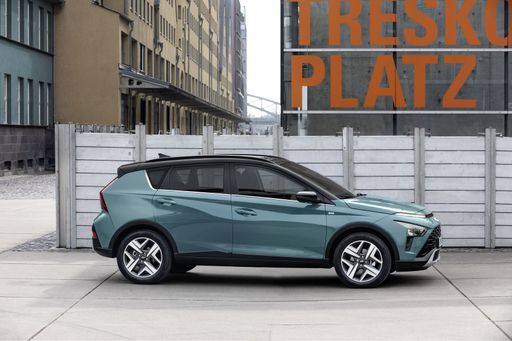
Hyundai Bayon

4 (1 Reviews)
rate
  • moderately more trunk space

All details on performance, efficiency, range and trunk space can be found in the technical comparison below – including user reviews for both models.

i20

Sibling Rivalry: same family, very different temperaments

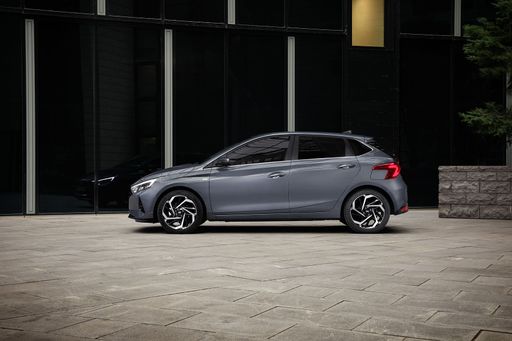
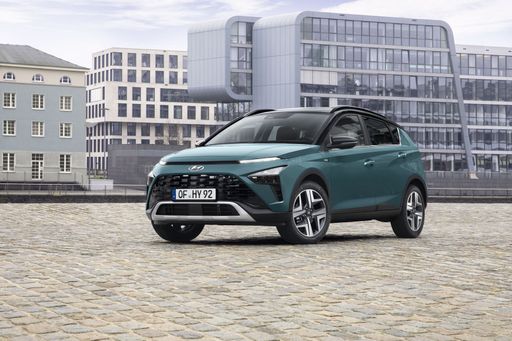
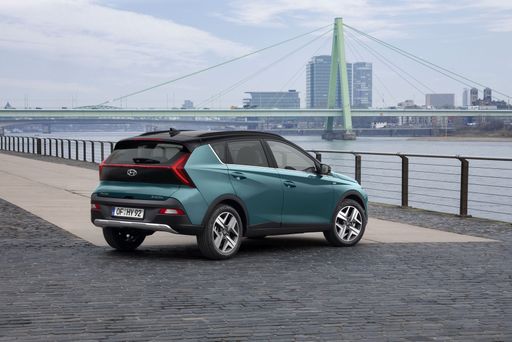
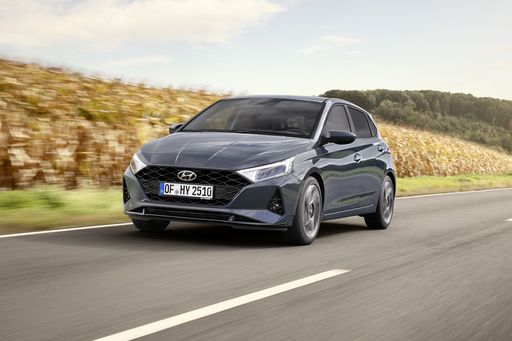
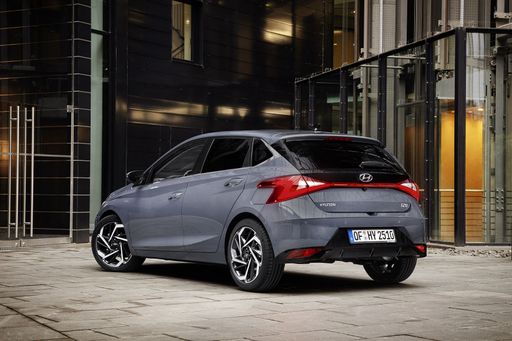
On paper they come from the same stable, but in the driveway they project two distinct characters: one leans into crossover confidence, the other wears its hatchback roots with sprightly charm. The Bayon trades a compact footprint for a taller stance and an image that says “I can tackle errands and weekend getaways with equal relish.” The i20 answers with a tighter, sportier demeanour that rewards the driver who enjoys deft inputs and a more direct connection to the road.
Bayon

City choreography: nimble feet or raised vantage?

For urban pilots the experience feels deliberate — the i20 is the dancer that slips into tight parking slots and responds with eager steering, while the Bayon offers a more relaxed, upright view that makes threading through cluttered streets less stressful. If you value dynamism and small-car agility, the i20’s playful nature will keep a smile on your face. If visibility and a more commanding driving position are higher on your checklist, the Bayon’s higher ride will appeal.

i20

Open-road manners: composed cruiser versus communicative companion

When the miles stretch out, the Bayon leans toward composed comfort, smoothing out rougher surfaces and prioritising a settled ride that passengers will appreciate on longer runs. The i20, by contrast, stays more engaged — it transmits more feedback through the wheel and rewards an enthusiastic driver with a sense of involvement. Both can cover distance without fuss, but their personalities on the road are noticeably different.

Bayon

Inside the cockpit: practicality with panache or focused ergonomics?

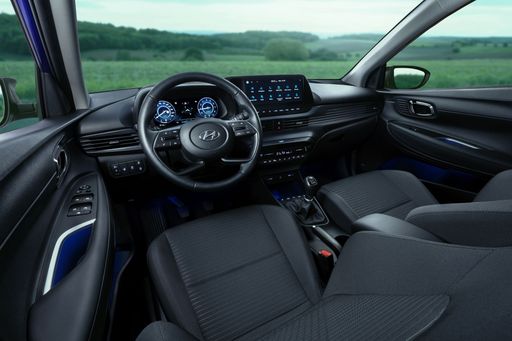
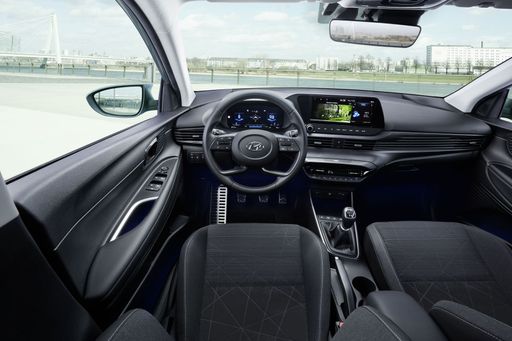
Cabin ambience plays to different strengths: the Bayon emphasises an airy impression and user-friendly practicality, making loading, stowing and family life feel effortless. The i20 concentrates on the driver’s sphere with controls and ergonomics that favour clarity and quick access, creating a cockpit that feels intentionally trimmed for everyday driving. Either way, material quality and feature levels are competitive — it’s the layout and vibe that separate them.

i20

Luggage logic: flexible cargo or clever packaging?

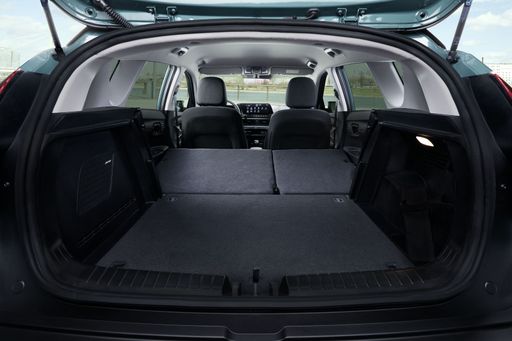
Hauling capacity is where the Bayon’s SUV cues become genuinely useful; its load space and flexibility suit weekend planners, parents and those who often carry bulky items. The i20 proves that good packaging can go a long way, squeezing practical solutions out of a compact footprint and serving single drivers or couples who need sensible day-to-day usability. Choice here really comes down to whether you regularly need extra room or prefer efficiency in a smaller shell.

Bayon

Ownership reality: running costs versus lifestyle investment

From a buyer’s perspective the i20 positions itself as the pragmatic pick, with a lighter touch on the wallet and a straightforward proposition that appeals to cost-conscious shoppers. The Bayon asks a small lifestyle premium in exchange for crossover styling and extra utility, which will make sense to those who prize the higher driving position or the image that comes with it. Either route can be sensible — your priorities and how you use the car will decide which feels like better value.

i20

Which personality suits you?

If your days are a mix of tight city streets, short commutes and a desire for sprightly handling, the i20 will feel like a natural fit; buyers who want a more commanding presence, extra versatility for family life and a crossover attitude will be drawn to the Bayon. Style-minded drivers who like the idea of being a little higher off the road will favour the Bayon, while practical minimalists and urban commuters usually nod towards the i20. Think about where you spend most of your miles and what gives you peace of mind before you decide.

Bayon

Curious who takes the DriveDuel crown?

Both cars bring clear strengths and appeal to different kinds of drivers, so the final verdict comes down to priorities and personality — and the DriveDuel Champion will be revealed next, so keep reading to see which model clinches the title.

Here’s where it gets real: The technical differences in detail

i20

Costs and Efficiency:

Price and efficiency are often the first things buyers look at. Here it becomes clear which model has the long-term edge – whether at the pump, the plug, or in purchase price.

Hyundai i20 is barely cheaper – starting at 18,600 £ , while the Hyundai Bayon costs 20,100 £ . That’s a price difference of around 1,457 £.

Fuel consumption also shows a difference: the Hyundai i20 uses 5.7 L/100km and is very slightly more efficient than the Hyundai Bayon with 5.8 L/100km. The difference is about 0.1 L/100km.

Bayon

Engine and Performance:

Power, torque and acceleration are the classic benchmarks for car enthusiasts – and here, some clear differences start to show.

Both models deliver identical power – 90 HP each.

When accelerating from 0 to 100 km/h, the Hyundai i20 is very slightly quicker – completing the sprint in 11.5 s, while the Hyundai Bayon takes 11.9 s. That’s about 0.4 s quicker.

Both models offer the same torque – 172 Nm.

i20

Space and Everyday Use:

Whether family car or daily driver – which one offers more room, flexibility and comfort?

Both vehicles offer seating for 5 people.

In terms of curb weight, Hyundai i20 is barely lighter – 1,145 kg compared to 1,175 kg. The difference is around 30 kg.

Looking at boot space, the Hyundai Bayon offers moderately more boot space – 411 L compared to 352 L. That’s a difference of about 59 L.

When it comes to payload, the Hyundai i20 carries barely more – 465 kg compared to 460 kg. That’s a difference of about 5 kg.

Who wins the race in the data check?

The Hyundai i20 holds a slight edge in the objective data comparison.
This result only shows which model scores more points on paper – not which of the two cars feels right for you.

from £18,600
i20

Hyundai i20

  • Engine Type : Petrol
  • Transmission : Manuel, Automatic
  • Drive Type : Front-Wheel Drive
  • Power HP : 90 HP
  • Consumption L/100km : 5.7 L/100km
Hyundai i20
Hyundai Bayon

Costs and Consumption

View detailed analysis

Engine and Performance

View detailed analysis

Dimensions and Body

View detailed analysis

Hyundai i20

The Hyundai i20 is a cheeky small car that mixes smart styling with sensible practicality, feeling more polished and roomy than you might expect for the money. It’s an easy car to live with, offering engaging handling, a comfy cabin and useful equipment that make daily commutes and weekend errands notably less dull.

details

Hyundai Bayon

The Hyundai Bayon slips neatly between city runabout and small SUV, offering surprising practicality and a fresh, confident design that stands out in urban traffic. It's an easy buy for shoppers who want smart packaging, tidy handling and a dash of personality without fuss — a sensible little crossover that makes everyday driving a bit more enjoyable.

details
Hyundai i20
Hyundai Bayon

Costs and Consumption

Price
18,600 - 24,000 £
Price
20,100 - 25,800 £
Consumption L/100km
5.7 L/100km
Consumption L/100km
5.8 L/100km
Consumption kWh/100km
-
Consumption kWh/100km
-
Electric Range
-
Electric Range
-
Battery Capacity
-
Battery Capacity
-
co2
128 - 129 g/km
co2
130 - 132 g/km
Fuel tank capacity
-
Fuel tank capacity
-

Dimensions and Body

Body Type
Hatchback
Body Type
SUV
Seats
5
Seats
5
Doors
-
Doors
-
Curb weight
1,145 - 1,170 kg
Curb weight
1,175 - 1,200 kg
Trunk capacity
352 L
Trunk capacity
411 L
Length
-
Length
-
Width
1,775 mm
Width
1,775 mm
Height
-
Height
-
Max trunk capacity
-
Max trunk capacity
-
Payload
455 - 465 kg
Payload
450 - 460 kg

Engine and Performance

Engine Type
Petrol
Engine Type
Petrol
Transmission
Manuel, Automatic
Transmission
Manuel, Automatic
Transmission Detail
Manual Gearbox, Dual-Clutch Automatic
Transmission Detail
Manual Gearbox, Dual-Clutch Automatic
Drive Type
Front-Wheel Drive
Drive Type
Front-Wheel Drive
Power HP
90 HP
Power HP
90 HP
Acceleration 0-100km/h
11.5 - 12.8 s
Acceleration 0-100km/h
11.9 - 13.3 s
Max Speed
-
Max Speed
-
Torque
172 Nm
Torque
172 Nm
Number of Cylinders
3
Number of Cylinders
3
Power kW
66 kW
Power kW
66 kW
Engine capacity
998 cm3
Engine capacity
998 cm3

General

Model Year
2,025
Model Year
2,025
CO2 Efficiency Class
D
CO2 Efficiency Class
D
Brand
Hyundai
Brand
Hyundai
DriveDuel uses data analysis and artificial intelligence to evaluate vehicle data and create content. Content is regularly reviewed and improved. The displayed prices are estimates based on German list prices, adjusted to the respective country’s VAT. Country-specific registration taxes are not included. This information is not legally binding.