VS

Hyundai Kona vs Hyundai Bayon comparison

Compare performance (218 HP vs 90 HP), boot space and price (23,100 £ vs 20,100 £ ) at a glance. Find out which car is the better choice for you – Hyundai Kona or Hyundai Bayon?

Hyundai Kona vs Hyundai Bayon: Key differences

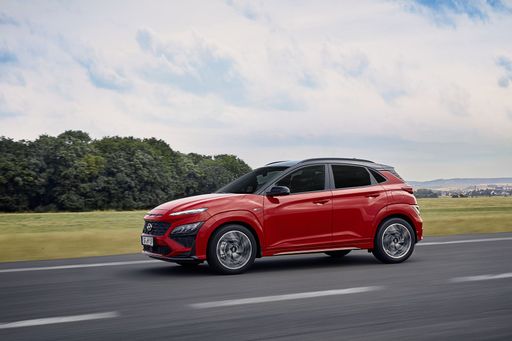
Hyundai Kona

5 (1 Reviews)
rate
  • clearly more power
  • markedly more efficient
  • substantially quicker 0–100 km/h
  • somewhat more trunk space

Hyundai Bayon

4 (1 Reviews)
rate
  • slightly cheaper
  • a bit lighter

All details on performance, efficiency, range and trunk space can be found in the technical comparison below – including user reviews for both models.

Kona

Urban Spark vs Weekend Swagger

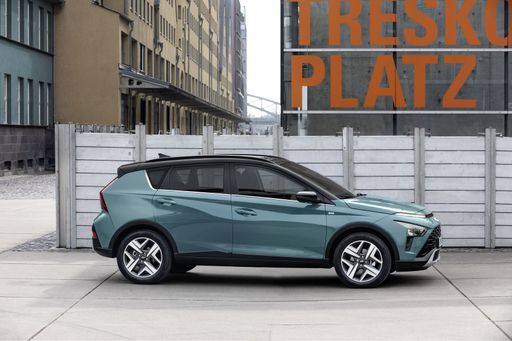
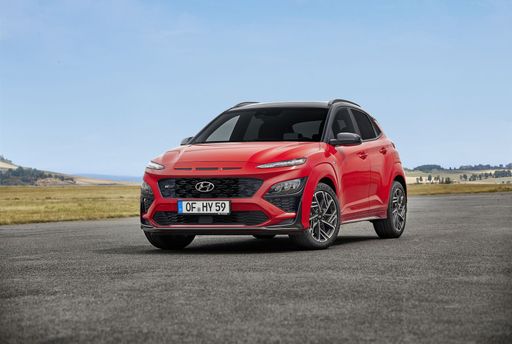
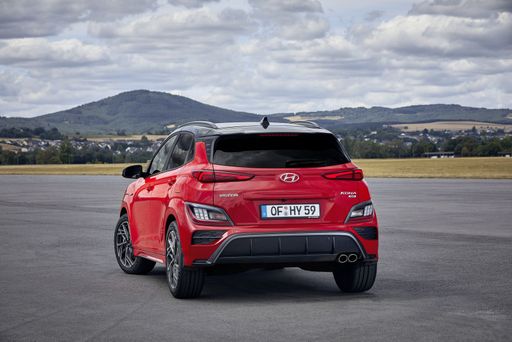
The Hyundai Bayon feels like the cheeky city-dweller: compact, nimble and designed to nip into tight spaces with confidence, while the Hyundai Kona projects a slightly more assertive presence that hints at broader capabilities. Bayon’s character is all about smart packaging and approachable charm, making it an easy choice for style-conscious buyers who prioritise low fuss. Kona brings a touch more attitude and composure, suggesting it’s happier when the day stretches beyond the inner ring road. Together they show how a single brand can cater to both the pragmatic urbanite and the driver who wants a bit more versatility in their life.
Bayon

Pleasure in Tight Turns

Drive either through a row of parked cars or a twisty suburban lane and you quickly notice their different manners: the Bayon rewards precision and light steering with a confidence that suits short commutes and frequent parking, whereas the Kona offers a steadier, planted feel that soaks up uneven surfaces with more composure. Neither is a sports car, but Kona’s demeanor gives you the sense of having a more grown-up companion for longer stints, while Bayon’s agility keeps daily chores pleasantly efficient. Both ride settings are tuned for comfort first, so you won’t be punished on rough city streets. That balance makes them easy to live with day-to-day.

Kona

Stretching the Day Without a Fuss

If your week includes school runs, supermarket trips and the occasional longer escape, practicality becomes the deciding factor: one car’s layout and load space feel more roomy and flexible, while the other makes up for tighter dimensions with clever cubbyry and a lighter-footed approach to stowing luggage. Rear-seat comfort is realistic rather than luxurious in both, but one model leans harder on user-friendly access and visibility for families. Ergonomics matters here — how easy it is to drop in a child seat, haul shopping or change luggage setups can tip the scales. Both are designed to keep family life simple rather than glamorous.

Bayon

Cabin Mood and Everyday Tech

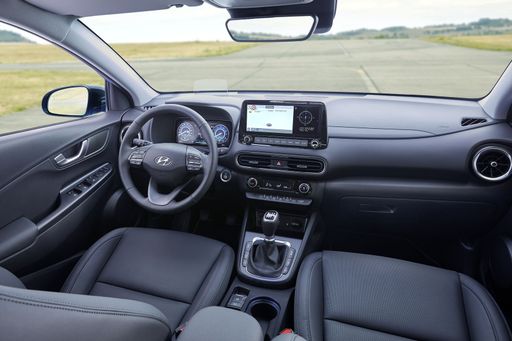
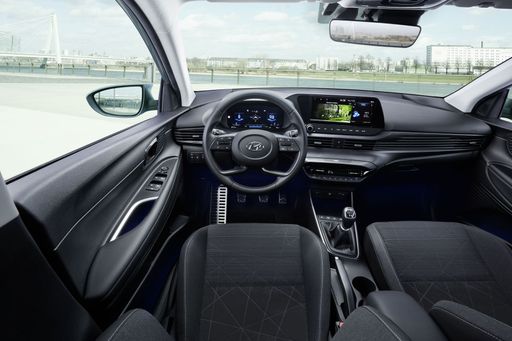
The interior atmospheres are distinct: Bayon aims for modern minimalism with a friendly, uncluttered layout, while Kona pushes a sportier, slightly more premium feel through its finishes and cockpit styling. Controls are generally straightforward on both, though one offers a more intuitive placement for the frequently used functions, which makes life less fiddly on busy mornings. Infotainment and connectivity feel current without overwhelming the driver, and material choices strike a practical balance between durability and perceived value. Overall they show Hyundai’s effort to make tech accessible rather than showy.

Kona

Running Costs and Ownership Mood

Owning either will be about trading what you need against what you want: one keeps the purchase and daily running experience modest and undemanding, while the other asks a little more upfront for a broader set of capabilities and a more assured road presence. Both deliver the kind of low-stress ownership that appeals to buyers who want predictable maintenance and easy usability rather than fret every trip. Insurance, servicing and fuel/energy considerations are part of the story, but the bigger picture is how each car fits your calendar and garage. Buy with your weekly routine in mind and you’re unlikely to be disappointed.

Bayon

Who Should Park One In Their Driveway?

Commuters and city dwellers who prioritise easy parking, light-footed handling and sensible cost-of-ownership will likely find the Bayon hits their sweet spot, while buyers who prize a more planted feel, extra flexibility for luggage and a slightly bolder road presence will be drawn to the Kona. Families who regularly head out of town may prefer the added composure and space of one, while single drivers or couples who value economy and agility will appreciate the other. Read on to find out which of these two takes the DriveDuel crown — the DriveDuel Champion will be revealed afterwards.

Here’s where it gets real: The technical differences in detail

Kona

Costs and Efficiency:

Price and efficiency are often the first things buyers look at. Here it becomes clear which model has the long-term edge – whether at the pump, the plug, or in purchase price.

Hyundai Bayon is slightly cheaper – starting at 20,100 £ , while the Hyundai Kona costs 23,100 £ . That’s a price difference of around 3,000 £.

Fuel consumption also shows a difference: the Hyundai Kona uses 4.6 L/100km and is markedly more efficient than the Hyundai Bayon with 5.8 L/100km. The difference is about 1.2 L/100km.

Bayon

Engine and Performance:

Power, torque and acceleration are the classic benchmarks for car enthusiasts – and here, some clear differences start to show.

When it comes to engine power, the Hyundai Kona offers clearly more power – delivering 218 HP compared to 90 HP. That’s roughly 128 HP more horsepower.

When accelerating from 0 to 100 km/h, the Hyundai Kona is substantially quicker – completing the sprint in 7.8 s, while the Hyundai Bayon takes 11.9 s. That’s about 4.1 s quicker.

There’s also a difference in torque: the Hyundai Kona delivers markedly more torque with 265 Nm compared to 172 Nm. That’s about 93 Nm more.

Kona

Space and Everyday Use:

Cabin size, boot volume and payload all play a role in everyday practicality. Here, comfort and flexibility make the difference.

Both vehicles offer seating for 5 people.

In terms of curb weight, Hyundai Bayon is a bit lighter – 1,175 kg compared to 1,370 kg. The difference is around 195 kg.

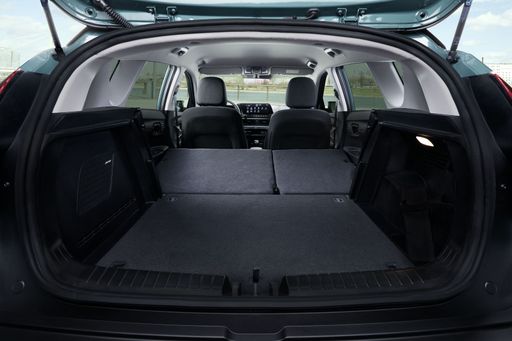
Looking at boot space, the Hyundai Kona offers somewhat more boot space – 466 L compared to 411 L. That’s a difference of about 55 L.

When it comes to payload, the Hyundai Kona carries very slightly more – 490 kg compared to 460 kg. That’s a difference of about 30 kg.

Who wins the race in the data check?

The Hyundai Kona is far ahead overall in the objective data comparison.
This result only shows which model scores more points on paper – not which of the two cars feels right for you.

from £23,100
Kona

Hyundai Kona

  • Engine Type : Electric, Petrol, Full Hybrid
  • Transmission : Automatic, Manuel
  • Drive Type : Front-Wheel Drive, All-Wheel Drive
  • Power HP : 115 - 218 HP
  • Consumption L/100km : 4.6 - 7 L/100km
  • Consumption kWh/100km : 14.6 - 16.8 kWh/100km
  • Electric Range : 377 - 514 km
Hyundai Kona
Hyundai Bayon

Costs and Consumption

View detailed analysis

Engine and Performance

View detailed analysis

Dimensions and Body

View detailed analysis

Hyundai Kona

The Hyundai Kona wears its personality on the outside with bold styling and sprightly handling that turns city driving into something a little more fun than a commute. It blends practical space, modern tech and sensible running costs into a compact, stylish package — a smart pick if you want flair without paying luxury prices.

details

Hyundai Bayon

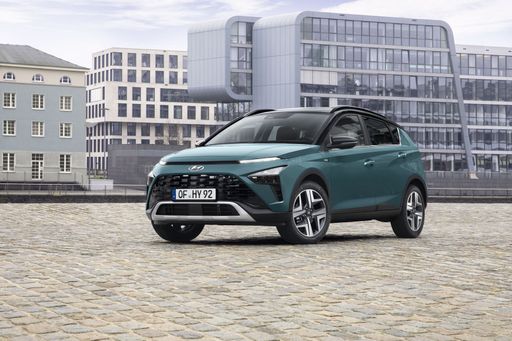
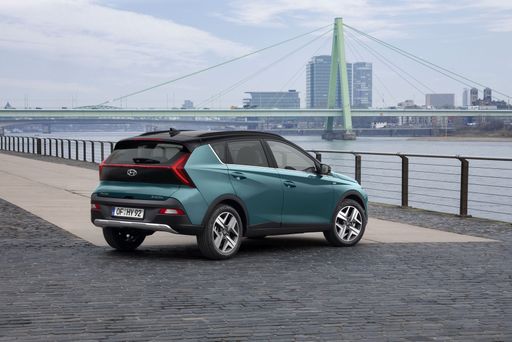
The Hyundai Bayon slips neatly between city runabout and small SUV, offering surprising practicality and a fresh, confident design that stands out in urban traffic. It's an easy buy for shoppers who want smart packaging, tidy handling and a dash of personality without fuss — a sensible little crossover that makes everyday driving a bit more enjoyable.

details
Hyundai Kona
Hyundai Bayon

Costs and Consumption

Price
23,100 - 41,600 £
Price
20,100 - 25,800 £
Consumption L/100km
4.6 - 7 L/100km
Consumption L/100km
5.8 L/100km
Consumption kWh/100km
14.6 - 16.8 kWh/100km
Consumption kWh/100km
-
Electric Range
377 - 514 km
Electric Range
-
Battery Capacity
48.4 - 65.4 kWh
Battery Capacity
-
co2
0 - 163 g/km
co2
130 - 132 g/km
Fuel tank capacity
-
Fuel tank capacity
-

Dimensions and Body

Body Type
SUV
Body Type
SUV
Seats
5
Seats
5
Doors
5
Doors
-
Curb weight
1,370 - 1,773 kg
Curb weight
1,175 - 1,200 kg
Trunk capacity
466 L
Trunk capacity
411 L
Length
4,355 - 4,385 mm
Length
-
Width
1,825 mm
Width
1,775 mm
Height
1,580 mm
Height
-
Max trunk capacity
1,300 L
Max trunk capacity
-
Payload
420 - 490 kg
Payload
450 - 460 kg

Engine and Performance

Engine Type
Electric, Petrol, Full Hybrid
Engine Type
Petrol
Transmission
Automatic, Manuel
Transmission
Manuel, Automatic
Transmission Detail
Reduction Gearbox, Manual Gearbox, Dual-Clutch Automatic
Transmission Detail
Manual Gearbox, Dual-Clutch Automatic
Drive Type
Front-Wheel Drive, All-Wheel Drive
Drive Type
Front-Wheel Drive
Power HP
115 - 218 HP
Power HP
90 HP
Acceleration 0-100km/h
7.8 - 11.9 s
Acceleration 0-100km/h
11.9 - 13.3 s
Max Speed
162 - 172 km/h
Max Speed
-
Torque
200 - 265 Nm
Torque
172 Nm
Number of Cylinders
3 - 4
Number of Cylinders
3
Power kW
85 - 160 kW
Power kW
66 kW
Engine capacity
998 - 1,598 cm3
Engine capacity
998 cm3

General

Model Year
2,024 - 2,025
Model Year
2,025
CO2 Efficiency Class
A, D, C, E, F
CO2 Efficiency Class
D
Brand
Hyundai
Brand
Hyundai
DriveDuel uses data analysis and artificial intelligence to evaluate vehicle data and create content. Content is regularly reviewed and improved. The displayed prices are estimates based on German list prices, adjusted to the respective country’s VAT. Country-specific registration taxes are not included. This information is not legally binding.