@ Hyundai Motor Company
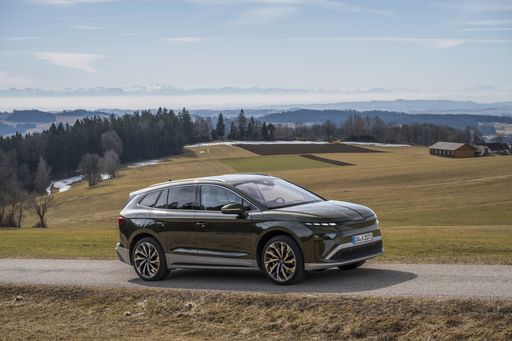
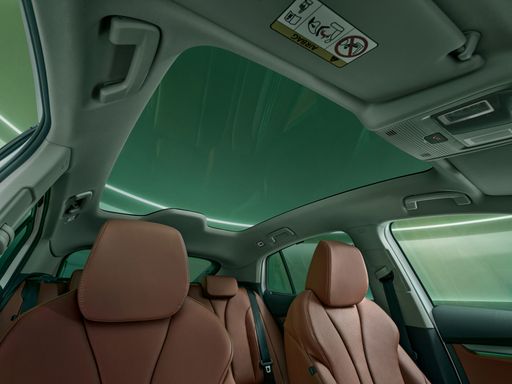
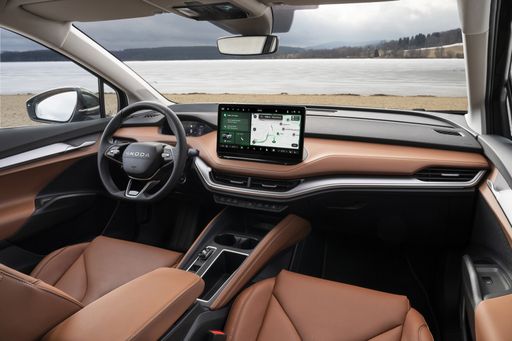
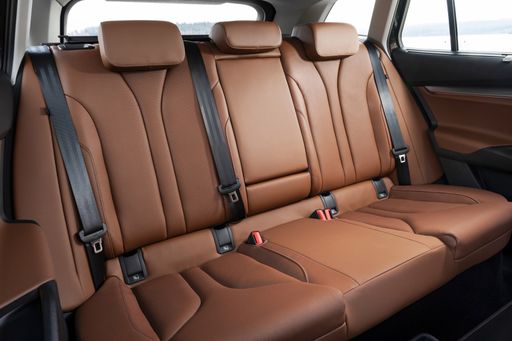
@ Škoda Auto a.s. / Škoda Storyboard
VS

Hyundai Kona vs Skoda Enyaq – Which model is better for everyday use?

Compare performance, boot capacity, efficiency and price at a glance.
Find out which car is the better choice for you – Hyundai Kona or Skoda Enyaq?

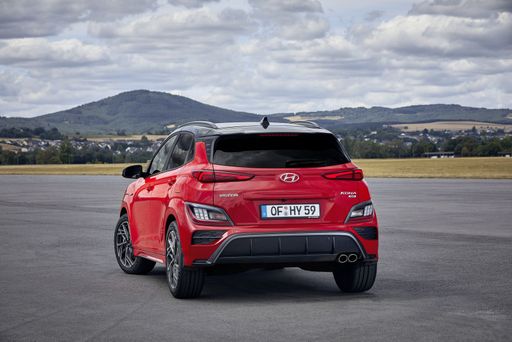
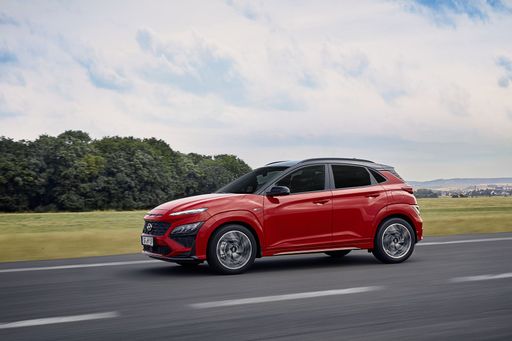
Kona @ Hyundai Motor Company

A Riveting Rivalry: Hyundai Kona vs. Skoda Enyaq

The automotive world is rife with competition, especially when it comes to the realm of compact SUVs. Today, the spotlight is on two impressive contenders: the Hyundai Kona and the Skoda Enyaq. Both vehicles bring a mix of style, technology, and performance to the table, but how do they stack up against each other? Let's dive into the details to find out.
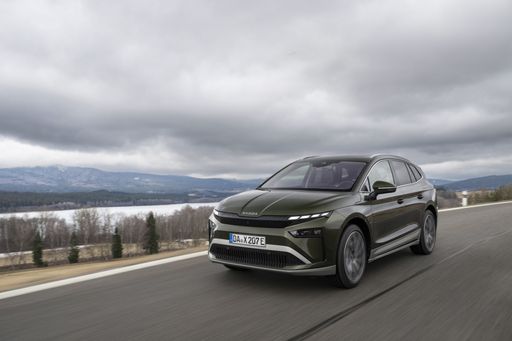
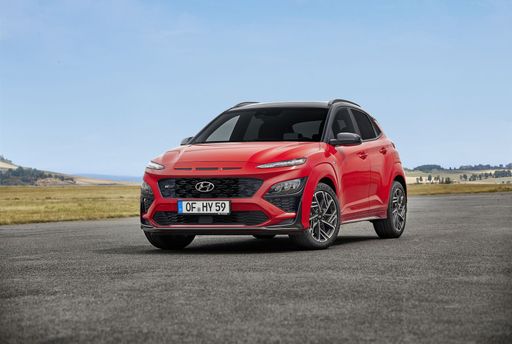
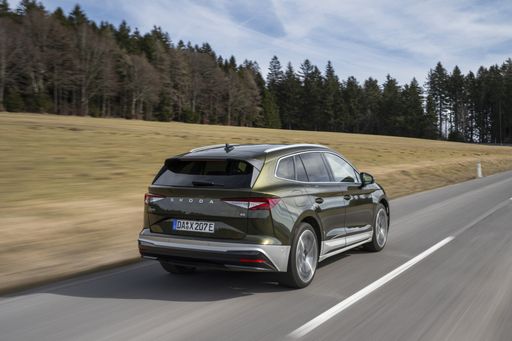
Enyaq @ Škoda Auto a.s. / Škoda Storyboard

Body and Build

Both the Hyundai Kona and the Skoda Enyaq are classified as SUVs, but their dimensions and build set them apart. The Kona is slightly more compact with lengths ranging from 4,350 to 4,385 mm, making it a nimble choice for urban environments. In contrast, the Enyaq is more generous in length, spanning up to 4,658 mm, offering a roomier interior and a robust presence on the road.

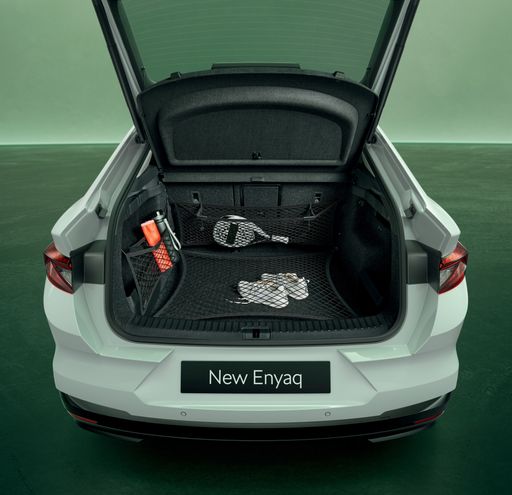
The Enyaq steals the show with its trunk capacity of up to 585 liters, compared to the Kona's 466 liters, making it a compelling choice for those who prioritize cargo space. Both vehicles offer excellent payload capacities, with the Enyaq slightly ahead at 516 kg compared to the Kona's maximum of 490 kg.

Kona @ Hyundai Motor Company

Performance and Power

Under the hood, the Kona is diverse, offering petrol, full hybrid, and electric powertrains. The petrol and hybrid engines range from 100 to 170 HP, while the electric version peaks at 218 HP. This versatility allows drivers to choose based on their driving preferences and environmental considerations.

Meanwhile, the Enyaq is solely electric, equipped with powerful motors offering up to 340 HP. With a maximum torque of 679 Nm, it promises brisk acceleration, achieving 0-100 km/h in as little as 5.5 seconds, which is significantly quicker than the Kona's 7.8 seconds. Both models ensure environmentally-friendly driving with CO2 emissions standing at zero for their electric variants.

Enyaq @ Škoda Auto a.s. / Škoda Storyboard

Efficiency and Range

The Hyundai Kona's electric version boasts an admirable range between 377 km and 514 km, depending on the configuration, using a battery capacity of up to 65.4 kWh. Its consumption rates are competitive, ranging from 14.6 to 16.8 kWh/100 km.

The Skoda Enyaq ups the ante with a maximum electric range of 587 km, leveraging a 77 kWh battery. Its energy consumption is slightly varied, mostly hovering around 15 kWh/100 km, making it an economical choice for those long drives.

Kona @ Hyundai Motor Company

Technological Innovation

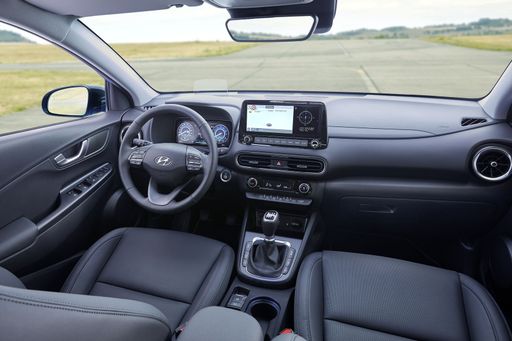
Both SUVs are equipped with the latest technological advancements. The Kona offers a variety of transmission options, including both manual and automatic gearboxes, targeting different driver preferences. Hyundai's connectivity features and driver-assist systems ensure a modern driving experience.

On the technology front, the Enyaq does not fall short. As a purely electric vehicle, it incorporates state-of-the-art charging solutions and infotainment features tailored for tech-savvy users. Its emphasis on sustainable driving is echoed in its excellent CO2 efficiency, maintaining class-A ratings across the board.

Enyaq @ Škoda Auto a.s. / Škoda Storyboard

Conclusion

The Hyundai Kona and Skoda Enyaq both offer compelling packages tailored to different needs. The Kona appeals to a broad demographic with its versatile powertrain options and compact design, making it ideal for urban dwellers. The Enyaq, on the other hand, leads with its extended range, powerful performance, and spacious design, appealing to those looking for a substantial yet efficient electric SUV.

In the electric revolution of the automotive world, both the Kona and Enyaq are robust competitors, each carving out its niche with unique strengths. Whether it’s the dynamic versatility of the Hyundai Kona or the powerful efficiency of the Skoda Enyaq, both represent forward-thinking innovation in the SUV segment.

Video - Skoda Enyaq

Here’s where it gets real: The technical differences in detail

Kona @ Hyundai Motor Company

Costs and Efficiency:

When it comes to price and running costs, the biggest differences usually appear. This is often where you see which car fits your budget better in the long run.

Hyundai Kona has a significantly advantage in terms of price – it starts at 23100 £, while the Skoda Enyaq costs 38100 £. That’s a price difference of around 15000 £.

In terms of energy consumption, the advantage goes to the Hyundai Kona: with 14.60 kWh per 100 km, it’s slight more efficient than the Skoda Enyaq with 14.80 kWh. That’s a difference of about 0.20 kWh.

As for range, the Skoda Enyaq performs a bit better – achieving up to 587 km, about 73 km more than the Hyundai Kona.

Enyaq @ Škoda Auto a.s. / Škoda Storyboard

Engine and Performance:

Power, torque and acceleration say a lot about how a car feels on the road. This is where you see which model delivers more driving dynamics.

When it comes to engine power, the Skoda Enyaq has a noticeable edge – offering 340 HP compared to 218 HP. That’s roughly 122 HP more horsepower.

In acceleration from 0 to 100 km/h, the Skoda Enyaq is decisively quicker – completing the sprint in 5.40 s, while the Hyundai Kona takes 7.80 s. That’s about 2.40 s faster.

In terms of top speed, the Hyundai Kona performs somewhat better – reaching 210 km/h, while the Skoda Enyaq tops out at 180 km/h. The difference is around 30 km/h.

There’s also a difference in torque: Skoda Enyaq pulls clearly stronger with 679 Nm compared to 265 Nm. That’s about 414 Nm difference.

Space and Everyday Use:

Cabin size, boot volume and payload all play a role in everyday practicality. Here, comfort and flexibility make the difference.

Both vehicles offer seating for 5 people.

In curb weight, Hyundai Kona is significantly lighter – 1370 kg compared to 2002 kg. The difference is around 632 kg.

In terms of boot space, the Skoda Enyaq offers evident more room – 585 L compared to 466 L. That’s a difference of about 119 L.

In maximum load capacity, the Skoda Enyaq performs evident better – up to 1710 L, which is about 410 L more than the Hyundai Kona.

When it comes to payload, Skoda Enyaq hardly perceptible takes the win – 509 kg compared to 490 kg. That’s a difference of about 19 kg.

Who wins the race?

The Skoda Enyaq proves to be is largely superior and therefore becomes our DriveDuel Champion!
Skoda Enyaq is the better all-rounder in this comparison.

from about £38,100
Enyaq @ Škoda Auto a.s. / Škoda Storyboard

Skoda Enyaq

  • Engine Type : Electric
  • Transmission : Automatic
  • Drive Type : Rear-Wheel Drive, All-Wheel Drive
  • Power HP : 204 - 340 HP
  • Consumption kWh/100km : 14.8 - 16.2 kWh
  • Electric Range : 428 - 587 km

Hyundai Kona

5 (1)
rate

The Hyundai Kona wears its personality on the outside with bold styling and sprightly handling that turns city driving into something a little more fun than a commute. It blends practical space, modern tech and sensible running costs into a compact, stylish package — a smart pick if you want flair without paying luxury prices.

details

Skoda Enyaq

5 (3)
rate

The Skoda Enyaq is a cleverly packaged electric SUV that blends roomy, pragmatic family space with clean, Czech design and sensible value. On the road it’s unshowy but composed, offering serene electric performance and easy-to-use tech — the kind of car that makes daily life smoother without trying too hard.

details
Hyundai Kona
Skoda Enyaq
Kona @ Hyundai Motor Company
Enyaq @ Škoda Auto a.s. / Škoda Storyboard

Costs and Consumption

Price
23100 - 41600 £
Price
38100 - 52200 £
Consumption L/100km
4.6 - 7 L
Consumption L/100km
-
Consumption kWh/100km
14.6 - 16.8 kWh
Consumption kWh/100km
14.8 - 16.2 kWh
Electric Range
377 - 514 km
Electric Range
428 - 587 km
Battery Capacity
1.3 - 65.4 kWh
Battery Capacity
59 - 79 kWh
co2
0 - 163 g/km
co2
0 g/km
Fuel tank capacity
38 - 47 L
Fuel tank capacity
-

Dimensions and Body

Body Type
SUV
Body Type
SUV
Seats
5
Seats
5
Doors
5
Doors
5
Curb weight
1370 - 1773 kg
Curb weight
2002 - 2293 kg
Trunk capacity
466 L
Trunk capacity
570 - 585 L
Length
4350 - 4385 mm
Length
4658 - 4660 mm
Width
1825 mm
Width
1879 mm
Height
1580 - 1585 mm
Height
1605 - 1625 mm
Max trunk capacity
1300 L
Max trunk capacity
1610 - 1710 L
Payload
420 - 490 kg
Payload
457 - 509 kg

Engine and Performance

Engine Type
Electric, Petrol, Full Hybrid
Engine Type
Electric
Transmission
Automatic, Manuel
Transmission
Automatic
Transmission Detail
Reduction Gearbox, Manual Gearbox, Dual-Clutch Automatic
Transmission Detail
Reduction Gearbox
Drive Type
Front-Wheel Drive, All-Wheel Drive
Drive Type
Rear-Wheel Drive, All-Wheel Drive
Power HP
115 - 218 HP
Power HP
204 - 340 HP
Acceleration 0-100km/h
7.8 - 11.9 s
Acceleration 0-100km/h
5.4 - 8.1 s
Max Speed
162 - 210 km/h
Max Speed
160 - 180 km/h
Torque
200 - 265 Nm
Torque
310 - 679 Nm
Number of Cylinders
3 - 4
Number of Cylinders
-
Power kW
85 - 160 kW
Power kW
150 - 250 kW
Engine capacity
998 - 1598 cm3
Engine capacity
-

General

Model Year
2024 - 2025
Model Year
2025
CO2 Efficiency Class
A, D, C, E, F
CO2 Efficiency Class
A
Brand
Hyundai
Brand
Skoda
Is the Hyundai Kona offered with different drivetrains?

Available configurations include Front-Wheel Drive or All-Wheel Drive.

The prices and data displayed are estimates based on German list prices and may vary by country. This information is not legally binding.