VS

Hyundai Tucson vs CUPRA Terramar comparison

Compare performance (288 HP vs 272 HP), boot space and price (20,900 £ vs 36,900 £ ) at a glance. Find out which car is the better choice for you – Hyundai Tucson or CUPRA Terramar?

Hyundai Tucson vs CUPRA Terramar: Key differences

Hyundai Tucson

4.6 (4 Reviews)
rate
  • substantially cheaper
  • only slightly more power
  • very slightly lighter
  • slightly more trunk space
details

CUPRA Terramar

5 (5 Reviews)
rate
  • significantly more efficient
  • considerably more electric range
  • noticeably quicker 0–100 km/h
details

All details on performance, efficiency, range and trunk space can be found in the technical comparison below – including user reviews for both models.

By Achim Sedelmaier

Tucson

Street Attitude and Presence

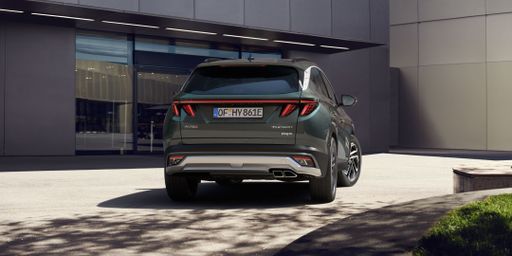
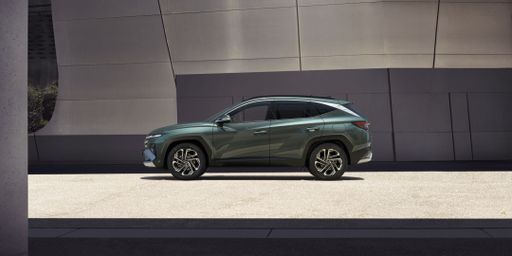
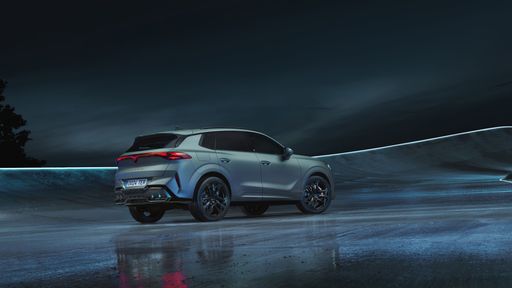
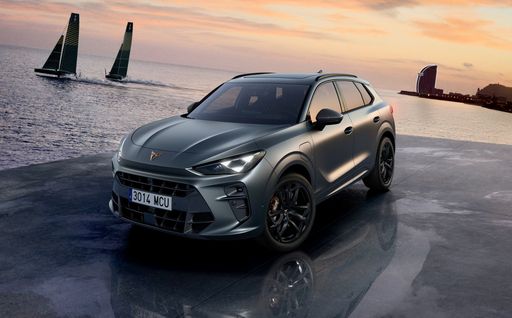
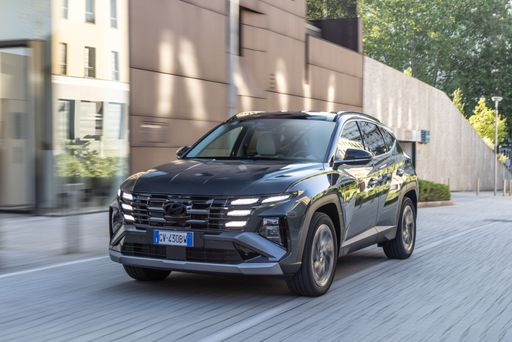
The two SUVs present themselves with very different attitudes: the CUPRA Terramar leans into a sporty, sculpted look that wants to be noticed, while the Hyundai Tucson plays a more composed, modern card that appeals through restraint and coherence. In traffic the Terramar feels like a statement piece, the Tucson like a well-tailored suit — both attractive, but to different tastes. Design choices here tell you immediately who each car is trying to charm: the image-first driver or the quietly confident one.
Terramar

Behind the Wheel

On the move the Terramar aims to deliver a sharper, more driver-focused experience with taut responses and a sense of urgency, whereas the Tucson prioritises calm composure and predictable manners that reward steady, efficient driving. Steering, chassis balance and drivetrain character all lean toward different philosophies: one more sporting and communicative, the other more forgiving and collected. That contrast will quickly sort buyers who crave engagement from those after relaxed daily usability.

Tucson

Cabin Comfort and Everyday Usability

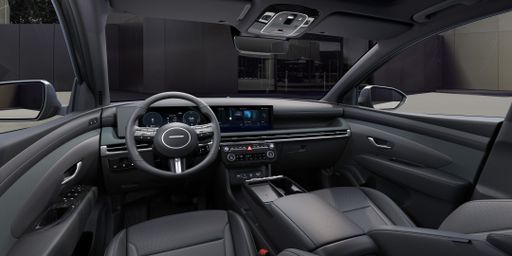
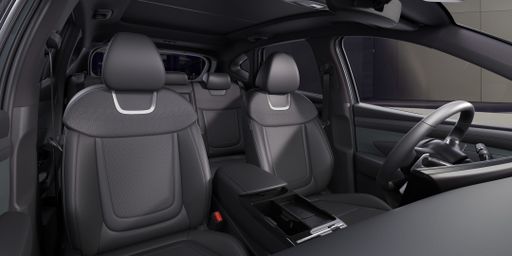
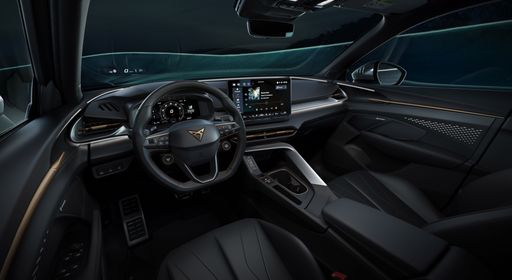
Inside, both cabins feel thoughtfully arranged but they pursue different atmospheres — the Terramar favors a showy, driver-centric layout with materials that suggest performance pedigree, while the Tucson trades some drama for an airy, user-friendly environment that welcomes passengers. Controls and displays are tuned for different priorities: one edges toward an energetic cockpit, the other toward straightforward ergonomics that make day-to-day life easier. Long commutes or lots of car-sharing will expose those differences fast.

Terramar

Practicalities for Family and Weekend Life

When it comes to hauling people and gear the Tucson leans into practicality and flexible utility, whereas the Terramar keeps practicality but offsets it with a sportier packaging and a stronger focus on the driving experience. Both will handle school runs and supermarket trips, but how they cope with awkward loads, routine chores and long family journeys will feel distinct in real use. Choose based on whether you prioritise maximum everyday adaptability or a livelier personality behind the wheel.

Tucson

Ownership Feel and Long-Term Appeal

Ownership is about more than initial thrills: perceived reliability, dealer experience and how the car feels to live with matter just as much, and these two take different approaches to reassurance and excitement. The Tucson projects the kind of all-round practicality that tends to soothe long-term owners, while the Terramar promises a more rewarding day-to-day drive for those who value involvement over neutrality. Either way, resale prospects and ownership happiness will depend on matching car character to your habits and expectations.

Terramar

Which Suitor Fits Your Garage?

If you prioritise engaging dynamics and a sporty image, the CUPRA Terramar will speak to your heart; if calm comfort and everyday versatility are higher on your list, the Hyundai Tucson will likely make more sense. Buyers should weigh personality against practicality: commuters, families, style-conscious drivers and long-distance users will each find a different appeal. Keep reading to see which model earns the DriveDuel crown — the DriveDuel Champion will be revealed afterwards.

Here’s where it gets real: The technical differences in detail

Tucson

Costs and Efficiency:

Price and efficiency are key factors when choosing a car – and this is often where the real differences emerge.

Hyundai Tucson is substantially cheaper – starting at 20,900 £ , while the CUPRA Terramar costs 36,900 £ . That’s a price difference of around 15,977 £.

Fuel consumption also shows a difference: the CUPRA Terramar uses 1.6 L/100km and is significantly more efficient than the Hyundai Tucson with 2.7 L/100km. The difference is about 1.1 L/100km.

As for electric range, the CUPRA Terramar offers considerably more range – reaching up to 118 km, about 48 km more than the Hyundai Tucson.

Terramar

Engine and Performance:

Power, torque and acceleration are the classic benchmarks for car enthusiasts – and here, some clear differences start to show.

When it comes to engine power, the Hyundai Tucson offers only slightly more power – delivering 288 HP compared to 272 HP. That’s roughly 16 HP more horsepower.

When accelerating from 0 to 100 km/h, the CUPRA Terramar is noticeably quicker – completing the sprint in 5.9 s, while the Hyundai Tucson takes 7.5 s. That’s about 1.6 s quicker.

Looking at top speed, the CUPRA Terramar is moderately faster – reaching 243 km/h, while the Hyundai Tucson tops out at 204 km/h. The difference is around 39 km/h.

There’s also a difference in torque: the CUPRA Terramar delivers marginally more torque with 400 Nm compared to 379 Nm. That’s about 21 Nm more.

Tucson

Space and Everyday Use:

Beyond pure performance, interior space and usability matter most in daily life. This is where you see which car is more practical and versatile.

Both vehicles offer seating for 5 people.

In terms of curb weight, Hyundai Tucson is very slightly lighter – 1,542 kg compared to 1,638 kg. The difference is around 96 kg.

Looking at boot space, the Hyundai Tucson offers slightly more boot space – 620 L compared to 540 L. That’s a difference of about 80 L.

When it comes to payload, the Hyundai Tucson carries only slightly more – 545 kg compared to 542 kg. That’s a difference of about 3 kg.

Who wins the race in the data check?

The CUPRA Terramar is decisively ahead in the objective data comparison.
This result only shows which model scores more points on paper – not which of the two cars feels right for you.

from £36,900
Terramar

CUPRA Terramar

  • Engine Type : Petrol MHEV, Petrol, Plugin Hybrid
  • Transmission : Automatic
  • Drive Type : Front-Wheel Drive, All-Wheel Drive
  • Power HP : 150 - 272 HP
  • Consumption L/100km : 1.6 - 8.4 L/100km
  • Electric Range : 118 km
Hyundai Tucson
CUPRA Terramar

Costs and Consumption

View detailed analysis

Engine and Performance

View detailed analysis

Dimensions and Body

View detailed analysis

Hyundai Tucson

Hyundai Tucson marries bold, sculpted looks with a clever, roomy cabin that feels smarter than its price tag suggests. It's composed on the road, easy to live with day-to-day, and a sensible choice for buyers who want SUV style without the showroom theatrics.

details

CUPRA Terramar

The CUPRA Terramar is a sharply styled, sporty SUV that brings athletic handling and bold design to buyers who want performance with everyday usability. Inside, premium finishes meet driver-focused flair and family-friendly practicality, making it a tempting pick for anyone who wants thrills without turning their daily routine into a chore.

details
Hyundai Tucson
CUPRA Terramar

Costs and Consumption

Price
20,900 - 47,900 £
Price
36,900 - 50,600 £
Consumption L/100km
2.7 - 7.6 L/100km
Consumption L/100km
1.6 - 8.4 L/100km
Consumption kWh/100km
-
Consumption kWh/100km
-
Electric Range
63 - 70 km
Electric Range
118 km
Battery Capacity
-
Battery Capacity
-
co2
62 - 172 g/km
co2
36 - 191 g/km
Fuel tank capacity
52 - 54 L
Fuel tank capacity
55 - 60 L

Dimensions and Body

Body Type
SUV
Body Type
SUV
Seats
5
Seats
5
Doors
5
Doors
5
Curb weight
1,542 - 1,893 kg
Curb weight
1,638 - 1,904 kg
Trunk capacity
546 - 620 L
Trunk capacity
450 - 540 L
Length
4,525 - 4,535 mm
Length
4,519 mm
Width
1,865 mm
Width
1,869 mm
Height
1,650 mm
Height
1,586 mm
Max trunk capacity
1,795 - 1,799 L
Max trunk capacity
-
Payload
518 - 545 kg
Payload
512 - 542 kg

Engine and Performance

Engine Type
Petrol, Full Hybrid, Plugin Hybrid, Diesel MHEV
Engine Type
Petrol MHEV, Petrol, Plugin Hybrid
Transmission
Manuel, Automatic
Transmission
Automatic
Transmission Detail
Manual Gearbox, Dual-Clutch Automatic, Automatic Gearbox
Transmission Detail
Dual-Clutch Automatic
Drive Type
Front-Wheel Drive, All-Wheel Drive
Drive Type
Front-Wheel Drive, All-Wheel Drive
Power HP
136 - 288 HP
Power HP
150 - 272 HP
Acceleration 0-100km/h
7.5 - 11.6 s
Acceleration 0-100km/h
5.9 - 9.3 s
Max Speed
196 - 204 km/h
Max Speed
205 - 243 km/h
Torque
250 - 379 Nm
Torque
250 - 400 Nm
Number of Cylinders
4
Number of Cylinders
4
Power kW
100 - 212 kW
Power kW
110 - 200 kW
Engine capacity
1,598 cm3
Engine capacity
1,498 - 1,984 cm3

General

Model Year
2025
Model Year
2,024 - 2,025
CO2 Efficiency Class
F, D, E, B
CO2 Efficiency Class
E, G, F, B
Brand
Hyundai
Brand
CUPRA
DriveDuel uses data analysis and artificial intelligence to evaluate vehicle data and create content. Content is regularly reviewed and improved. The displayed prices are estimates based on German list prices, adjusted to the respective country’s VAT. Country-specific registration taxes are not included. This information is not legally binding.