VS

Isuzu D-Max vs Suzuki S-Cross comparison

Compare performance (163 HP vs 110 HP), boot space and price (35,900 £ vs 21,800 £ ) at a glance. Find out which car is the better choice for you – Isuzu D-Max or Suzuki S-Cross?

Isuzu D-Max vs Suzuki S-Cross: Key differences

Isuzu D-Max

4.7 (2 Reviews)
rate
  • visibly more power
details

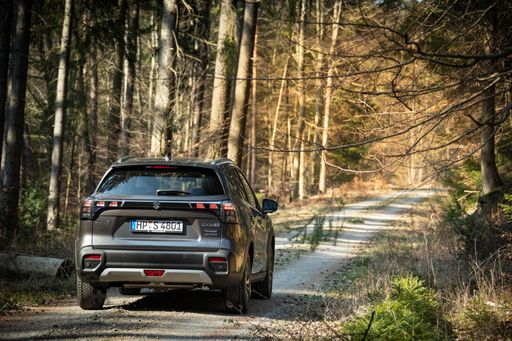
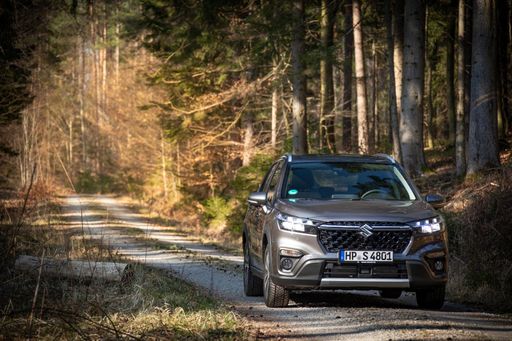
Suzuki S-Cross

4.7 (5 Reviews)
rate
  • substantially cheaper
  • significantly more efficient
  • considerably lighter
details

All details on performance, efficiency, range and trunk space can be found in the technical comparison below – including user reviews for both models.

By Achim Sedelmaier

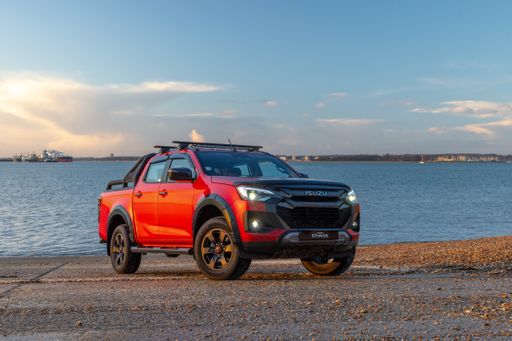
D-Max

Two Titans of the Road: Isuzu D-Max vs Suzuki S-Cross

When it comes to choosing a vehicle that perfectly blends resilience, functionality, and innovation, the Isuzu D-Max and Suzuki S-Cross stand out as top contenders. While the D-Max is a robust pickup ideal for heavy-duty tasks, the S-Cross represents elegance in the SUV category. This comparison aims to shed light on the unique aspects and recent upgrades of these extraordinary models, assisting you in making an informed decision.
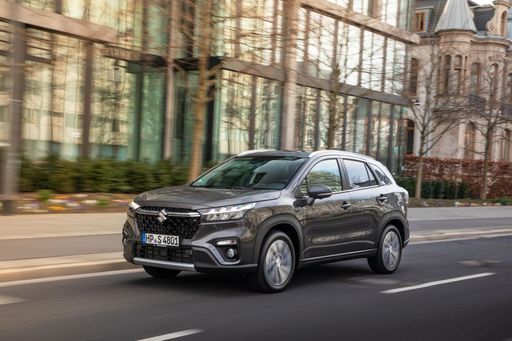
S-Cross

Power and Performance

In the debate between muscle and efficiency, the Isuzu D-Max commands attention with its diesel engine delivering substantial power. The D-Max generates 163 HP, boosted by 360 Nm of torque, ensuring it handles challenging terrains effortlessly. With options for both manual and automatic gearboxes, and drive types including rear-wheel and all-wheel drive, the D-Max is adaptable to any driving preference or environment.

On the other hand, the Suzuki S-Cross embraces modern driving with its hybrid engines available in both full hybrid and petrol MHEV variations. Producing up to 129 HP and 235 Nm of torque, the S-Cross offers a balanced driving experience with impressive fuel efficiency. Its acceleration from 0-100 km/h in just 9.5 seconds makes it notably swifter than the D-Max, which takes 12.6 seconds.

D-Max

Fuel Efficiency vs. Capacity

Efficiency is where the S-Cross shines, with a fuel consumption rate of 5.1 to 5.8 L/100km, paired with a CO2 efficiency class of 'D'. In contrast, the D-Max consumes between 8.1 and 9.2 L/100km, indicating a trade-off for its powerful performance.

The D-Max compensates with a generous 76 L fuel tank capacity, ensuring you can drive longer distances before requiring a refill. Meanwhile, the S-Cross is equipped with a 47 L fuel tank, which is suitably matched to its efficient fuel consumption.

S-Cross

Design and Dimensions

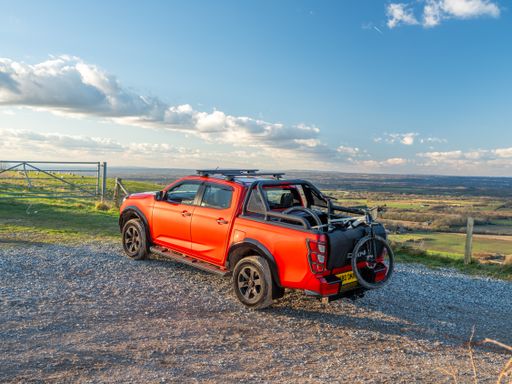
The Isuzu D-Max’s reputation as a workhorse is reflected in its size, with a length of over 5.2 meters and a payload capacity of up to 1130 kg, making it perfect for those in need of a reliable pickup with ample space. Its robust design is built to withstand the toughest of jobs.

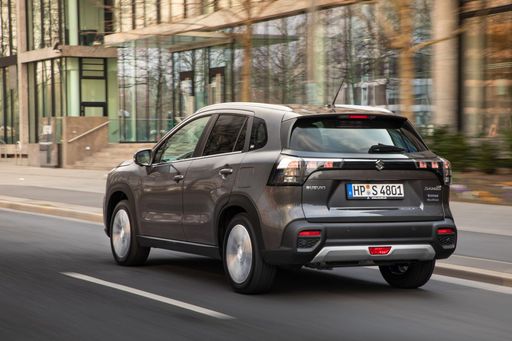
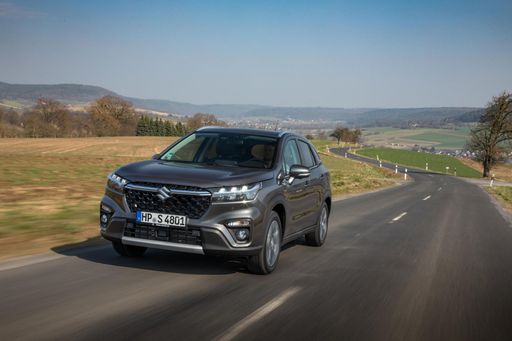
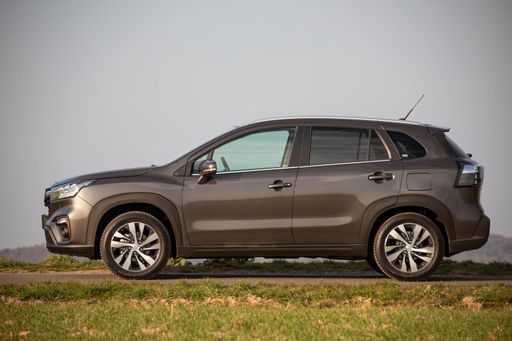
Conversely, the Suzuki S-Cross caters to urban drivers with its compact SUV build. At 4.3 meters long, it offers easier maneuverability in urban settings, along with a spacious trunk capacity of 430 liters for everyday practicality. This model supports both front-wheel and all-wheel drive, enhancing its versatility on various terrains.

D-Max

Environmental Impact and Innovations

Both models have taken strides in incorporating innovative technologies to improve the driving experience. The Isuzu D-Max meets the demands of its user base by providing practical off-road capabilities without compromising too much on emissions, though its CO2 output ranges higher at 212-240 g/km.

The Suzuki S-Cross, with a CO2 output of 116-131 g/km, and a focus on hybrid technology, makes a more environmentally friendly choice. This aligns with the growing trend towards sustainable automotive solutions, appealing to eco-conscious drivers.

S-Cross

Conclusion: Choosing Your Ideal Companion

Ultimately, the choice between the Isuzu D-Max and Suzuki S-Cross boils down to individual needs. The D-Max is the right choice for those seeking power, space, and off-road capabilities, perfectly supporting rugged lifestyles. Alternatively, the S-Cross excels in urban settings with its efficient design and hybrid technology, making it a formidable competitor in the SUV segment.

Both vehicles offer a glimpse into the future of automotive design and technology, giving buyers a taste of what to expect in the evolving landscape of cars. Armed with this comparison, your journey towards the perfect choice begins now.

Here’s where it gets real: The technical differences in detail

D-Max

Costs and Efficiency:

Price and efficiency are often the first things buyers look at. Here it becomes clear which model has the long-term edge – whether at the pump, the plug, or in purchase price.

Suzuki S-Cross is substantially cheaper – starting at 21,800 £ , while the Isuzu D-Max costs 35,900 £ . That’s a price difference of around 14,143 £.

Fuel consumption also shows a difference: the Suzuki S-Cross uses 5.3 L/100km and is significantly more efficient than the Isuzu D-Max with 8.6 L/100km. The difference is about 3.3 L/100km.

S-Cross

Engine and Performance:

Power, torque and acceleration say a lot about how a car feels on the road. This is where you see which model delivers more driving dynamics.

When it comes to engine power, the Isuzu D-Max offers visibly more power – delivering 163 HP compared to 110 HP. That’s roughly 53 HP more horsepower.

There’s also a difference in torque: the Isuzu D-Max delivers significantly more torque with 400 Nm compared to 235 Nm. That’s about 165 Nm more.

D-Max

Space and Everyday Use:

Beyond pure performance, interior space and usability matter most in daily life. This is where you see which car is more practical and versatile.

Both vehicles offer seating for 5 people.

In terms of curb weight, Suzuki S-Cross is considerably lighter – 1,280 kg compared to 1,900 kg. The difference is around 620 kg.

When it comes to payload, the Isuzu D-Max carries clearly more – 1,115 kg compared to 405 kg. That’s a difference of about 710 kg.

Who wins the race in the data check?

The Suzuki S-Cross is clearly ahead overall in the objective data comparison.
This result only shows which model scores more points on paper – not which of the two cars feels right for you.

from £21,800
S-Cross

Suzuki S-Cross

  • Engine Type Petrol MHEV
  • Transmission Manuel, Automatic
  • Drive Type Front-Wheel Drive, All-Wheel Drive
  • Power HP 110 HP
  • Consumption L/100km 5.3 - 5.8 L/100km
Isuzu D-Max
Suzuki S-Cross

Costs and Consumption

View detailed analysis

Engine and Performance

View detailed analysis

Dimensions and Body

View detailed analysis

Isuzu D-Max

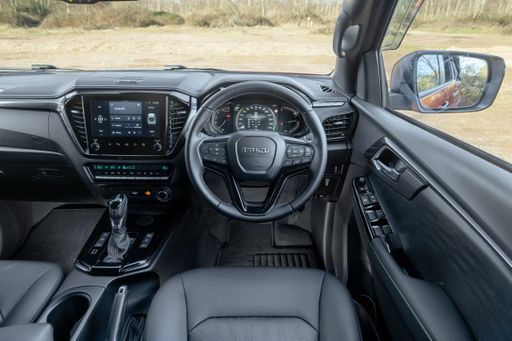
The Isuzu D-Max wears its workhorse credentials with quiet confidence, delivering rugged practicality and a cabin that keeps things simple and sensible. If you want a dependable truck that gets on with the job without fuss—and even manages a bit of comfort on the road—the D-Max is a smart, no-nonsense pick.

details

Suzuki S-Cross

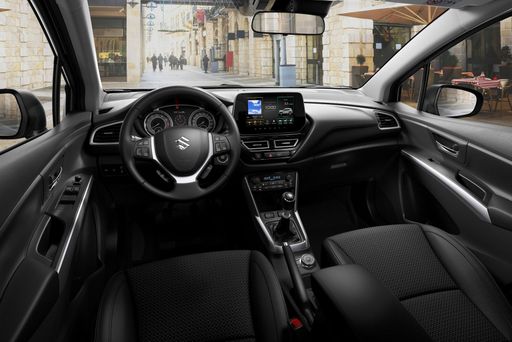
The Suzuki S-Cross is a practical, well-built compact crossover that puts comfort, efficiency and everyday reliability first. With a roomy cabin, straightforward technology and sensible design, it’s a no-nonsense choice for buyers seeking a versatile family car.

details
Isuzu D-Max
Suzuki S-Cross

Costs and Consumption

Price
35,900 - 52,500 £
Price
21,800 - 34,200 £
Consumption L/100km
8.6 - 9.1 L/100km
Consumption L/100km
5.3 - 5.8 L/100km
Consumption kWh/100km
-
Consumption kWh/100km
-
Electric Range
-
Electric Range
-
Battery Capacity
-
Battery Capacity
-
co2
225 - 237 g/km
co2
119 - 138 g/km
Fuel tank capacity
-
Fuel tank capacity
-

Dimensions and Body

Body Type
Pickup
Body Type
SUV
Seats
2 - 5
Seats
5
Doors
-
Doors
-
Curb weight
1,900 - 2,130 kg
Curb weight
1,280 - 1,385 kg
Trunk capacity
-
Trunk capacity
430 L
Length
-
Length
-
Width
1,810 - 1,870 mm
Width
1,785 mm
Height
-
Height
-
Max trunk capacity
-
Max trunk capacity
-
Payload
970 - 1,115 kg
Payload
395 - 405 kg

Engine and Performance

Engine Type
Diesel
Engine Type
Petrol MHEV
Transmission
Manuel, Automatic
Transmission
Manuel, Automatic
Transmission Detail
Manual Gearbox, Automatic Gearbox
Transmission Detail
Manual Gearbox, Automatic Gearbox
Drive Type
Rear-Wheel Drive, All-Wheel Drive
Drive Type
Front-Wheel Drive, All-Wheel Drive
Power HP
163 HP
Power HP
110 HP
Acceleration 0-100km/h
-
Acceleration 0-100km/h
-
Max Speed
-
Max Speed
-
Torque
400 Nm
Torque
235 Nm
Number of Cylinders
4
Number of Cylinders
4
Power kW
120 kW
Power kW
81 kW
Engine capacity
2,164 cm3
Engine capacity
1,373 cm3

General

Model Year
2026
Model Year
2025
CO2 Efficiency Class
G
CO2 Efficiency Class
D, E
Brand
Isuzu
Brand
Suzuki
DriveDuel uses data analysis and artificial intelligence to evaluate vehicle data and create content. Content is regularly reviewed and improved. The displayed prices are estimates based on German list prices, adjusted to the respective country’s VAT. Country-specific registration taxes are not included. This information is not legally binding.