VS

Jaecoo 7 vs Dacia Bigster comparison

Compare performance (279 HP vs 158 HP), boot space and price (31,600 £ vs 20,600 £ ) at a glance. Find out which car is the better choice for you – Jaecoo 7 or Dacia Bigster?

Jaecoo 7 vs Dacia Bigster: Key differences

Jaecoo 7

  • considerably more power
  • substantially more efficient
  • moderately quicker 0–100 km/h
details

Dacia Bigster

4.5 (12 Reviews)
rate
  • clearly cheaper
  • noticeably lighter
  • clearly more trunk space
details

All details on performance, efficiency, range and trunk space can be found in the technical comparison below – including user reviews for both models.

By Achim Sedelmaier

7

Quick take: Dacia Bigster VS Jaecoo 7 – utility or kit?

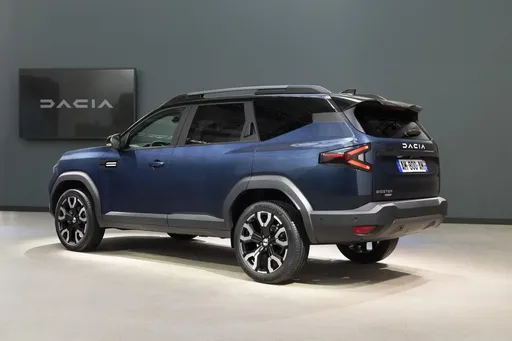
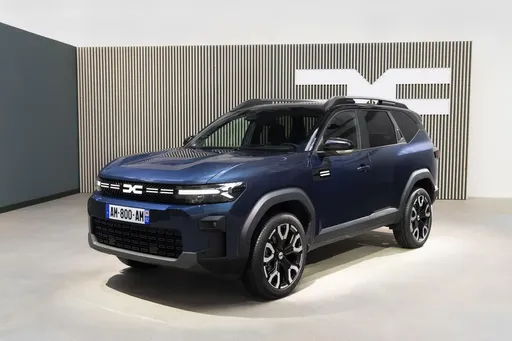
Dacia Bigster VS Jaecoo 7 sets up a classic contrast: the Bigster sells roomy pragmatism and low running costs, while the Jaecoo 7 trades cargo space for a fancier cabin and heavier equipment list. The Dacia Bigster makes its case with sheer usefulness — huge luggage room, simple controls and hybrid efficiency for long stints — at a price that keeps monthly costs down. The Jaecoo 7 answers with a noticeably more polished interior, a long warranty and a PHEV option that is very pleasant around town. Choosing between them is a matter of priorities: raw usefulness and economy versus perceived quality and kit. The technical comparison below will parse how those priorities show up in power, efficiency and dimensions.

Bigster

Character and driving feel

The Dacia Bigster feels deliberately unflashy: tall, stable and built for carrying people and gear rather than carving corners, and it rewards calm driving with predictable manners. By contrast, the Jaecoo 7 presents itself as quieter and stronger off the line, with a more composed, refined on‑road persona — though its steering is light and the ride can become fidgety over certain motorway undulations. The Bigster’s relaxed setup masks its weakness at higher speeds, where wind and engine noise become obvious; the Jaecoo 7 hides noise better in town but can transmit rebound or pitching on longer fast runs depending on the version. That means drivers who favour steady, utilitarian progress will prefer the Dacia Bigster, while buyers who want a more refined feel and stronger acceleration will lean to the Jaecoo 7 despite its softer feedback. Both are undemanding, but they reward different expectations behind the wheel.

Comfort and long‑distance behavior

For long miles the Dacia Bigster offers generous rear space and a relaxed suspension that soaks up long waves — it’s family friendly for extended trips but comes with the trade‑off of wind and engine intrusion at higher speeds and seats that some find too soft. The Jaecoo 7 is notably serene in everyday urban driving, especially as a plug‑in hybrid where electric mode makes short commutes whisper‑quiet, yet its long‑distance composure varies: some versions feel firmer or more unsettled over poor surfaces. On real highway runs the Bigster’s noise level matters; on mixed routes the Jaecoo 7’s cabin refinement and stronger shove make the time pass easier for the driver. If you spend most days in town and value a quiet, tech‑rich cabin the Jaecoo 7 will feel nicer, but if you regularly carry luggage or passengers for long hauls the Dacia Bigster’s space and simplicity stay persuasive.

Practicality, usability and family life

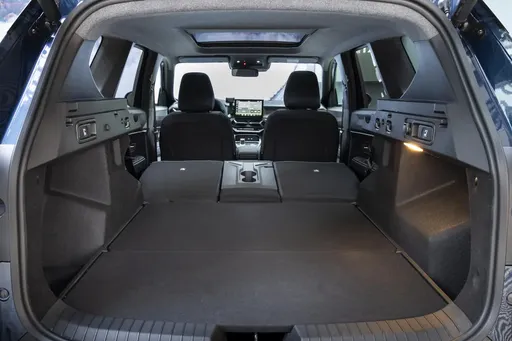
Where the Dacia Bigster really separates itself is luggage and load‑carrying: a vast, usable boot, a 40:20:40 split and outdoor‑minded touches make packing, bikes and weekend kit straightforward. The Jaecoo 7’s boot is noticeably smaller and sometimes awkward in shape, so families who habitually carry a stroller, sports gear or long holiday loads will find the Bigster easier to live with. Inside, Jaecoo 7 adds practical assists you won’t get on the Dacia — excellent camera views, HUD and interior storage that feel more modern — which helps daily usability when city parking and kit stowage matter. In short, pick the Dacia Bigster if cargo capacity and simple, robust practicality are daily non‑negotiables; opt for the Jaecoo 7 if you prioritise smarter parking aids and a cabin that feels engineered rather than utilitarian.

Cabin feel, perceived quality and tech ergonomics

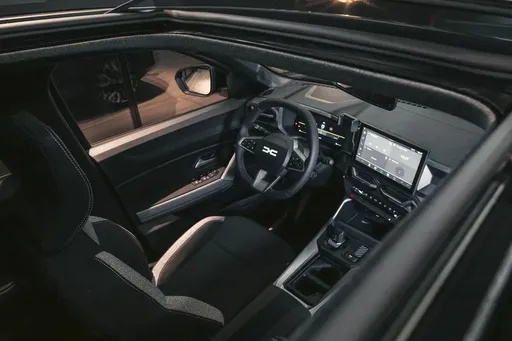
The Jaecoo 7 gives a stronger first impression: softer surfaces where it counts, abundant standard equipment and an interior design that aims above its price bracket, supported by a long warranty that reassures shoppers. The Dacia Bigster is intentionally straightforward — tactile buttons, plain plastics and an austere but functional layout that stays easy to use and low‑stress to maintain. Infotainment is large on both, but the Dacia Bigster keeps frequently used functions physical and obvious, while the Jaecoo 7 tends toward menu‑deep options and more intrusive assistant chimes. That makes the Jaecoo 7 feel like a small luxury step-up in daily life, while the Dacia Bigster feels honest, durable and faster to operate in practical routines.

Who should pick which car — buyer fit and the trade‑offs ahead

If your buying checklist prioritises lowest total cost, maximum luggage space and a no‑nonsense, family‑oriented utility vehicle then the Dacia Bigster maps directly to that need. If you favour a richer cabin, lots of tech, a pleasant electric city experience (PHEV) and a stronger on‑paper performance package, the Jaecoo 7 will fit better — provided you accept a smaller boot and some ride nuances. The trade‑off is clear: Bigster is about usable volume and simplicity; Jaecoo 7 is about perceived quality and kit. Below, the technical comparison breaks down how power delivery, weights, boot volume and consumption underpin those real‑world differences so you can match figures to the priorities outlined here.

Here’s where it gets real: The technical differences in detail

7

Costs and Efficiency:

When it comes to price and running costs, the biggest differences usually appear. This is often where you see which car fits your budget better in the long run.

Dacia Bigster is clearly cheaper – starting at 20,600 £ , while the Jaecoo 7 costs 31,600 £ . That’s a price difference of around 11,066 £.

Fuel consumption also shows a difference: the Jaecoo 7 uses 2.4 L/100km and is substantially more efficient than the Dacia Bigster with 4.7 L/100km. The difference is about 2.3 L/100km.

Bigster

Engine and Performance:

Power, torque and acceleration say a lot about how a car feels on the road. This is where you see which model delivers more driving dynamics.

When it comes to engine power, the Jaecoo 7 offers considerably more power – delivering 279 HP compared to 158 HP. That’s roughly 121 HP more horsepower.

When accelerating from 0 to 100 km/h, the Jaecoo 7 is moderately quicker – completing the sprint in 8.5 s, while the Dacia Bigster takes 9.7 s. That’s about 1.2 s quicker.

There’s also a difference in torque: the Jaecoo 7 delivers markedly more torque with 365 Nm compared to 230 Nm. That’s about 135 Nm more.

Space and Everyday Use:

Whether family car or daily driver – which one offers more room, flexibility and comfort?

Both vehicles offer seating for 5 people.

In terms of curb weight, Dacia Bigster is noticeably lighter – 1,425 kg compared to 1,870 kg. The difference is around 445 kg.

Looking at boot space, the Dacia Bigster offers clearly more boot space – 667 L compared to 340 L. That’s a difference of about 327 L.

When it comes to payload, the Dacia Bigster carries barely more – 465 kg compared to 440 kg. That’s a difference of about 25 kg.

Who wins the race in the data check?

The Jaecoo 7 is clearly superior overall in the objective data comparison.
This result only shows which model scores more points on paper – not which of the two cars feels right for you.

from £31,600
7

Jaecoo 7

  • Engine Type Plugin Hybrid
  • Transmission Automatic
  • Drive Type Front-Wheel Drive
  • Power HP 279 HP
  • Consumption L/100km 2.4 L/100km
  • Electric Range 90 km
Jaecoo 7
Dacia Bigster

Costs and Consumption

View detailed analysis

Engine and Performance

View detailed analysis

Dimensions and Body

View detailed analysis

Jaecoo 7

The Jaecoo 7 is a striking compact SUV that pairs bold, modern styling with a spacious, well-equipped cabin aimed at families and tech-minded buyers. It offers strong value, a comfortable ride and plenty of gadgetry, though you should weigh dealer support and long-term ownership reputation when deciding.

details

Dacia Bigster

The Dacia Bigster is a straightforward, value-driven SUV that emphasizes space, practicality and low running costs rather than flashy tech. It’s a sensible choice for buyers who want a roomy, well-built family car with rugged styling and easy-to-use features at an affordable price.

details
Jaecoo 7
Dacia Bigster

Costs and Consumption

Price
31,600 - 33,800 £
Price
20,600 - 28,100 £
Consumption L/100km
2.4 L/100km
Consumption L/100km
4.7 - 7.2 L/100km
Consumption kWh/100km
-
Consumption kWh/100km
-
Electric Range
90 km
Electric Range
-
Battery Capacity
-
Battery Capacity
-
co2
54 g/km
co2
106 - 134 g/km
Fuel tank capacity
-
Fuel tank capacity
-

Dimensions and Body

Body Type
SUV
Body Type
SUV
Seats
5
Seats
5
Doors
-
Doors
-
Curb weight
1,870 kg
Curb weight
1,425 - 1,611 kg
Trunk capacity
340 L
Trunk capacity
444 - 667 L
Length
-
Length
-
Width
1,865 mm
Width
1,813 mm
Height
-
Height
-
Max trunk capacity
-
Max trunk capacity
-
Payload
440 kg
Payload
434 - 465 kg

Engine and Performance

Engine Type
Plugin Hybrid
Engine Type
Petrol MHEV, Full Hybrid, LPG
Transmission
Automatic
Transmission
Manuel, Automatic
Transmission Detail
Automatic Gearbox
Transmission Detail
Manual Gearbox, Automated Manual, Dual-Clutch Automatic
Drive Type
Front-Wheel Drive
Drive Type
Front-Wheel Drive, All-Wheel Drive
Power HP
279 HP
Power HP
140 - 158 HP
Acceleration 0-100km/h
8.5 s
Acceleration 0-100km/h
9.7 - 10.5 s
Max Speed
-
Max Speed
-
Torque
365 Nm
Torque
230 Nm
Number of Cylinders
4
Number of Cylinders
3 - 4
Power kW
205 kW
Power kW
103 - 116 kW
Engine capacity
1,499 cm3
Engine capacity
1,199 - 1,789 cm3

General

Model Year
2026
Model Year
2025
CO2 Efficiency Class
B
CO2 Efficiency Class
D, C
Brand
Jaecoo
Brand
Dacia
DriveDuel uses data analysis and artificial intelligence to evaluate vehicle data and create content. Content is regularly reviewed and improved. The displayed prices are estimates based on German list prices, adjusted to the respective country’s VAT. Country-specific registration taxes are not included. This information is not legally binding.