VS

Jeep Avenger vs MINI Aceman comparison

Compare performance (156 HP vs 258 HP), boot space and price (22,500 £ vs 25,500 £ ) at a glance. Find out which car is the better choice for you – Jeep Avenger or MINI Aceman?

Jeep Avenger vs MINI Aceman: Key differences

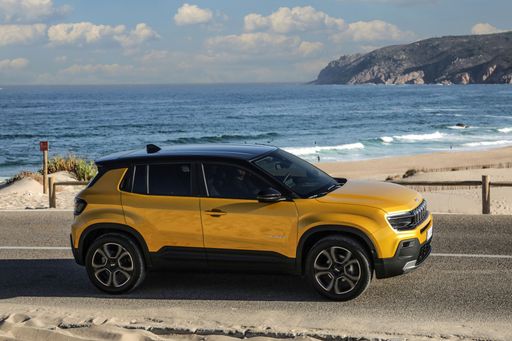
Jeep Avenger

4.3 (6 Reviews)
rate
  • a bit cheaper
  • clearly lighter
  • clearly more trunk space
details

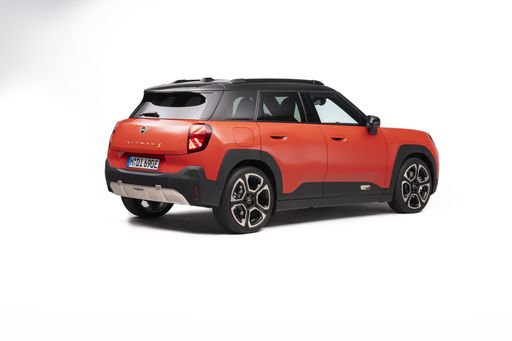
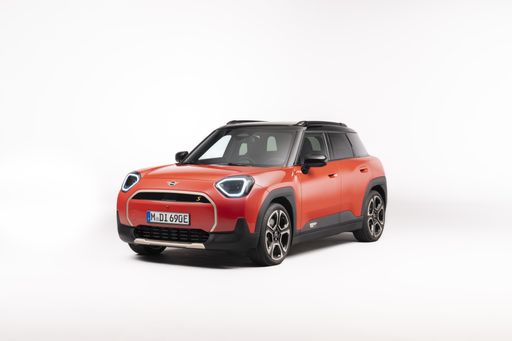
MINI Aceman

4.6 (1 Reviews)
rate
  • noticeably more power
  • moderately more efficient
  • only slightly more electric range
  • clearly quicker 0–100 km/h
details

All details on performance, efficiency, range and trunk space can be found in the technical comparison below – including user reviews for both models.

By Achim Sedelmaier

Avenger

Comparing Compact Electric SUV Icons: Jeep Avenger vs MINI Aceman

In the ever-evolving landscape of electric vehicles, compact SUVs have gained immense popularity, melding practicality with sustainability. Two leading contenders in this segment are the Jeep Avenger and the MINI Aceman. These models offer distinctive features, setting new benchmarks in technology and driving experience. Let’s delve into a detailed comparison.
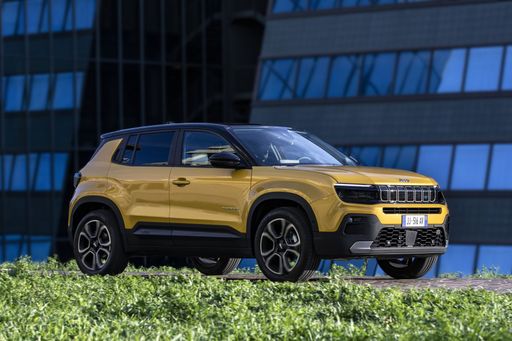
Aceman

Power and Performance

The Jeep Avenger offers a versatile range when it comes to powertrains. It boasts both electric and petrol engines, appealing to a broader spectrum of consumers. The electric variant of the Avenger generates a respectable 156 HP and 260 Nm of torque, ensuring a smooth ride. Its acceleration from 0 to 100 km/h is accomplished in 9 seconds, with a top speed of 150 km/h.

In contrast, the MINI Aceman, designed solely as an electric vehicle, takes a different approach to power. With options going up to 258 HP and 350 Nm of torque, it sprints from 0 to 100 km/h in a zippy 6.4 seconds. It achieves a maximum speed of 200 km/h, reflecting its more performance-focused engineering.

Avenger

Electric Range and Efficiency

Efficiency is a critical factor for electric SUVs. The Jeep Avenger’s electric variant provides an impressive range of up to 400 km on a full charge, thanks to its 51 kWh battery. This makes it an excellent choice for long road trips and daily commuting alike.

Meanwhile, the MINI Aceman, with a slightly smaller 49.2 kWh battery, offers a competitive range of up to 405 km. Considering its power output, the Aceman manages to deliver impressive efficiency, with consumption figures as low as 14 kWh/100 km.

Aceman

Design and Dimensions

Both vehicles encapsulate the essence of compact SUVs but with their unique brand signatures. The Jeep Avenger measures 4084 mm in length, 1776 mm in width, and stands 1536 mm tall, offering a robust presence on the road. It features a spacious 5-door design with a trunk capacity of 355 liters.

The MINI Aceman, slightly more compact, is 4079 mm long, 1754 mm wide, and 1514 mm in height. Its distinctive 3-door layout is coupled with a 300-liter trunk, emphasizing stylish urban use without compromising practicality.

Avenger

Innovations and Features

The Jeep Avenger showcases Jeep's blend of rugged capability and modern tech, offering all-wheel drives in certain variants and a variety of transmission options, including automatic and manual gearboxes.

On the other hand, the MINI Aceman displays MINI’s commitment to innovative electric mobility. Its futuristic design and focus on driving dynamics include features like a reduction gearbox and advanced driver assist technologies.

Aceman

Conclusion

Both the Jeep Avenger and MINI Aceman represent forward-thinking solutions in the compact electric SUV segment. The Avenger is perfect for those seeking versatility with a choice between petrol and electric, while the Aceman is tailored for drivers looking for an agile, stylish, all-electric performance.

Ultimately, the decision comes down to personal preference: the rugged dependability of the Jeep or the dynamic elegance of the MINI. Whichever you choose, both promise a step forward into the future of automotive mobility.

Here’s where it gets real: The technical differences in detail

Avenger

Costs and Efficiency:

Looking at overall running costs, both models reveal some interesting differences in everyday economy.

Jeep Avenger is a bit cheaper – starting at 22,500 £ , while the MINI Aceman costs 25,500 £ . That’s a price difference of around 2,915 £.

In terms of energy consumption, the MINI Aceman is moderately more efficient: consuming 14 kWh/100km compared to 15.5 kWh/100km for the Jeep Avenger. That’s a difference of about 1.5 kWh/100km.

As for electric range, the MINI Aceman offers only slightly more range – reaching up to 405 km, about 5 km more than the Jeep Avenger.

Aceman

Engine and Performance:

Power, torque and acceleration say a lot about how a car feels on the road. This is where you see which model delivers more driving dynamics.

When it comes to engine power, the MINI Aceman offers noticeably more power – delivering 258 HP compared to 156 HP. That’s roughly 102 HP more horsepower.

When accelerating from 0 to 100 km/h, the MINI Aceman is clearly quicker – completing the sprint in 6.4 s, while the Jeep Avenger takes 9 s. That’s about 2.6 s quicker.

Looking at top speed, the MINI Aceman is very slightly faster – reaching 200 km/h, while the Jeep Avenger tops out at 194 km/h. The difference is around 6 km/h.

There’s also a difference in torque: the MINI Aceman delivers noticeably more torque with 350 Nm compared to 260 Nm. That’s about 90 Nm more.

Avenger

Space and Everyday Use:

Cabin size, boot volume and payload all play a role in everyday practicality. Here, comfort and flexibility make the difference.

Both vehicles offer seating for 5 people.

In terms of curb weight, Jeep Avenger is clearly lighter – 1,180 kg compared to 1,720 kg. The difference is around 540 kg.

Looking at boot space, the Jeep Avenger offers clearly more boot space – 380 L compared to 300 L. That’s a difference of about 80 L.

For maximum load capacity, the Jeep Avenger offers markedly more capacity – up to 1,277 L, about 272 L more than the MINI Aceman.

When it comes to payload, the MINI Aceman carries marginally more – 530 kg compared to 502 kg. That’s a difference of about 28 kg.

Who wins the race in the data check?

The MINI Aceman holds a decisive overall lead in the objective data comparison.
This result only shows which model scores more points on paper – not which of the two cars feels right for you.

from £25,500
Aceman

MINI Aceman

  • Engine Type : Electric
  • Transmission : Automatic
  • Drive Type : Front-Wheel Drive
  • Power HP : 184 - 258 HP
  • Consumption kWh/100km : 14 - 16 kWh/100km
  • Electric Range : 303 - 405 km
Jeep Avenger
MINI Aceman

Costs and Consumption

View detailed analysis

Engine and Performance

View detailed analysis

Dimensions and Body

View detailed analysis

Jeep Avenger

The Jeep Avenger shrinks Jeep's boxy, adventurous styling into a city-friendly electric crossover that looks just as at home on tight streets as it does on muddy weekend lanes. It's a savvy pick for drivers who want go-anywhere attitude without the truck-size ego — practical inside, lively around town and ready to tackle a bit of rough stuff when the mood strikes.

details

MINI Aceman

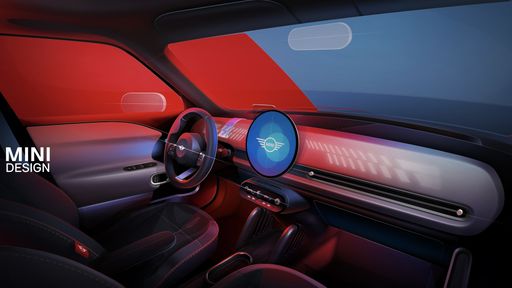
The MINI Aceman squeezes classic MINI charm into a sharper, more crossover-ready shape, trading some of the old curves for grown-up practicality while keeping the wink-and-grin personality buyers crave. Inside it's a surprisingly premium, customizable cabin that feels clever rather than cluttered, and on the road the Aceman is eager and nimble — ideal for city dwellers who want an SUV silhouette with proper fun behind the wheel.

details
Jeep Avenger
MINI Aceman

Costs and Consumption

Price
22,500 - 36,900 £
Price
25,500 - 36,200 £
Consumption L/100km
4.9 - 5.7 L/100km
Consumption L/100km
-
Consumption kWh/100km
15.5 kWh/100km
Consumption kWh/100km
14 - 16 kWh/100km
Electric Range
400 km
Electric Range
303 - 405 km
Battery Capacity
51 kWh
Battery Capacity
38.5 - 49.2 kWh
co2
0 - 129 g/km
co2
0 g/km
Fuel tank capacity
44 L
Fuel tank capacity
-

Dimensions and Body

Body Type
SUV
Body Type
SUV
Seats
5
Seats
5
Doors
5
Doors
5
Curb weight
1,180 - 1,520 kg
Curb weight
1,720 - 1,825 kg
Trunk capacity
325 - 380 L
Trunk capacity
300 L
Length
4,084 - 4,088 mm
Length
4,079 mm
Width
1,776 mm
Width
1,754 mm
Height
1,527 - 1,541 mm
Height
1,514 mm
Max trunk capacity
1,218 - 1,277 L
Max trunk capacity
1,005 L
Payload
494 - 502 kg
Payload
450 - 530 kg

Engine and Performance

Engine Type
Electric, Petrol MHEV, Petrol
Engine Type
Electric
Transmission
Automatic, Manuel
Transmission
Automatic
Transmission Detail
Reduction Gearbox, Dual-Clutch Automatic, Manual Gearbox
Transmission Detail
Reduction Gearbox
Drive Type
Front-Wheel Drive, All-Wheel Drive
Drive Type
Front-Wheel Drive
Power HP
100 - 156 HP
Power HP
184 - 258 HP
Acceleration 0-100km/h
9 - 10.6 s
Acceleration 0-100km/h
6.4 - 7.9 s
Max Speed
150 - 194 km/h
Max Speed
160 - 200 km/h
Torque
205 - 260 Nm
Torque
290 - 350 Nm
Number of Cylinders
3
Number of Cylinders
-
Power kW
74 - 115 kW
Power kW
135 - 190 kW
Engine capacity
1,199 cm3
Engine capacity
-

General

Model Year
2,023 - 2,026
Model Year
2,024 - 2,026
CO2 Efficiency Class
A, C, D
CO2 Efficiency Class
A
Brand
Jeep
Brand
MINI
DriveDuel uses data analysis and artificial intelligence to evaluate vehicle data and create content. Content is regularly reviewed and improved. The displayed prices are estimates based on German list prices, adjusted to the respective country’s VAT. Country-specific registration taxes are not included. This information is not legally binding.