VS

Jeep Compass vs Skoda Kamiq comparison

Compare performance (225 HP vs 150 HP), boot space and price (34,200 £ vs 22,300 £ ) at a glance. Find out which car is the better choice for you – Jeep Compass or Skoda Kamiq?

Jeep Compass vs Skoda Kamiq: Key differences

Jeep Compass

2.4 (4 Reviews)
rate
  • noticeably more power
  • clearly more efficient
  • marginally quicker 0–100 km/h
  • visibly more trunk space
details

Skoda Kamiq

5 (5 Reviews)
rate
  • significantly cheaper
  • clearly lighter
details

By Achim Sedelmaier

Compass

Jeep Compass vs Skoda Kamiq: A Battle of the Compact SUVs

The compact SUV segment continues to captivate automotive enthusiasts, offering a blend of practicality and performance in a versatile package. In this comparison, we pit the robust Jeep Compass against the stylish Skoda Kamiq. Both vehicles offer unique propositions aimed at fulfilling diverse customer needs. Which of the two should you consider for your next ride? Let’s dive into the technical details and innovations of these 2024 models.
Kamiq

Power and Performance

The Jeep Compass brings to the table a range of powertrains, most notably featuring a hybrid edge with its Petrol MHEV and Plugin Hybrid options. The power output varies significantly, catering to different driving preferences. The spectrum ranges from a compact 130 HP engine to a punchy 240 HP variant, with torque peaking at 240 Nm. This powerhouse enables the Compass to accelerate from 0 to 100 km/h in as little as 7.3 seconds, with a top speed of up to 200 km/h. The availability of both front-wheel and all-wheel drive offers flexibility based on your driving necessities, further complemented by its dual-clutch automatic transmission.

The Skoda Kamiq, on the other hand, opts for a traditional petrol lineup with an output between 95 HP and 150 HP. While it might not have the hybrid allure of the Compass, it delivers a sprightly driving experience with a maximum speed up to 213 km/h for its top-tier variant. With a torque of up to 250 Nm, the Kamiq ensures an engaging yet efficient ride, hitting 0 to 100 km/h in as low as 8.3 seconds. The front-wheel drive is standard, along with an option between manual and dual-clutch automatic transmissions.

Compass

Efficiency and Economy

In terms of fuel efficiency, the Jeep Compass stands out with its Plugin Hybrid model offering an impressive consumption rate of just 2 L/100km, thanks to its 36 km electric range. For regular petrol consumption, it averages around 5.5 L/100km. CO2 emissions are also kept in check, presenting a commendable choice for eco-conscious buyers with as low as 48 g/km for the hybrid models.

The Skoda Kamiq, maintaining a straightforward petrol lineup, presents a slightly higher consumption rate between 5.4 to 5.7 L/100km. CO2 emissions vary from 121 to 130 g/km, aligning it with the industry standards for petrol engines in its category.

Kamiq

Design and Dimensions

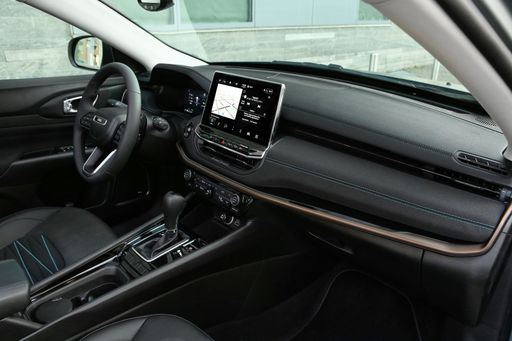
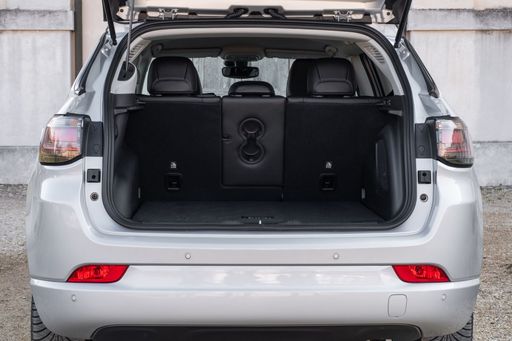
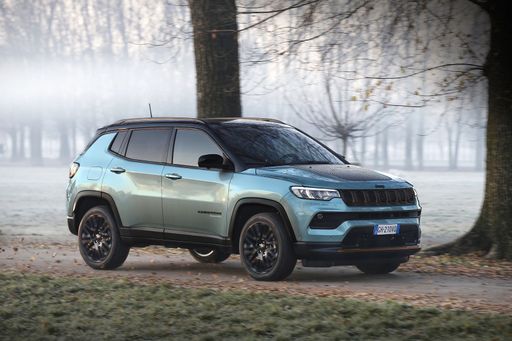
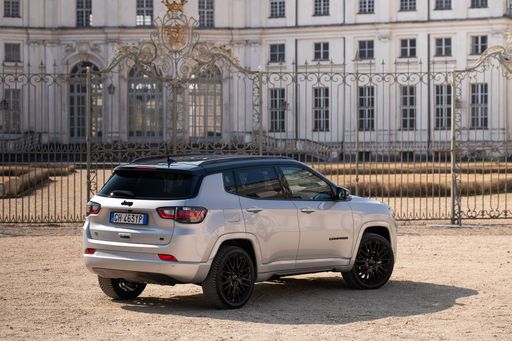
Design-wise, both SUVs uphold the commanding presence expected of vehicles in their class. The Jeep Compass showcases its rugged, go-anywhere persona in a slightly larger frame, measuring 4404 mm in length, 1819 mm in width, and 1629 mm in height. Its versatile boot offers up to 438 liters of cargo space, ideal for those spontaneous weekend getaways.

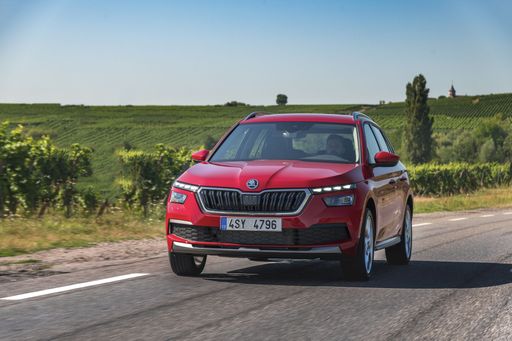
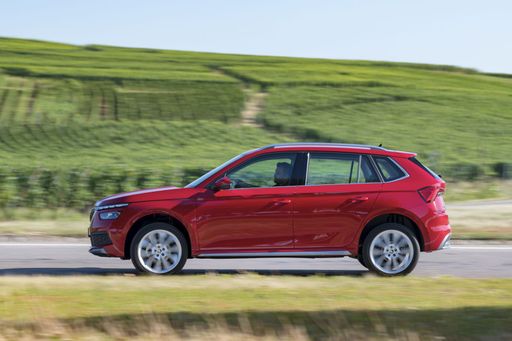
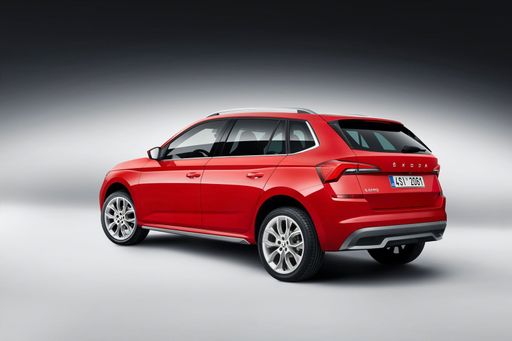
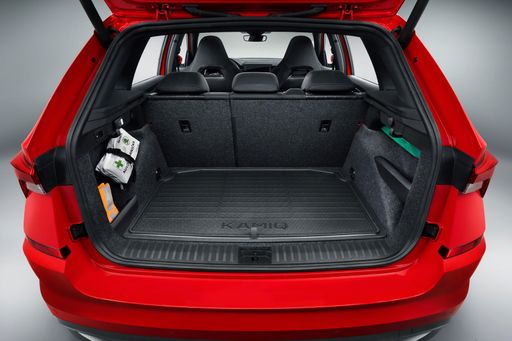
Meanwhile, the Skoda Kamiq emphasizes urban sophistication with its compact dimensions — standing at 4241 mm long, 1793 mm wide, and 1562 mm tall. The trunk capacity of 400 liters, although marginally smaller than the Compass, still provides ample utility for daily errands.

Compass

Conclusion

The choice between the Jeep Compass and Skoda Kamiq ultimately boils down to individual preference. If you prioritize advanced hybrid technology, diverse drive options, and rugged styling, the Jeep Compass stands as a compelling choice. Conversely, if you lean towards traditional petrol efficiency, sleek design, and a more urban-friendly dimension, the Skoda Kamiq offers a remarkable option at competitive pricing.

Ultimately, both models shine as excellent representations of modern compact SUVs, each bringing a blend of innovation and reliability to meet the expectations of various drivers.

Here’s where it gets real: The technical differences in detail

Compass

Costs and Efficiency:

Price and efficiency are key factors when choosing a car – and this is often where the real differences emerge.

Skoda Kamiq is significantly cheaper – starting at 22,300 £ , while the Jeep Compass costs 34,200 £ . That’s a price difference of around 11,932 £.

Fuel consumption also shows a difference: the Jeep Compass uses 3 L/100km and is clearly more efficient than the Skoda Kamiq with 5.3 L/100km. The difference is about 2.3 L/100km.

Kamiq

Engine and Performance:

Power, torque and acceleration say a lot about how a car feels on the road. This is where you see which model delivers more driving dynamics.

When it comes to engine power, the Jeep Compass offers noticeably more power – delivering 225 HP compared to 150 HP. That’s roughly 75 HP more horsepower.

When accelerating from 0 to 100 km/h, the Jeep Compass is marginally quicker – completing the sprint in 8 s, while the Skoda Kamiq takes 8.1 s. That’s about 0.1 s quicker.

Looking at top speed, the Skoda Kamiq is a bit faster – reaching 216 km/h, while the Jeep Compass tops out at 188 km/h. The difference is around 28 km/h.

There’s also a difference in torque: the Jeep Compass delivers clearly more torque with 345 Nm compared to 250 Nm. That’s about 95 Nm more.

Compass

Space and Everyday Use:

Beyond pure performance, interior space and usability matter most in daily life. This is where you see which car is more practical and versatile.

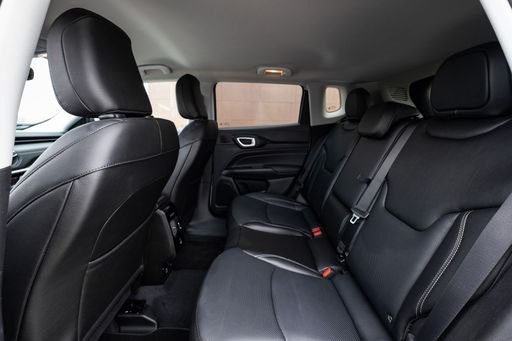
Both vehicles offer seating for 5 people.

In terms of curb weight, Skoda Kamiq is clearly lighter – 1,231 kg compared to 1,667 kg. The difference is around 436 kg.

Looking at boot space, the Jeep Compass offers visibly more boot space – 550 L compared to 400 L. That’s a difference of about 150 L.

For maximum load capacity, the Jeep Compass offers moderately more capacity – up to 1,561 L, about 166 L more than the Skoda Kamiq.

Who wins the race in the data check?

The Jeep Compass is decisively ahead in the objective data comparison.
This result only shows which model scores more points on paper – not which of the two cars feels right for you.

from £34,200
Compass

Jeep Compass

  • Engine Type : Petrol MHEV, Electric, Plugin Hybrid
  • Transmission : Automatic
  • Drive Type : Front-Wheel Drive
  • Power HP : 145 - 225 HP
  • Consumption L/100km : 3 - 5.8 L/100km
  • Consumption kWh/100km : 17.5 kWh/100km
  • Electric Range : 95 - 500 km
Jeep Compass
Skoda Kamiq

Costs and Consumption

View detailed analysis

Engine and Performance

View detailed analysis

Dimensions and Body

View detailed analysis

Jeep Compass

The Jeep Compass packs classic Jeep styling with a surprisingly composed demeanor, equally at home turning heads in the city or tackling a weekend dirt track. Inside it's a pragmatic, user-friendly compact SUV that prioritizes comfort and versatility — a smart pick if you want a dose of adventure without giving up everyday sense.

details

Skoda Kamiq

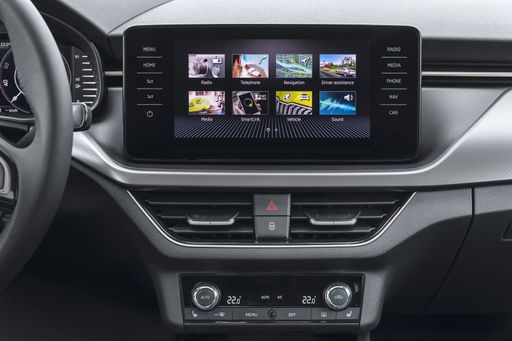
The Skoda Kamiq is a neatly packaged city crossover that pairs practical space with unshowy, thoughtful design. It’s easy to live with, economical to run and full of clever details that make daily driving feel intelligently sorted rather than flashy.

details
Jeep Compass
Skoda Kamiq

Costs and Consumption

Price
34,200 - 43,200 £
Price
22,300 - 32,700 £
Consumption L/100km
3 - 5.8 L/100km
Consumption L/100km
5.3 - 5.7 L/100km
Consumption kWh/100km
17.5 kWh/100km
Consumption kWh/100km
-
Electric Range
95 - 500 km
Electric Range
-
Battery Capacity
74 kWh
Battery Capacity
-
co2
0 - 130 g/km
co2
121 - 128 g/km
Fuel tank capacity
55 L
Fuel tank capacity
50 L

Dimensions and Body

Body Type
SUV
Body Type
SUV
Seats
5
Seats
5
Doors
5
Doors
5
Curb weight
1,667 - 2,198 kg
Curb weight
1,231 - 1,340 kg
Trunk capacity
550 L
Trunk capacity
400 L
Length
4,552 mm
Length
4,241 mm
Width
1,928 mm
Width
1,793 mm
Height
1,675 mm
Height
1,562 mm
Max trunk capacity
1,561 L
Max trunk capacity
1,395 L
Payload
-
Payload
439 - 539 kg

Engine and Performance

Engine Type
Petrol MHEV, Electric, Plugin Hybrid
Engine Type
Petrol
Transmission
Automatic
Transmission
Manuel, Automatic
Transmission Detail
Dual-Clutch Automatic, Reduction Gearbox
Transmission Detail
Manual Gearbox, Dual-Clutch Automatic
Drive Type
Front-Wheel Drive
Drive Type
Front-Wheel Drive
Power HP
145 - 225 HP
Power HP
95 - 150 HP
Acceleration 0-100km/h
8 - 10.3 s
Acceleration 0-100km/h
8.1 - 11 s
Max Speed
180 - 188 km/h
Max Speed
183 - 216 km/h
Torque
230 - 345 Nm
Torque
175 - 250 Nm
Number of Cylinders
3 - 4
Number of Cylinders
3 - 4
Power kW
107 - 165 kW
Power kW
70 - 110 kW
Engine capacity
1,199 - 1,596 cm3
Engine capacity
999 - 1,498 cm3

General

Model Year
2,025 - 2,026
Model Year
2025
CO2 Efficiency Class
D, A, B
CO2 Efficiency Class
D
Brand
Jeep
Brand
Skoda
DriveDuel uses data analysis and artificial intelligence to evaluate vehicle data and create content. Content is regularly reviewed and improved. The displayed prices are estimates based on German list prices, adjusted to the respective country’s VAT. Country-specific registration taxes are not included. This information is not legally binding.