VS

Jeep Renegade vs Kia Stonic comparison

Compare performance (240 HP vs 115 HP), boot space and price (26,700 £ vs 20,400 £ ) at a glance. Find out which car is the better choice for you – Jeep Renegade or Kia Stonic?

Jeep Renegade vs Kia Stonic: Key differences

Jeep Renegade

  • substantially more power
  • substantially more efficient
  • significantly quicker 0–100 km/h
details

Kia Stonic

4.6 (2 Reviews)
rate
  • noticeably cheaper
  • somewhat lighter
  • barely more trunk space
details

All details on performance, efficiency, range and trunk space can be found in the technical comparison below – including user reviews for both models.

By Achim Sedelmaier

Renegade

Dynamic Duo: Jeep Renegade vs. Kia Stonic

The compact SUV segment has grown incredibly competitive, and two models making waves are the Jeep Renegade and the Kia Stonic. Both vehicles offer unique attributes tailored for different audiences, yet share enough similarities to make this comparison interesting. Let’s dive into their technical aspects and innovations to see what makes each stand out.
Stonic

Design and Dimensions

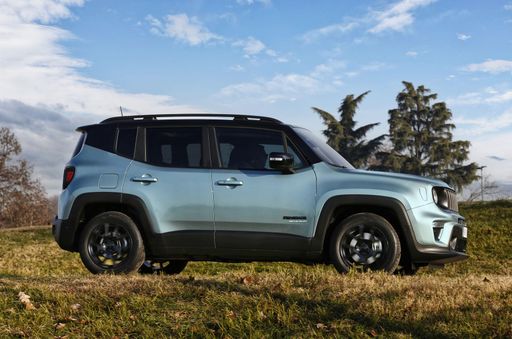
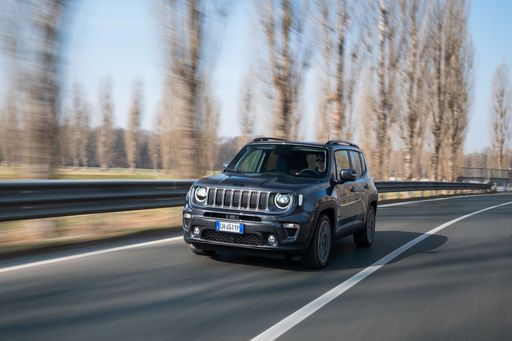
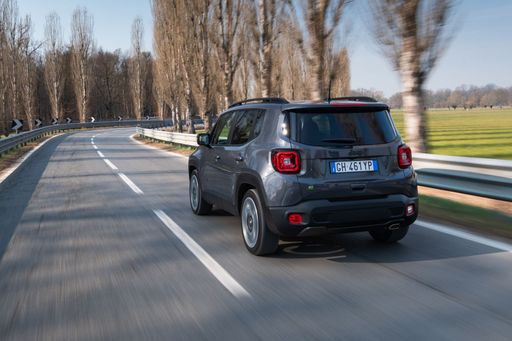
The Jeep Renegade and Kia Stonic both embrace the SUV ethos with their compact size and bold styling. However, they sport distinctly different design philosophies. The Renegade inherits Jeep’s rugged design cues, providing a more aggressive and off-road-ready character. It stands at 4236 mm in length, 1805 mm in width, and up to 1718 mm in height, projecting a robust presence.

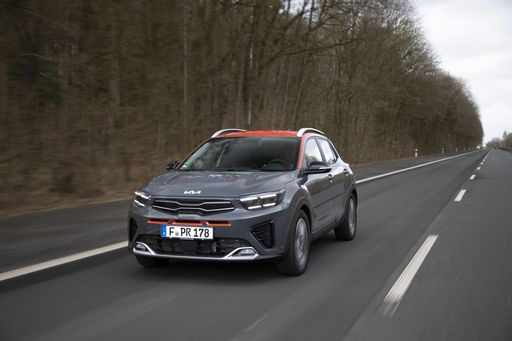
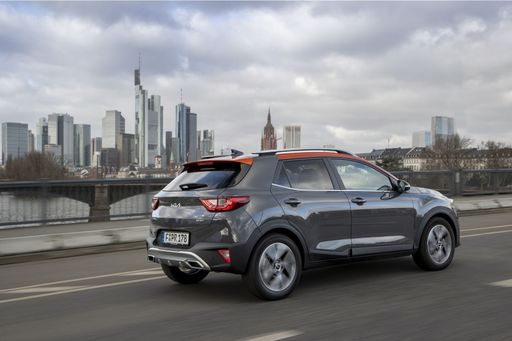
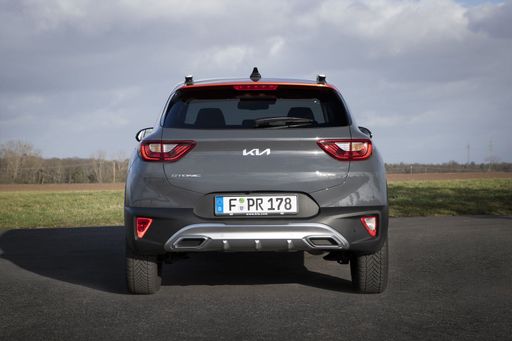
The Kia Stonic, on the other hand, wears a more urban-friendly suit. It’s slightly more compact with a length of 4140 mm, a width of 1760 mm, and a height of 1505 mm. Its sleek lines and contemporary design make it ideal for city dwellers who crave style and practicality.

Renegade

Performance and Powertrain

The Renegade boasts a versatile engine lineup catering to different driving preferences. It offers petrol MHEV and plugin hybrid variants, with power outputs ranging from 130 to 240 HP. The hybrid version delivers impressive performance with a 0-100 km/h acceleration of just 7.1 seconds and a top speed of 199 km/h, making it a capable option whether you're powering through city streets or country roads.

The Stonic may not match the raw power of the Renegade, yet it holds its own with petrol and petrol MHEV engines delivering up to 100 HP. The three-cylinder engine provides a spirited drive with an acceleration of 11.3 seconds for 0-100 km/h and a top speed of 179 km/h, suitable for everyday drives and occasional highway journeys.

Stonic

Efficiency and Emissions

Fuel efficiency remains a key factor in favor of the Stonic. With its consumption ranging from 5.5 to 5.8 L/100km, it is a cost-effective choice for budget-conscious consumers. Emissions stay consistent with a CO2 output between 125-132 g/km.

The Renegade showcases its versatility again with an electric driving range of 36 km on the hybrid model, making it optimal for eco-friendly commutes. It achieves a fuel consumption of 5.5 L/100km on the petrol MHEV and 2.1 L/100km for the plug-in hybrid. CO2 emissions range from 48-125 g/km, contributing positively to its environmental credentials.

Renegade

Interior and Cargo Space

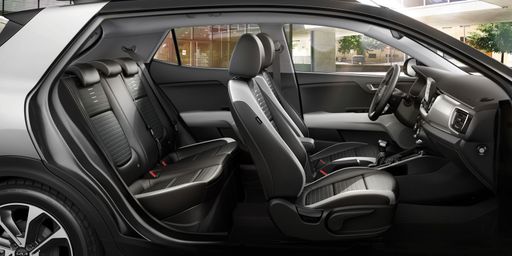
Both SUVs prioritize passenger comfort and practicality. The Renegade seats five comfortably, with dimensions translating into ample headroom and legroom, especially suitable for longer trips. A trunk capacity of up to 351 liters ensures adequate space for hauling family luggage or groceries.

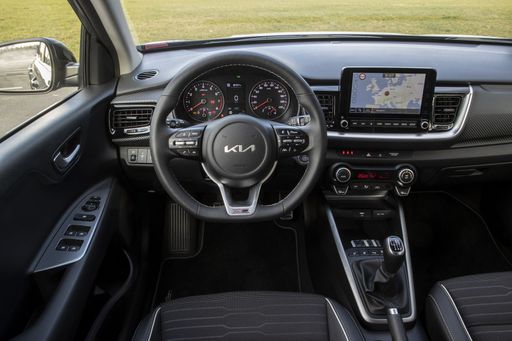
The Stonic also offers five seats, focusing on a balance between passenger comfort and cargo space. Its trunk capacity of 352 liters is slightly more spacious than that of the Renegade, perfect for urban adventures requiring a bit more storage flexibility.

Stonic

Innovation and Features

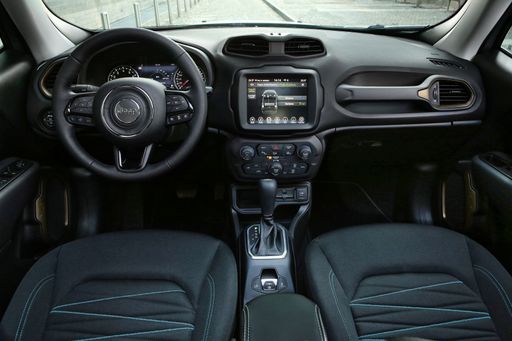
The Jeep Renegade packs innovative features including advanced infotainment systems, off-road capability with an available All-Wheel Drive system, and sophisticated safety features across its trims. For tech enthusiasts and adventure seekers, it’s packed with options aligning with Jeep's reputation for ruggedness and luxury.

The Kia Stonic shines in its segment with its emphasis on practicality and user-friendly technology at a remarkable price point. Navigation, connectivity features, and driver assistance technologies are atop its offerings, ensuring a modern driving experience.

Renegade

Conclusion: Choose Your Path

In the battle of the Jeep Renegade vs. Kia Stonic, choice depends on your lifestyle needs. Choose the Renegade if you favor power, hybrid versatility, and off-road prowess. The Stonic, however, is perfect for drivers seeking an efficient, budget-friendly ride optimized for urban environments. Whichever path you take, both models provide compelling options in the compact SUV category.

Here’s where it gets real: The technical differences in detail

Renegade

Costs and Efficiency:

Price and efficiency are often the first things buyers look at. Here it becomes clear which model has the long-term edge – whether at the pump, the plug, or in purchase price.

Kia Stonic is noticeably cheaper – starting at 20,400 £ , while the Jeep Renegade costs 26,700 £ . That’s a price difference of around 6,266 £.

Fuel consumption also shows a difference: the Jeep Renegade uses 2.1 L/100km and is substantially more efficient than the Kia Stonic with 5.6 L/100km. The difference is about 3.5 L/100km.

Stonic

Engine and Performance:

Power, torque and acceleration are the classic benchmarks for car enthusiasts – and here, some clear differences start to show.

When it comes to engine power, the Jeep Renegade offers substantially more power – delivering 240 HP compared to 115 HP. That’s roughly 125 HP more horsepower.

When accelerating from 0 to 100 km/h, the Jeep Renegade is significantly quicker – completing the sprint in 7.1 s, while the Kia Stonic takes 10.7 s. That’s about 3.6 s quicker.

There’s also a difference in torque: the Jeep Renegade delivers moderately more torque with 240 Nm compared to 200 Nm. That’s about 40 Nm more.

Renegade

Space and Everyday Use:

Whether family car or daily driver – which one offers more room, flexibility and comfort?

Both vehicles offer seating for 5 people.

In terms of curb weight, Kia Stonic is somewhat lighter – 1,205 kg compared to 1,420 kg. The difference is around 215 kg.

Looking at boot space, the Kia Stonic offers barely more boot space – 352 L compared to 351 L. That’s a difference of about 1 L.

When it comes to payload, the Jeep Renegade carries clearly more – 570 kg compared to 445 kg. That’s a difference of about 125 kg.

Who wins the race in the data check?

The Jeep Renegade is decisively ahead in the objective data comparison.
This result only shows which model scores more points on paper – not which of the two cars feels right for you.

from £26,700
Renegade

Jeep Renegade

  • Engine Type Petrol MHEV, Plugin Hybrid
  • Transmission Automatic
  • Drive Type Front-Wheel Drive, All-Wheel Drive
  • Power HP 130 - 240 HP
  • Consumption L/100km 2.1 - 5.5 L/100km
  • Electric Range 36 km
Jeep Renegade
Kia Stonic

Costs and Consumption

View detailed analysis

Engine and Performance

View detailed analysis

Dimensions and Body

View detailed analysis

Jeep Renegade

The Jeep Renegade wears its chunky, boxy looks like a badge of character, blending genuine off-road swagger with city-friendly manners so it feels at home on a muddy trail or a tight urban lane. Inside you'll find a surprisingly practical cabin with rugged touches and clever storage, making it a sensible choice for buyers who want a compact SUV with personality rather than just another anonymous crossover.

details

Kia Stonic

The Kia Stonic is a compact crossover that pairs nimble city manners with a surprisingly spacious and comfortable cabin. It’s a practical, well-equipped choice for buyers who value sensible features, approachable styling and easy everyday usability.

details
Jeep Renegade
Kia Stonic

Costs and Consumption

Price
26,700 - 39,200 £
Price
20,400 - 26,800 £
Consumption L/100km
2.1 - 5.5 L/100km
Consumption L/100km
5.6 - 5.7 L/100km
Consumption kWh/100km
-
Consumption kWh/100km
-
Electric Range
36 km
Electric Range
-
Battery Capacity
-
Battery Capacity
-
co2
48 - 125 g/km
co2
126 - 128 g/km
Fuel tank capacity
36 - 48 L
Fuel tank capacity
-

Dimensions and Body

Body Type
SUV
Body Type
SUV
Seats
5
Seats
5
Doors
5
Doors
-
Curb weight
1,420 - 1,770 kg
Curb weight
1,205 - 1,270 kg
Trunk capacity
330 - 351 L
Trunk capacity
352 L
Length
4,236 mm
Length
-
Width
1,805 mm
Width
1,760 mm
Height
1,684 - 1,718 mm
Height
-
Max trunk capacity
1,277 - 1,297 L
Max trunk capacity
-
Payload
545 - 570 kg
Payload
440 - 445 kg

Engine and Performance

Engine Type
Petrol MHEV, Plugin Hybrid
Engine Type
Petrol, Petrol MHEV
Transmission
Automatic
Transmission
Manuel, Automatic
Transmission Detail
Dual-Clutch Automatic, Automatic Gearbox
Transmission Detail
Manual Gearbox, Dual-Clutch Automatic
Drive Type
Front-Wheel Drive, All-Wheel Drive
Drive Type
Front-Wheel Drive
Power HP
130 - 240 HP
Power HP
100 - 115 HP
Acceleration 0-100km/h
7.1 - 9.7 s
Acceleration 0-100km/h
10.7 - 12.1 s
Max Speed
191 - 199 km/h
Max Speed
-
Torque
240 Nm
Torque
172 - 200 Nm
Number of Cylinders
4
Number of Cylinders
3
Power kW
96 - 177 kW
Power kW
74 - 85 kW
Engine capacity
1,332 - 1,469 cm3
Engine capacity
998 cm3

General

Model Year
2024
Model Year
2025
CO2 Efficiency Class
D, B
CO2 Efficiency Class
D
Brand
Jeep
Brand
Kia
DriveDuel uses data analysis and artificial intelligence to evaluate vehicle data and create content. Content is regularly reviewed and improved. The displayed prices are estimates based on German list prices, adjusted to the respective country’s VAT. Country-specific registration taxes are not included. This information is not legally binding.