@ Jeep / Stellantis Media
@ Renault Group Media
VS

Jeep Renegade vs Renault Captur – Which model is better for everyday use?

Compare performance, boot capacity, efficiency and price at a glance.
Find out which car is the better choice for you – Jeep Renegade or Renault Captur?

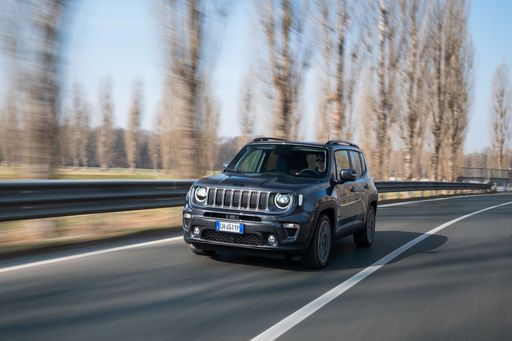
Renegade @ Jeep / Stellantis Media

Jeep Renegade vs. Renault Captur: The Battle of the Compact SUVs

As the demand for compact SUVs continues to rise, two models have carved out a noticeable niche for themselves: the Jeep Renegade and the Renault Captur. Both sporting the latest in automotive technology and design, these compact SUVs offer unique experiences while catering to diverse driver needs. Let’s delve into their technical aspects and determine what sets them apart.

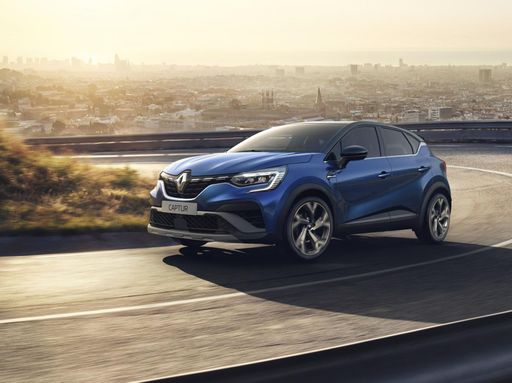
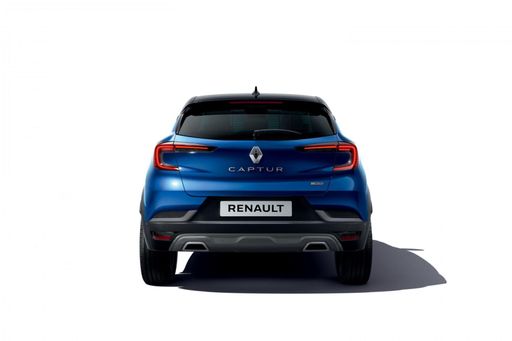
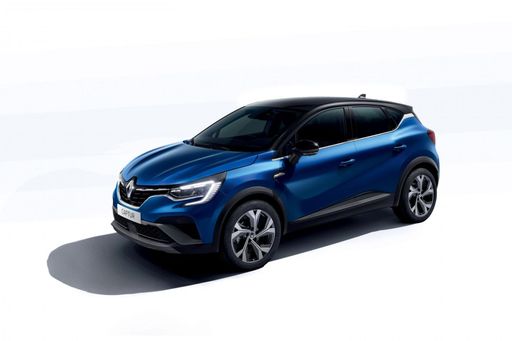
Captur @ Renault Group Media

Performance and Engine Variety

The Jeep Renegade offers a range of powertrains, including a Petrol Mild Hybrid Electric Vehicle (MHEV) and a Plug-in Hybrid, ensuring flexible performance options for prospective buyers. With power outputs ranging from 130 HP to a more robust 240 HP, the Renegade can accelerate from 0-100 km/h in as little as 7.1 seconds. In addition, the Renegade comes with dual-clutch automatic and standard automatic gearbox options, coupled with either an all-wheel or front-wheel drive option, giving drivers the choice of enhanced performance or efficiency.

On the other hand, the Renault Captur boasts an extensive array of engine types, from a Full Hybrid configuration to Petrol, LPG, and even Petrol MHEV options. The Captur’s power spans from 91 HP to 158 HP, with a maximum speed reaching up to 180 km/h. The acceleration ranges from 8.5 seconds to a more leisurely 14.3 seconds for 0-100 km/h, depending on the chosen engine type. Primarily available in front-wheel drive, the Captur offers a varied transmission lineup, including automatic, manual, and dual-clutch options.


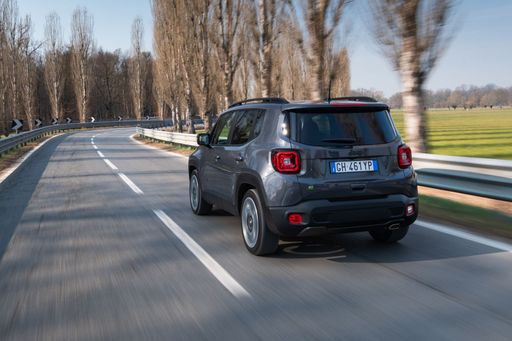
Renegade @ Jeep / Stellantis Media

Fuel Efficiency and Environmental Considerations

Fuel efficiency plays a crucial role in the SUV segment. The Jeep Renegade’s consumption ranges from 5.5 to an impressive 2.1 liters per 100 km, specifically in the plug-in hybrid option, with a commendable CO2 emission rating as low as 48 g/km. It also boasts an electric range of 36 km, providing an eco-friendly option for short commutes.

Meanwhile, the Renault Captur’s fuel consumption is equally noteworthy, ranging from 4.7 liters to 7.8 liters per 100 km. It also offers a CO2 emission rating of 106 g/km at its best, although its hybrid nature includes a smaller battery capacity of 0.6 kWh, focusing more on driving economy than electric range.

Captur @ Renault Group Media

Design and Dimensions

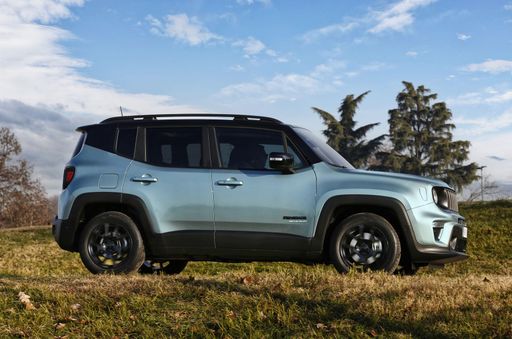
Design wise, both models maintain the compact SUV characteristics, but with distinctive flair. The Jeep Renegade stands out with its rugged design, measuring 4,236 mm in length, 1,805 mm in width, and up to 1,718 mm in height. This provides a higher driving position and ground clearance, suitable for off-road enthusiasts.

The Renault Captur opts for a more urban-friendly style, slightly longer at 4,239 mm but narrower at 1,797 mm. Its height of 1,575 mm is lower, contributing to its stylish and aerodynamic silhouette, making it a better fit for city environments.

Renegade @ Jeep / Stellantis Media

Interior and Practicality

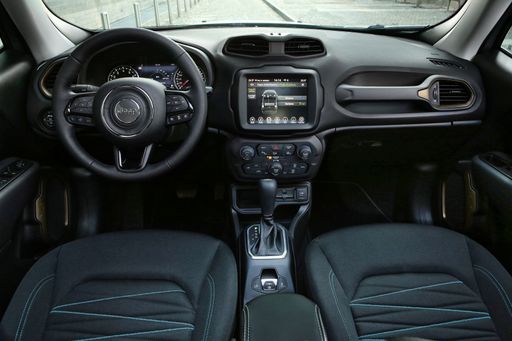
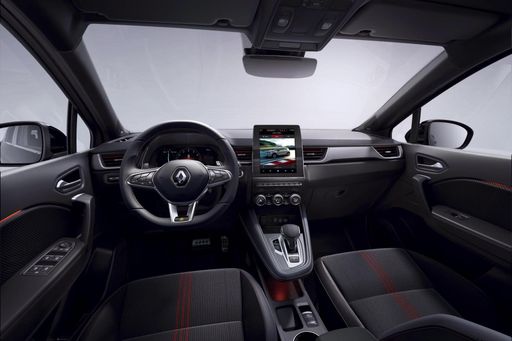
Inside, both the Renegade and Captur offer seating for five, but their trunk capacities differ. The Renegade provides a trunk capacity that ranges from 330 to 351 liters, while the Captur offers a range from 326 to 422 liters, making it slightly more practical for bulkier cargo.

Moreover, the Renault Captur extends its practicality with a payload range from 372 kg to 383 kg, whereas the Jeep Renegade provides more robust options, with payload capabilities extending up to 570 kg.

Captur @ Renault Group Media

Conclusion

Both the Jeep Renegade and the Renault Captur blend style, innovation, and practicality, yet cater to distinct audience preferences. The Renegade is undoubtedly for those seeking adventure, off-road capabilities, and robust performance. Meanwhile, the Captur is perfect for urban explorers needing versatility, advanced fuel efficiency, and agile handling. Choose wisely based on your lifestyle needs, and you won’t be disappointed with either of these impressive SUVs.

Here’s where it gets real: The technical differences in detail

Renegade @ Jeep / Stellantis Media

Costs and Efficiency:

Price and efficiency are often the first things buyers look at. Here it becomes clear which model has the long-term edge – whether at the pump, the plug, or in purchase price.

Renault Captur has a distinct advantage in terms of price – it starts at 21100 £, while the Jeep Renegade costs 26700 £. That’s a price difference of around 5529 £.

Fuel consumption also shows a difference: Jeep Renegade manages with 2.10 L and is therefore decisively more efficient than the Renault Captur with 4.50 L. The difference is about 2.40 L per 100 km.

Captur @ Renault Group Media

Engine and Performance:

Power, torque and acceleration say a lot about how a car feels on the road. This is where you see which model delivers more driving dynamics.

When it comes to engine power, the Jeep Renegade has a clearly edge – offering 240 HP compared to 143 HP. That’s roughly 97 HP more horsepower.

In acceleration from 0 to 100 km/h, the Jeep Renegade is evident quicker – completing the sprint in 7.10 s, while the Renault Captur takes 8.90 s. That’s about 1.80 s faster.

In terms of top speed, the Jeep Renegade performs hardly perceptible better – reaching 199 km/h, while the Renault Captur tops out at 180 km/h. The difference is around 19 km/h.

There’s also a difference in torque: Renault Captur pulls hardly perceptible stronger with 265 Nm compared to 240 Nm. That’s about 25 Nm difference.

Renegade @ Jeep / Stellantis Media

Space and Everyday Use:

Beyond pure performance, interior space and usability matter most in daily life. This is where you see which car is more practical and versatile.

Both vehicles offer seating for 5 people.

In curb weight, Renault Captur is hardly perceptible lighter – 1323 kg compared to 1420 kg. The difference is around 97 kg.

In terms of boot space, the Renault Captur offers to a small extent more room – 422 L compared to 351 L. That’s a difference of about 71 L.

In maximum load capacity, the Renault Captur performs slight better – up to 1363 L, which is about 66 L more than the Jeep Renegade.

When it comes to payload, Jeep Renegade clearly perceptible takes the win – 570 kg compared to 453 kg. That’s a difference of about 117 kg.

Who wins the race?

The Jeep Renegade proves to be outperforms in nearly all aspects and therefore becomes our DriveDuel Champion!
Jeep Renegade is the better all-rounder in this comparison.

from about £26,700
Renegade @ Jeep / Stellantis Media

Jeep Renegade

  • Engine Type : Petrol MHEV, Plugin Hybrid
  • Transmission : Automatic
  • Drive Type : Front-Wheel Drive, All-Wheel Drive
  • Power HP : 130 - 240 HP
  • Consumption L/100km : 2.1 - 5.5 L
  • Electric Range : 36 km

Jeep Renegade

The Jeep Renegade wears its chunky, boxy looks like a badge of character, blending genuine off-road swagger with city-friendly manners so it feels at home on a muddy trail or a tight urban lane. Inside you'll find a surprisingly practical cabin with rugged touches and clever storage, making it a sensible choice for buyers who want a compact SUV with personality rather than just another anonymous crossover.

details

Renault Captur

5 (1)
rate

The Renault Captur is a cheeky little crossover that pairs city-friendly agility with a roomy, well-thought-out cabin and enough style to turn heads at the lights. It’s a sensible choice for buyers who want practical versatility and a dash of personality on their daily drives, without taking itself too seriously.

details
Jeep Renegade
Renault Captur
Renegade @ Jeep / Stellantis Media
Captur @ Renault Group Media

Costs and Consumption

Price
26700 - 39200 £
Price
21100 - 28300 £
Consumption L/100km
2.1 - 5.5 L
Consumption L/100km
4.5 - 6 L
Consumption kWh/100km
-
Consumption kWh/100km
-
Electric Range
36 km
Electric Range
-
Battery Capacity
-
Battery Capacity
-
co2
48 - 125 g/km
co2
102 - 137 g/km
Fuel tank capacity
36 - 48 L
Fuel tank capacity
48 L

Dimensions and Body

Body Type
SUV
Body Type
SUV
Seats
5
Seats
5
Doors
5
Doors
5
Curb weight
1420 - 1770 kg
Curb weight
1323 - 1514 kg
Trunk capacity
330 - 351 L
Trunk capacity
326 - 422 L
Length
4236 mm
Length
4239 mm
Width
1805 mm
Width
1797 mm
Height
1684 - 1718 mm
Height
1575 mm
Max trunk capacity
1277 - 1297 L
Max trunk capacity
1276 - 1363 L
Payload
545 - 570 kg
Payload
376 - 453 kg

Engine and Performance

Engine Type
Petrol MHEV, Plugin Hybrid
Engine Type
Full Hybrid, Petrol, Petrol MHEV
Transmission
Automatic
Transmission
Automatic, Manuel
Transmission Detail
Dual-Clutch Automatic, Automatic Gearbox
Transmission Detail
Automatic Gearbox, Manual Gearbox, Dual-Clutch Automatic
Drive Type
Front-Wheel Drive, All-Wheel Drive
Drive Type
Front-Wheel Drive
Power HP
130 - 240 HP
Power HP
115 - 143 HP
Acceleration 0-100km/h
7.1 - 9.7 s
Acceleration 0-100km/h
8.9 - 12.3 s
Max Speed
191 - 199 km/h
Max Speed
180 km/h
Torque
240 Nm
Torque
160 - 265 Nm
Number of Cylinders
4
Number of Cylinders
3 - 4
Power kW
96 - 177 kW
Power kW
84 - 116 kW
Engine capacity
1332 - 1469 cm3
Engine capacity
1199 - 1789 cm3

General

Model Year
2024
Model Year
2025
CO2 Efficiency Class
D, B
CO2 Efficiency Class
C, D, E
Brand
Jeep
Brand
Renault
What drivetrain options does the Jeep Renegade have?

Available configurations include Front-Wheel Drive or All-Wheel Drive.

The prices and data displayed are estimates based on German list prices and may vary by country. This information is not legally binding.