VS

Kia Ceed Sportswagon vs Skoda Kamiq comparison

Compare performance (140 HP vs 150 HP), boot space and price (24300 £ vs 21700 £ ) at a glance. Find out which car is the better choice for you – Kia Ceed Sportswagon or Skoda Kamiq?

Ceed Sportswagon

Introduction: A Clash of Versatility and Performance

The automotive market is buzzing with competition, especially in the compact SUV and wagon segments. Two notable models vying for consumer attention are the Kia Ceed Sportswagon and the Skoda Kamiq. Both vehicles cater to practical needs with a blend of style, performance, and technology. We’ll delve into the technical aspects, innovations, and overall value each offers to help you decide which one deserves a place in your garage.
Kamiq

Body Style and Dimensions

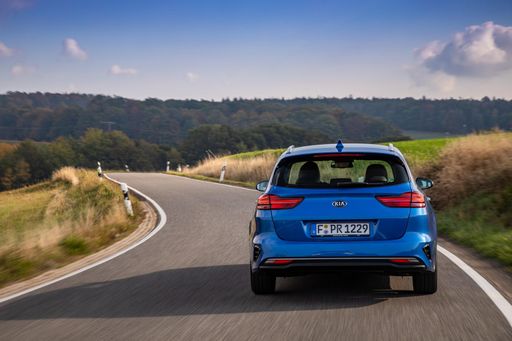
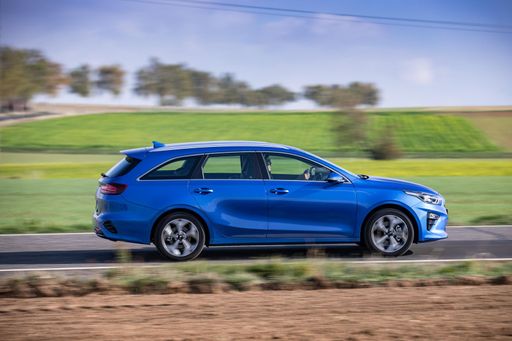
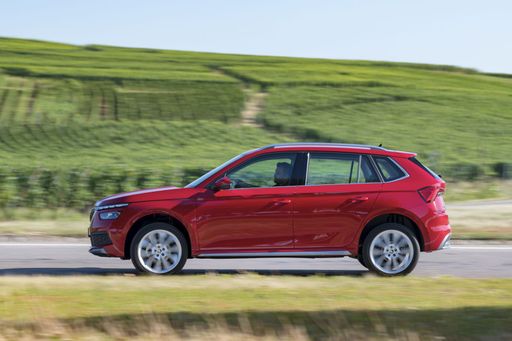
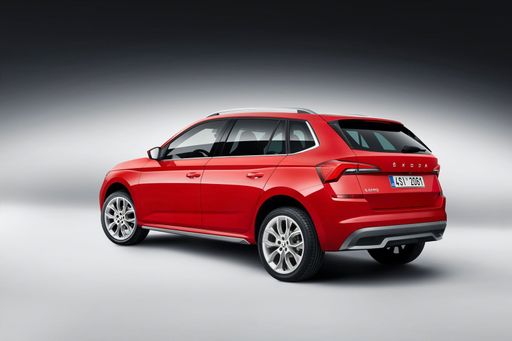
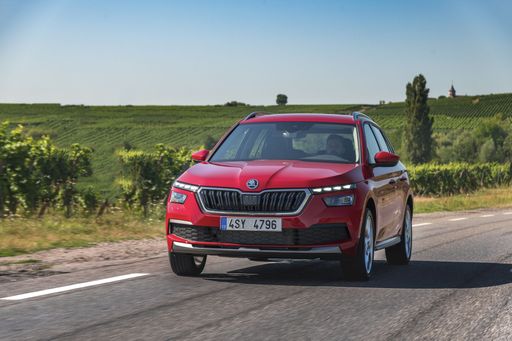
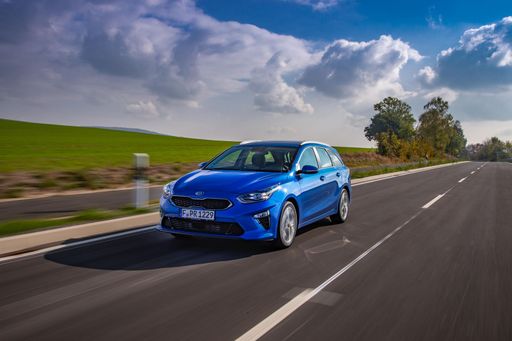
Starting with their body styles, the Kia Ceed Sportswagon is designed as a wagon, offering ample cargo space and a practical rear. It measures 4605 mm in length, 1800 mm in width, and stands 1465 mm tall. The Skoda Kamiq, on the other hand, is classified as an SUV. This model is shorter at 4241 mm but boasts a taller height of 1562 mm, giving it a more commanding road presence.

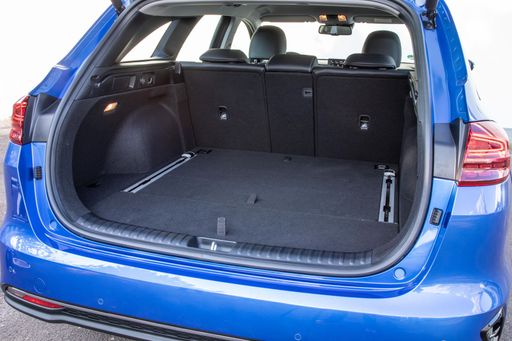
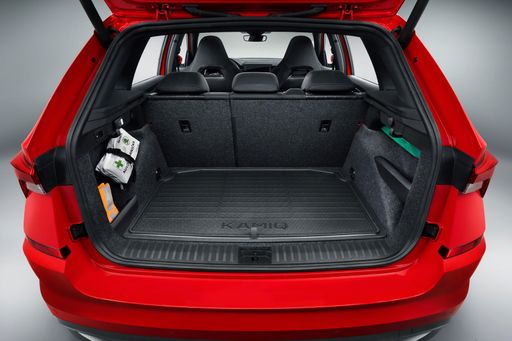
Despite being an SUV, the Kamiq features a trunk capacity of 400 liters, which pales in comparison to the Ceed Sportswagon's generous 512 liters. For buyers prioritizing space and versatility, the Ceed comes out on top in this area.

Ceed Sportswagon

Powertrain Options: Performance and Efficiency

Under the hood, both the Ceed Sportswagon and Kamiq boast a range of engine options. The Kia Ceed offers petrol engines with mild hybrid technology (MHEV), producing power outputs of 100 to 140 HP. The engine options include a 998 cc three-cylinder and a 1482 cc four-cylinder unit, with CO2 emissions ranging from 137 to 146 g/km. The vehicle provides a respectable fuel consumption of 6.3 to 6.4 L/100km, depending on the variant.

In comparison, the Skoda Kamiq presents an impressive array of petrol engines with outputs ranging from 95 to 150 HP. Featuring both three-cylinder (999 cc) and four-cylinder (1498 cc) options, it achieves fuel consumption as low as 5.4 L/100km. This efficiency is noteworthy and makes the Kamiq a strong contender for those looking to save at the pump.

Kamiq

Transmission and Driving Dynamics

When it comes to transmission, both models offer flexibility with manual and automatic options. The Ceed Sportswagon features a dual-clutch automatic option for smooth transitions, while the Kamiq’s dual-clutch system is designed for effortless urban navigation. With a front-wheel drive layout, both models promise good traction and handling.

In terms of acceleration, the Ceed can go from 0-100 km/h in as little as 9.7 seconds, while the Kamiq impresses with a sprint of just 8.3 seconds in its most powerful variant. For those who value performance, the Kamiq may be the more exhilarating option.

Ceed Sportswagon

Innovation and Safety Features

Both brands have integrated a variety of innovative features into their vehicles, enhancing safety and driving experience. The Kia Ceed Sportswagon is equipped with tech such as lane departure warning, adaptive cruise control, and a host of infotainment options that include smartphone integration.

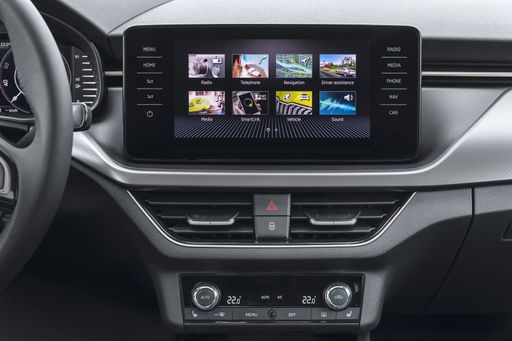
Skoda has also embraced technology with the Kamiq, offering features like adaptive cruise control, blind-spot monitoring, and a user-friendly infotainment system. Notably, Skoda’s Virtual Cockpit is a significant highlight, providing a customizable digital dashboard experience.

Kamiq

Comfort and Interior Space

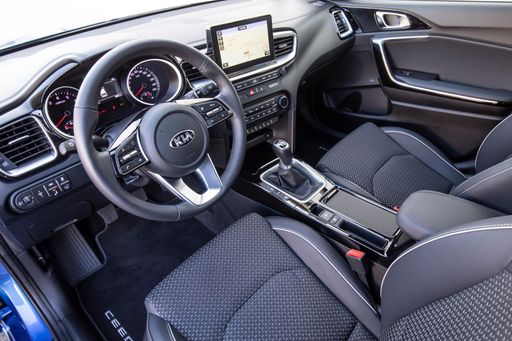
Both vehicles comfortably seat five passengers, but the design and layout differ. The Kia Ceed’s interior emphasizes space and practicality, making it a perfect companion for family outings or as a daily commuter. With quality materials and a well-thought-out layout, the Ceed delivers a pleasant driving environment.

The Kamiq, with its SUV design, offers a higher driving position, which many drivers find advantageous for visibility. This compact SUV also features a modern interior with thoughtful ergonomics that ensure comfort over long journeys.

Ceed Sportswagon

Conclusion: Which One to Choose?

The choice between the Kia Ceed Sportswagon and Skoda Kamiq ultimately depends on your personal preferences and needs. If you require extensive cargo capacity and prefer wagon versatility, the Ceed is the clear winner. However, if fuel efficiency and fun driving dynamics are more aligned with your priorities, the Kamiq stands out as a compelling option.

In conclusion, both vehicles succeed in their intentions, and potential buyers are encouraged to test drive both to find the one that best suits their lifestyle.

Kia Ceed Sportswagon vs Skoda Kamiq: Key differences

Kia Ceed Sportswagon

Skoda Kamiq

5 (3 Reviews)
rate
  • somewhat cheaper
  • minimal more power
  • a bit more efficient
  • a bit quicker from 0–100 km/h
  • minimal lighter

Here’s where it gets real: The technical differences in detail

Kamiq

Costs and Efficiency:

Price and efficiency are key factors when choosing a car – and this is often where the real differences emerge.

Skoda Kamiq has a somewhat advantage in terms of price – it starts at 21700 £ , while the Kia Ceed Sportswagon costs 24300 £ . That’s a price difference of around 2623 £.

Fuel consumption also shows a difference: Skoda Kamiq manages with 5.30 L and is therefore a bit more efficient than the Kia Ceed Sportswagon with 6 L. The difference is about 0.70 L per 100 km.

Ceed Sportswagon

Engine and Performance:

Under the bonnet, it becomes clear which model is tuned for sportiness and which one takes the lead when you hit the accelerator.

When it comes to engine power, the Skoda Kamiq has a minimal edge – offering 150 HP compared to 140 HP. That’s roughly 10 HP more horsepower.

In acceleration from 0 to 100 km/h, the Skoda Kamiq is a bit quicker – completing the sprint in 8.10 s, while the Kia Ceed Sportswagon takes 9.70 s. That’s about 1.60 s faster.

There’s also a difference in torque: Kia Ceed Sportswagon pulls slight stronger with 253 Nm compared to 250 Nm. That’s about 3 Nm difference.

Kamiq

Space and Everyday Use:

Whether family car or daily driver – which one offers more room, flexibility and comfort?

Both vehicles offer seating for 5 people.

In curb weight, Skoda Kamiq is minimal lighter – 1231 kg compared to 1335 kg. The difference is around 104 kg.

When it comes to payload, Skoda Kamiq slightly takes the win – 539 kg compared to 485 kg. That’s a difference of about 54 kg.

Who wins the race in the data check?

The Skoda Kamiq is decisively ahead in the objective data comparison.
This result only shows which model scores more points on paper – not which of the two cars feels right for you.

Kia Ceed Sportswagon
Skoda Kamiq

Costs and Consumption

View detailed analysis

Engine and Performance

View detailed analysis

Dimensions and Body

View detailed analysis
from about £21,700
Kamiq

Skoda Kamiq

  • Engine Type : Petrol
  • Transmission : Manuel, Automatic
  • Drive Type : Front-Wheel Drive
  • Power HP : 95 - 150 HP
  • Consumption L/100km : 5.3 - 5.7 L

Kia Ceed Sportswagon

The Kia Ceed Sportswagon is a sensible and surprisingly stylish family wagon that turns daily chores into a bit less of a grind. Practical, comfortable and packed with thoughtful touches where they matter, it’s a smart choice for buyers who want usefulness without sacrificing personality.

details

Skoda Kamiq

5 (3 Reviews)
rate

The Skoda Kamiq is a neatly packaged city crossover that pairs practical space with unshowy, thoughtful design. It’s easy to live with, economical to run and full of clever details that make daily driving feel intelligently sorted rather than flashy.

details
Kia Ceed Sportswagon
Skoda Kamiq

Costs and Consumption

Price
24300 - 27200 £
Price
21700 - 31900 £
Consumption L/100km
6 - 6.4 L
Consumption L/100km
5.3 - 5.7 L
Consumption kWh/100km
-
Consumption kWh/100km
-
Electric Range
-
Electric Range
-
Battery Capacity
-
Battery Capacity
-
co2
137 - 146 g/km
co2
121 - 128 g/km
Fuel tank capacity
-
Fuel tank capacity
50 L

Dimensions and Body

Body Type
Estate
Body Type
SUV
Seats
5
Seats
5
Doors
-
Doors
5
Curb weight
1335 - 1437 kg
Curb weight
1231 - 1340 kg
Trunk capacity
-
Trunk capacity
400 L
Length
-
Length
4241 mm
Width
1800 mm
Width
1793 mm
Height
-
Height
1562 mm
Max trunk capacity
-
Max trunk capacity
1395 L
Payload
463 - 485 kg
Payload
439 - 539 kg

Engine and Performance

Engine Type
Petrol, Petrol MHEV
Engine Type
Petrol
Transmission
Manuel, Automatic
Transmission
Manuel, Automatic
Transmission Detail
Manual Gearbox, Dual-Clutch Automatic
Transmission Detail
Manual Gearbox, Dual-Clutch Automatic
Drive Type
Front-Wheel Drive
Drive Type
Front-Wheel Drive
Power HP
100 - 140 HP
Power HP
95 - 150 HP
Acceleration 0-100km/h
9.7 - 13.5 s
Acceleration 0-100km/h
8.1 - 11 s
Max Speed
-
Max Speed
183 - 216 km/h
Torque
172 - 253 Nm
Torque
175 - 250 Nm
Number of Cylinders
3 - 4
Number of Cylinders
3 - 4
Power kW
74 - 103 kW
Power kW
70 - 110 kW
Engine capacity
998 - 1482 cm3
Engine capacity
999 - 1498 cm3

General

Model Year
2024
Model Year
2025
CO2 Efficiency Class
E
CO2 Efficiency Class
D
Brand
Kia
Brand
Skoda
Is the Kia Ceed Sportswagon offered with different drivetrains?

The Kia Ceed Sportswagon is available as Front-Wheel Drive.

The prices shown are estimates based on German list prices, adjusted for local VAT. Local registration taxes (e.g. NoVA, BPM or CO2 malus) are not included. This information is not legally binding.