VS

Kia Ceed vs Hyundai Bayon comparison

Compare performance (140 HP vs 90 HP), boot space and price (23,500 £ vs 20,100 £ ) at a glance. Find out which car is the better choice for you – Kia Ceed or Hyundai Bayon?

Kia Ceed vs Hyundai Bayon: Key differences

Kia Ceed

  • markedly more power
  • markedly quicker 0–100 km/h

Hyundai Bayon

4 (1 Reviews)
rate
  • slightly cheaper
  • marginally more efficient
  • slightly lighter

All details on performance, efficiency, range and trunk space can be found in the technical comparison below – including user reviews for both models.

Ceed

Hyundai Bayon vs. Kia Ceed: A Detailed Comparison

The automotive market is continuously evolving, and in this competitive landscape, the Hyundai Bayon and Kia Ceed stand out as prominent choices for modern drivers. Each model appeals to different tastes within the compact segment, blending innovative technology with performance and comfort. In this article, we will delve into a comprehensive comparison of these two vehicles, focusing on their technical specifications, innovations, and unique features.
Bayon

Design and Body Structure

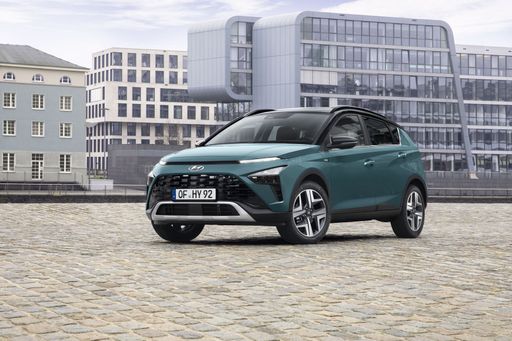
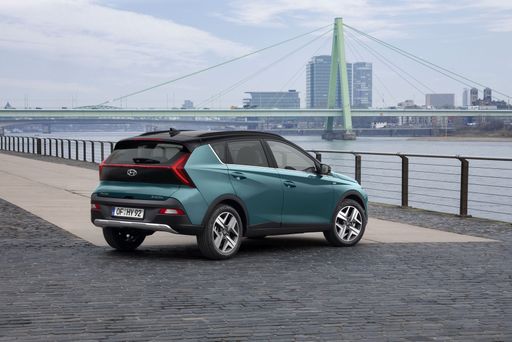
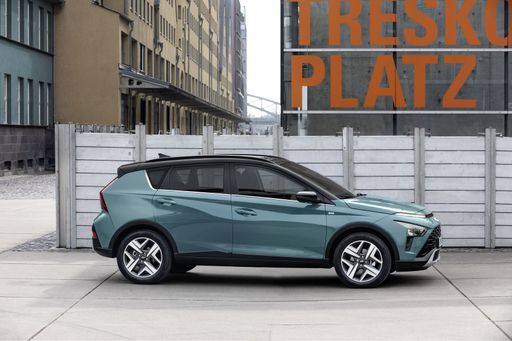
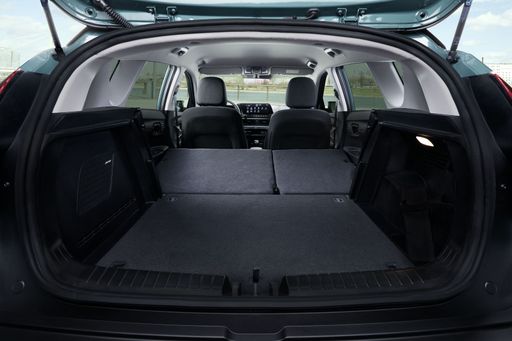
The Hyundai Bayon is classified as a subcompact SUV, designed for those seeking a higher driving position and greater cargo capacity. Boasting a length of 4,180 mm, width of 1,775 mm, and a height of 1,500 mm, it offers a spacious cabin for up to five passengers and provides a trunk capacity of 411 liters.

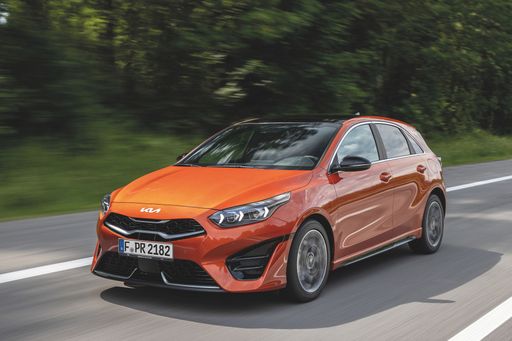
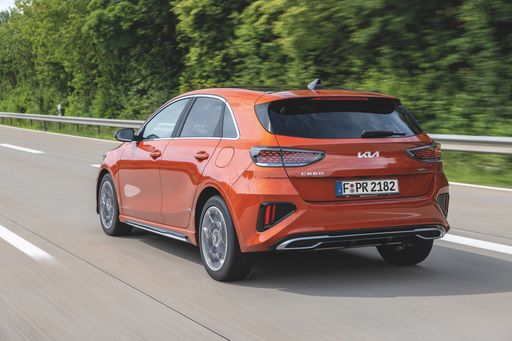
In contrast, the Kia Ceed is positioned as a hatchback, known for its sporty aesthetics and agile handling. With a length ranging from 4,315 to 4,325 mm, a width of 1,800 mm, and a height of 1,442 to 1,447 mm, it presents a slightly more compact profile but still caters to the needs of five passengers with a trunk capacity varying from 357 to 395 liters.

Ceed

Performance and Engine Options

Under the hood, the Hyundai Bayon offers a single engine type: a turbocharged 1.0-liter three-cylinder petrol engine that delivers 100 HP and 172 Nm of torque. Buyers can choose between a manual gearbox or a dual-clutch automatic transmission. This setup promises respectable fuel efficiency, with a consumption rate of 5.4 L/100 km and a top speed of 179 km/h. The 0-100 km/h acceleration takes approximately 11.3 seconds.

The Kia Ceed, on the other hand, presents a broader engine lineup, including options for functional MHEV (Mild Hybrid Electric Vehicle) technology. It offers a basic 1.0-liter three-cylinder petrol engine with 100 HP and a more powerful 1.5-liter four-cylinder engine producing 140 HP. The power delivery is coupled with a torque output ranging from 172 Nm to a robust 253 Nm, depending on the engine variant. Fuel consumption ranges from 6.0 to 6.4 L/100 km, with the top speed of the more powerful engine reaching an impressive 197 km/h. Accelerating from 0-100 km/h can take as little as 9.5 seconds with the highest-performing variant.

Bayon

Driving Dynamics and Comfort

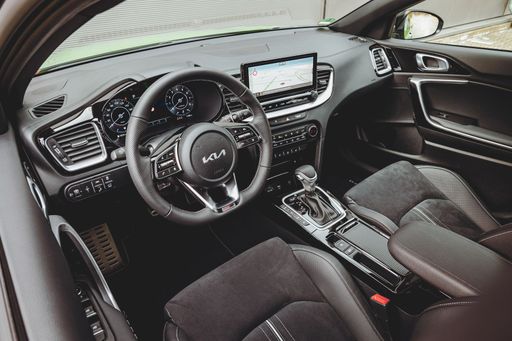
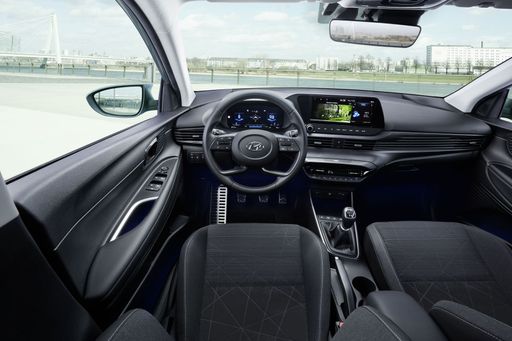
Both vehicles employ a front-wheel-drive setup, providing stability and control during everyday driving. The Hyundai Bayon is optimized for comfort, making it an excellent choice for city driving as well as longer journeys. The interior is designed to create a cozy atmosphere, featuring a modern dashboard layout with high-quality materials.

The Kia Ceed emphasizes sportiness alongside comfort, delivering a responsive driving experience. It's well-suited for those who seek a blend of fun and functionality. The engineering behind the suspension enhances the overall driving dynamics, offering precise handling, especially around corners.

Ceed

Innovative Technology and Features

Innovation is at the forefront of both the Bayon and Ceed models. The Bayon is equipped with a range of modern infotainment features, including a touchscreen display with smartphone integration and multiple safety assist technologies as standard. These enhancements cater to the tech-savvy driver looking for connectivity and convenience.

Meanwhile, the Kia Ceed provides a more upscale technological experience, with options for advanced navigation systems, premium audio systems, and semi-autonomous driving features on select trims. Safety is also paramount, with robust driver assistance systems including lane-keeping assist and adaptive cruise control, making everyday commuting safer and more enjoyable.

Bayon

Conclusion: Which One is Right for You?

Ultimately, the choice between the Hyundai Bayon and the Kia Ceed boils down to personal preference. If you're in the market for an SUV that emphasizes space and comfort with excellent fuel efficiency, the Bayon is an appealing option. However, if you value sporty design, a broad engine selection, and cutting-edge technology, the Kia Ceed should be at the top of your list.

As both brands continue to innovate and raise the bar in the automotive sector, either vehicle promises to provide a satisfying driving experience backed by quality and reliability.

Here’s where it gets real: The technical differences in detail

Ceed

Costs and Efficiency:

Price and efficiency are key factors when choosing a car – and this is often where the real differences emerge.

Hyundai Bayon is slightly cheaper – starting at 20,100 £ , while the Kia Ceed costs 23,500 £ . That’s a price difference of around 3,420 £.

Fuel consumption also shows a difference: the Hyundai Bayon uses 5.8 L/100km and is marginally more efficient than the Kia Ceed with 6 L/100km. The difference is about 0.2 L/100km.

Bayon

Engine and Performance:

Under the bonnet, it becomes clear which model is tuned for sportiness and which one takes the lead when you hit the accelerator.

When it comes to engine power, the Kia Ceed offers markedly more power – delivering 140 HP compared to 90 HP. That’s roughly 50 HP more horsepower.

When accelerating from 0 to 100 km/h, the Kia Ceed is markedly quicker – completing the sprint in 9.5 s, while the Hyundai Bayon takes 11.9 s. That’s about 2.4 s quicker.

There’s also a difference in torque: the Kia Ceed delivers noticeably more torque with 253 Nm compared to 172 Nm. That’s about 81 Nm more.

Ceed

Space and Everyday Use:

Beyond pure performance, interior space and usability matter most in daily life. This is where you see which car is more practical and versatile.

Both vehicles offer seating for 5 people.

In terms of curb weight, Hyundai Bayon is slightly lighter – 1,175 kg compared to 1,298 kg. The difference is around 123 kg.

When it comes to payload, the Kia Ceed carries barely more – 490 kg compared to 460 kg. That’s a difference of about 30 kg.

Who wins the race in the data check?

The Kia Ceed is far ahead overall in the objective data comparison.
This result only shows which model scores more points on paper – not which of the two cars feels right for you.

from £23,500
Ceed

Kia Ceed

  • Engine Type : Petrol, Petrol MHEV
  • Transmission : Manuel, Automatic
  • Drive Type : Front-Wheel Drive
  • Power HP : 100 - 140 HP
  • Consumption L/100km : 6 - 6.4 L/100km
Kia Ceed
Hyundai Bayon

Costs and Consumption

View detailed analysis

Engine and Performance

View detailed analysis

Dimensions and Body

View detailed analysis

Kia Ceed

The Kia Ceed is a sensible, stylish hatchback that gives buyers more than they'd expect for the money, blending practical space with crisp, modern looks. It drives with measured confidence and comes loaded with user-friendly kit, so you can enjoy daily life behind the wheel without breaking into a sweat.

details

Hyundai Bayon

The Hyundai Bayon slips neatly between city runabout and small SUV, offering surprising practicality and a fresh, confident design that stands out in urban traffic. It's an easy buy for shoppers who want smart packaging, tidy handling and a dash of personality without fuss — a sensible little crossover that makes everyday driving a bit more enjoyable.

details
Kia Ceed
Hyundai Bayon

Costs and Consumption

Price
23,500 - 26,300 £
Price
20,100 - 25,800 £
Consumption L/100km
6 - 6.4 L/100km
Consumption L/100km
5.8 L/100km
Consumption kWh/100km
-
Consumption kWh/100km
-
Electric Range
-
Electric Range
-
Battery Capacity
-
Battery Capacity
-
co2
137 - 146 g/km
co2
130 - 132 g/km
Fuel tank capacity
-
Fuel tank capacity
-

Dimensions and Body

Body Type
Hatchback
Body Type
SUV
Seats
5
Seats
5
Doors
-
Doors
-
Curb weight
1,298 - 1,372 kg
Curb weight
1,175 - 1,200 kg
Trunk capacity
-
Trunk capacity
411 L
Length
-
Length
-
Width
1,800 mm
Width
1,775 mm
Height
-
Height
-
Max trunk capacity
-
Max trunk capacity
-
Payload
478 - 490 kg
Payload
450 - 460 kg

Engine and Performance

Engine Type
Petrol, Petrol MHEV
Engine Type
Petrol
Transmission
Manuel, Automatic
Transmission
Manuel, Automatic
Transmission Detail
Manual Gearbox, Dual-Clutch Automatic
Transmission Detail
Manual Gearbox, Dual-Clutch Automatic
Drive Type
Front-Wheel Drive
Drive Type
Front-Wheel Drive
Power HP
100 - 140 HP
Power HP
90 HP
Acceleration 0-100km/h
9.5 - 13.2 s
Acceleration 0-100km/h
11.9 - 13.3 s
Max Speed
-
Max Speed
-
Torque
172 - 253 Nm
Torque
172 Nm
Number of Cylinders
3 - 4
Number of Cylinders
3
Power kW
74 - 103 kW
Power kW
66 kW
Engine capacity
998 - 1,482 cm3
Engine capacity
998 cm3

General

Model Year
2,024
Model Year
2,025
CO2 Efficiency Class
E
CO2 Efficiency Class
D
Brand
Kia
Brand
Hyundai
DriveDuel uses data analysis and artificial intelligence to evaluate vehicle data and create content. Content is regularly reviewed and improved. The displayed prices are estimates based on German list prices, adjusted to the respective country’s VAT. Country-specific registration taxes are not included. This information is not legally binding.