VS

Kia EV3 vs Hyundai Tucson comparison

Compare performance (204 HP vs 288 HP), boot space and price (30,800 £ vs 20,900 £ ) at a glance. Find out which car is the better choice for you – Kia EV3 or Hyundai Tucson?

Kia EV3 vs Hyundai Tucson: Key differences

Kia EV3

4.7 (3 Reviews)
rate
  • clearly more electric range

Hyundai Tucson

4.6 (4 Reviews)
rate
  • significantly cheaper
  • noticeably more power
  • moderately lighter
  • visibly more trunk space

All details on performance, efficiency, range and trunk space can be found in the technical comparison below – including user reviews for both models.

EV3

A Battle of Two Titans: Hyundai Tucson vs Kia EV3

In the rapidly evolving automotive world, the competition between SUVs has never been fiercer, especially with the advent of innovative electric vehicles. The Hyundai Tucson and Kia EV3 stand out in 2024, each embodying distinct characteristics and technologies that cater to varied consumer needs. This article explores the technical specifications, innovations, and overall performance of both models to help potential buyers make an informed choice.
Tucson

Exterior Dimensions and Design

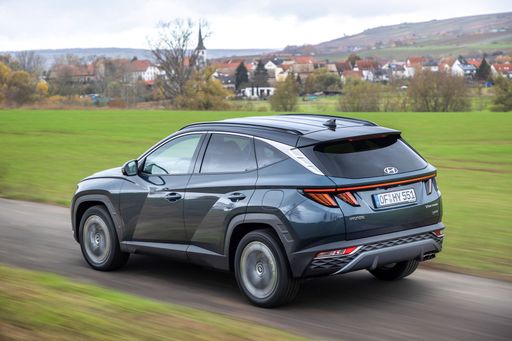
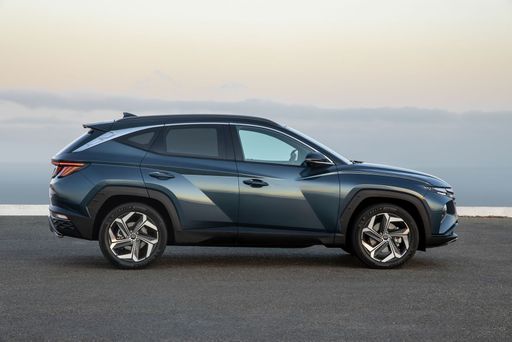
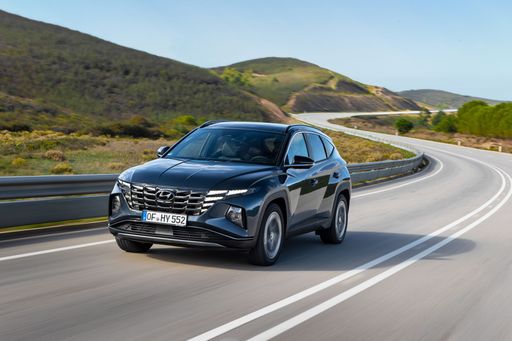
The Tucson boasts a length of 4510 mm (and up to 4520 mm), a width of 1865 mm, and a height of 1650 mm, creating an imposing SUV presence. Its bold design language, characterized by sharp lines and an aggressive stance, appeals to modern consumers seeking both style and functionality.

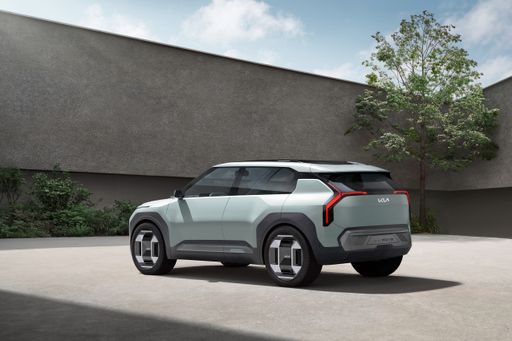
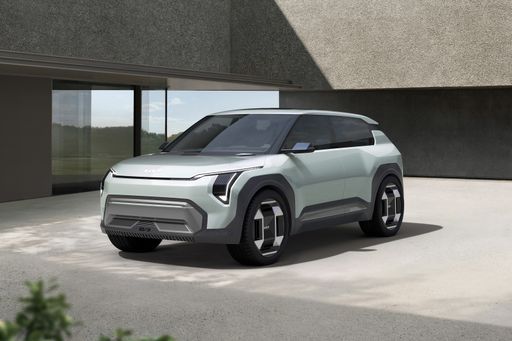
In contrast, the Kia EV3 measures slightly smaller at 4300 mm (and 4310 mm), with a width of 1850 mm and a height that ranges from 1560 to 1570 mm. Despite its more compact stature, the EV3 features a sleek and futuristic design strategy that positions it as a leading player in the electric segment.

EV3

Engine Performance and Efficiency

When it comes to engine options, the Hyundai Tucson offers a wide array of choices, including Diesel MHEV, Petrol MHEV, Full Hybrid, and Plugin Hybrid variants, with power outputs ranging from 136 HP to a robust 252 HP. The Tucson's automatic and manual transmission options cater to diverse driving preferences. Fuel consumption varies significantly across the models, with efficiency ratings ranging from 5.1 to 6.8 L/100 km.

On the electric front, the Kia EV3 showcases a powerful electric motor producing up to 204 HP. It employs a reduction gearbox in its automatic transmission, ensuring smooth acceleration. The EV3 is lauded for its efficiency, consuming between 14.9 and 16.2 kWh/100 km. Notably, the electric range is impressive, reaching up to 605 km with the larger battery capacity of 81.4 kWh.

Tucson

Acceleration and Speed

The Tucson delivers respectable acceleration figures, with the quickest variant reaching 0-100 km/h in just 7.9 seconds. The max speed ranges from 180 to 194 km/h across different engine options, ensuring a thrilling driving experience.

In comparison, the Kia EV3 demonstrates its prowess with a commendable 0-100 km/h time of 7.5 seconds. Though its top speed is lower at 170 km/h, the EV3’s quick acceleration is a testament to the growing capabilities of electric vehicles in terms of performance.

EV3

Interior Comfort and Technology

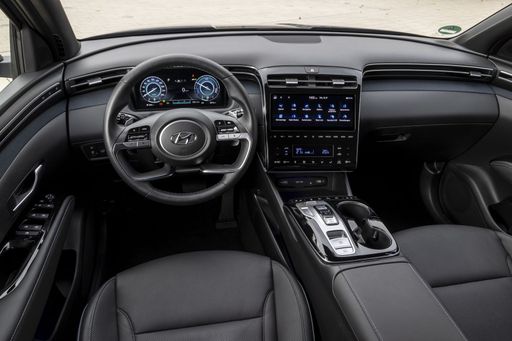
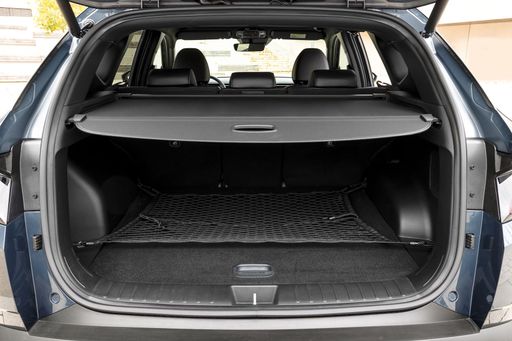
Both SUVs are designed to comfortably seat five passengers, but the Tucson emerges as a leader in cargo capacity, offering up to 620 liters of trunk space – a practical choice for families or travelers. The EV3, while smaller at 460 liters, still provides ample storage for everyday needs.

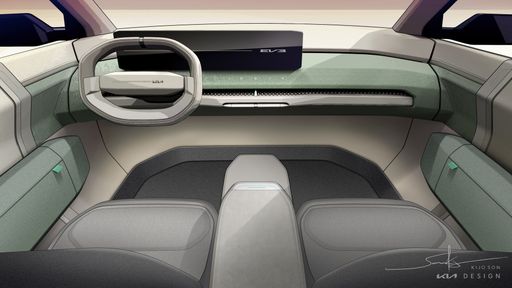
In terms of technology, both models are equipped with state-of-the-art infotainment systems and advanced safety features. The Tucson’s array of options include a user-friendly touchscreen interface and ADAS (Advanced Driver-Assistance Systems) that enhance driving safety and convenience. The Kia EV3, in line with its innovative ethos, incorporates futuristic features and smart connectivity, appealing to tech-savvy consumers.

Tucson

Cost-Effectiveness and Environmental Impact

With Hyundai Tucson's diverse engine options, consumers can select a model that fits their budget and needs, making it an attractive all-rounder. The SUV is designed with eco-friendliness in mind, achieving CO2 emissions ranging from 22 to 153 g/km, depending on the variant.

The Kia EV3 takes sustainability a step further, producing zero emissions (0 g/km) and earning an impressive CO2 efficiency class rating of A. While the initial cost of electric vehicles may be higher, the long-term savings on fuel and maintenance can make it a wise investment for environmentally conscious consumers.

Conclusion: Which SUV Reigns Supreme?

Choosing between the Hyundai Tucson and the Kia EV3 ultimately boils down to personal preference and driving needs. The Tucson offers a wealth of versatility with its hybrid options and superior cargo space, making it an excellent choice for families. On the other hand, the Kia EV3 emerges as a front-runner in the electric segment, blending performance with sustainability.

As the automotive industry continues to innovate, both models stand as testaments to their respective brands' commitment to quality, performance, and tech-forward thinking. Whatever your choice, the Tucson and EV3 symbolize a new era of driving that emphasizes efficiency, comfort, and safety.

Here’s where it gets real: The technical differences in detail

EV3

Costs and Efficiency:

Price and efficiency are key factors when choosing a car – and this is often where the real differences emerge.

Hyundai Tucson is significantly cheaper – starting at 20,900 £ , while the Kia EV3 costs 30,800 £ . That’s a price difference of around 9,951 £.

As for electric range, the Kia EV3 offers clearly more range – reaching up to 605 km, about 535 km more than the Hyundai Tucson.

Tucson

Engine and Performance:

Under the bonnet, it becomes clear which model is tuned for sportiness and which one takes the lead when you hit the accelerator.

When it comes to engine power, the Hyundai Tucson offers noticeably more power – delivering 288 HP compared to 204 HP. That’s roughly 84 HP more horsepower.

Both models accelerate almost equally fast – 7.5 s from 0 to 100 km/h.

Looking at top speed, the Hyundai Tucson is a bit faster – reaching 204 km/h, while the Kia EV3 tops out at 170 km/h. The difference is around 34 km/h.

There’s also a difference in torque: the Hyundai Tucson delivers noticeably more torque with 379 Nm compared to 283 Nm. That’s about 96 Nm more.

EV3

Space and Everyday Use:

Cabin size, boot volume and payload all play a role in everyday practicality. Here, comfort and flexibility make the difference.

Both vehicles offer seating for 5 people.

In terms of curb weight, Hyundai Tucson is moderately lighter – 1,542 kg compared to 1,800 kg. The difference is around 258 kg.

Looking at boot space, the Hyundai Tucson offers visibly more boot space – 620 L compared to 460 L. That’s a difference of about 160 L.

For maximum load capacity, the Hyundai Tucson offers noticeably more capacity – up to 1,799 L, about 548 L more than the Kia EV3.

When it comes to payload, the Hyundai Tucson carries slightly more – 545 kg compared to 470 kg. That’s a difference of about 75 kg.

Who wins the race in the data check?

The Hyundai Tucson is clearly ahead overall in the objective data comparison.
This result only shows which model scores more points on paper – not which of the two cars feels right for you.

from £20,900
Tucson

Hyundai Tucson

  • Engine Type : Petrol, Full Hybrid, Plugin Hybrid, Diesel MHEV
  • Transmission : Manuel, Automatic
  • Drive Type : Front-Wheel Drive, All-Wheel Drive
  • Power HP : 136 - 288 HP
  • Consumption L/100km : 2.7 - 7.6 L/100km
  • Electric Range : 63 - 70 km
Kia EV3
Hyundai Tucson

Costs and Consumption

View detailed analysis

Engine and Performance

View detailed analysis

Dimensions and Body

View detailed analysis

Kia EV3

The Kia EV3 arrives as a cheeky, practical electric compact that manages to feel both premium and playful, delivering crisp handling and a roomy cabin that's perfect for urban life. With smart tech, friendly styling and sensible pricing, the EV3 is the kind of car that makes switching to electric feel like a no-brainer without asking you to give anything important up.

details

Hyundai Tucson

Hyundai Tucson marries bold, sculpted looks with a clever, roomy cabin that feels smarter than its price tag suggests. It's composed on the road, easy to live with day-to-day, and a sensible choice for buyers who want SUV style without the showroom theatrics.

details
Kia EV3
Hyundai Tucson

Costs and Consumption

Price
30,800 - 41,700 £
Price
20,900 - 47,900 £
Consumption L/100km
-
Consumption L/100km
2.7 - 7.6 L/100km
Consumption kWh/100km
14.9 - 16.2 kWh/100km
Consumption kWh/100km
-
Electric Range
436 - 605 km
Electric Range
63 - 70 km
Battery Capacity
58.3 - 81.4 kWh
Battery Capacity
-
co2
0 g/km
co2
62 - 172 g/km
Fuel tank capacity
-
Fuel tank capacity
52 - 54 L

Dimensions and Body

Body Type
SUV
Body Type
SUV
Seats
5
Seats
5
Doors
5
Doors
5
Curb weight
1,800 - 1,885 kg
Curb weight
1,542 - 1,893 kg
Trunk capacity
460 L
Trunk capacity
546 - 620 L
Length
4,300 - 4,310 mm
Length
4,525 - 4,535 mm
Width
1,850 mm
Width
1,865 mm
Height
1,560 - 1,570 mm
Height
1,650 mm
Max trunk capacity
1,251 L
Max trunk capacity
1,795 - 1,799 L
Payload
470 kg
Payload
518 - 545 kg

Engine and Performance

Engine Type
Electric
Engine Type
Petrol, Full Hybrid, Plugin Hybrid, Diesel MHEV
Transmission
Automatic
Transmission
Manuel, Automatic
Transmission Detail
Reduction Gearbox
Transmission Detail
Manual Gearbox, Dual-Clutch Automatic, Automatic Gearbox
Drive Type
Front-Wheel Drive
Drive Type
Front-Wheel Drive, All-Wheel Drive
Power HP
204 HP
Power HP
136 - 288 HP
Acceleration 0-100km/h
7.5 - 7.9 s
Acceleration 0-100km/h
7.5 - 11.6 s
Max Speed
170 km/h
Max Speed
196 - 204 km/h
Torque
283 Nm
Torque
250 - 379 Nm
Number of Cylinders
-
Number of Cylinders
4
Power kW
150 kW
Power kW
100 - 212 kW
Engine capacity
-
Engine capacity
1,598 cm3

General

Model Year
2,024
Model Year
2,025
CO2 Efficiency Class
A
CO2 Efficiency Class
F, D, E, B
Brand
Kia
Brand
Hyundai
DriveDuel uses data analysis and artificial intelligence to evaluate vehicle data and create content. Content is regularly reviewed and improved. The displayed prices are estimates based on German list prices, adjusted to the respective country’s VAT. Country-specific registration taxes are not included. This information is not legally binding.