VS

Kia EV5 vs Hyundai IONIQ 5 comparison

Compare performance (306 HP vs 229 HP), boot space and price (39,400 £ vs 42,800 £ ) at a glance. Find out which car is the better choice for you – Kia EV5 or Hyundai IONIQ 5?

Kia EV5 vs Hyundai IONIQ 5: Key differences

Kia EV5

  • barely cheaper
  • markedly more power
  • noticeably quicker 0–100 km/h
details

Hyundai IONIQ 5

5 (2 Reviews)
rate
  • only slightly more efficient
  • barely more electric range
  • barely lighter
details

All details on performance, efficiency, range and trunk space can be found in the technical comparison below – including user reviews for both models.

By Achim Sedelmaier

EV5

Head-to-head: Hyundai IONIQ 5 VS Kia EV5 — the electric crossover comparison

The Hyundai IONIQ 5 and the Kia EV5 are two electric crossovers that make the same promise — contemporary EV living — but deliver it with different personalities. This comparison cuts through the marketing copy to show who each car actually suits in daily life, from city streets to motorway runs. If you’re hunting for an electric crossover that fits your style, family needs or commute, this is the page you want. We’ll talk vibe, practicality and the kinds of compromises each model asks you to live with.
IONIQ 5

Personality clash: futuristic minimalism versus SUV pragmatism

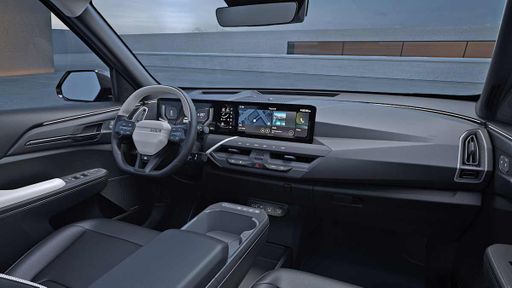
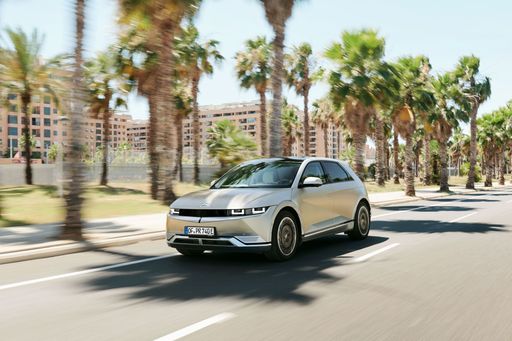
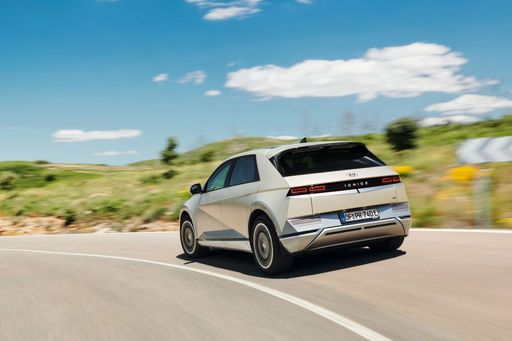
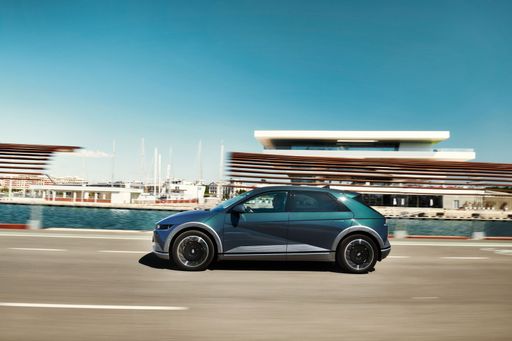
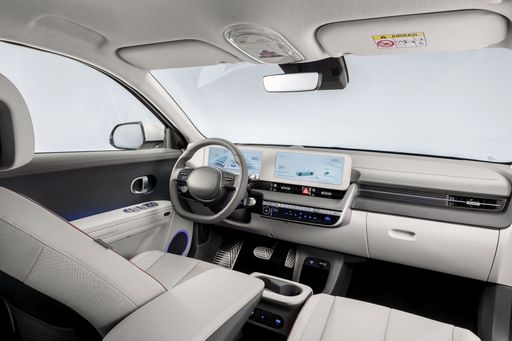
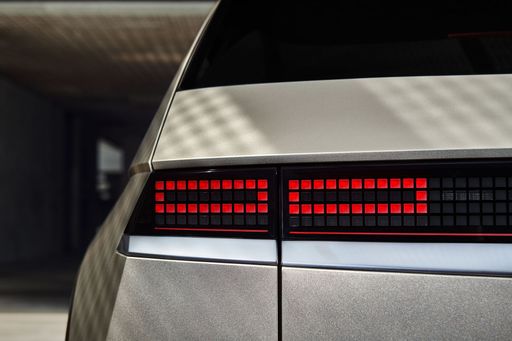
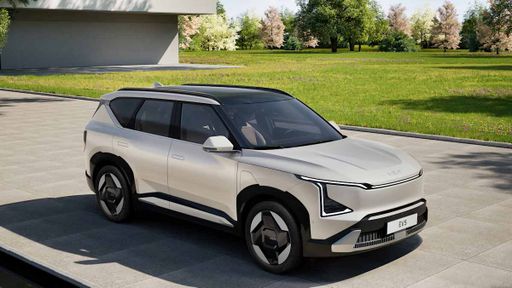
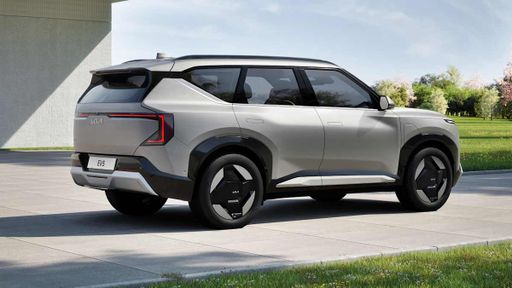
The Hyundai IONIQ 5 feels like a design statement — sharp lines, an interior that flirts with retro-futurism and a cabin that puts tech front and center. By contrast, the Kia EV5 wears a more conventional SUV silhouette and projects a friendlier, grounded presence that says “useful first, flashy later.” The IONIQ 5 leans into character and spectacle; the EV5 prefers predictability and broad appeal. That difference shows in how each car communicates with its driver: the IONIQ 5 is confident and a little cheeky, the EV5 keeps its cards close and focuses on making life easier.

EV5

Everyday reality: driver feel, comfort and space where it counts

On a daily basis, the Hyundai IONIQ 5 rewards those who want a composed, engaging cabin with thoughtful ergonomics and a slightly sportier demeanour, while the Kia EV5 tilts toward room and straightforward usability. Families and luggage-heavy owners will notice the EV5’s emphasis on load space and sensible packaging, whereas solo commuters and tech enthusiasts will appreciate the IONIQ 5’s livelier steering and more modern interior vibe. Neither car is harsh or impractical, but they prioritize different kinds of comfort — the IONIQ 5 aims for relaxed involvement, the EV5 for roomy reliability. That plays out in rear-seat usability, boot practicality and the general sense of daily convenience.

IONIQ 5

Buying it with your identity: the stories each car lets you tell

Pick the Hyundai IONIQ 5 if you want your car to feel like a piece of design theatre — it’s a conversation starter and a subtle status symbol for buyers who value innovation and flair. Choose the Kia EV5 if your narrative is about sensible upgrading: an EV that makes family life simpler without shouting. The IONIQ 5 tends to attract people who enjoy modern interiors and the idea of driving something that looks like it belongs in a design studio, while the EV5 suits drivers who prize predictability and everyday utility. Both let you justify the purchase in different ways: either as a forward-looking lifestyle choice or as a pragmatic step into electric motoring.

EV5

Who should seriously test-drive the Hyundai IONIQ 5?

If you’re drawn to gadget-rich cabins, distinctive styling and a car that feels a bit special every time you climb in, the Hyundai IONIQ 5 should be near the top of your test-drive list. It’s aimed at people who place value on perceived quality, cabin tech and a sharper driving character rather than sheer cargo volume. If you’re tempted by innovation and a modern image, the IONIQ 5 will reward that desire more than the Kia EV5. However, if family-first practicality is your priority, you’ll want to put the EV5 on your shortlist as well.

IONIQ 5

Who should lean toward the Kia EV5 — and when the IONIQ 5 still makes sense

The Kia EV5 is best for buyers who prioritise space, straightforward usability and a comfortable, no-fuss ownership experience — think practical families and commuters who want reliability over showmanship. If you need a more conventional SUV layout and easy day-to-day flexibility, the EV5 answers that brief better than the Hyundai IONIQ 5. That said, anyone who values sharper design or a more tech-forward interior should still take the IONIQ 5 for a drive before deciding. Scroll down to the data section to see how those qualitative differences line up on paper and help you make the final call.

Here’s where it gets real: The technical differences in detail

EV5

Costs and Efficiency:

Looking at overall running costs, both models reveal some interesting differences in everyday economy.

Kia EV5 is barely cheaper – starting at 39,400 £ , while the Hyundai IONIQ 5 costs 42,800 £ . That’s a price difference of around 3,351 £.

In terms of energy consumption, the Hyundai IONIQ 5 is only slightly more efficient: consuming 15.6 kWh/100km compared to 16.9 kWh/100km for the Kia EV5. That’s a difference of about 1.3 kWh/100km.

As for electric range, the Hyundai IONIQ 5 offers barely more range – reaching up to 570 km, about 40 km more than the Kia EV5.

IONIQ 5

Engine and Performance:

Under the bonnet, it becomes clear which model is tuned for sportiness and which one takes the lead when you hit the accelerator.

When it comes to engine power, the Kia EV5 offers markedly more power – delivering 306 HP compared to 229 HP. That’s roughly 77 HP more horsepower.

When accelerating from 0 to 100 km/h, the Kia EV5 is noticeably quicker – completing the sprint in 6.2 s, while the Hyundai IONIQ 5 takes 7.5 s. That’s about 1.3 s quicker.

There’s also a difference in torque: the Kia EV5 delivers noticeably more torque with 480 Nm compared to 350 Nm. That’s about 130 Nm more.

EV5

Space and Everyday Use:

Cabin size, boot volume and payload all play a role in everyday practicality. Here, comfort and flexibility make the difference.

Both vehicles offer seating for 5 people.

In terms of curb weight, Hyundai IONIQ 5 is barely lighter – 1,955 kg compared to 2,069 kg. The difference is around 114 kg.

When it comes to payload, the Hyundai IONIQ 5 carries barely more – 530 kg compared to 511 kg. That’s a difference of about 19 kg.

Who wins the race in the data check?

The Kia EV5 is far ahead overall in the objective data comparison.
This result only shows which model scores more points on paper – not which of the two cars feels right for you.

from £39,400
EV5

Kia EV5

  • Engine Type : Electric
  • Transmission : Automatic
  • Drive Type : Front-Wheel Drive, All-Wheel Drive
  • Power HP : 218 - 306 HP
  • Consumption kWh/100km : 16.9 - 18.6 kWh/100km
  • Electric Range : 476 - 530 km
Kia EV5
Hyundai IONIQ 5

Costs and Consumption

View detailed analysis

Engine and Performance

View detailed analysis

Dimensions and Body

View detailed analysis

Kia EV5

Kia's EV5 is an exciting entry into the electric SUV market, showcasing the brand's commitment to sustainable mobility. With its modern design and advanced technology features, the EV5 promises to deliver a smooth and environmentally friendly driving experience. The interior offers a spacious and comfortable ride, making it an appealing choice for families and eco-conscious drivers alike.

details

Hyundai IONIQ 5

The Hyundai IONIQ 5 looks like a spaceship that moved into suburbia, pairing bold retro‑futuristic styling with a roomy, cleverly laid-out cabin that makes long trips surprisingly comfortable. Its electric character delivers instant, silky acceleration and low running costs, making it a smart, slightly cheeky pick for buyers who want tech, practicality and personality without the drama.

details
Kia EV5
Hyundai IONIQ 5

Costs and Consumption

Price
39,400 - 51,400 £
Price
42,800 - 45,600 £
Consumption L/100km
-
Consumption L/100km
-
Consumption kWh/100km
16.9 - 18.6 kWh/100km
Consumption kWh/100km
15.6 - 16 kWh/100km
Electric Range
476 - 530 km
Electric Range
440 - 570 km
Battery Capacity
-
Battery Capacity
63 - 84 kWh
co2
0 g/km
co2
0 g/km
Fuel tank capacity
-
Fuel tank capacity
-

Dimensions and Body

Body Type
SUV
Body Type
SUV
Seats
5
Seats
5
Doors
-
Doors
5
Curb weight
2,069 - 2,205 kg
Curb weight
1,955 - 2,060 kg
Trunk capacity
-
Trunk capacity
520 L
Length
-
Length
4,655 mm
Width
1,875 mm
Width
1,890 mm
Height
-
Height
1,605 mm
Max trunk capacity
-
Max trunk capacity
1,580 L
Payload
465 - 511 kg
Payload
515 - 530 kg

Engine and Performance

Engine Type
Electric
Engine Type
Electric
Transmission
Automatic
Transmission
Automatic
Transmission Detail
Reduction Gearbox
Transmission Detail
Reduction Gearbox
Drive Type
Front-Wheel Drive, All-Wheel Drive
Drive Type
Rear-Wheel Drive
Power HP
218 - 306 HP
Power HP
170 - 229 HP
Acceleration 0-100km/h
6.2 - 8.4 s
Acceleration 0-100km/h
7.5 - 8.5 s
Max Speed
-
Max Speed
185 km/h
Torque
295 - 480 Nm
Torque
350 Nm
Number of Cylinders
-
Number of Cylinders
-
Power kW
160 - 225 kW
Power kW
125 - 168 kW
Engine capacity
-
Engine capacity
-

General

Model Year
2,025 - 2,026
Model Year
2025
CO2 Efficiency Class
A
CO2 Efficiency Class
A
Brand
Kia
Brand
Hyundai
DriveDuel uses data analysis and artificial intelligence to evaluate vehicle data and create content. Content is regularly reviewed and improved. The displayed prices are estimates based on German list prices, adjusted to the respective country’s VAT. Country-specific registration taxes are not included. This information is not legally binding.