VS

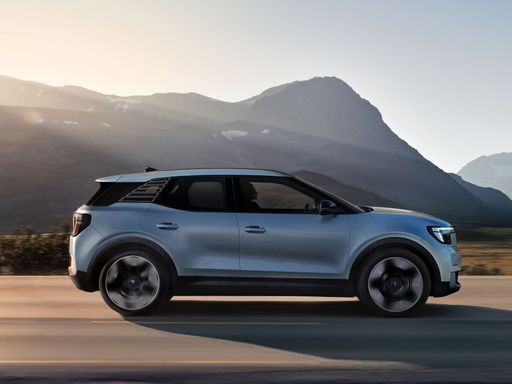
Kia EV6 vs Ford Explorer EV comparison

Compare performance (609 HP vs 340 HP), boot space and price (38,600 £ vs 34,200 £ ) at a glance. Find out which car is the better choice for you – Kia EV6 or Ford Explorer EV?

Kia EV6 vs Ford Explorer EV: Key differences

Kia EV6

5 (3 Reviews)
rate
  • considerably more power
  • considerably quicker 0–100 km/h
  • very slightly lighter
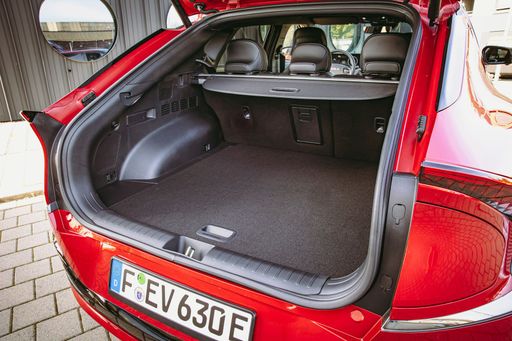
  • very slightly more trunk space
details

Ford Explorer EV

4.9 (3 Reviews)
rate
  • moderately cheaper
  • marginally more efficient
  • only slightly more electric range
details

All details on performance, efficiency, range and trunk space can be found in the technical comparison below – including user reviews for both models.

By Achim Sedelmaier

EV6

Introduction: A Clash of Electric Titans

In the rapidly evolving world of electric vehicles, the competition continues to heat up as brands strive to deliver innovative solutions and remarkable performance. In this article, we pit the Ford Explorer EV against the Kia EV6—two remarkable SUVs that showcase the future of electric mobility. Each vehicle has its unique advantages, and we’ll explore their technical aspects and innovative features to see which SUV reigns supreme.
Explorer EV

Design and Dimensions

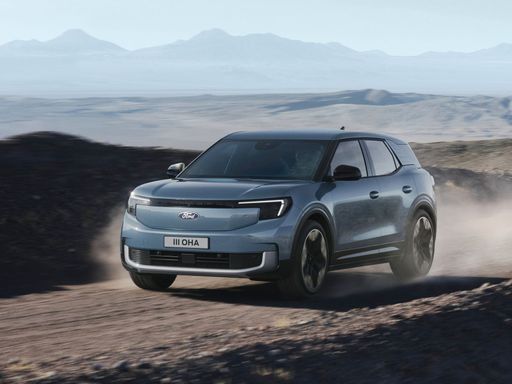
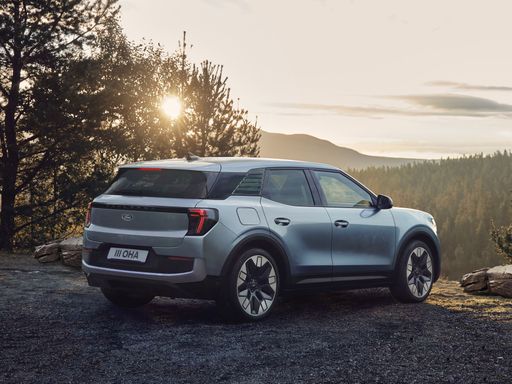
The Ford Explorer EV measures 4,468 mm in length, 1,871 mm in width, and 1,630-1,639 mm in height, presenting a robust and muscular stance typical of Ford's SUV lineage. It offers ample space with a trunk capacity of 450-445 liters, making it quite practical for everyday use.

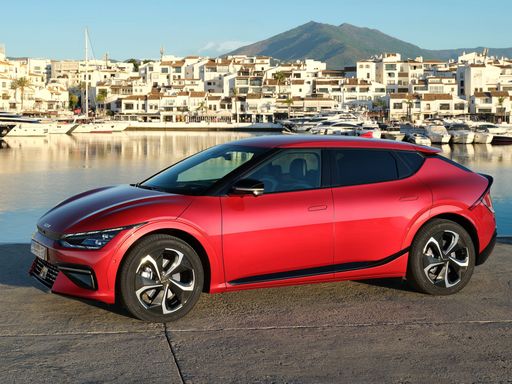
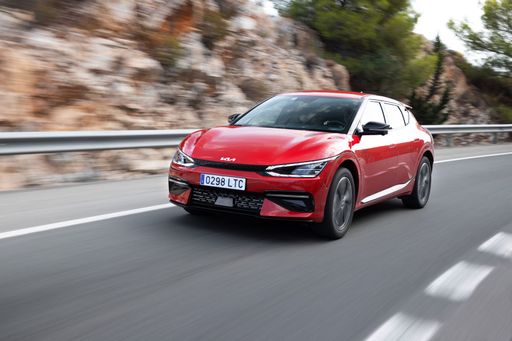
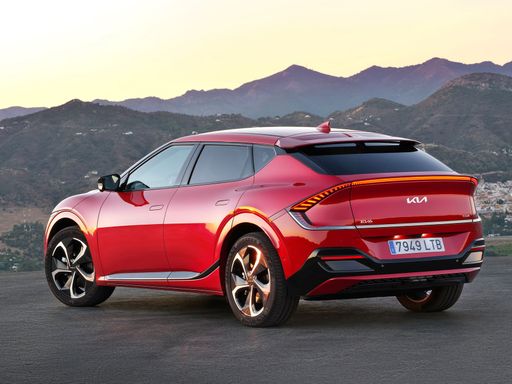
On the other hand, the Kia EV6 exhibits a more aerodynamic design, stretching to 4,695 mm in length, 1,880-1,890 mm in width, and a lower height of 1,550 mm. This gives it a sportier profile while still providing substantial trunk space of 490 liters. Both vehicles offer five seats, catering well to family needs.

EV6

Powertrains and Performance

Under the hood, the Ford Explorer EV comes with several power options ranging from 170 hp to a compelling 340 hp. It offers both rear-wheel and all-wheel drive configurations and impresses with a torque output of up to 679 Nm. The Explorer EV boasts a respectable acceleration time of 5.3 seconds (0-100 km/h) with its top-end powertrain, making it a strong contender for those seeking performance.

The Kia EV6, while starting at 170 hp, can go up to 325 hp, also offering both rear-wheel and all-wheel drive. Its peak torque figures reach 605 Nm, enabling a spirited 0-100 km/h acceleration time of just 5.3 seconds in the higher-performance variant. While slightly less powerful than the Explorer EV's top option, the EV6's athletic design and performance credentials ensure it remains competitive.

Explorer EV

Battery and Range

Battery technology plays a pivotal role in the appeal of an electric vehicle. The Ford Explorer EV features a battery capacity range from 52 kWh to 79 kWh, with a commendable electric range of up to 602 km on the higher capacity model. It consumes 13.9-16.6 kWh/100km depending on the variant, providing an impressive efficiency option for long-distance travel.

Conversely, the Kia EV6 houses a larger battery option of up to 84 kWh, delivering an electric range of 428-582 km. The consumption ranges from 15.9 to 17 kWh/100km, which places it slightly less efficient than the Ford in its highest-performing configuration. However, the high-capacity battery does provide extended travel options overall.

EV6

Safety and Technology

Both the Ford Explorer EV and Kia EV6 come outfitted with a suite of safety features and technological innovations. They include advanced driver-assistance systems (ADAS), prolific infotainment options, and connectivity features that ensure a modern driving experience.

Ford has long established itself in terms of safety, and the Explorer EV is anticipated to carry forward that legacy with cutting-edge technologies including adaptive cruise control, lane-keeping assist, and collision avoidance systems. The vehicle is also designed to meet or exceed rigorous safety standards, instilling confidence in potential buyers.

Kia also excels in this realm, offering a plethora of safety technologies in the EV6, with innovative features such as highway driving assist, blind-spot monitoring, and smart cruise control, among others. The EV6 has received high safety ratings in various regulatory tests, solidifying its reputation as a safe family-friendly vehicle.

Explorer EV

Conclusion: Which SUV Best Suits Your Needs?

The decision between the Ford Explorer EV and Kia EV6 ultimately hinges on individual needs and preferences. If you prioritize range, power, and the ruggedness typical of an SUV, the Ford Explorer EV—with its superior battery range and impressive towing capabilities—might be the ideal choice. Alternatively, if sportiness, design, and cutting-edge technology are what capture your attention, the Kia EV6 could be the perfect fit.

Both vehicles offer an exciting glimpse into the future of electric SUVs, each contributing to the shift towards sustainable mobility in their own unique way. Whichever you choose, you can be assured of a thrilling ride, remarkable tech, and a commitment to a cleaner future.

Here’s where it gets real: The technical differences in detail

EV6

Costs and Efficiency:

Price and efficiency are key factors when choosing a car – and this is often where the real differences emerge.

Ford Explorer EV is moderately cheaper – starting at 34,200 £ , while the Kia EV6 costs 38,600 £ . That’s a price difference of around 4,362 £.

In terms of energy consumption, the Ford Explorer EV is marginally more efficient: consuming 14.6 kWh/100km compared to 15.9 kWh/100km for the Kia EV6. That’s a difference of about 1.3 kWh/100km.

As for electric range, the Ford Explorer EV offers only slightly more range – reaching up to 602 km, about 20 km more than the Kia EV6.

Explorer EV

Engine and Performance:

Power, torque and acceleration are the classic benchmarks for car enthusiasts – and here, some clear differences start to show.

When it comes to engine power, the Kia EV6 offers considerably more power – delivering 609 HP compared to 340 HP. That’s roughly 269 HP more horsepower.

When accelerating from 0 to 100 km/h, the Kia EV6 is considerably quicker – completing the sprint in 3.5 s, while the Ford Explorer EV takes 5.3 s. That’s about 1.8 s quicker.

There’s also a difference in torque: the Kia EV6 delivers a bit more torque with 770 Nm compared to 679 Nm. That’s about 91 Nm more.

EV6

Space and Everyday Use:

Whether family car or daily driver – which one offers more room, flexibility and comfort?

Both vehicles offer seating for 5 people.

In terms of curb weight, Kia EV6 is very slightly lighter – 1,955 kg compared to 1,996 kg. The difference is around 41 kg.

Looking at boot space, the Kia EV6 offers very slightly more boot space – 490 L compared to 472 L. That’s a difference of about 18 L.

When it comes to payload, the Ford Explorer EV carries markedly more – 585 kg compared to 450 kg. That’s a difference of about 135 kg.

Who wins the race in the data check?

The Kia EV6 stands well ahead of its rival in the objective data comparison.
This result only shows which model scores more points on paper – not which of the two cars feels right for you.

from £38,600
EV6

Kia EV6

  • Engine Type : Electric
  • Transmission : Automatic
  • Drive Type : Rear-Wheel Drive, All-Wheel Drive
  • Power HP : 170 - 609 HP
  • Consumption kWh/100km : 15.9 - 20.9 kWh/100km
  • Electric Range : 428 - 582 km
Kia EV6
Ford Explorer EV

Costs and Consumption

View detailed analysis

Engine and Performance

View detailed analysis

Dimensions and Body

View detailed analysis

Kia EV6

The Kia EV6 looks like it sprinted off a concept stage, its bold, futuristic lines wrapping a surprisingly spacious and grown-up cabin. On the road it delivers crisp, immediate thrust and composed handling, with enough everyday practicality and slick tech to make ditching petrol feel like an upgrade rather than a compromise.

details

Ford Explorer EV

The Ford Explorer EV translates the familiar big‑American SUV presence into whisper‑quiet electric motoring, offering roomy seating and a tech‑forward cabin that will please families and road‑trippers alike. It drives with more composure than its boxy looks suggest, blending a comfortable ride and eager acceleration while undercutting the guilt of gas stops — a practical, modern alternative for buyers who want Explorer space with electric charm.

details
Kia EV6
Ford Explorer EV

Costs and Consumption

Price
38,600 - 60,000 £
Price
34,200 - 49,600 £
Consumption L/100km
-
Consumption L/100km
-
Consumption kWh/100km
15.9 - 20.9 kWh/100km
Consumption kWh/100km
14.6 - 17.3 kWh/100km
Electric Range
428 - 582 km
Electric Range
417 - 602 km
Battery Capacity
63 - 84 kWh
Battery Capacity
-
co2
0 g/km
co2
0 g/km
Fuel tank capacity
-
Fuel tank capacity
-

Dimensions and Body

Body Type
SUV
Body Type
SUV
Seats
5
Seats
5
Doors
5
Doors
-
Curb weight
1,955 - 2,220 kg
Curb weight
1,996 - 2,209 kg
Trunk capacity
480 - 490 L
Trunk capacity
472 L
Length
4,695 mm
Length
-
Width
1,880 - 1,890 mm
Width
1,872 mm
Height
1,550 mm
Height
-
Max trunk capacity
1,290 L
Max trunk capacity
-
Payload
440 - 450 kg
Payload
531 - 585 kg

Engine and Performance

Engine Type
Electric
Engine Type
Electric
Transmission
Automatic
Transmission
Automatic
Transmission Detail
Reduction Gearbox
Transmission Detail
Reduction Gearbox
Drive Type
Rear-Wheel Drive, All-Wheel Drive
Drive Type
Rear-Wheel Drive, All-Wheel Drive
Power HP
170 - 609 HP
Power HP
190 - 340 HP
Acceleration 0-100km/h
3.5 - 8.7 s
Acceleration 0-100km/h
5.3 - 8 s
Max Speed
185 - 188 km/h
Max Speed
-
Torque
350 - 770 Nm
Torque
350 - 679 Nm
Number of Cylinders
-
Number of Cylinders
-
Power kW
125 - 448 kW
Power kW
140 - 250 kW
Engine capacity
-
Engine capacity
-

General

Model Year
2,024 - 2,025
Model Year
2026
CO2 Efficiency Class
A
CO2 Efficiency Class
A
Brand
Kia
Brand
Ford
DriveDuel uses data analysis and artificial intelligence to evaluate vehicle data and create content. Content is regularly reviewed and improved. The displayed prices are estimates based on German list prices, adjusted to the respective country’s VAT. Country-specific registration taxes are not included. This information is not legally binding.