VS

Kia Niro vs Hyundai IONIQ 5 comparison

Compare performance (138 HP vs 650 HP), boot space and price (29,100 £ vs 38,500 £ ) at a glance. Find out which car is the better choice for you – Kia Niro or Hyundai IONIQ 5?

Kia Niro vs Hyundai IONIQ 5: Key differences

Kia Niro

4.5 (2 Reviews)
rate
  • clearly cheaper
  • markedly lighter

Hyundai IONIQ 5

5 (2 Reviews)
rate
  • substantially more power
  • significantly quicker 0–100 km/h

All details on performance, efficiency, range and trunk space can be found in the technical comparison below – including user reviews for both models.

Niro

Electric Innovation: Hyundai IONIQ 5 vs. Kia Niro

As the automotive landscape increasingly shifts towards electrification, two contenders from South Korea are making waves in the sustainable SUV segment: the Hyundai IONIQ 5 and the Kia Niro. Both vehicles embody their brands' commitments to innovative design and technology, yet they cater to slightly different needs. Let's delve into what makes each of them stand out.
IONIQ 5

Design and Dimensions

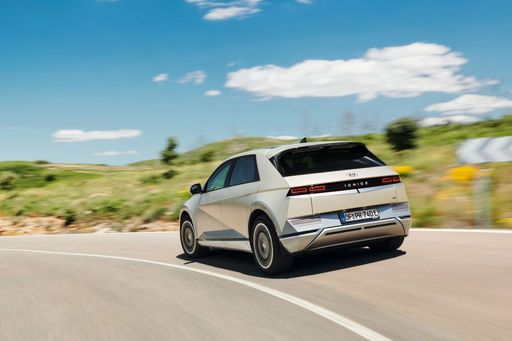
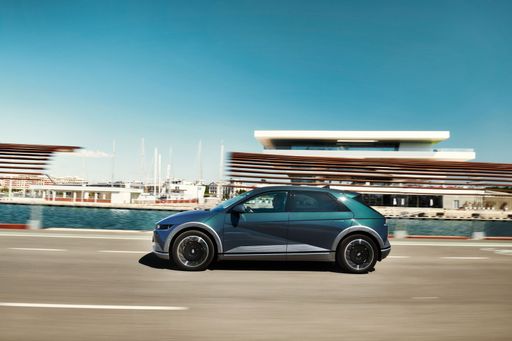
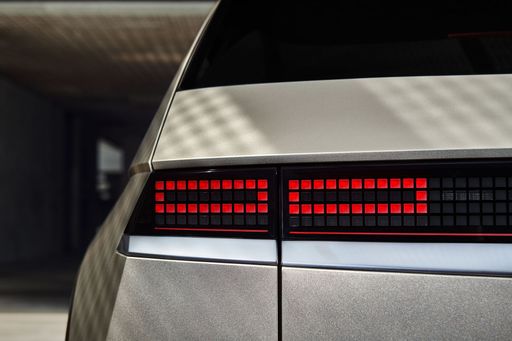
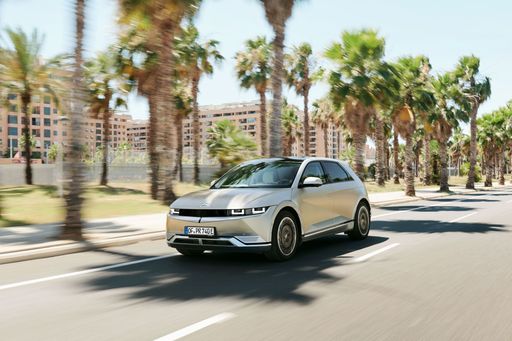
The Hyundai IONIQ 5 is a bold leap forward in terms of design, drawing inspiration from the past while looking decidedly futuristic. This SUV measures up to 4715 mm in length and stands at 1585 mm tall, which creates a spacious interior environment. Hyundai's innovative design language shines through its distinct LED lighting patterns and geometric aesthetics.

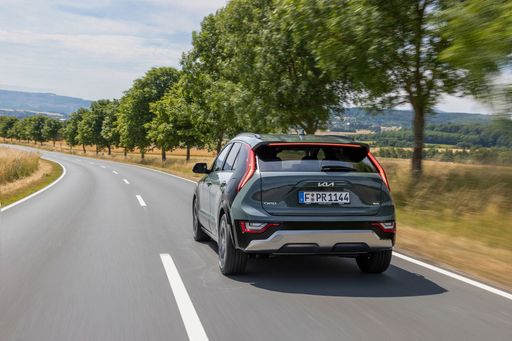
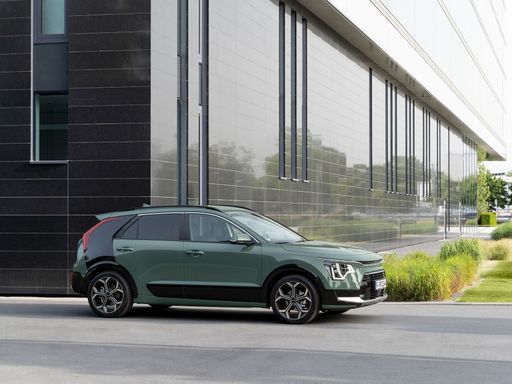
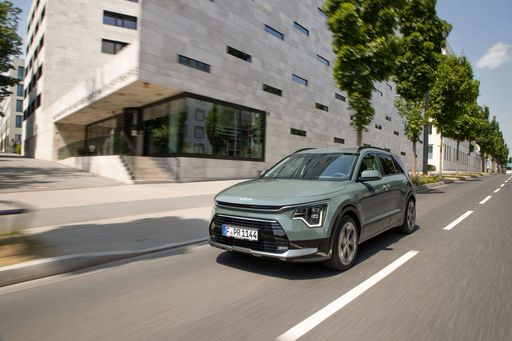
On the other hand, the Kia Niro doesn't stray away from its identity as a compact SUV. With a length of 4420 mm and a height of 1545 mm, it offers maneuverability combined with fresh, modern styling cues. Its sleek lines and aerodynamics provide a harmonious balance of form and function.

Niro

Performance and Powertrain

The Hyundai IONIQ 5 impresses with its all-electric powertrain, available in both rear-wheel and all-wheel drive configurations. Offering power outputs ranging from 170 HP to an astounding 609 HP, the IONIQ 5 shows its prowess in acceleration, going from 0 to 100 km/h in as little as 3.5 seconds. It boasts a generous range of up to 570 km thanks to its high-capacity batteries of up to 84 kWh.

Meanwhile, the Kia Niro provides versatility with full hybrid and plug-in hybrid variants. With power outputs of up to 171 HP, this SUV handles efficiently with an electric range of 59 to 65 km, catering to less range-demanding users. It achieves a balanced performance with a 0 to 100 km/h acceleration time of as quick as 10.4 seconds, making it suitable for urban and suburban adventure.

IONIQ 5

Efficiency and Sustainability

In terms of energy consumption and environmental impact, the Hyundai IONIQ 5 is at the forefront with its emission-free operation. Its electricity consumption varies from 15.6 to 21.2 kWh/100 km, making it an eco-friendly choice with zero CO2 emissions during operation.

The Kia Niro, while not fully electric, still plays a significant role in reducing greenhouse gases with CO2 emissions as low as 19 g/km for the plug-in hybrid variant. Its fuel efficiency impresses with a consumption ranging from 0.8 to 4.4 L/100km, supported by a 42 L fuel tank for extended range between fill-ups.

Niro

Interior and Comfort

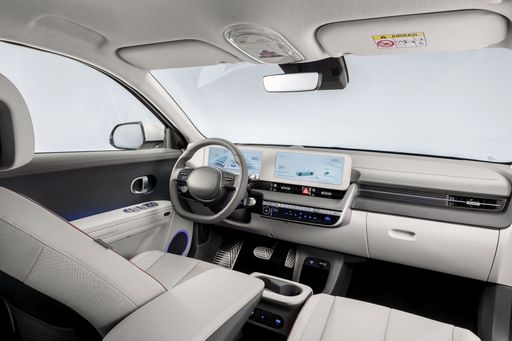
The IONIQ 5 capitalizes on its larger dimensions to offer an interior that feels as spacious as a lounge. Its flexible seating for five, along with ample trunk space ranging between 480 to 520 liters, emphasize practicality without sacrificing passenger comfort.

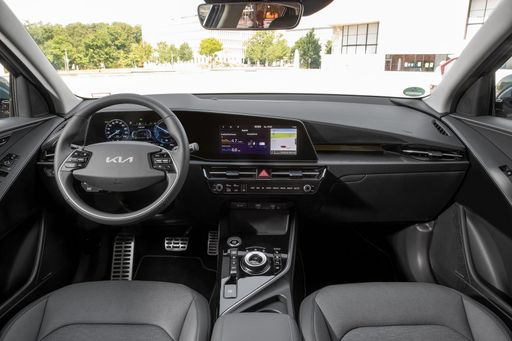
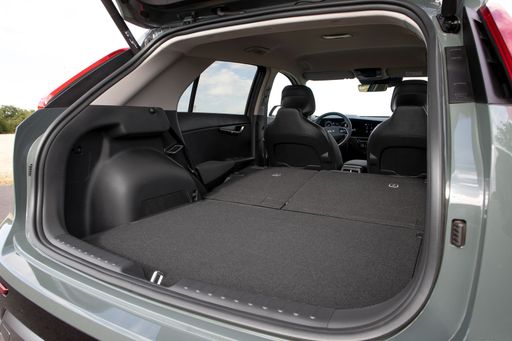
Though more compact, the Kia Niro comfortably seats five and uses its space wisely with a trunk capacity of up to 451 liters. Convenience and connectivity are prioritized, making it an excellent choice for daily commuters and small families.

IONIQ 5

Conclusion: Choosing the Right Fit

Deciding between the Hyundai IONIQ 5 and Kia Niro ultimately hinges on what you prioritize in an SUV. If cutting-edge electric performance and futuristic design are high on your wish list, the IONIQ 5 might just be your ideal match. However, if you're looking for a versatile, efficient hybrid solution, the Kia Niro stands out with its remarkable fuel efficiency and practical size.

Both vehicles are brilliant additions to the hybrid and electric SUV market, showcasing Hyundai and Kia's dedication to innovation in sustainable mobility. Whether you're chasing the future or finding balance between power and economy, there's a Korean SUV ready to meet your needs.

Here’s where it gets real: The technical differences in detail

Niro

Costs and Efficiency:

Price and efficiency are key factors when choosing a car – and this is often where the real differences emerge.

Kia Niro is clearly cheaper – starting at 29,100 £ , while the Hyundai IONIQ 5 costs 38,500 £ . That’s a price difference of around 9,351 £.

IONIQ 5

Engine and Performance:

Power, torque and acceleration are the classic benchmarks for car enthusiasts – and here, some clear differences start to show.

When it comes to engine power, the Hyundai IONIQ 5 offers substantially more power – delivering 650 HP compared to 138 HP. That’s roughly 512 HP more horsepower.

When accelerating from 0 to 100 km/h, the Hyundai IONIQ 5 is significantly quicker – completing the sprint in 3.5 s, while the Kia Niro takes 11.1 s. That’s about 7.6 s quicker.

There’s also a difference in torque: the Hyundai IONIQ 5 delivers considerably more torque with 770 Nm compared to 265 Nm. That’s about 505 Nm more.

Niro

Space and Everyday Use:

Cabin size, boot volume and payload all play a role in everyday practicality. Here, comfort and flexibility make the difference.

Both vehicles offer seating for 5 people.

In terms of curb weight, Kia Niro is markedly lighter – 1,474 kg compared to 1,955 kg. The difference is around 481 kg.

When it comes to payload, the Hyundai IONIQ 5 carries moderately more – 530 kg compared to 466 kg. That’s a difference of about 64 kg.

Who wins the race in the data check?

The Hyundai IONIQ 5 holds a decisive overall lead in the objective data comparison.
This result only shows which model scores more points on paper – not which of the two cars feels right for you.

from £38,500
IONIQ 5

Hyundai IONIQ 5

  • Engine Type : Electric
  • Transmission : Automatic
  • Drive Type : Rear-Wheel Drive, All-Wheel Drive
  • Power HP : 170 - 650 HP
  • Consumption kWh/100km : 15.6 - 21.2 kWh/100km
  • Electric Range : 440 - 570 km
Kia Niro
Hyundai IONIQ 5

Costs and Consumption

View detailed analysis

Engine and Performance

View detailed analysis

Dimensions and Body

View detailed analysis

Kia Niro

The Kia Niro blends clever packaging and modern styling into a compact crossover that’s refreshingly sensible for daily life. It’s comfortable, economical and packed with user‑friendly tech, so if you want a fuss‑free family car with a touch of green credibility, the Niro is worth a test drive.

details

Hyundai IONIQ 5

The Hyundai IONIQ 5 looks like a spaceship that moved into suburbia, pairing bold retro‑futuristic styling with a roomy, cleverly laid-out cabin that makes long trips surprisingly comfortable. Its electric character delivers instant, silky acceleration and low running costs, making it a smart, slightly cheeky pick for buyers who want tech, practicality and personality without the drama.

details
Kia Niro
Hyundai IONIQ 5

Costs and Consumption

Price
29,100 - 33,800 £
Price
38,500 - 64,200 £
Consumption L/100km
4.5 - 4.9 L/100km
Consumption L/100km
-
Consumption kWh/100km
-
Consumption kWh/100km
15.6 - 21.2 kWh/100km
Electric Range
-
Electric Range
440 - 570 km
Battery Capacity
-
Battery Capacity
63 - 84 kWh
co2
102 - 111 g/km
co2
0 g/km
Fuel tank capacity
-
Fuel tank capacity
-

Dimensions and Body

Body Type
SUV
Body Type
SUV
Seats
5
Seats
5
Doors
-
Doors
5
Curb weight
1,474 kg
Curb weight
1,955 - 2,275 kg
Trunk capacity
-
Trunk capacity
480 - 520 L
Length
-
Length
4,655 - 4,715 mm
Width
1,825 mm
Width
1,890 - 1,940 mm
Height
-
Height
1,585 - 1,605 mm
Max trunk capacity
-
Max trunk capacity
1,540 - 1,580 L
Payload
466 kg
Payload
385 - 530 kg

Engine and Performance

Engine Type
Full Hybrid
Engine Type
Electric
Transmission
Automatic
Transmission
Automatic
Transmission Detail
Dual-Clutch Automatic
Transmission Detail
Reduction Gearbox
Drive Type
Front-Wheel Drive
Drive Type
Rear-Wheel Drive, All-Wheel Drive
Power HP
138 HP
Power HP
170 - 650 HP
Acceleration 0-100km/h
11.1 - 11.4 s
Acceleration 0-100km/h
3.5 - 8.5 s
Max Speed
-
Max Speed
185 - 260 km/h
Torque
265 Nm
Torque
350 - 770 Nm
Number of Cylinders
4
Number of Cylinders
-
Power kW
102 kW
Power kW
125 - 478 kW
Engine capacity
1,580 cm3
Engine capacity
-

General

Model Year
2,025
Model Year
2,024 - 2,025
CO2 Efficiency Class
C
CO2 Efficiency Class
A
Brand
Kia
Brand
Hyundai
DriveDuel uses data analysis and artificial intelligence to evaluate vehicle data and create content. Content is regularly reviewed and improved. The displayed prices are estimates based on German list prices, adjusted to the respective country’s VAT. Country-specific registration taxes are not included. This information is not legally binding.