VS

Kia Sportage vs Hyundai Tucson comparison

Compare performance (288 HP vs 288 HP), boot space and price (30,200 £ vs 20,900 £ ) at a glance. Find out which car is the better choice for you – Kia Sportage or Hyundai Tucson?

Kia Sportage vs Hyundai Tucson: Key differences

Kia Sportage

4.9 (2 Reviews)
rate

Hyundai Tucson

4.6 (4 Reviews)
rate
  • considerably cheaper
  • very slightly more efficient
  • marginally more electric range
  • marginally lighter
  • barely more trunk space

All details on performance, efficiency, range and trunk space can be found in the technical comparison below – including user reviews for both models.

Sportage

Introduction: A Battle of the Korean Titans

The automotive market is witnessing a fierce competition between the Hyundai Tucson and the Kia Sportage—two of the most acclaimed compact SUVs in their segment. With innovative features, sleek designs, and advanced engineering, both vehicles cater to the needs of modern drivers. This article dives into the technical aspects and innovations of both models, helping consumers decide which one reigns supreme.

Tucson

Design and Dimensions

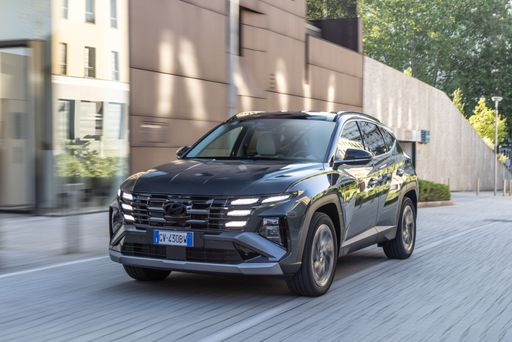
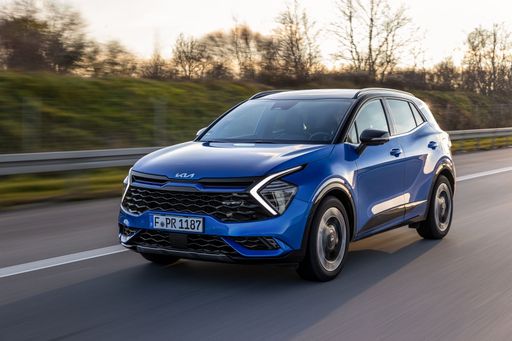
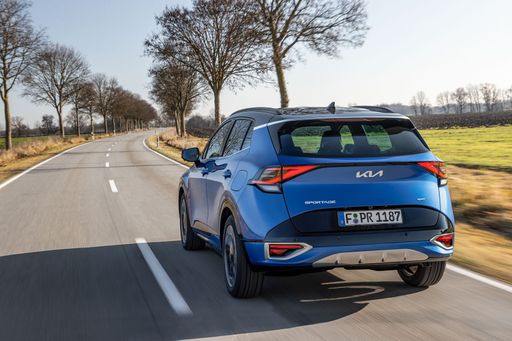
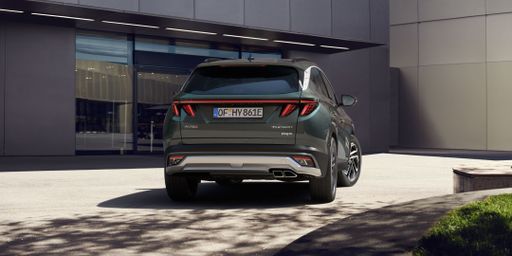
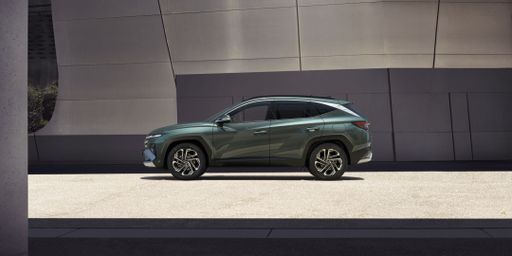
Both the Hyundai Tucson and the Kia Sportage exude a certain elegance with their bold and modern designs. The Tucson measures approximately 4510 mm in length and 1865 mm in width, offering a robust yet sleek profile. The Kia Sportage is similarly dimensioned at 4515 mm long and the same width, making them almost identical in size.

Both vehicles stand at a height of 1650 mm, contributing to an impressive road presence. The Tucson offers a trunk capacity ranging from 546 to 620 liters, while the Sportage slightly edges out with a maximum trunk capacity of 587 liters, providing a bit more utility for those with larger cargo needs.

Sportage

Engine and Performance

Under the hood, both the Tucson and the Sportage provide a versatile array of engine options. The Tucson offers a choice of several engines, including a 136 to 252 HP lineup, available in diesel MHEV, petrol MHEV, full hybrid, and plug-in hybrid configurations. Acceleration from 0-100 km/h ranges from a respectable 8.1 to 11.6 seconds depending on the engine choice.

The Kia Sportage mirrors this performance range with similar engine options generating anywhere from 136 to 252 HP, with the 0-100 km/h times clocking in between 8.3 and 11.6 seconds. Both SUVs are available with front-wheel and all-wheel drive configurations, offering drivers flexibility based on their needs.

Tucson

Fuel Efficiency and CO2 Emissions

When it comes to fuel efficiency, the Tucson also shows promising figures, with consumption rates ranging from 5.1 to 7.2 L/100km. On the other hand, the Sportage claims slightly better figures, with fuel consumption as low as 5.0 L/100km. Both SUVs are equipped with efficient engines, helping to keep CO2 emissions competitive—Tucson's emissions range from 126 to 153 g/km, while the Sportage varies from 132 to 162 g/km.

Sportage

Transmission Options

Each model offers a variety of transmission options. The Tucson boasts both manual and automatic gearbox choices, including a dual-clutch automatic transmission for smoother shifting. The Sportage offers a similar setup, with manual, automatic, and dual-clutch configurations. This variety ensures that both vehicles can cater to different driving preferences and styles.

Tucson

Interior and Technology

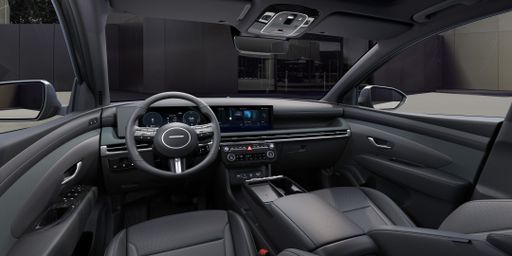
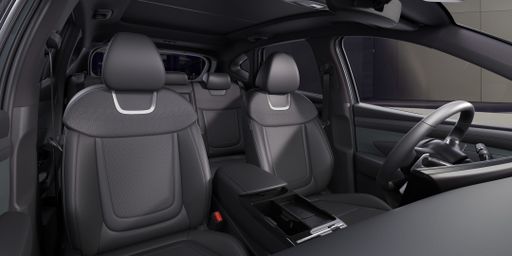
Inside, both models are equipped with advanced technology and premium materials. The Tucson’s cabin is spacious, featuring high-quality finishes and modern infotainment options. It includes an intuitive touchscreen display, connectivity features, and ample room for passengers, making it a joy for daily commutes or long road trips.

In comparison, the Sportage also features a modern interior layout, with high-end materials and a tech-savvy interface. Its infotainment system includes a range of connectivity options, ensuring drivers and passengers stay connected on-the-go.

Sportage

Safety Features

In the realm of safety, both the Tucson and Sportage are equipped with comprehensive safety systems, including adaptive cruise control, lane-keeping assist, and emergency braking systems. Both models have scored favorably in safety tests, providing peace of mind for drivers and their passengers.

Tucson

Pricing and Value

The pricing of both SUVs is competitive, with the Tucson starting around €34,990 and climbing up to €54,050 based on configurations. The Sportage begins at approximately €34,690 and goes up to €52,190, making it slightly more accessible in the entry-level market.

Conclusion: Which One to Choose?

In the battle between the Hyundai Tucson and Kia Sportage, potential buyers are presented with two fabulous options that cater to various preferences. The Tucson shines with its higher trunk capacity and slightly better fuel efficiency, while the Sportage impresses with its engaging interior and slightly lower starting price. Ultimately, the choice may boil down to personal preferences in style, technology, and brand loyalty.

Both vehicles stand as testaments to the quality and innovation that South Korean automakers bring to the table, making them worthy contenders in the world of compact SUVs.

Here’s where it gets real: The technical differences in detail

Sportage

Costs and Efficiency:

When it comes to price and running costs, the biggest differences usually appear. This is often where you see which car fits your budget better in the long run.

Hyundai Tucson is considerably cheaper – starting at 20,900 £ , while the Kia Sportage costs 30,200 £ . That’s a price difference of around 9,265 £.

Fuel consumption also shows a difference: the Hyundai Tucson uses 2.7 L/100km and is very slightly more efficient than the Kia Sportage with 2.9 L/100km. The difference is about 0.2 L/100km.

As for electric range, the Hyundai Tucson offers marginally more range – reaching up to 70 km, about 4 km more than the Kia Sportage.

Tucson

Engine and Performance:

Power, torque and acceleration say a lot about how a car feels on the road. This is where you see which model delivers more driving dynamics.

Both models deliver identical power – 288 HP each.

Both models accelerate almost equally fast – 7.5 s from 0 to 100 km/h.

There’s also a difference in torque: the Kia Sportage delivers very slightly more torque with 380 Nm compared to 379 Nm. That’s about 1 Nm more.

Sportage

Space and Everyday Use:

Whether family car or daily driver – which one offers more room, flexibility and comfort?

Both vehicles offer seating for 5 people.

In terms of curb weight, Hyundai Tucson is marginally lighter – 1,542 kg compared to 1,552 kg. The difference is around 10 kg.

Looking at boot space, the Hyundai Tucson offers barely more boot space – 620 L compared to 587 L. That’s a difference of about 33 L.

When it comes to payload, the Kia Sportage carries only slightly more – 580 kg compared to 545 kg. That’s a difference of about 35 kg.

Who wins the race in the data check?

The Hyundai Tucson stands well ahead of its rival in the objective data comparison.
This result only shows which model scores more points on paper – not which of the two cars feels right for you.

from £20,900
Tucson

Hyundai Tucson

  • Engine Type : Petrol, Full Hybrid, Plugin Hybrid, Diesel MHEV
  • Transmission : Manuel, Automatic
  • Drive Type : Front-Wheel Drive, All-Wheel Drive
  • Power HP : 136 - 288 HP
  • Consumption L/100km : 2.7 - 7.6 L/100km
  • Electric Range : 63 - 70 km
Kia Sportage
Hyundai Tucson

Costs and Consumption

View detailed analysis

Engine and Performance

View detailed analysis

Dimensions and Body

View detailed analysis

Kia Sportage

The Kia Sportage proves you don't have to choose between style and sensible family motoring, wrapping modern, confident looks around a roomy, well-equipped cabin. It's an easy car to live with — comfortable on daily runs, pleasantly engaging when you want a bit of fun, and kind to your wallet so you can keep smiling at the fuel pump.

details

Hyundai Tucson

Hyundai Tucson marries bold, sculpted looks with a clever, roomy cabin that feels smarter than its price tag suggests. It's composed on the road, easy to live with day-to-day, and a sensible choice for buyers who want SUV style without the showroom theatrics.

details
Kia Sportage
Hyundai Tucson

Costs and Consumption

Price
30,200 - 47,100 £
Price
20,900 - 47,900 £
Consumption L/100km
2.9 - 7.8 L/100km
Consumption L/100km
2.7 - 7.6 L/100km
Consumption kWh/100km
-
Consumption kWh/100km
-
Electric Range
63 - 66 km
Electric Range
63 - 70 km
Battery Capacity
-
Battery Capacity
-
co2
67 - 177 g/km
co2
62 - 172 g/km
Fuel tank capacity
-
Fuel tank capacity
52 - 54 L

Dimensions and Body

Body Type
SUV
Body Type
SUV
Seats
5
Seats
5
Doors
-
Doors
5
Curb weight
1,552 - 1,896 kg
Curb weight
1,542 - 1,893 kg
Trunk capacity
526 - 587 L
Trunk capacity
546 - 620 L
Length
-
Length
4,525 - 4,535 mm
Width
1,865 mm
Width
1,865 mm
Height
-
Height
1,650 mm
Max trunk capacity
-
Max trunk capacity
1,795 - 1,799 L
Payload
533 - 580 kg
Payload
518 - 545 kg

Engine and Performance

Engine Type
Petrol, Full Hybrid, Diesel MHEV, Plugin Hybrid
Engine Type
Petrol, Full Hybrid, Plugin Hybrid, Diesel MHEV
Transmission
Manuel, Automatic
Transmission
Manuel, Automatic
Transmission Detail
Manual Gearbox, Dual-Clutch Automatic, Automatic Gearbox
Transmission Detail
Manual Gearbox, Dual-Clutch Automatic, Automatic Gearbox
Drive Type
Front-Wheel Drive, All-Wheel Drive
Drive Type
Front-Wheel Drive, All-Wheel Drive
Power HP
136 - 288 HP
Power HP
136 - 288 HP
Acceleration 0-100km/h
7.5 - 11.6 s
Acceleration 0-100km/h
7.5 - 11.6 s
Max Speed
-
Max Speed
196 - 204 km/h
Torque
250 - 380 Nm
Torque
250 - 379 Nm
Number of Cylinders
4
Number of Cylinders
4
Power kW
100 - 212 kW
Power kW
100 - 212 kW
Engine capacity
1,598 cm3
Engine capacity
1,598 cm3

General

Model Year
2,025 - 2,026
Model Year
2,025
CO2 Efficiency Class
F, D, E, G, B
CO2 Efficiency Class
F, D, E, B
Brand
Kia
Brand
Hyundai
DriveDuel uses data analysis and artificial intelligence to evaluate vehicle data and create content. Content is regularly reviewed and improved. The displayed prices are estimates based on German list prices, adjusted to the respective country’s VAT. Country-specific registration taxes are not included. This information is not legally binding.