VS

Kia Sportage vs Subaru Forester comparison

Compare performance (288 HP vs 136 HP), boot space and price (30,200 £ vs 34,700 £ ) at a glance. Find out which car is the better choice for you – Kia Sportage or Subaru Forester?

Kia Sportage vs Subaru Forester: Key differences

Kia Sportage

4.9 (2 Reviews)
rate
  • a bit cheaper
  • significantly more power
  • substantially more efficient
  • substantially quicker 0–100 km/h
  • very slightly lighter
  • slightly more trunk space

Subaru Forester

4 (1 Reviews)
rate

All details on performance, efficiency, range and trunk space can be found in the technical comparison below – including user reviews for both models.

Sportage

Introduction: A Clash of Titans

In the world of compact SUVs, the Kia Sportage and Subaru Forester stand as two of the most compelling options for drivers looking for a blend of style, performance, and practicality. Each vehicle offers a unique set of features and capabilities, making a direct comparison not just interesting but essential for prospective buyers. This article will delve into their technical specifications, performance metrics, and innovative technologies to help you make an informed choice.
Forester

Design and Dimensions

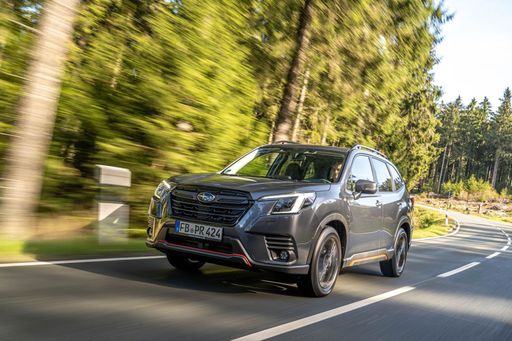
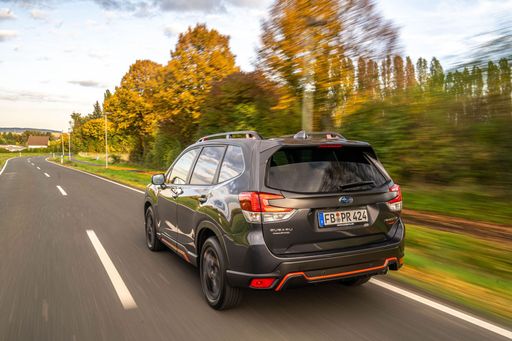
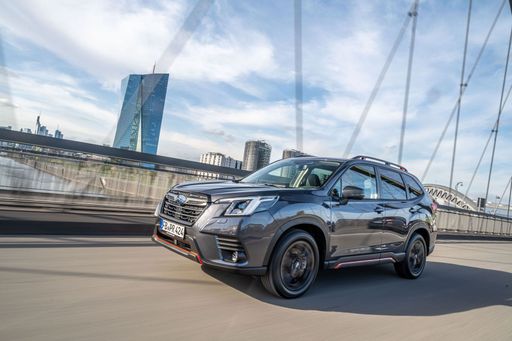
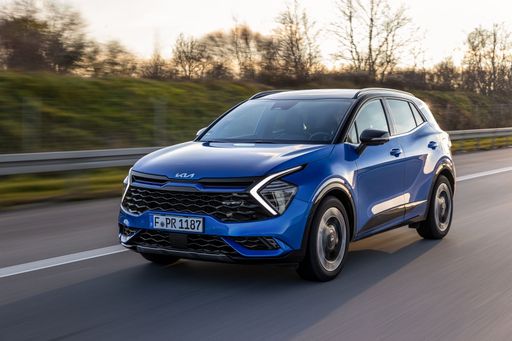
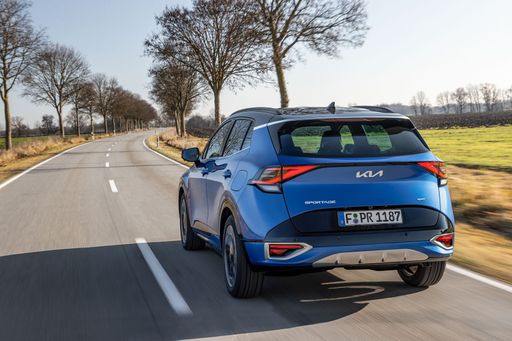
The Kia Sportage sports a striking design with assertive lines and a modern aesthetic. Measuring at 4,515 mm in length, 1,865 mm in width, and 1,650 mm in height, it presents a sporty silhouette. On the other hand, the Subaru Forester, slightly larger, ranges from 4,640 mm to 4,670 mm in length, 1,815 mm to 1,830 mm in width, and 1,730 mm in height. This gives the Forester a more rugged appearance, often associated with off-road capabilities.

Sportage

Engine Options and Performance

The Sportage offers a diverse lineup of engines, including petrol, hybrid, and diesel options, boasting power outputs ranging from 136 HP to an impressive 252 HP. Engine types include Diesel MHEV, Petrol MHEV, Full Hybrid, and Plugin Hybrid, providing versatility in fuel efficiency and power delivery. The Sportage’s fuel consumption averages between 5.0 L/100km and 8.1 L/100km, catering to varied driving styles and needs.

In contrast, the Subaru Forester is powered solely by a petrol MHEV engine generating between 136 HP and 150 HP. It exhibits slightly lower torque levels, reaching up to 194 Nm. While the Forester's fuel consumption is less efficient at around 8.1 L/100km, it excels in delivering a reliable all-wheel-drive experience.

Forester

Transmission and Drive Types

Kia provides multiple transmission options for the Sportage, including manual, dual-clutch automatic, and traditional automatic gearboxes, with both front-wheel and all-wheel drive configurations available. This variety allows drivers to select a setup that aligns with their driving preferences.

On the flip side, the Subaru Forester comes equipped with a continuously variable transmission (CVT) exclusively paired with its all-wheel-drive system. While it simplifies driving in various conditions, it might not appeal to those who prefer more engagement during gear changes.

Sportage

Acceleration and Handling

The Sportage demonstrates impressive acceleration capabilities, with some variants accelerating from 0 to 100 km/h in just 8.3 seconds. This performance makes it an agile choice for city driving. The Forester, however, takes slightly longer, with a range of 11.8 to 12.2 seconds, reflecting its focus on comfort and stability rather than outright speed.

Forester

Innovative Features and Safety

In terms of innovations, the Kia Sportage is equipped with advanced driver-assistance systems that enhance safety and driving ease. Features such as adaptive cruise control, lane keeping assist, and a comprehensive infotainment system with smartphone integration are highlights of this SUV.

The Subaru Forester also excels in safety, boasting the brand's renowned EyeSight technology, which includes pre-collision braking and lane departure warnings. With its rugged construction and all-wheel-drive capabilities, the Forester is particularly suitable for those who venture off the beaten path.

Sportage

Interior Comfort and Cargo Space

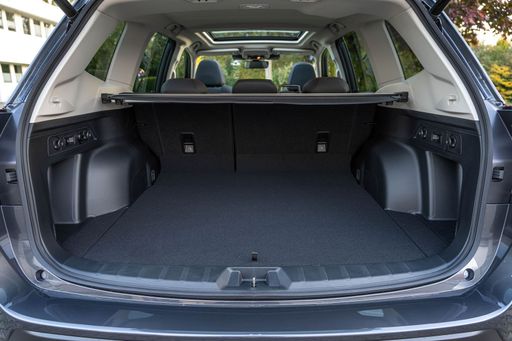
Inside, the Sportage offers a spacious cabin with comfortable seating for five, along with a trunk capacity that ranges from 526 to 587 liters, depending on the configuration. The design features high-quality materials and a focus on user-friendly technology, appealing to modern drivers.

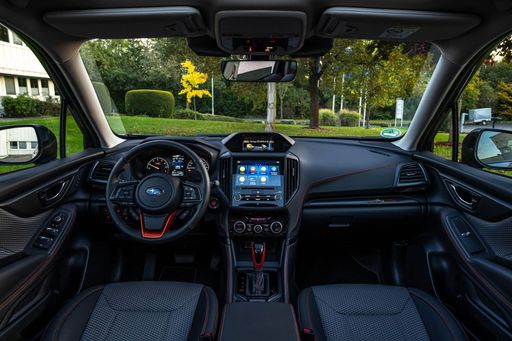
The Forester, while slightly less spacious at 508 to 509 liters of trunk capacity, compensates with a more utilitarian interior and superior visibility, making it a favorite for outdoor enthusiasts.

Forester

Final Verdict

Both the Kia Sportage and Subaru Forester have strong compelling cases for various buyers. The Sportage captivates with its performance options, modern design, and array of technological advancements. Meanwhile, the Forester shines when it comes to safety, reliability, and off-road prowess.

Your choice between these two SUVs ultimately depends on your preferences. If you value sporty aesthetics and diverse engine options, the Sportage may be your ideal match. If you require rugged capability with uncompromising safety features, the Forester could be your go-to SUV. Whichever you choose, you’re guaranteed a reliable and engaging driving experience.

Here’s where it gets real: The technical differences in detail

Sportage

Costs and Efficiency:

Looking at overall running costs, both models reveal some interesting differences in everyday economy.

Kia Sportage is a bit cheaper – starting at 30,200 £ , while the Subaru Forester costs 34,700 £ . That’s a price difference of around 4,543 £.

Fuel consumption also shows a difference: the Kia Sportage uses 2.9 L/100km and is substantially more efficient than the Subaru Forester with 8.1 L/100km. The difference is about 5.2 L/100km.

Forester

Engine and Performance:

Power, torque and acceleration are the classic benchmarks for car enthusiasts – and here, some clear differences start to show.

When it comes to engine power, the Kia Sportage offers significantly more power – delivering 288 HP compared to 136 HP. That’s roughly 152 HP more horsepower.

When accelerating from 0 to 100 km/h, the Kia Sportage is substantially quicker – completing the sprint in 7.5 s, while the Subaru Forester takes 12.2 s. That’s about 4.7 s quicker.

There’s also a difference in torque: the Kia Sportage delivers clearly more torque with 380 Nm compared to 182 Nm. That’s about 198 Nm more.

Sportage

Space and Everyday Use:

Cabin size, boot volume and payload all play a role in everyday practicality. Here, comfort and flexibility make the difference.

Both vehicles offer seating for 5 people.

In terms of curb weight, Kia Sportage is very slightly lighter – 1,552 kg compared to 1,693 kg. The difference is around 141 kg.

Looking at boot space, the Kia Sportage offers slightly more boot space – 587 L compared to 508 L. That’s a difference of about 79 L.

When it comes to payload, the Kia Sportage carries moderately more – 580 kg compared to 492 kg. That’s a difference of about 88 kg.

Who wins the race in the data check?

The Kia Sportage is clearly superior overall in the objective data comparison.
This result only shows which model scores more points on paper – not which of the two cars feels right for you.

from £30,200
Sportage

Kia Sportage

  • Engine Type : Petrol, Full Hybrid, Diesel MHEV, Plugin Hybrid
  • Transmission : Manuel, Automatic
  • Drive Type : Front-Wheel Drive, All-Wheel Drive
  • Power HP : 136 - 288 HP
  • Consumption L/100km : 2.9 - 7.8 L/100km
  • Electric Range : 63 - 66 km
Kia Sportage
Subaru Forester

Costs and Consumption

View detailed analysis

Engine and Performance

View detailed analysis

Dimensions and Body

View detailed analysis

Kia Sportage

The Kia Sportage proves you don't have to choose between style and sensible family motoring, wrapping modern, confident looks around a roomy, well-equipped cabin. It's an easy car to live with — comfortable on daily runs, pleasantly engaging when you want a bit of fun, and kind to your wallet so you can keep smiling at the fuel pump.

details

Subaru Forester

The Subaru Forester is a practical all-rounder that quietly does everything right, with roomy comfort, excellent visibility and a real fondness for weekend adventures off the beaten path. It won't set your pulse racing like a sports car, but for buyers who prize reliability, safety and sensible charm, it's a brilliantly steady companion with a cheeky streak.

details
Kia Sportage
Subaru Forester

Costs and Consumption

Price
30,200 - 47,100 £
Price
34,700 - 42,200 £
Consumption L/100km
2.9 - 7.8 L/100km
Consumption L/100km
8.1 L/100km
Consumption kWh/100km
-
Consumption kWh/100km
-
Electric Range
63 - 66 km
Electric Range
-
Battery Capacity
-
Battery Capacity
-
co2
67 - 177 g/km
co2
183 g/km
Fuel tank capacity
-
Fuel tank capacity
-

Dimensions and Body

Body Type
SUV
Body Type
SUV
Seats
5
Seats
5
Doors
-
Doors
-
Curb weight
1,552 - 1,896 kg
Curb weight
1,693 - 1,739 kg
Trunk capacity
526 - 587 L
Trunk capacity
508 L
Length
-
Length
-
Width
1,865 mm
Width
1,830 mm
Height
-
Height
-
Max trunk capacity
-
Max trunk capacity
-
Payload
533 - 580 kg
Payload
446 - 492 kg

Engine and Performance

Engine Type
Petrol, Full Hybrid, Diesel MHEV, Plugin Hybrid
Engine Type
Petrol MHEV
Transmission
Manuel, Automatic
Transmission
Automatic
Transmission Detail
Manual Gearbox, Dual-Clutch Automatic, Automatic Gearbox
Transmission Detail
CVT
Drive Type
Front-Wheel Drive, All-Wheel Drive
Drive Type
All-Wheel Drive
Power HP
136 - 288 HP
Power HP
136 HP
Acceleration 0-100km/h
7.5 - 11.6 s
Acceleration 0-100km/h
12.2 s
Max Speed
-
Max Speed
-
Torque
250 - 380 Nm
Torque
182 Nm
Number of Cylinders
4
Number of Cylinders
4
Power kW
100 - 212 kW
Power kW
100 kW
Engine capacity
1,598 cm3
Engine capacity
1,995 cm3

General

Model Year
2,025 - 2,026
Model Year
2,025
CO2 Efficiency Class
F, D, E, G, B
CO2 Efficiency Class
G
Brand
Kia
Brand
Subaru
DriveDuel uses data analysis and artificial intelligence to evaluate vehicle data and create content. Content is regularly reviewed and improved. The displayed prices are estimates based on German list prices, adjusted to the respective country’s VAT. Country-specific registration taxes are not included. This information is not legally binding.