VS

Kia Stonic vs Dacia Sandero comparison

Compare performance (115 HP vs 122 HP), boot space and price (20,100 £ vs 11,000 £ ) at a glance. Find out which car is the better choice for you – Kia Stonic or Dacia Sandero?

Kia Stonic vs Dacia Sandero: Key differences

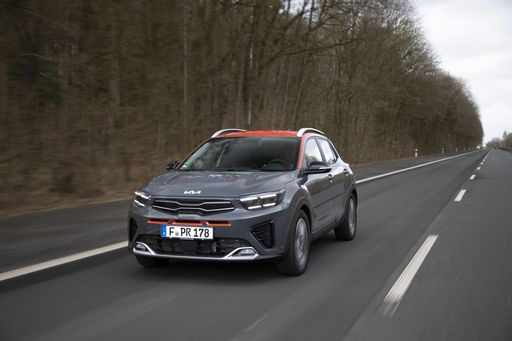
Kia Stonic

4.6 (2 Reviews)
rate

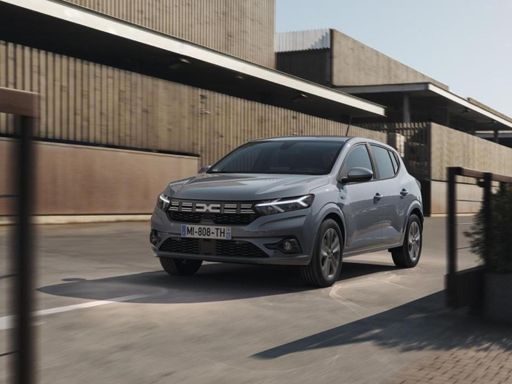
Dacia Sandero

3.5 (3 Reviews)
rate
  • considerably cheaper
  • marginally more power
  • marginally more efficient
  • a bit quicker 0–100 km/h
  • only slightly lighter
  • barely more trunk space

All details on performance, efficiency, range and trunk space can be found in the technical comparison below – including user reviews for both models.

Stonic

When comparing the Dacia Sandero and the Kia Stonic, buyers are often faced with a decision between two very different driving experiences within a compact yet practical package. Both vehicles cater to budget-conscious consumers, yet they bring unique features to the table. Here’s an in-depth look at how these two standout models fare against each other, focusing on technical aspects and innovations.

Sandero

Design and Body Type

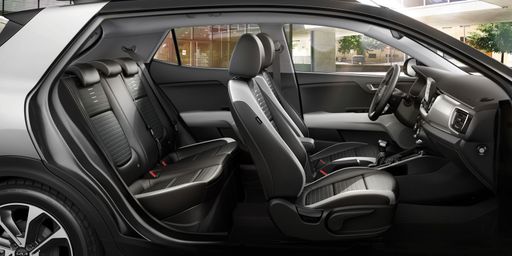
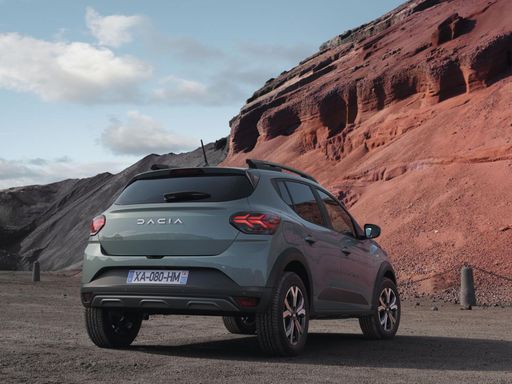
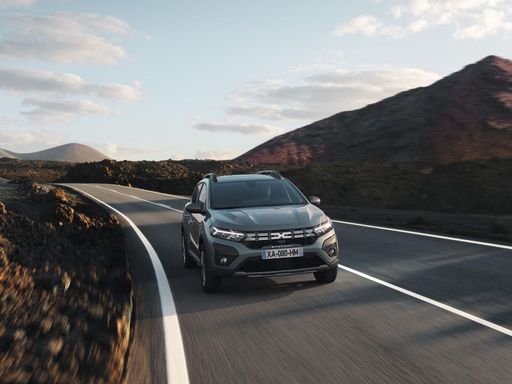
The Dacia Sandero is a hatchback, emphasizing practicality and efficiency, while the Kia Stonic falls into the SUV category, providing a slightly elevated ride height and a more robust stance on the road. With a length of 4,088 mm, the Sandero maintains a compact profile, ideal for urban driving. On the other hand, the Stonic is marginally longer at 4,140 mm, which contributes to its spacious interior and cargo capacity of 352 liters—slightly more than the Sandero’s 328 liters.

Stonic

Engine and Performance

Engine options are where these two cars start to diverge significantly. The Dacia Sandero offers a range of petrol engines with outputs from 67 HP to a punchy 110 HP. Its LPG variant is particularly appealing for those looking to save on fuel costs. The Kia Stonic, albeit having fewer power options, includes a promising 100 HP petrol engine as well as a mild-hybrid variant that caters to eco-conscious drivers.

When it comes to acceleration, the Sandero's agile performance is reflected in its best 0-100 km/h time of 10 seconds for the more powerful variants. The Stonic slightly trails with a best time of 11.3 seconds, although it compensates with a higher torque from its diesel model reaching 200 Nm, compared to the Sandero's 170 Nm.

Sandero

Transmission and Drive Configuration

Both vehicles feature front-wheel drive as a standard, ensuring stability and ease of handling. The Sandero is equipped with flexible transmission options, providing a manual gearbox as well as a CVT for those who prefer seamless gear changes. The Stonic, meanwhile, offers a manual gearbox and a dual-clutch automatic transmission, optimizing both efficiency and responsiveness during drives.

Stonic

Fuel Efficiency

Fuel efficiency is a crucial consideration for many buyers. The Sandero excels with consumption figures, ranging from 5.2 to 7 L/100km, showcasing its ability to deliver economic performance across various driving conditions. The Stonic’s consumption, while slightly higher at 5.5 to 5.8 L/100 km, still proves competitive in the compact SUV segment, particularly appealing to those who want the SUV advantage with relatively low operating costs.

Sandero

Interior and Technology

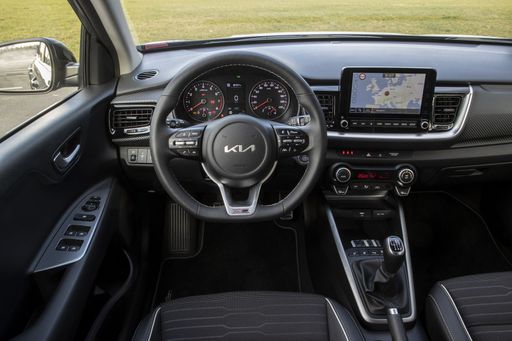
Comfort and technology are paramount in any modern vehicle. The Sandero’s interior may lean towards functionality with focus on practicality, but it doesn’t skimp on tech, offering features such as smartphone connectivity. The Stonic, as an SUV, leans into a slightly more upscale interior, featuring more contemporary design elements and advanced infotainment systems that create a more engaging driving experience.

Stonic

Safety and Innovations

In terms of safety, both vehicles come equipped with essential safety features, but the Kia Stonic presents a slight edge with its advanced driver assistance systems. These features promote peace of mind for drivers and passengers alike, contributing to higher safety ratings in crash tests.

Final Thoughts

Ultimately, choosing between the Dacia Sandero and the Kia Stonic will depend on your individual needs and preferences. If you prioritize affordability, practicality, and excellent fuel efficiency, the Sandero shines brightly. However, if you’re looking for a robust SUV with enhanced tech and performance, the Kia Stonic could be your ideal match. Both cars offer impressive features and specifications, ensuring that drivers receive value for their investment.

Here’s where it gets real: The technical differences in detail

Stonic

Costs and Efficiency:

Price and efficiency are key factors when choosing a car – and this is often where the real differences emerge.

Dacia Sandero is considerably cheaper – starting at 11,000 £ , while the Kia Stonic costs 20,100 £ . That’s a price difference of around 9,172 £.

Fuel consumption also shows a difference: the Dacia Sandero uses 5.3 L/100km and is marginally more efficient than the Kia Stonic with 5.6 L/100km. The difference is about 0.3 L/100km.

Sandero

Engine and Performance:

Under the bonnet, it becomes clear which model is tuned for sportiness and which one takes the lead when you hit the accelerator.

When it comes to engine power, the Dacia Sandero offers marginally more power – delivering 122 HP compared to 115 HP. That’s roughly 7 HP more horsepower.

When accelerating from 0 to 100 km/h, the Dacia Sandero is a bit quicker – completing the sprint in 9.7 s, while the Kia Stonic takes 10.7 s. That’s about 1 s quicker.

Both models offer the same torque – 200 Nm.

Stonic

Space and Everyday Use:

Whether family car or daily driver – which one offers more room, flexibility and comfort?

Both vehicles offer seating for 5 people.

In terms of curb weight, Dacia Sandero is only slightly lighter – 1,100 kg compared to 1,205 kg. The difference is around 105 kg.

Looking at boot space, the Dacia Sandero offers barely more boot space – 372 L compared to 352 L. That’s a difference of about 20 L.

When it comes to payload, the Kia Stonic carries barely more – 445 kg compared to 436 kg. That’s a difference of about 9 kg.

Who wins the race in the data check?

The Dacia Sandero stands well ahead of its rival in the objective data comparison.
This result only shows which model scores more points on paper – not which of the two cars feels right for you.

from £11,000
Sandero

Dacia Sandero

  • Engine Type : Petrol, LPG
  • Transmission : Manuel, Automatic
  • Drive Type : Front-Wheel Drive
  • Power HP : 67 - 122 HP
  • Consumption L/100km : 5.3 - 7.2 L/100km
Kia Stonic
Dacia Sandero

Costs and Consumption

View detailed analysis

Engine and Performance

View detailed analysis

Dimensions and Body

View detailed analysis

Kia Stonic

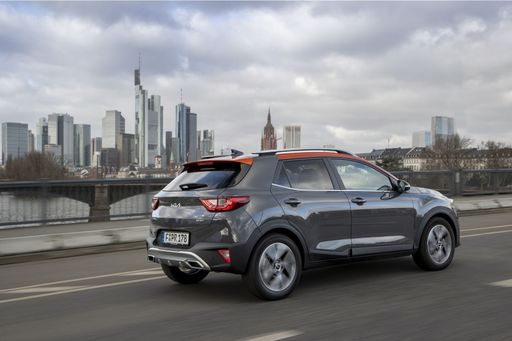
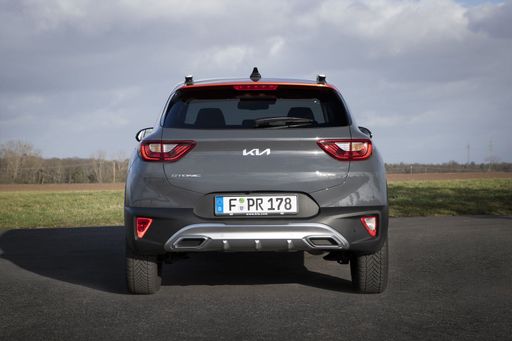
The Kia Stonic is a sprightly compact crossover that mixes city-friendly agility with a cheeky, modern design — perfect for buyers who want style without sacrificing sense. Inside it serves up clever practicality and a bright, well-equipped cabin, making everyday driving feel a bit more fun than it has any right to be.

details

Dacia Sandero

The Dacia Sandero is the everyman's hatchback — unpretentious, practical and brilliantly affordable, with sensible space and straightforward charm where it matters most. It won't wow in the premium lane, but for buyers who want honest, dependable transport without showroom theatrics, the Sandero is a clever, no‑nonsense pick that keeps running costs low and grin levels high.

details
Kia Stonic
Dacia Sandero

Costs and Consumption

Price
20,100 - 26,600 £
Price
11,000 - 16,300 £
Consumption L/100km
5.6 - 5.9 L/100km
Consumption L/100km
5.3 - 7.2 L/100km
Consumption kWh/100km
-
Consumption kWh/100km
-
Electric Range
-
Electric Range
-
Battery Capacity
-
Battery Capacity
-
co2
127 - 133 g/km
co2
111 - 131 g/km
Fuel tank capacity
45 L
Fuel tank capacity
-

Dimensions and Body

Body Type
SUV
Body Type
Hatchback
Seats
5
Seats
5
Doors
5
Doors
-
Curb weight
1,205 - 1,270 kg
Curb weight
1,100 - 1,297 kg
Trunk capacity
352 L
Trunk capacity
372 L
Length
4,165 mm
Length
-
Width
1,760 mm
Width
1,853 mm
Height
1,520 mm
Height
-
Max trunk capacity
1,155 L
Max trunk capacity
-
Payload
440 - 445 kg
Payload
385 - 436 kg

Engine and Performance

Engine Type
Petrol, Petrol MHEV
Engine Type
Petrol, LPG
Transmission
Manuel, Automatic
Transmission
Manuel, Automatic
Transmission Detail
Manual Gearbox, Dual-Clutch Automatic
Transmission Detail
Manual Gearbox, Dual-Clutch Automatic
Drive Type
Front-Wheel Drive
Drive Type
Front-Wheel Drive
Power HP
100 - 115 HP
Power HP
67 - 122 HP
Acceleration 0-100km/h
10.7 - 12.1 s
Acceleration 0-100km/h
9.7 - 16.7 s
Max Speed
179 - 182 km/h
Max Speed
-
Torque
172 - 200 Nm
Torque
95 - 200 Nm
Number of Cylinders
3
Number of Cylinders
3
Power kW
74 - 85 kW
Power kW
49 - 90 kW
Engine capacity
998 cm3
Engine capacity
999 - 1,199 cm3

General

Model Year
2,025
Model Year
2,025
CO2 Efficiency Class
D
CO2 Efficiency Class
D, C
Brand
Kia
Brand
Dacia
DriveDuel uses data analysis and artificial intelligence to evaluate vehicle data and create content. Content is regularly reviewed and improved. The displayed prices are estimates based on German list prices, adjusted to the respective country’s VAT. Country-specific registration taxes are not included. This information is not legally binding.