VS

Kia Stonic vs Honda Jazz comparison

Compare performance (115 HP vs 122 HP), boot space and price (20,400 £ vs 23,100 £ ) at a glance. Find out which car is the better choice for you – Kia Stonic or Honda Jazz?

Kia Stonic vs Honda Jazz: Key differences

Kia Stonic

4.6 (2 Reviews)
rate
  • moderately cheaper
  • marginally lighter
  • slightly more trunk space
details

Honda Jazz

4.6 (4 Reviews)
rate
  • marginally more power
  • visibly more efficient
  • a bit quicker 0–100 km/h
details

All details on performance, efficiency, range and trunk space can be found in the technical comparison below – including user reviews for both models.

By Achim Sedelmaier

Stonic

Honda Jazz vs. Kia Stonic: A Comprehensive Comparison

In the world of compact cars, the Honda Jazz and Kia Stonic stand out for their unique offerings. With advancements in technology and design, they cater to a variety of driver needs. This article compares these two models, dissecting their technical specifications, performance metrics, and innovations to help you decide which suits you better.
Jazz

Body Type and Design

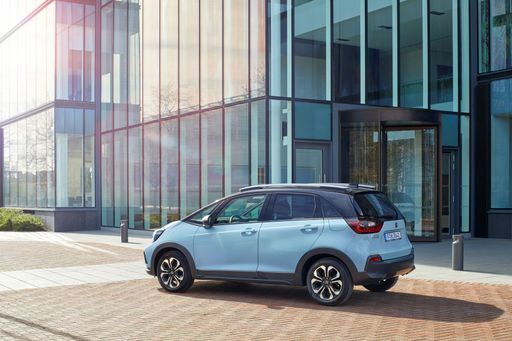
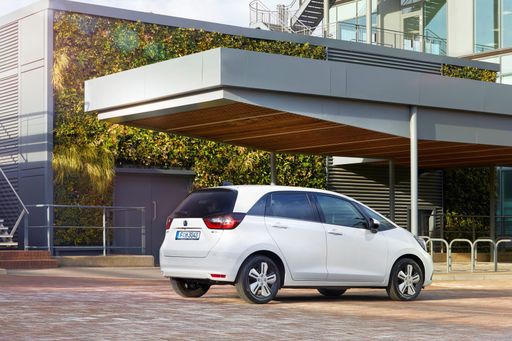
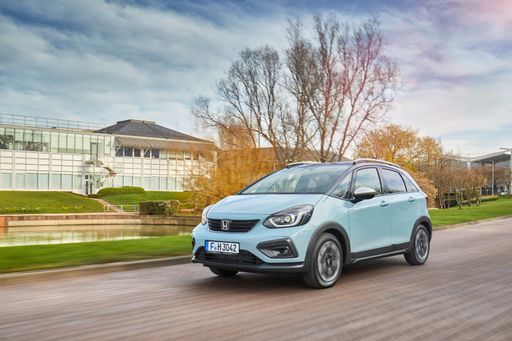
The Honda Jazz is classified as a hatchback, renowned for its space efficiency and practicality. With a length ranging between 4089 to 4105 mm and a height of 1526 to 1556 mm, the Jazz emphasizes a spacious interior, aimed at maximizing cabin comfort.

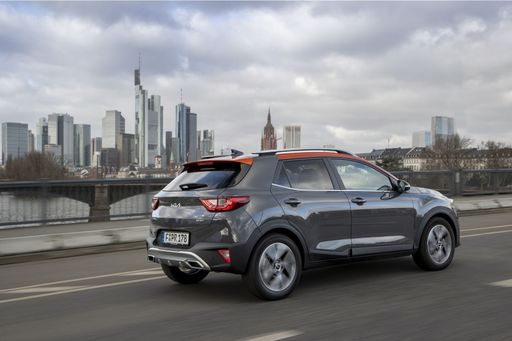
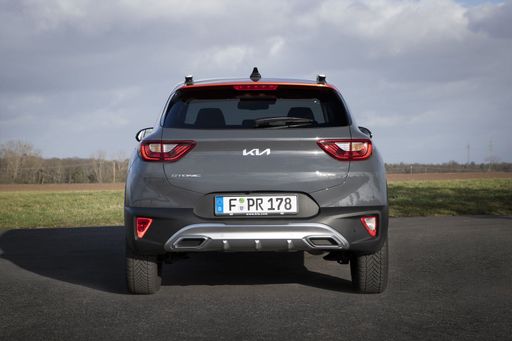
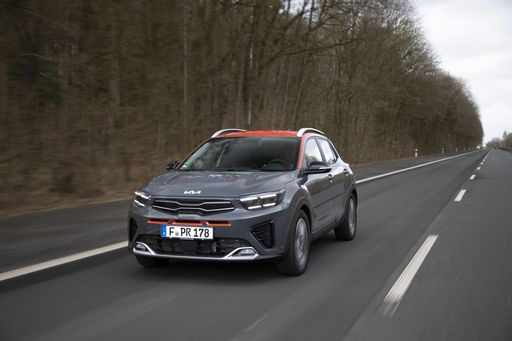
On the other hand, the Kia Stonic, an SUV, is slightly longer at 4140 mm and boasts a width of 1760 mm and a height of 1505 mm. This gives the Stonic a more commanding road presence, coupled with an interior that balances comfort and storage with a trunk capacity of 352 L.

Stonic

Engine Performance and Efficiency

The 2023 Honda Jazz is equipped with a full hybrid engine. It delivers a powerful output of 122 HP from its 1498 cm³, 4-cylinder engine. The impressive torque of 253 Nm also allows for a 0-100 km/h acceleration time of just 9.4 to 9.7 seconds. Furthermore, it is highly efficient with a fuel consumption rate of 4.5 to 4.8 L/100km and CO2 emissions ranging from 102 to 108 g/km.

Conversely, the 2024 Kia Stonic comes with options for petrol and mild-hybrid engines. The power output ranges from 79 to 100 HP, depending on the configuration. The Stonic's torque varies between 113 and 200 Nm, resulting in an acceleration time of 11.3 to 14.2 seconds from 0 to 100 km/h. Though it is less fuel-efficient with consumption figures of 5.5 to 5.8 L/100km, it compensates with potentially higher performance levels for city driving.

Jazz

Transmission and Driving Experience

The Honda Jazz features a continuously variable transmission (CVT), which ensures a smooth driving experience with seamless acceleration. The front-wheel-drive layout enhances its agility, making it perfect for urban environments.

The Kia Stonic offers more variety with both manual and automatic transmission options, including a dual-clutch automatic setup. This versatility can cater to different driver preferences; however, the front-wheel-drive system also provides adequate flexibility on city roads.

Stonic

Interior Space and Comfort

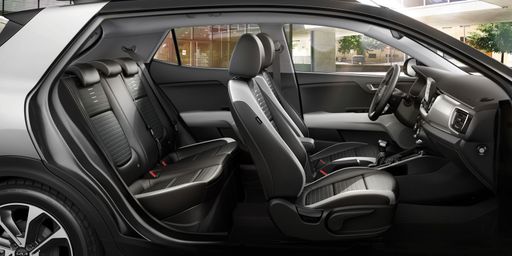
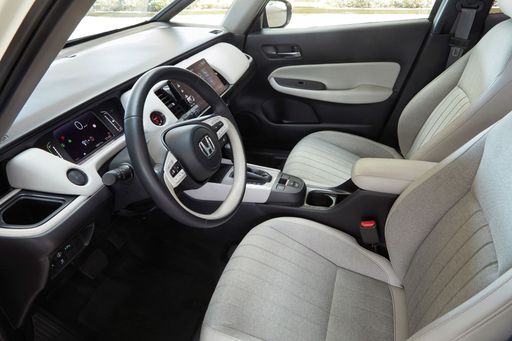
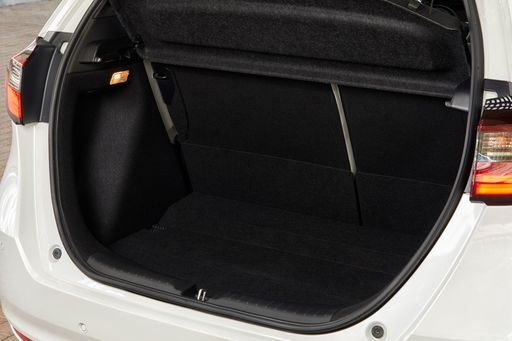
Internally, both vehicles prioritize passenger comfort. The Jazz accommodates five passengers comfortably while maintaining a versatile space with its Magic Seat feature, allowing for various seating and cargo arrangements. With a trunk capacity of 304 L, it ensures ample storage for everyday use.

The Stonic, with its SUV styling, also seats five, offering a trunk space of 352 L, slightly larger than that of the Jazz. Small details such as ergonomic seating and user-friendly technology add to the overall comfort for both driver and passengers.

Jazz

Innovations and Safety Features

Honda is known for its focus on safety features, and the Jazz is no exception. It comes equipped with Honda Sensing, which includes a suite of advanced safety technologies such as collision mitigation braking, lane-keeping assistance, and adaptive cruise control.

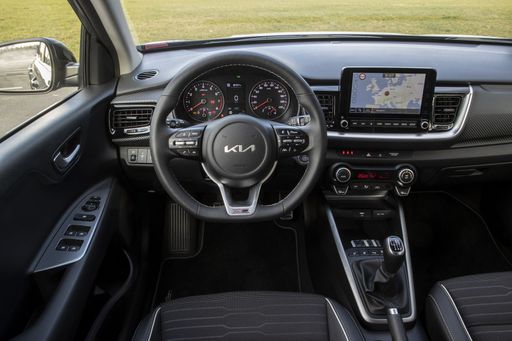
Kia, on the other hand, offers an array of driving aids with the Stonic. Its safety features comprise lane assistance, blind-spot monitoring, and rear-cross traffic alert. Technology-wise, the Stonic also boasts a modern infotainment system with smartphone integration.

Stonic

Conclusion: Which One Should You Choose?

Ultimately, the choice between the Honda Jazz and Kia Stonic boils down to your individual preferences and lifestyle. If you prioritize hybrid efficiency, practicality, and advanced safety features, the Jazz is a compelling choice. Conversely, if a sporty SUV presence, versatility in driving options, and slightly more cargo space appeal more to you, the Stonic could be your ideal vehicle. With both vehicles offering unique advantages, you can't go wrong with either option.

Here’s where it gets real: The technical differences in detail

Stonic

Costs and Efficiency:

Looking at overall running costs, both models reveal some interesting differences in everyday economy.

Kia Stonic is moderately cheaper – starting at 20,400 £ , while the Honda Jazz costs 23,100 £ . That’s a price difference of around 2,709 £.

Fuel consumption also shows a difference: the Honda Jazz uses 4.5 L/100km and is visibly more efficient than the Kia Stonic with 5.6 L/100km. The difference is about 1.1 L/100km.

Jazz

Engine and Performance:

Under the bonnet, it becomes clear which model is tuned for sportiness and which one takes the lead when you hit the accelerator.

When it comes to engine power, the Honda Jazz offers marginally more power – delivering 122 HP compared to 115 HP. That’s roughly 7 HP more horsepower.

When accelerating from 0 to 100 km/h, the Honda Jazz is a bit quicker – completing the sprint in 9.4 s, while the Kia Stonic takes 10.7 s. That’s about 1.3 s quicker.

There’s also a difference in torque: the Honda Jazz delivers markedly more torque with 253 Nm compared to 200 Nm. That’s about 53 Nm more.

Stonic

Space and Everyday Use:

Cabin size, boot volume and payload all play a role in everyday practicality. Here, comfort and flexibility make the difference.

Both vehicles offer seating for 5 people.

In terms of curb weight, Kia Stonic is marginally lighter – 1,205 kg compared to 1,302 kg. The difference is around 97 kg.

Looking at boot space, the Kia Stonic offers slightly more boot space – 352 L compared to 304 L. That’s a difference of about 48 L.

When it comes to payload, the Kia Stonic carries somewhat more – 445 kg compared to 388 kg. That’s a difference of about 57 kg.

Who wins the race in the data check?

The Honda Jazz is clearly superior overall in the objective data comparison.
This result only shows which model scores more points on paper – not which of the two cars feels right for you.

from £23,100
Jazz

Honda Jazz

  • Engine Type : Full Hybrid
  • Transmission : Automatic
  • Drive Type : Front-Wheel Drive
  • Power HP : 122 HP
  • Consumption L/100km : 4.5 - 4.8 L/100km
Kia Stonic
Honda Jazz

Costs and Consumption

View detailed analysis

Engine and Performance

View detailed analysis

Dimensions and Body

View detailed analysis

Kia Stonic

The Kia Stonic is a sprightly compact crossover that mixes city-friendly agility with a cheeky, modern design — perfect for buyers who want style without sacrificing sense. Inside it serves up clever practicality and a bright, well-equipped cabin, making everyday driving feel a bit more fun than it has any right to be.

details

Honda Jazz

The Honda Jazz is a supremely practical small hatch that hides clever packaging and more usable space than it lets on, with friendly styling and an unfussy charm. It’s economical to run, easy to park and perfect for buyers who want reliable, versatile daily motoring without the hassle.

details
Kia Stonic
Honda Jazz

Costs and Consumption

Price
20,400 - 26,800 £
Price
23,100 - 26,700 £
Consumption L/100km
5.6 - 5.7 L/100km
Consumption L/100km
4.5 - 4.8 L/100km
Consumption kWh/100km
-
Consumption kWh/100km
-
Electric Range
-
Electric Range
-
Battery Capacity
-
Battery Capacity
-
co2
126 - 128 g/km
co2
102 - 108 g/km
Fuel tank capacity
-
Fuel tank capacity
-

Dimensions and Body

Body Type
SUV
Body Type
Hatchback
Seats
5
Seats
5
Doors
-
Doors
-
Curb weight
1,205 - 1,270 kg
Curb weight
1,302 - 1,321 kg
Trunk capacity
352 L
Trunk capacity
304 L
Length
-
Length
-
Width
1,760 mm
Width
-
Height
-
Height
-
Max trunk capacity
-
Max trunk capacity
-
Payload
440 - 445 kg
Payload
369 - 388 kg

Engine and Performance

Engine Type
Petrol, Petrol MHEV
Engine Type
Full Hybrid
Transmission
Manuel, Automatic
Transmission
Automatic
Transmission Detail
Manual Gearbox, Dual-Clutch Automatic
Transmission Detail
CVT
Drive Type
Front-Wheel Drive
Drive Type
Front-Wheel Drive
Power HP
100 - 115 HP
Power HP
122 HP
Acceleration 0-100km/h
10.7 - 12.1 s
Acceleration 0-100km/h
9.4 - 9.7 s
Max Speed
-
Max Speed
-
Torque
172 - 200 Nm
Torque
253 Nm
Number of Cylinders
3
Number of Cylinders
4
Power kW
74 - 85 kW
Power kW
90 kW
Engine capacity
998 cm3
Engine capacity
1,498 cm3

General

Model Year
2025
Model Year
2025
CO2 Efficiency Class
D
CO2 Efficiency Class
C
Brand
Kia
Brand
Honda
DriveDuel uses data analysis and artificial intelligence to evaluate vehicle data and create content. Content is regularly reviewed and improved. The displayed prices are estimates based on German list prices, adjusted to the respective country’s VAT. Country-specific registration taxes are not included. This information is not legally binding.