VS

Mazda 2 Hybrid vs Suzuki Swift comparison

Compare performance (116 HP vs 82 HP), boot space and price (21,400 £ vs 17,100 £ ) at a glance. Find out which car is the better choice for you – Mazda 2 Hybrid or Suzuki Swift?

Mazda 2 Hybrid vs Suzuki Swift: Key differences

Mazda 2 Hybrid

  • visibly more power
  • somewhat more efficient
details

Suzuki Swift

4.2 (4 Reviews)
rate
  • markedly cheaper
  • slightly lighter
details

All details on performance, efficiency, range and trunk space can be found in the technical comparison below – including user reviews for both models.

By Achim Sedelmaier

2 Hybrid

The Battle of the Hatchbacks: Mazda 2 Hybrid VS Suzuki Swift

In the ever-competitive segment of compact hatchbacks, two models have recently tugged at the spotlight: the Mazda 2 Hybrid and the Suzuki Swift. Each offers its own blend of innovative tech and driving dynamics, making them appealing choices for urban drivers and eco-conscious individuals alike. Let's delve into the technical aspects and innovations that set these two hatchbacks apart.

Swift

Power and Performance

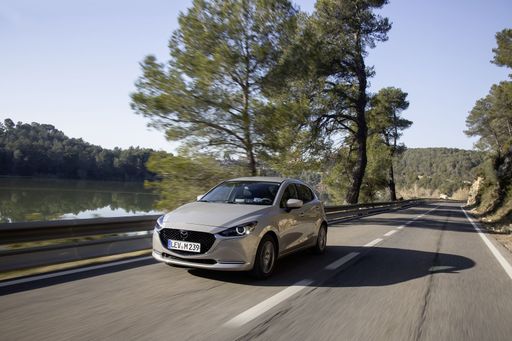
The Mazda 2 Hybrid is equipped with a full hybrid engine that delivers 116 HP (85 kW) through a front-wheel-drive system paired with a smooth CVT automatic transmission. It achieves a remarkable fuel consumption of 3.8 - 4 L/100km, and accelerates from 0-100 km/h in 9.7 seconds, with a maximum speed of 175 km/h. The combination of a 1490 cm3 engine displacement and a lightweight curb weight of 1180 kg ensures both agility and efficiency, found in a 3-cylinder layout.

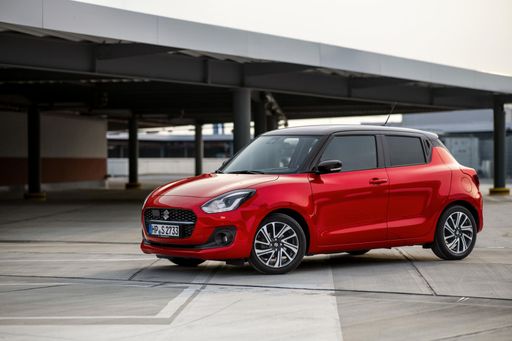
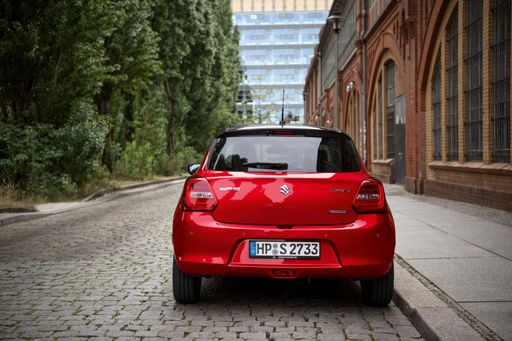
On the other hand, the Suzuki Swift offers a mild hybrid engine with 82 HP (61 kW). It comes with both manual and automatic transmission options, and presents the flexibility of front-wheel or all-wheel drive. The Swift achieves a fuel consumption of 4.4 - 4.9 L/100km, with a varied top speed of 165 - 170 km/h, depending on the model. While it may seem less potent compared to the Mazda, the Swift's engine capacity stands at 1197 cm3, providing a well-balanced performance for its lightweight body, curbing at around 1069-1145 kg.


2 Hybrid

Eco-Friendliness

When it comes to eco-friendliness, the Mazda 2 Hybrid leads with its CO2 emissions ranging between 87-93 g/km, achieving an efficiency class B rating. Meanwhile, the Suzuki Swift produces between 98-110 g/km of CO2, earning a class C rating. Mazda's dedication to minimizing environmental impact is evident through its specialized hybrid technology.

Swift

Design and Dimensions

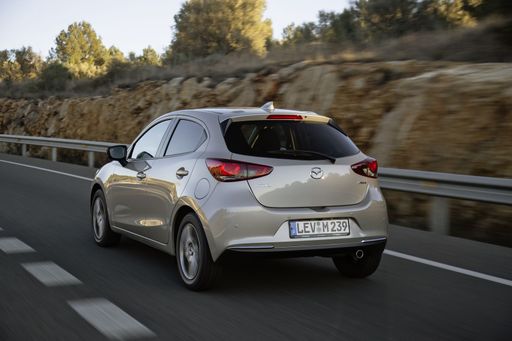
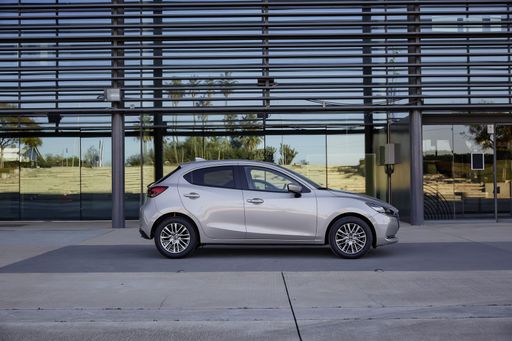
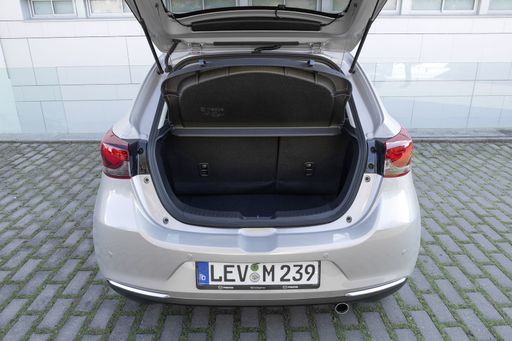
The exterior dimensions of both vehicles make them perfect for urban settings. The Mazda 2 Hybrid measures 3940 mm in length, 1745 mm in width, and 1505 mm in height, offering a compact yet roomy interior with a trunk capacity of 286 liters. Conversely, the Suzuki Swift is slightly shorter at 3860 mm in length and 1735 mm wide, with varying height specifications (1485-1510 mm) and a trunk capacity of 265 liters—making it practical for day-to-day use and tight parking spots.

2 Hybrid

Comfort and Convenience

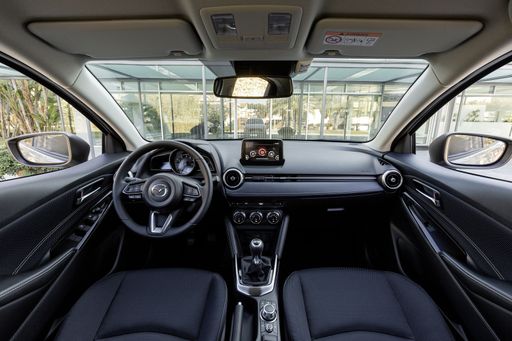
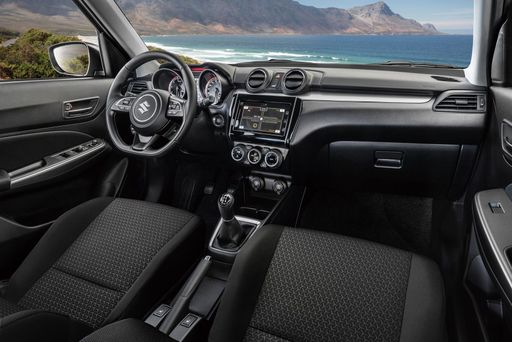
Both models comfortably seat five passengers and provide similar levels of convenience, though they cater to different tastes. Mazda’s hybrid model ensures a quiet driving experience, thanks to its electric power integration, while Suzuki offers plenty for those who prefer a more involved driving experience between its manual and automatic transmissions.

Swift

Conclusion: Choosing the Right Hatchback

The decision between the Mazda 2 Hybrid and the Suzuki Swift comes down to personal preference and priorities. If hybrid technology and lower emissions are top priorities, the Mazda 2 Hybrid might be your ideal pick. However, if you prefer a more conventional driving experience with a touch of sportiness and flexible drivetrain choices, the Suzuki Swift is a commendable contender. Both cars represent fine instances of modern hatchbacks, designed for efficiency and style in the urban landscape.

Here’s where it gets real: The technical differences in detail

2 Hybrid

Costs and Efficiency:

Price and efficiency are often the first things buyers look at. Here it becomes clear which model has the long-term edge – whether at the pump, the plug, or in purchase price.

Suzuki Swift is markedly cheaper – starting at 17,100 £ , while the Mazda 2 Hybrid costs 21,400 £ . That’s a price difference of around 4,278 £.

Fuel consumption also shows a difference: the Mazda 2 Hybrid uses 3.8 L/100km and is somewhat more efficient than the Suzuki Swift with 4.4 L/100km. The difference is about 0.6 L/100km.

Swift

Engine and Performance:

Power, torque and acceleration are the classic benchmarks for car enthusiasts – and here, some clear differences start to show.

When it comes to engine power, the Mazda 2 Hybrid offers visibly more power – delivering 116 HP compared to 82 HP. That’s roughly 34 HP more horsepower.

2 Hybrid

Space and Everyday Use:

Whether family car or daily driver – which one offers more room, flexibility and comfort?

Both vehicles offer seating for 5 people.

In terms of curb weight, Suzuki Swift is slightly lighter – 1,069 kg compared to 1,180 kg. The difference is around 111 kg.

When it comes to payload, the Mazda 2 Hybrid carries markedly more – 435 kg compared to 296 kg. That’s a difference of about 139 kg.

Who wins the race in the data check?

The Mazda 2 Hybrid is decisively ahead in the objective data comparison.
This result only shows which model scores more points on paper – not which of the two cars feels right for you.

from £21,400
2 Hybrid

Mazda 2 Hybrid

  • Engine Type : Full Hybrid
  • Transmission : Automatic
  • Drive Type : Front-Wheel Drive
  • Power HP : 116 HP
  • Consumption L/100km : 3.8 - 4 L/100km
Mazda 2 Hybrid
Suzuki Swift

Costs and Consumption

View detailed analysis

Engine and Performance

View detailed analysis

Dimensions and Body

View detailed analysis

Mazda 2 Hybrid

The Mazda 2 Hybrid brings Mazda’s trademark driving flair to the city, combining smooth, efficient running with unexpectedly eager handling that keeps short trips engaging. Compact, nicely finished and sensible on running costs, it’s a clever choice for buyers who want the economy of a small car without sacrificing cabin quality or personality.

details

Suzuki Swift

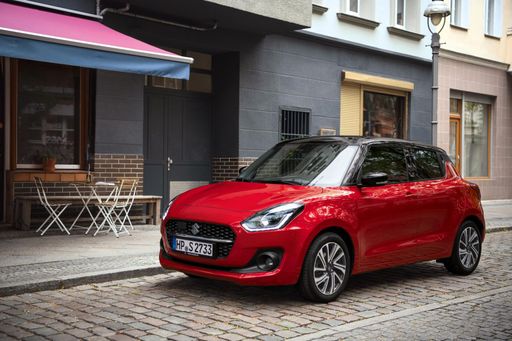
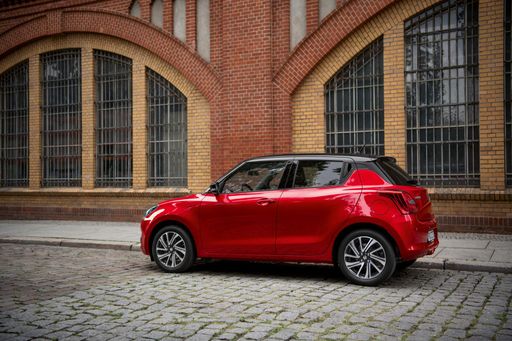
The Suzuki Swift is a cheeky little hatch that turns city streets into its playground with lively handling and a grin-inducing drive. Practical enough for daily chores, thrifty to run and kinder on your wallet than many rivals, it's a sensible pick for buyers who want fun without drama.

details
Mazda 2 Hybrid
Suzuki Swift

Costs and Consumption

Price
21,400 - 28,200 £
Price
17,100 - 21,200 £
Consumption L/100km
3.8 - 4 L/100km
Consumption L/100km
4.4 - 4.9 L/100km
Consumption kWh/100km
-
Consumption kWh/100km
-
Electric Range
-
Electric Range
-
Battery Capacity
-
Battery Capacity
-
co2
87 - 93 g/km
co2
98 - 110 g/km
Fuel tank capacity
-
Fuel tank capacity
-

Dimensions and Body

Body Type
Hatchback
Body Type
Hatchback
Seats
5
Seats
5
Doors
-
Doors
-
Curb weight
1,180 kg
Curb weight
1,069 - 1,145 kg
Trunk capacity
286 L
Trunk capacity
-
Length
-
Length
-
Width
1,745 mm
Width
1,735 mm
Height
-
Height
-
Max trunk capacity
-
Max trunk capacity
-
Payload
435 kg
Payload
282 - 296 kg

Engine and Performance

Engine Type
Full Hybrid
Engine Type
Petrol MHEV
Transmission
Automatic
Transmission
Manuel, Automatic
Transmission Detail
CVT
Transmission Detail
Manual Gearbox, CVT
Drive Type
Front-Wheel Drive
Drive Type
Front-Wheel Drive, All-Wheel Drive
Power HP
116 HP
Power HP
82 HP
Acceleration 0-100km/h
9.7 s
Acceleration 0-100km/h
-
Max Speed
-
Max Speed
-
Torque
-
Torque
112 Nm
Number of Cylinders
3
Number of Cylinders
3
Power kW
85 kW
Power kW
61 kW
Engine capacity
1,490 cm3
Engine capacity
1,197 cm3

General

Model Year
2025
Model Year
2025
CO2 Efficiency Class
B
CO2 Efficiency Class
C
Brand
Mazda
Brand
Suzuki
DriveDuel uses data analysis and artificial intelligence to evaluate vehicle data and create content. Content is regularly reviewed and improved. The displayed prices are estimates based on German list prices, adjusted to the respective country’s VAT. Country-specific registration taxes are not included. This information is not legally binding.