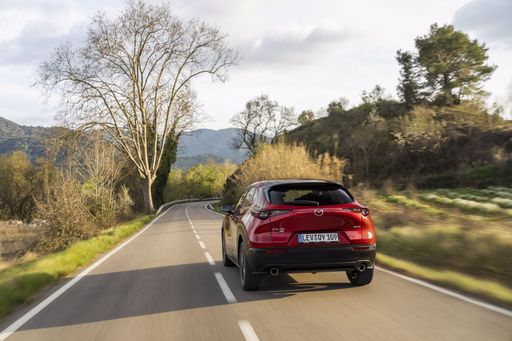
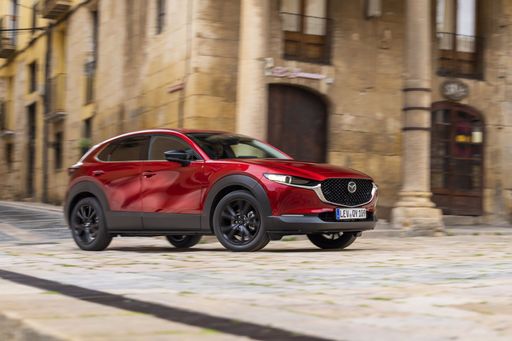
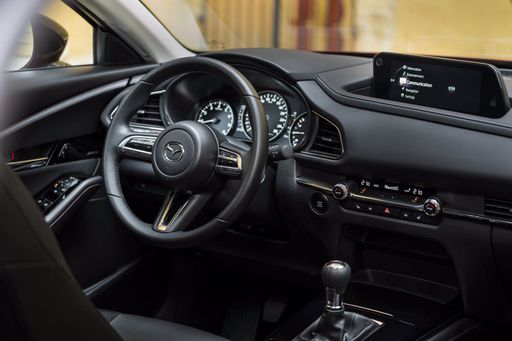
@ Mazda Motor Corporation
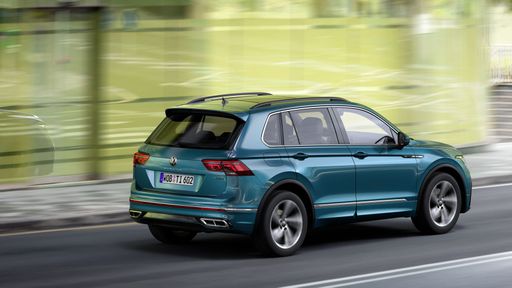
@ Volkswagen AG / VW Media
VS

Mazda CX-30 vs VW Tiguan – Differences & prices compared

Everyday use, family trips or long-distance drives – here’s where the differences show.
Discover whether Mazda CX-30 or VW Tiguan fits your lifestyle better.

CX-30 @ Mazda Motor Corporation

The Showdown of Compact SUVs: Mazda CX-30 vs. VW Tiguan

In the ever-competitive compact SUV segment, two models stand out for their blend of performance, efficiency, and style: the Mazda CX-30 and Volkswagen Tiguan. Both vehicles aim to offer superior driving experiences, but they cater to slightly different audiences. This comparison will delve into their technical specifications and innovations to help you choose the perfect SUV for your needs.
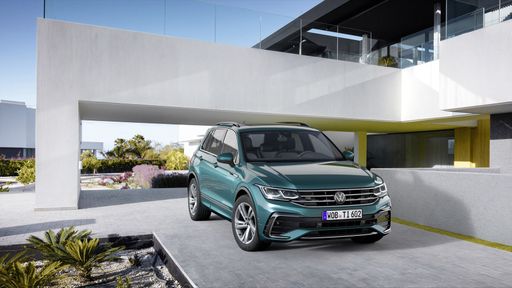
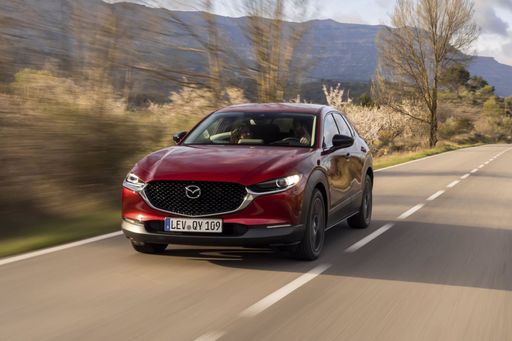
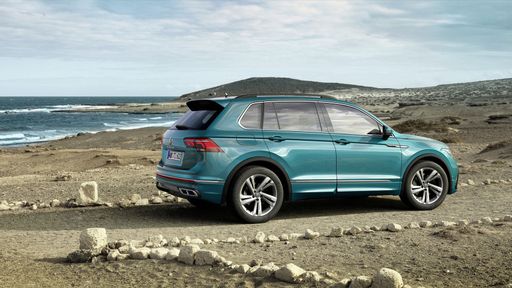
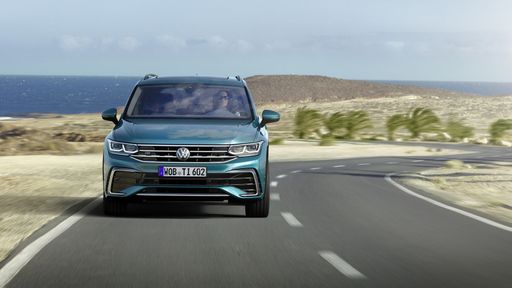
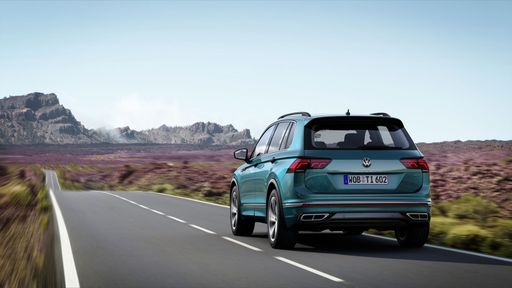
Tiguan @ Volkswagen AG / VW Media

Design and Dimensions

The Mazda CX-30 boasts a contemporary design philosophy with sleek contours and a refined look. It measures 4,395 mm in length, 1,795 mm in width, and 1,540 mm in height. The VW Tiguan, on the other hand, features a more traditional SUV silhouette, larger in stature at 4,539 mm in length, 1,842-1,859 mm in width, and 1,656-1,658 mm in height. While both offer a rugged design, the CX-30 leans towards a sporty aesthetic, whereas the Tiguan emphasizes a commanding road presence.

CX-30 @ Mazda Motor Corporation

Powertrains and Performance

The Mazda CX-30 comes with a choice of petrol mild hybrid engines offering a power range between 140-186 HP, catered to either front-wheel or all-wheel-drive systems. Accelerating from 0-100 km/h takes between 8.3 to 10.3 seconds, and it can reach a top speed of up to 204 km/h. Options for both manual and automatic transmissions provide flexibility for drivers.

Volkswagen Tiguan offers a more varied engine lineup, including petrol, mild hybrid, plugin hybrid, and diesel. It boasts a power output from 130 to 272 HP and offers only automatic transmission options, specifically a dual-clutch automatic, for smooth and efficient gear changes. It accelerates from 0-100 km/h in as quick as 5.9 seconds. A plugin hybrid variant impressively claims an electric range of 112-113 km on a single charge, enhancing fuel efficiency.

Tiguan @ Volkswagen AG / VW Media

Fuel Efficiency and Environmental Impact

Mazda’s less complex MHEV system allows the CX-30 to deliver a combined fuel consumption ranging between 5.7 to 6.6 L/100 km, emitting between 129 to 148 g/km of CO2, placing it within the D-E efficiency class. This efficiency makes it an attractive option for eco-conscious drivers.

The Tiguan’s range of powertrains offers a broader spectrum of fuel consumption rates. Particularly, its plugin hybrid variant showcases impressive fuel efficiency at just 0.4 to 0.5 L/100 km and CO2 emissions as low as 8-10 g/km, classifying it within the B efficiency class. Standard engines consume between 5.3 to 8.5 L/100 km, with emissions spanning 139 to 193 g/km.

CX-30 @ Mazda Motor Corporation

Interior and Cargo Space

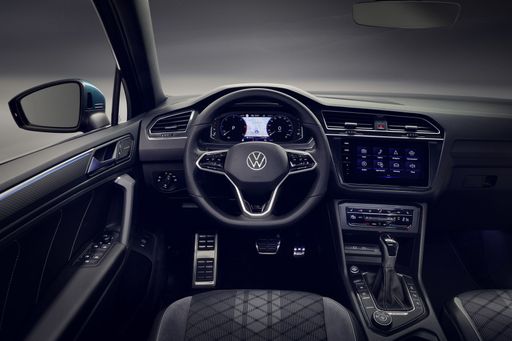
Both vehicles comfortably seat five passengers. The CX-30 offers a trunk capacity of approximately 430 liters, enough for daily tasks and medium-sized luggage. The Tiguan, highlighting its larger build, comes with a more generous cargo space of up to 652 liters, appealing to those who prioritize practicality and space.

Tiguan @ Volkswagen AG / VW Media

Conclusion

Choosing between the Mazda CX-30 and VW Tiguan largely depends on personal preferences and priorities. The CX-30 shines with its sporty, compact design, and economical engines, making it ideal for city dwellers and those seeking a stylish ride. On the other hand, the Tiguan stands out with its versatile engine lineup, spacious interior, and advanced hybrid options, perfect for families and adventurers needing extra space and versatility.

Both models bring a unique set of innovations and practical features, each projecting a strong case within the competitive SUV market.

Here’s where it gets real: The technical differences in detail

CX-30 @ Mazda Motor Corporation

Costs and Efficiency:

Price and efficiency are key factors when choosing a car – and this is often where the real differences emerge.

Mazda CX-30 has a noticeable advantage in terms of price – it starts at 25200 £, while the VW Tiguan costs 32800 £. That’s a price difference of around 7551 £.

Fuel consumption also shows a difference: VW Tiguan manages with 1.40 L and is therefore clearly more efficient than the Mazda CX-30 with 5.70 L. The difference is about 4.30 L per 100 km.

Tiguan @ Volkswagen AG / VW Media

Engine and Performance:

Power, torque and acceleration say a lot about how a car feels on the road. This is where you see which model delivers more driving dynamics.

When it comes to engine power, the VW Tiguan has a distinct edge – offering 272 HP compared to 186 HP. That’s roughly 86 HP more horsepower.

In acceleration from 0 to 100 km/h, the VW Tiguan is convincingly quicker – completing the sprint in 5.90 s, while the Mazda CX-30 takes 8.30 s. That’s about 2.40 s faster.

In terms of top speed, the VW Tiguan performs to a small extent better – reaching 242 km/h, while the Mazda CX-30 tops out at 204 km/h. The difference is around 38 km/h.

There’s also a difference in torque: VW Tiguan pulls evident stronger with 400 Nm compared to 240 Nm. That’s about 160 Nm difference.

Space and Everyday Use:

Beyond pure performance, interior space and usability matter most in daily life. This is where you see which car is more practical and versatile.

Both vehicles offer seating for 5 people.

In curb weight, Mazda CX-30 is minimal lighter – 1455 kg compared to 1599 kg. The difference is around 144 kg.

In terms of boot space, the VW Tiguan offers clearly perceptible more room – 652 L compared to 430 L. That’s a difference of about 222 L.

In maximum load capacity, the VW Tiguan performs a bit better – up to 1650 L, which is about 244 L more than the Mazda CX-30.

When it comes to payload, VW Tiguan hardly perceptible takes the win – 533 kg compared to 496 kg. That’s a difference of about 37 kg.

Who wins the race?

The VW Tiguan proves to be wins the duel decisively and therefore becomes our DriveDuel Champion!
VW Tiguan is the better all-rounder in this comparison.

from about £32,800
Tiguan @ Volkswagen AG / VW Media

VW Tiguan

  • Engine Type : Petrol, Petrol MHEV, Diesel, Plugin Hybrid
  • Transmission : Automatic
  • Drive Type : All-Wheel Drive, Front-Wheel Drive
  • Power HP : 130 - 272 HP
  • Consumption L/100km : 1.4 - 8.4 L
  • Electric Range : 118 - 126 km

Mazda CX-30

5 (1)
rate

The Mazda CX-30 blends sleek coupe-like lines with the practicality of a compact crossover, feeling more premium than its price tag suggests. It’s a joy to drive for anyone who likes a taut chassis and an interior that treats daily commutes like a small luxury escape.

details

VW Tiguan

3.3 (3)
rate

The VW Tiguan blends sensible family practicality with a dash of German polish, delivering a calm, reassuring ride and a cabin that never feels like an afterthought. For buyers who want an SUV that’s easy to live with yet still nicely dressed, the Tiguan is the grown‑up choice that keeps a cheeky wink in reserve.

details
Mazda CX-30
VW Tiguan
CX-30 @ Mazda Motor Corporation
Tiguan @ Volkswagen AG / VW Media

Costs and Consumption

Price
25200 - 36800 £
Price
32800 - 51900 £
Consumption L/100km
5.7 - 6.6 L
Consumption L/100km
1.4 - 8.4 L
Consumption kWh/100km
-
Consumption kWh/100km
-
Electric Range
-
Electric Range
118 - 126 km
Battery Capacity
-
Battery Capacity
19.70 kWh
co2
129 - 148 g/km
co2
32 - 190 g/km
Fuel tank capacity
48 - 51 L
Fuel tank capacity
45 - 58 L

Dimensions and Body

Body Type
SUV
Body Type
SUV
Seats
5
Seats
5
Doors
5
Doors
5
Curb weight
1455 - 1587 kg
Curb weight
1599 - 1890 kg
Trunk capacity
422 - 430 L
Trunk capacity
490 - 652 L
Length
4395 mm
Length
4539 mm
Width
1795 mm
Width
1842 - 1859 mm
Height
1540 mm
Height
1656 - 1658 mm
Max trunk capacity
1398 - 1406 L
Max trunk capacity
1486 - 1650 L
Payload
458 - 496 kg
Payload
460 - 533 kg

Engine and Performance

Engine Type
Petrol MHEV
Engine Type
Petrol, Petrol MHEV, Diesel, Plugin Hybrid
Transmission
Manuel, Automatic
Transmission
Automatic
Transmission Detail
Manual Gearbox, Automatic Gearbox
Transmission Detail
Dual-Clutch Automatic
Drive Type
Front-Wheel Drive, All-Wheel Drive
Drive Type
All-Wheel Drive, Front-Wheel Drive
Power HP
140 - 186 HP
Power HP
130 - 272 HP
Acceleration 0-100km/h
8.3 - 10.3 s
Acceleration 0-100km/h
5.9 - 10.6 s
Max Speed
191 - 204 km/h
Max Speed
198 - 242 km/h
Torque
238 - 240 Nm
Torque
220 - 400 Nm
Number of Cylinders
4
Number of Cylinders
4
Power kW
103 - 137 kW
Power kW
96 - 200 kW
Engine capacity
1998 - 2488 cm3
Engine capacity
1498 - 1984 cm3

General

Model Year
2025
Model Year
2024 - 2025
CO2 Efficiency Class
D, E
CO2 Efficiency Class
G, D, E, F, B
Brand
Mazda
Brand
VW
What drive types are available for the Mazda CX-30?

The Mazda CX-30 is offered with Front-Wheel Drive or All-Wheel Drive.

The prices and data displayed are estimates based on German list prices and may vary by country. This information is not legally binding.