VS

Mercedes EQB vs Ford Capri comparison

Compare performance (292 HP vs 340 HP), boot space and price (45,900 £ vs 36,300 £ ) at a glance. Find out which car is the better choice for you – Mercedes EQB or Ford Capri?

Mercedes EQB vs Ford Capri: Key differences

Mercedes EQB

4.3 (3 Reviews)
rate

Ford Capri

5 (2 Reviews)
rate
  • markedly cheaper
  • moderately more power
  • slightly more efficient
  • a bit more electric range
  • a bit quicker 0–100 km/h
  • only slightly lighter
  • a bit more trunk space

All details on performance, efficiency, range and trunk space can be found in the technical comparison below – including user reviews for both models.

EQB

The All-Electric Battle: Ford Capri vs. Mercedes EQB

In the rapidly evolving world of electric vehicles (EVs), two giants have entered the stage, each bringing its unique blend of innovation and performance. The Ford Capri and Mercedes EQB are two exceptional SUVs that showcase not only the latest in electric drive technology but also the distinct design philosophies of their respective automakers. Let’s dive into a detailed comparison to see how these two electrifying contenders stack up against each other.
Capri

Design & Dimensions: Style Meets Substance

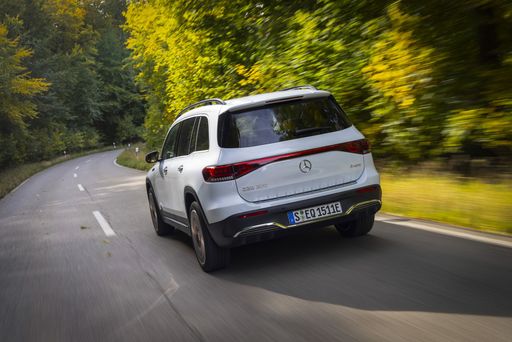
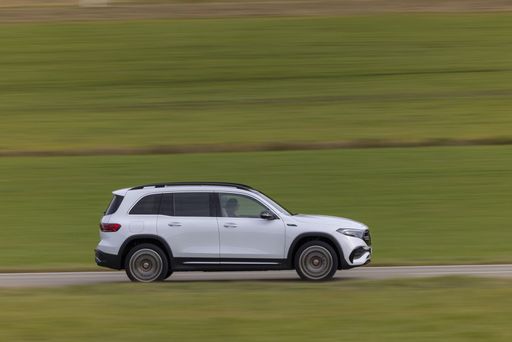
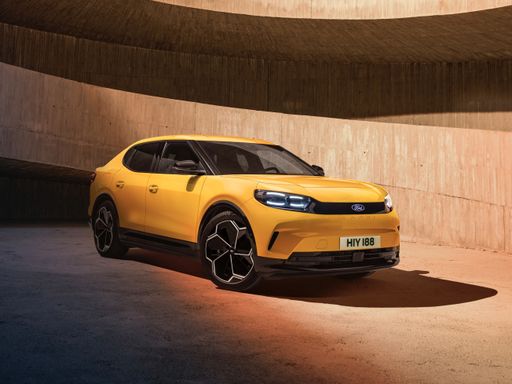
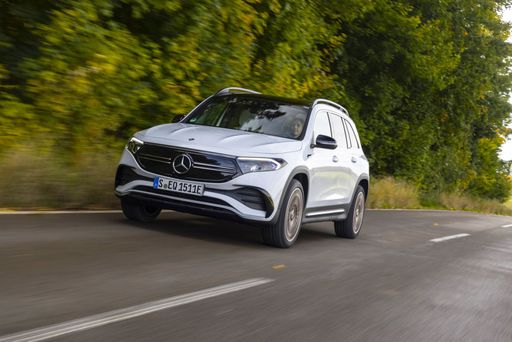
The Ford Capri and Mercedes EQB both exhibit bold designs that cater to modern tastes. Measuring 4634 mm in length, 1872 mm in width, and 1626 mm in height, the Ford Capri provides a sleek silhouette combined with a spacious interior. The Mercedes EQB is slightly longer at 4684 mm, with a width of 1834 mm and a height ranging from 1654 to 1689 mm, offering a more squared and rugged aesthetic.

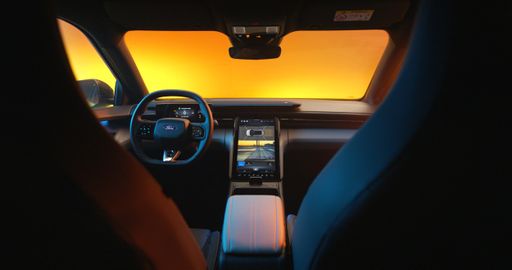
The EQB’s design leans towards a more traditional SUV look, prioritizing interior space with room for 5 passengers effortlessly. Meanwhile, the Capri’s design is more coupe-inspired, which is reflected in its aerodynamic efficiency and slightly sportier vibe.

EQB

Performance & Power: Torque Titans

Both models feature electric propulsion powered by automatic transmissions with reduction gearboxes. The Ford Capri stands out with its diverse power offerings, ranging from 170 HP to an impressive 340 HP, with matching torque up to 679 Nm. This powerhouse can accelerate from 0-100 km/h in as little as 5.3 seconds, making it a thrilling ride.

In contrast, the Mercedes EQB, with outputs ranging between 190 HP to 292 HP and torque peaking at 520 Nm, offers a more muted but equally stable drive. It can sprint from 0-100 km/h in 6.2 seconds, ensuring a spirited experience without compromising comfort.

Capri

Range & Efficiency: Mileage Masters

Range anxiety is a thing of the past with these vehicles. The Ford Capri boasts a commanding electric range of up to 627 km on a single charge, attributed to its sizable battery options including a capacity of up to 79 kWh. This impressive efficiency does come with various consumption figures, from as low as 13.3 to 15.8 kWh/100km.

The Mercedes EQB offers a maximum range of 533 km with a choice of 70.5 kWh battery capacity, showing off consumption rates between 15.2 to 17.3 kWh/100km. While slightly lower in range compared to the Capri, the EQB emphasizes steady performance alongside practicality.

EQB

Practicality & Space: Comfort Unlimited

Comfort and cargo space are paramount in the SUV market. On that front, the Ford Capri provides a generous trunk capacity ranging from 567 to 572 liters, allowing for ample storage. With a payload capacity of up to 587 kg, it’s ready for any adventure thrown its way.

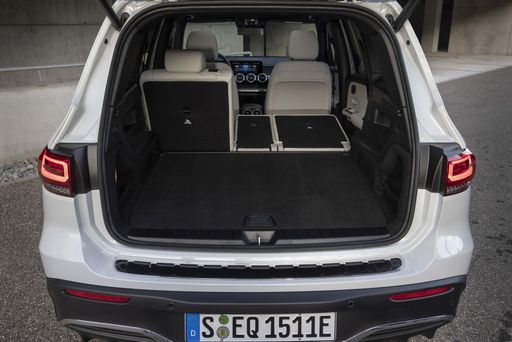
The Mercedes EQB offers a trunk capacity of 495 liters with a payload of 435 kg. Despite its slightly smaller cargo space, it ensures premium comfort and flexibility in its layout, catering well to family needs or long expeditions.

Conclusion: Picking Your Electric Partner

Choosing between the Ford Capri and the Mercedes EQB is no easy feat. The Capri shines with its formidable range and sporty performance, perfect for drivers who crave power and the thrill of driving. Meanwhile, the EQB stands as an epitome of balanced luxury and practicality, ideal for those who prioritize refinement and a serene driving experience.

Both the Ford Capri and Mercedes EQB are prime examples of how far we’ve come in the journey toward sustainable mobility, offering distinct experiences tailored to diverse driver expectations. The only question left is, which electrifying SUV matches your personal style?

Here’s where it gets real: The technical differences in detail

EQB

Costs and Efficiency:

Price and efficiency are key factors when choosing a car – and this is often where the real differences emerge.

Ford Capri is markedly cheaper – starting at 36,300 £ , while the Mercedes EQB costs 45,900 £ . That’s a price difference of around 9,527 £.

In terms of energy consumption, the Ford Capri is slightly more efficient: consuming 13.8 kWh/100km compared to 15.2 kWh/100km for the Mercedes EQB. That’s a difference of about 1.4 kWh/100km.

As for electric range, the Ford Capri offers a bit more range – reaching up to 627 km, about 92 km more than the Mercedes EQB.

Capri

Engine and Performance:

Power, torque and acceleration say a lot about how a car feels on the road. This is where you see which model delivers more driving dynamics.

When it comes to engine power, the Ford Capri offers moderately more power – delivering 340 HP compared to 292 HP. That’s roughly 48 HP more horsepower.

When accelerating from 0 to 100 km/h, the Ford Capri is a bit quicker – completing the sprint in 5.3 s, while the Mercedes EQB takes 6.2 s. That’s about 0.9 s quicker.

There’s also a difference in torque: the Ford Capri delivers clearly more torque with 679 Nm compared to 520 Nm. That’s about 159 Nm more.

EQB

Space and Everyday Use:

Whether family car or daily driver – which one offers more room, flexibility and comfort?

Both vehicles offer seating for 5 people.

In terms of curb weight, Ford Capri is only slightly lighter – 2,001 kg compared to 2,105 kg. The difference is around 104 kg.

Looking at boot space, the Ford Capri offers a bit more boot space – 572 L compared to 495 L. That’s a difference of about 77 L.

When it comes to payload, the Ford Capri carries visibly more – 587 kg compared to 435 kg. That’s a difference of about 152 kg.

Who wins the race in the data check?

The Ford Capri is clearly superior overall in the objective data comparison.
This result only shows which model scores more points on paper – not which of the two cars feels right for you.

from £36,300
Capri

Ford Capri

  • Engine Type : Electric
  • Transmission : Automatic
  • Drive Type : Rear-Wheel Drive, All-Wheel Drive
  • Power HP : 190 - 340 HP
  • Consumption kWh/100km : 13.8 - 16.5 kWh/100km
  • Electric Range : 439 - 627 km
Mercedes EQB
Ford Capri

Costs and Consumption

View detailed analysis

Engine and Performance

View detailed analysis

Dimensions and Body

View detailed analysis

Mercedes EQB

The Mercedes EQB is an electric compact SUV that dresses Mercedes' premium feel in practical clothing, with flexible seating and a serene, composed ride that turns everyday errands into a small luxury. It won't thrill the enthusiast, but for buyers who want a smart, spacious and well-made EV with tasteful tech and real-world usability, the EQB is a sensible, slightly buttoned-up choice that impresses without shouting.

details

Ford Capri

The Ford Capri turned the family car into something cheekily sporty, with a long, rakish profile that still promises fun at a glance. Today it lives on as a lovable classic — easy to tinker with, enjoyable to drive and guaranteed to raise smiles at any meet.

details
Mercedes EQB
Ford Capri

Costs and Consumption

Price
45,900 - 58,900 £
Price
36,300 - 50,900 £
Consumption L/100km
-
Consumption L/100km
-
Consumption kWh/100km
15.2 - 17.2 kWh/100km
Consumption kWh/100km
13.8 - 16.5 kWh/100km
Electric Range
468 - 535 km
Electric Range
439 - 627 km
Battery Capacity
70.5 kWh
Battery Capacity
-
co2
0 g/km
co2
0 g/km
Fuel tank capacity
-
Fuel tank capacity
-

Dimensions and Body

Body Type
SUV
Body Type
SUV
Seats
5
Seats
5
Doors
5
Doors
-
Curb weight
2,105 - 2,170 kg
Curb weight
2,001 - 2,175 kg
Trunk capacity
495 L
Trunk capacity
572 L
Length
4,684 mm
Length
-
Width
1,834 mm
Width
1,872 mm
Height
1,654 - 1,689 mm
Height
-
Max trunk capacity
1,710 L
Max trunk capacity
-
Payload
435 kg
Payload
559 - 587 kg

Engine and Performance

Engine Type
Electric
Engine Type
Electric
Transmission
Automatic
Transmission
Automatic
Transmission Detail
Reduction Gearbox
Transmission Detail
Reduction Gearbox
Drive Type
Front-Wheel Drive, All-Wheel Drive
Drive Type
Rear-Wheel Drive, All-Wheel Drive
Power HP
190 - 292 HP
Power HP
190 - 340 HP
Acceleration 0-100km/h
6.2 - 8.9 s
Acceleration 0-100km/h
5.3 - 8 s
Max Speed
160 km/h
Max Speed
-
Torque
385 - 520 Nm
Torque
350 - 679 Nm
Number of Cylinders
-
Number of Cylinders
-
Power kW
140 - 215 kW
Power kW
140 - 250 kW
Engine capacity
-
Engine capacity
-

General

Model Year
2,024 - 2,025
Model Year
2,026
CO2 Efficiency Class
A
CO2 Efficiency Class
A
Brand
Mercedes-Benz
Brand
Ford
DriveDuel uses data analysis and artificial intelligence to evaluate vehicle data and create content. Content is regularly reviewed and improved. The displayed prices are estimates based on German list prices, adjusted to the respective country’s VAT. Country-specific registration taxes are not included. This information is not legally binding.