VS

Mercedes EQE SUV vs BMW iX3 comparison

Compare performance (625 HP vs 469 HP), boot space and price (71,600 £ vs 54,300 £ ) at a glance. Find out which car is the better choice for you – Mercedes EQE SUV or BMW iX3?

Mercedes EQE SUV vs BMW iX3: Key differences

Mercedes EQE SUV

4.8 (3 Reviews)
rate
  • markedly more power
  • visibly quicker 0–100 km/h
details

BMW iX3

4.6 (4 Reviews)
rate
  • visibly cheaper
  • markedly more efficient
  • markedly more electric range
  • very slightly lighter
details

All details on performance, efficiency, range and trunk space can be found in the technical comparison below – including user reviews for both models.

By Achim Sedelmaier

EQE SUV

BMW iX3 VS Mercedes EQE SUV: a quick head-to-head

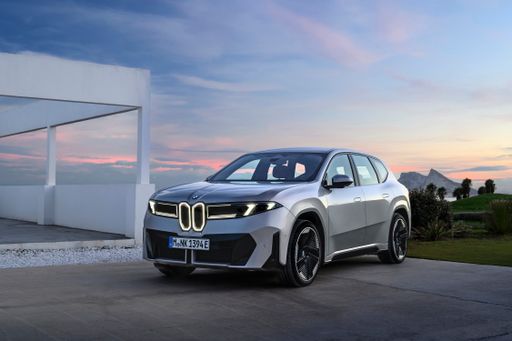
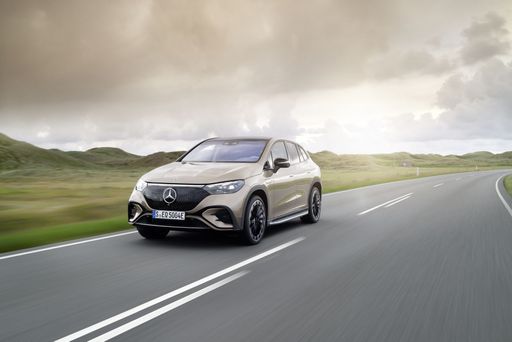
BMW iX3 and Mercedes EQE SUV represent two different answers to the premium electric SUV question, and this comparison focuses on how those answers play out for real buyers. The iX3 leans into efficiency, rapid charging capabilities and a more engaged driving character, while the EQE SUV prioritises an ultra‑quiet cabin, plush long‑distance comfort and a technology-laden interior. That means the iX3 feels like a long‑distance tool for people who want to spend less time charging and more time driving; the EQE SUV feels like a mobile lounge where silence and seat comfort come first. Expect trade-offs: the iX3 asks you to accept a more digital, touch-heavy control plan for its efficiency gains, and the EQE SUV asks you to pay for its comfort and tech in a steeper sticker price. Read on to see which compromises matter for your everyday use before the technical numbers tell the rest of the story.
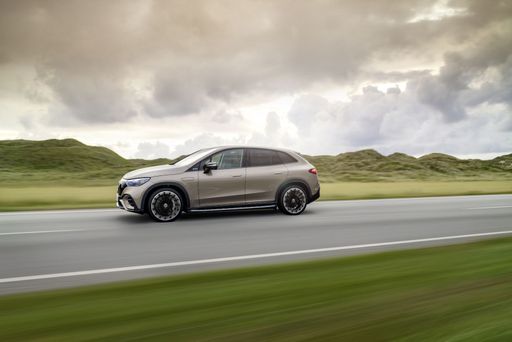
iX3

Driving character and on-road manners

The BMW iX3 drives with noticeably more agility and immediacy than the Mercedes EQE SUV, rewarding drivers who still enjoy steering feel and a bit of dynamism. By contrast, the Mercedes EQE SUV is composed and deliberately calm, trading sharpness for a composed, float‑over‑the‑road demeanour that favours relaxation over excitement. For mission‑focused journeys where passing and motorway stability count, the iX3’s livelier responses and efficiency pay off; for sedate cruising and chauffeur‑style comfort the EQE SUV’s heavy, planted character feels reassuring. Both are quiet at speed, but the iX3’s packaging gives a touch more feedback while the EQE SUV muffles the world almost entirely. Choose based on temperament: brisk, efficient driving with the BMW iX3 or serene, cushioned travel with the Mercedes EQE SUV.

EQE SUV

Cabin feel, comfort and long‑distance usability

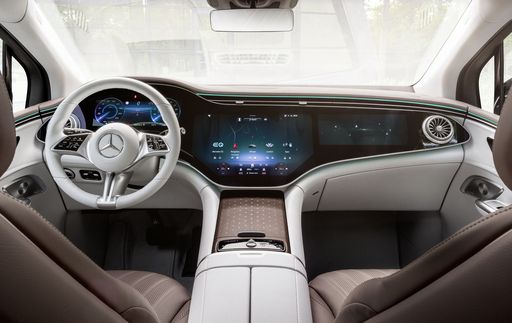
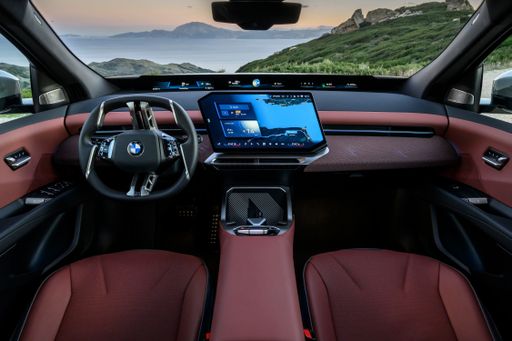
Inside, the Mercedes EQE SUV delivers a lounge‑like ambience with very soft seats, superb rear legroom and a sense of isolation from wind and road noise that makes long runs effortless. The BMW iX3 matches many of those long‑haul strengths in noise suppression and adds a snugger, driver‑centric seating position that keeps fatigue at bay for active drivers. Practical comfort differences emerge in detail: the EQE SUV’s seats and suspension lean toward plushness and passive comfort, whereas the iX3 balances cushioning with firmer support that helps on twistier roads. Both cabins feel premium, but the iX3’s radical display layout demands an adaptation period while the EQE SUV’s tech can sometimes interrupt the calm with intrusive prompts. If your priority is being cosseted on motorway miles pick the EQE SUV; if you want a quieter cockpit that still involves you in the drive, the iX3 is more aligned.

iX3

Practicality, loading and family usability

The BMW iX3 is the more pragmatic family tool: it offers additional small‑item storage and the rare frunk space, and its luggage solutions are geared toward flexibility for trips and towing. The Mercedes EQE SUV, despite generous rear passenger space, shows the usual premium trade‑off with a less straightforward boot experience—higher load lip and a luggage area that can feel smaller than the car’s exterior size promises. Both cars seat five comfortably and give rear occupants a flat floor, but the iX3’s fold‑and‑store details are more user‑friendly for active families and kit‑laden weekends. Tow ratings and payload considerations also favour the BMW iX3 for buyers who plan to haul a trailer or carry heavier loads more often. In short, families needing practical loading and occasional towing will lean toward the iX3, while those who prioritise rear passenger room and a relaxed cabin will favour the EQE SUV.

EQE SUV

Daily usability, infotainment and city friendliness

BMW’s Panoramic iDrive in the iX3 is striking and powerful, but it keeps many climate and comfort controls behind screens—appealing to tech‑savvy drivers but frustrating for anyone who prefers tactile shortcuts. Mercedes’ MBUX/Hyperscreen package in the EQE SUV is showy and feature-rich, yet its touch surfaces and layered menus can interrupt attention and sometimes overstep with unsolicited voice prompts. In tight urban settings the EQE SUV’s optional rear‑axle steering makes parking and manoeuvring surprisingly nimble for its size, while the iX3 demands a little more spatial respect but benefits from helpful cameras and driver aids. Both cars require a short learning curve to live with daily, but the iX3 rewards those who embrace voice and touchscreen control, and the EQE SUV rewards buyers who accept complexity in exchange for a luxurious, tech‑dense environment. If you spend most of your time in the city the EQE SUV’s steering aids are a bigger practical win; if you value straightforward, efficient day‑to‑day operation the iX3’s logic will suit you better.

iX3

Which buyer each car fits — practical guidance before the numbers

If your shortlist is between the BMW iX3 and the Mercedes EQE SUV, start by matching temperament and budget: the iX3 suits drivers who prioritise efficiency, shorter charging stops and a more engaging driving experience at a lower entry price. The EQE SUV fits buyers who place a premium on cabin serenity, rear‑seat luxury and a tech showpiece, and who are willing to absorb a higher purchase price for those comforts. For families who need towing, straightforward loading and value for money the BMW iX3 is the more pragmatic pick, whereas those seeking chauffeur‑grade comfort and an opulent interior will feel at home in the Mercedes EQE SUV. Below this editorial comparison you’ll find the technical section where charging behavior, powertrain traits and range figures translate these real‑world differences into the metrics that finalize a purchase decision.

Here’s where it gets real: The technical differences in detail

EQE SUV

Costs and Efficiency:

When it comes to price and running costs, the biggest differences usually appear. This is often where you see which car fits your budget better in the long run.

BMW iX3 is visibly cheaper – starting at 54,300 £ , while the Mercedes EQE SUV costs 71,600 £ . That’s a price difference of around 17,211 £.

In terms of energy consumption, the BMW iX3 is markedly more efficient: consuming 14.6 kWh/100km compared to 18.3 kWh/100km for the Mercedes EQE SUV. That’s a difference of about 3.7 kWh/100km.

As for electric range, the BMW iX3 offers markedly more range – reaching up to 805 km, about 194 km more than the Mercedes EQE SUV.

iX3

Engine and Performance:

Power, torque and acceleration are the classic benchmarks for car enthusiasts – and here, some clear differences start to show.

When it comes to engine power, the Mercedes EQE SUV offers markedly more power – delivering 625 HP compared to 469 HP. That’s roughly 156 HP more horsepower.

When accelerating from 0 to 100 km/h, the Mercedes EQE SUV is visibly quicker – completing the sprint in 3.7 s, while the BMW iX3 takes 4.9 s. That’s about 1.2 s quicker.

There’s also a difference in torque: the Mercedes EQE SUV delivers clearly more torque with 950 Nm compared to 645 Nm. That’s about 305 Nm more.

EQE SUV

Space and Everyday Use:

Whether family car or daily driver – which one offers more room, flexibility and comfort?

Both vehicles offer seating for 5 people.

In terms of curb weight, BMW iX3 is very slightly lighter – 2,360 kg compared to 2,440 kg. The difference is around 80 kg.

When it comes to payload, the Mercedes EQE SUV carries somewhat more – 580 kg compared to 465 kg. That’s a difference of about 115 kg.

Who wins the race in the data check?

The Mercedes EQE SUV comes out clearly ahead in the objective data comparison.
This result only shows which model scores more points on paper – not which of the two cars feels right for you.

from £71,600
EQE SUV

Mercedes EQE SUV

  • Engine Type Electric
  • Transmission Automatic
  • Drive Type All-Wheel Drive, Rear-Wheel Drive
  • Power HP 265 - 625 HP
  • Consumption kWh/100km 18.3 - 23.1 kWh/100km
  • Electric Range 453 - 611 km
Mercedes EQE SUV
BMW iX3

Costs and Consumption

View detailed analysis

Engine and Performance

View detailed analysis

Dimensions and Body

View detailed analysis

Mercedes EQE SUV

The Mercedes EQE SUV wraps silent electric power in a sumptuous, tech-filled shell, offering a cocoon-like cabin that makes long journeys feel indulgent. It’s not a driver's toy but a sophisticated cruiser for buyers who want luxury, space and futuristic gadgetry without shouting for attention.

details

BMW iX3

The BMW iX3 is an electric SUV that delivers the composed, premium driving experience BMW buyers expect. With a calm, refined cabin and practical everyday usability, it’s a strong choice for those who want electric motoring without giving up luxury and comfort.

details
Mercedes EQE SUV
BMW iX3

Costs and Consumption

Price
71,600 - 125,100 £
Price
54,300 - 66,300 £
Consumption L/100km
-
Consumption L/100km
-
Consumption kWh/100km
18.3 - 23.1 kWh/100km
Consumption kWh/100km
14.6 - 15.1 kWh/100km
Electric Range
453 - 611 km
Electric Range
635 - 805 km
Battery Capacity
90.5 - 96 kWh
Battery Capacity
-
co2
0 g/km
co2
0 g/km
Fuel tank capacity
-
Fuel tank capacity
-

Dimensions and Body

Body Type
SUV
Body Type
SUV
Seats
5
Seats
5
Doors
4
Doors
-
Curb weight
2,440 - 2,615 kg
Curb weight
2,360 kg
Trunk capacity
520 L
Trunk capacity
-
Length
4,863 - 4,879 mm
Length
-
Width
1,940 mm
Width
1,895 mm
Height
1,672 - 1,685 mm
Height
-
Max trunk capacity
1,675 L
Max trunk capacity
-
Payload
505 - 580 kg
Payload
465 kg

Engine and Performance

Engine Type
Electric
Engine Type
Electric
Transmission
Automatic
Transmission
Automatic
Transmission Detail
Reduction Gearbox
Transmission Detail
Reduction Gearbox
Drive Type
All-Wheel Drive, Rear-Wheel Drive
Drive Type
All-Wheel Drive, Rear-Wheel Drive
Power HP
265 - 625 HP
Power HP
320 - 469 HP
Acceleration 0-100km/h
3.7 - 7.1 s
Acceleration 0-100km/h
4.9 - 5.9 s
Max Speed
210 - 240 km/h
Max Speed
-
Torque
550 - 950 Nm
Torque
500 - 645 Nm
Number of Cylinders
-
Number of Cylinders
-
Power kW
195 - 460 kW
Power kW
235 - 345 kW
Engine capacity
-
Engine capacity
-

General

Model Year
2,023 - 2,025
Model Year
2026
CO2 Efficiency Class
A
CO2 Efficiency Class
A
Brand
Mercedes-Benz
Brand
BMW
DriveDuel uses data analysis and artificial intelligence to evaluate vehicle data and create content. Content is regularly reviewed and improved. The displayed prices are estimates based on German list prices, adjusted to the respective country’s VAT. Country-specific registration taxes are not included. This information is not legally binding.