VS

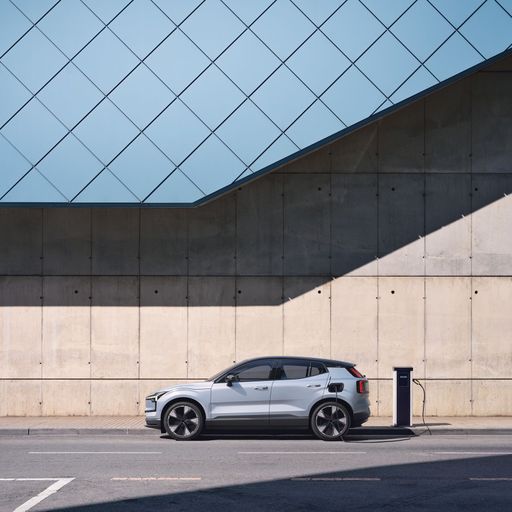
Mercedes GLC vs Volvo EX30 comparison

Compare performance (680 HP vs 428 HP), boot space and price (50,300 £ vs 33,000 £ ) at a glance. Find out which car is the better choice for you – Mercedes GLC or Volvo EX30?

Mercedes GLC vs Volvo EX30: Key differences

Mercedes GLC

4.4 (11 Reviews)
rate
  • visibly more power
  • a bit more efficient
  • noticeably more electric range
  • marginally quicker 0–100 km/h
  • considerably more trunk space

Volvo EX30

3.6 (5 Reviews)
rate
  • clearly cheaper
  • barely lighter

All details on performance, efficiency, range and trunk space can be found in the technical comparison below – including user reviews for both models.

GLC

The Battle of SUVs: Mercedes GLC vs Volvo EX30

In the world of luxury SUVs, two models stand out in 2024 and 2025 for their innovation, technical prowess, and style - the Mercedes GLC and the Volvo EX30. These vehicles are not just modes of transportation but statements of technology and power. Let's delve deep into the features that set them apart and see who takes the crown.
EX30

Under the Hood: Engine and Performance

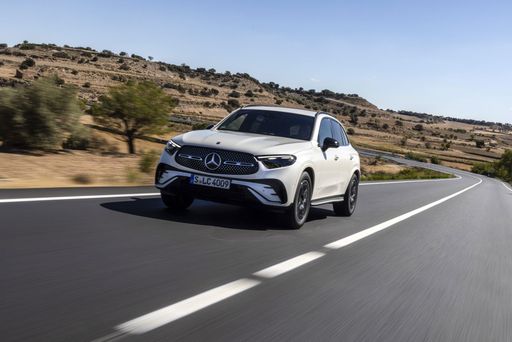
The Mercedes GLC comes with a variety of engine options to cater to different driving preferences - from petrol MHEV and diesel MHEV to plugin hybrid variants. This gives a power output ranging from 186 HP to a whopping 680 HP, offering every driver a perfect blend of efficiency and performance. The GLC boasts a top speed of up to 275 km/h, with the ability to accelerate from 0 to 100 km/h in just 3.5 seconds on its higher-end models. With a CO2 efficiency class varying from B to G, it also shows decent commitment to efficiency.

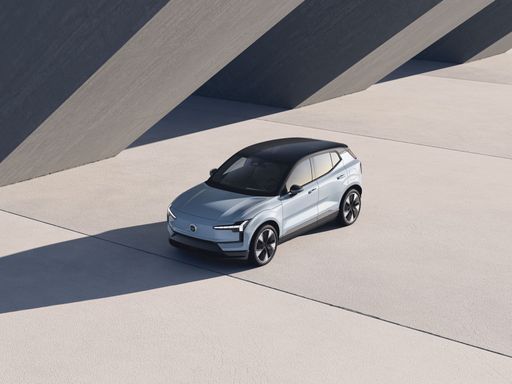
On the other hand, the Volvo EX30 embraces the electric wave, featuring pure electric powertrains. Available in rear-wheel and all-wheel drive options, the EX30 delivers substantial power with outputs of 272 HP and 428 HP, combined with a negligible CO2 efficiency, as expected from an electric vehicle. The Volvo EX30's acceleration, ranging from 3.6 to 5.7 seconds for the 0 to 100 km/h sprint, is nothing short of impressive. The electric range of up to 476 km reflects its capacity to comfortably handle long journeys in one charge.

GLC

Dimensions and Design

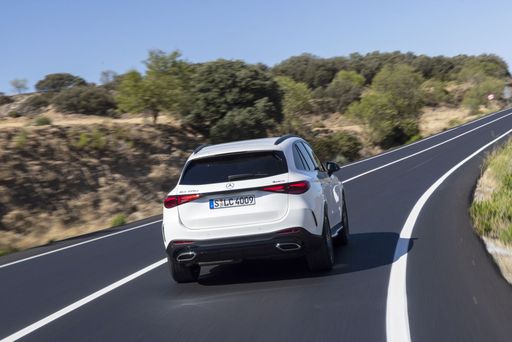
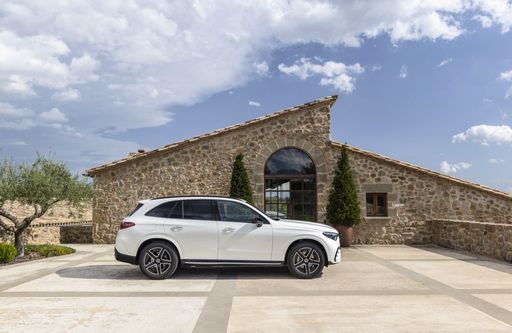
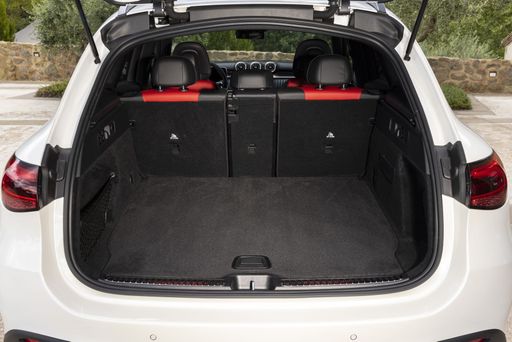
The Mercedes GLC is slightly larger with a length of between 4716 mm and 4792 mm, a width of 1890 mm, and a height that ranges from 1603 mm to 1647 mm. Its interior offers a spacious trunk capacity of up to 620 liters, ensuring ample space for luggage and utility.

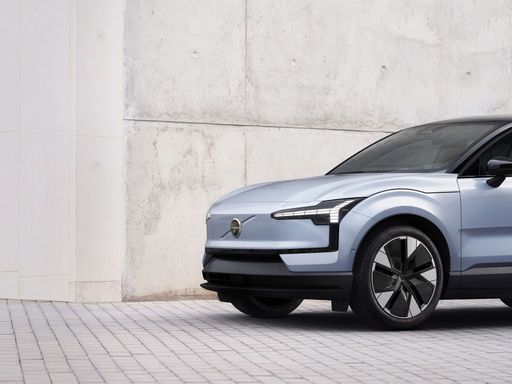
In comparison, the Volvo EX30 is more compact with a length of 4233 mm, a width of 1837 mm, and a height between 1549 mm and 1567 mm. While its trunk capacity is 318 liters, which is smaller than the GLC, the EX30 compensates for this with a sleek, modern design focusing on electrification benefits and environmental sustainability.

EX30

Advanced Technology and Features

Both SUVs are equipped with automatic transmission systems, enhancing the driving experience with seamless speed transitions. The Mercedes GLC features a modern automatic gearbox, whereas the Volvo EX30 incorporates a reduction gearbox, specifically designed to optimize the electric motor's performance.

Mercedes, with its legacy in luxury vehicular design, provides plush interiors that reflect elegance, while offering a range of driving assistance technologies. The GLC comes with a dynamic MBUX infotainment system, emphasizing connectivity and user interaction.

Volvo pledges its commitment to safety and ecological benefits with the EX30 by providing advanced driver assistance systems that align with its brand promise of making life safer and more sustainable. The use of eco-friendly materials in its design also appeals to the environmentally conscious consumer base.

GLC

Final Verdict

Choosing between the Mercedes GLC and the Volvo EX30 ultimately comes down to personal preference. If power, diverse engine options, and luxury are paramount, the Mercedes GLC has a slight edge. However, if cutting-edge electric technology, sustainability, and efficiency are your primary focus, then the Volvo EX30 is an outstanding contender.

Both SUVs signify the future of automotive innovation, showcasing how traditional luxury can seamlessly blend with new-age technology. No matter the choice, buyers are set for an exhilarating ride in 2024 and beyond.

Here’s where it gets real: The technical differences in detail

GLC

Costs and Efficiency:

Looking at overall running costs, both models reveal some interesting differences in everyday economy.

Volvo EX30 is clearly cheaper – starting at 33,000 £ , while the Mercedes GLC costs 50,300 £ . That’s a price difference of around 17,336 £.

In terms of energy consumption, the Mercedes GLC is a bit more efficient: consuming 14.9 kWh/100km compared to 17 kWh/100km for the Volvo EX30. That’s a difference of about 2.1 kWh/100km.

As for electric range, the Mercedes GLC offers noticeably more range – reaching up to 714 km, about 238 km more than the Volvo EX30.

EX30

Engine and Performance:

Power, torque and acceleration are the classic benchmarks for car enthusiasts – and here, some clear differences start to show.

When it comes to engine power, the Mercedes GLC offers visibly more power – delivering 680 HP compared to 428 HP. That’s roughly 252 HP more horsepower.

When accelerating from 0 to 100 km/h, the Mercedes GLC is marginally quicker – completing the sprint in 3.5 s, while the Volvo EX30 takes 3.6 s. That’s about 0.1 s quicker.

Looking at top speed, the Mercedes GLC is noticeably faster – reaching 275 km/h, while the Volvo EX30 tops out at 180 km/h. The difference is around 95 km/h.

There’s also a difference in torque: the Mercedes GLC delivers considerably more torque with 1,020 Nm compared to 543 Nm. That’s about 477 Nm more.

GLC

Space and Everyday Use:

Whether family car or daily driver – which one offers more room, flexibility and comfort?

Both vehicles offer seating for 5 people.

In terms of curb weight, Volvo EX30 is barely lighter – 1,840 kg compared to 1,910 kg. The difference is around 70 kg.

Looking at boot space, the Mercedes GLC offers considerably more boot space – 620 L compared to 318 L. That’s a difference of about 302 L.

For maximum load capacity, the Mercedes GLC offers considerably more capacity – up to 1,740 L, about 740 L more than the Volvo EX30.

When it comes to payload, the Mercedes GLC carries clearly more – 600 kg compared to 390 kg. That’s a difference of about 210 kg.

Who wins the race in the data check?

The Mercedes GLC stands well ahead of its rival in the objective data comparison.
This result only shows which model scores more points on paper – not which of the two cars feels right for you.

from £50,300
GLC

Mercedes GLC

  • Engine Type : Petrol MHEV, Plugin Hybrid, Diesel MHEV, Electric
  • Transmission : Automatic
  • Drive Type : All-Wheel Drive
  • Power HP : 186 - 680 HP
  • Consumption L/100km : 1.6 - 9.7 L/100km
  • Consumption kWh/100km : 14.9 - 16.6 kWh/100km
  • Electric Range : 12 - 714 km
Mercedes GLC
Volvo EX30

Costs and Consumption

View detailed analysis

Engine and Performance

View detailed analysis

Dimensions and Body

View detailed analysis

Mercedes GLC

The Mercedes GLC blends plush cabin comfort and composed road manners into an SUV that feels more grown-up than it looks. It won’t shout for attention, but will quietly please buyers who want refinement, usable space and a touch of luxury without the drama.

details

Volvo EX30

The Volvo EX30 arrives as a compact electric with crisp Scandinavian design and a cheeky personality, proving you can be serious about safety and still enjoy a grin on your commute. Its cabin is cleverly packaged and delightfully easy to live with, offering smart tech and practical touches that make it feel like a grown-up's city car with a sense of fun.

details
Mercedes GLC
Volvo EX30

Costs and Consumption

Price
50,300 - 126,600 £
Price
33,000 - 49,100 £
Consumption L/100km
1.6 - 9.7 L/100km
Consumption L/100km
-
Consumption kWh/100km
14.9 - 16.6 kWh/100km
Consumption kWh/100km
17 - 18.3 kWh/100km
Electric Range
12 - 714 km
Electric Range
339 - 476 km
Battery Capacity
94 kWh
Battery Capacity
49 - 65 kWh
co2
0 - 221 g/km
co2
0 g/km
Fuel tank capacity
62 - 65 L
Fuel tank capacity
-

Dimensions and Body

Body Type
SUV
Body Type
SUV
Seats
5
Seats
5
Doors
5
Doors
5
Curb weight
1,910 - 2,535 kg
Curb weight
1,840 - 1,960 kg
Trunk capacity
390 - 620 L
Trunk capacity
318 L
Length
4,716 - 4,845 mm
Length
4,233 mm
Width
1,890 - 1,913 mm
Width
1,838 mm
Height
1,603 - 1,644 mm
Height
1,550 mm
Max trunk capacity
1,490 - 1,740 L
Max trunk capacity
1,000 L
Payload
475 - 600 kg
Payload
370 - 390 kg

Engine and Performance

Engine Type
Petrol MHEV, Plugin Hybrid, Diesel MHEV, Electric
Engine Type
Electric
Transmission
Automatic
Transmission
Automatic
Transmission Detail
Automatic Gearbox, Reduction Gearbox
Transmission Detail
Reduction Gearbox
Drive Type
All-Wheel Drive
Drive Type
Rear-Wheel Drive, All-Wheel Drive
Power HP
186 - 680 HP
Power HP
272 - 428 HP
Acceleration 0-100km/h
3.5 - 9 s
Acceleration 0-100km/h
3.6 - 5.7 s
Max Speed
210 - 275 km/h
Max Speed
180 km/h
Torque
320 - 1,020 Nm
Torque
343 - 543 Nm
Number of Cylinders
4 - 6
Number of Cylinders
-
Power kW
137 - 500 kW
Power kW
200 - 315 kW
Engine capacity
1,991 - 2,989 cm3
Engine capacity
-

General

Model Year
2,025 - 2,026
Model Year
2,024 - 2,025
CO2 Efficiency Class
F, G, D, B, E, A
CO2 Efficiency Class
A
Brand
Mercedes-Benz
Brand
Volvo
DriveDuel uses data analysis and artificial intelligence to evaluate vehicle data and create content. Content is regularly reviewed and improved. The displayed prices are estimates based on German list prices, adjusted to the respective country’s VAT. Country-specific registration taxes are not included. This information is not legally binding.