
 Deutschland
 France
 Nederland
 Great Britain
 Sverige
 Danmark
 Suomi
Suomi Italia
 Polska
 Česko
Česko España
VS
Mercedes Vito Transporter vs Skoda Kodiaq comparison
Compare performance (237 HP vs 265 HP), boot space and price (28,800 £ vs 37,900 £ ) at a glance. Find out which car is the better choice for you – Mercedes Vito Transporter or Skoda Kodiaq?
Mercedes Vito Transporter vs Skoda Kodiaq: Key differences
All details on performance, efficiency, range and trunk space can be found in the technical comparison below – including user reviews for both models.
Vito Transporter
Costs and Efficiency:
Price and efficiency are key factors when choosing a car – and this is often where the real differences emerge.
Mercedes Vito Transporter is clearly cheaper – starting at 28,800 £ , while the Skoda Kodiaq costs 37,900 £ . That’s a price difference of around 9,095 £.
Fuel consumption also shows a difference: the Skoda Kodiaq uses 1.5 L/100km and is clearly more efficient than the Mercedes Vito Transporter with 6.8 L/100km. The difference is about 5.3 L/100km.
As for electric range, the Mercedes Vito Transporter offers clearly more range – reaching up to 474 km, about 352 km more than the Skoda Kodiaq.
Kodiaq
Engine and Performance:
Under the bonnet, it becomes clear which model is tuned for sportiness and which one takes the lead when you hit the accelerator.
When it comes to engine power, the Skoda Kodiaq offers somewhat more power – delivering 265 HP compared to 237 HP. That’s roughly 28 HP more horsepower.
There’s also a difference in torque: the Mercedes Vito Transporter delivers moderately more torque with 500 Nm compared to 400 Nm. That’s about 100 Nm more.
Space and Everyday Use:
Whether family car or daily driver – which one offers more room, flexibility and comfort?
Both vehicles offer seating for 5 people.
In terms of curb weight, Skoda Kodiaq is somewhat lighter – 1,684 kg compared to 1,916 kg. The difference is around 232 kg.
When it comes to payload, the Mercedes Vito Transporter carries visibly more – 884 kg compared to 563 kg. That’s a difference of about 321 kg.
Who wins the race in the data check?
The Skoda Kodiaq stands well ahead of its rival in the objective data comparison.
This result only shows which model scores more points on paper – not which of the two cars feels right for you.
from £37,900
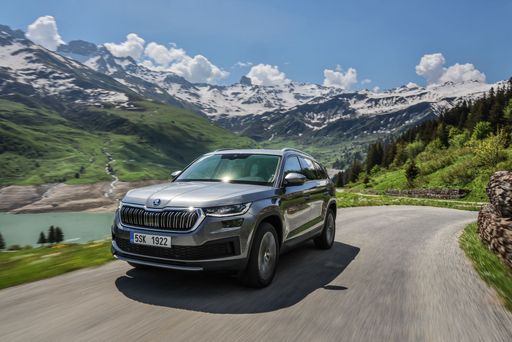
Skoda Kodiaq
Mercedes Vito Transporter
Skoda Kodiaq
Costs and Consumption
View detailed analysis
View detailed analysis
Engine and Performance
View detailed analysis
View detailed analysis
Dimensions and Body
View detailed analysis
View detailed analysis
Mercedes Vito Transporter
The Mercedes Vito Transporter is a supremely practical workhorse that blends Mercedes refinement with van-like utility, making long days on the road feel surprisingly civilized. With a cleverly thought-out interior and a drive that won’t wear you out, the Vito is the ideal choice for businesses that want capability without sacrificing comfort — and yes, it still looks sharper than most vans at a client meeting.
details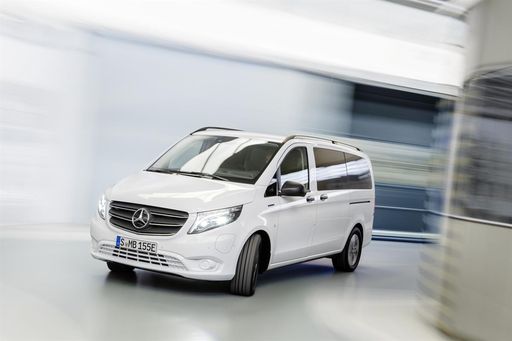
Skoda Kodiaq
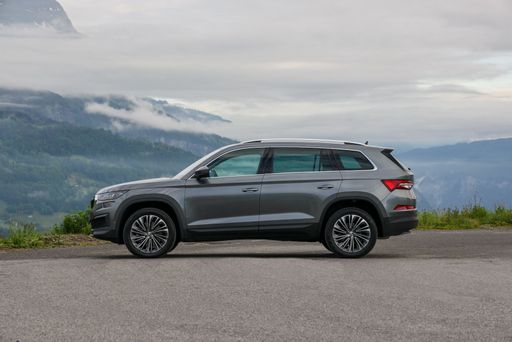
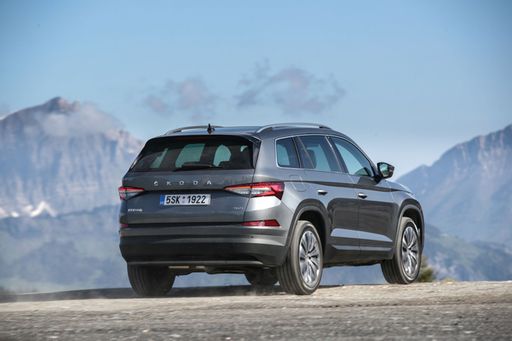
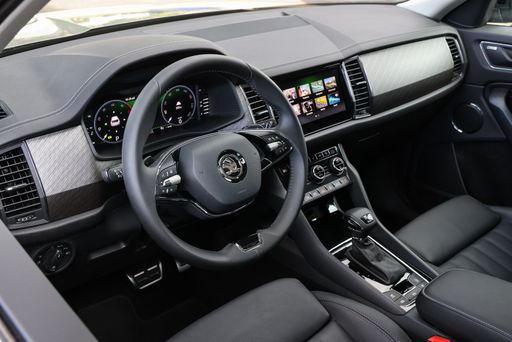
The Skoda Kodiaq is a practical, well built family SUV that puts space, comfort and usefulness ahead of showy gimmicks. Its composed ride, clever interior packaging and sensible feature set make it an easy, unpretentious choice for daily driving and longer journeys.
details
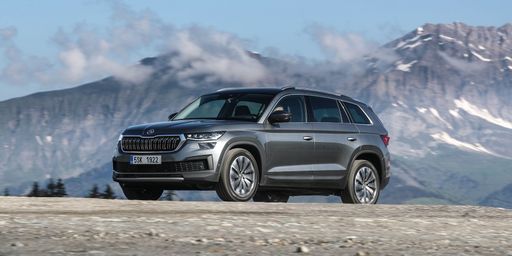
Mercedes Vito Transporter
Skoda Kodiaq
Costs and Consumption |
|
|---|---|
|
Price
28,800 - 51,600 £
|
Price
37,900 - 50,600 £
|
|
Consumption L/100km
6.8 - 9.7 L/100km
|
Consumption L/100km
1.5 - 8.2 L/100km
|
|
Consumption kWh/100km
21.2 - 26.5 kWh/100km
|
Consumption kWh/100km
-
|
|
Electric Range
304 - 474 km
|
Electric Range
119 - 122 km
|
|
Battery Capacity
60 - 90 kWh
|
Battery Capacity
-
|
|
co2
0 - 222 g/km
|
co2
35 - 186 g/km
|
|
Fuel tank capacity
57 - 70 L
|
Fuel tank capacity
-
|
Dimensions and Body |
|
|---|---|
|
Body Type
Cargo Van
|
Body Type
SUV
|
|
Seats
2 - 5
|
Seats
5
|
|
Doors
4
|
Doors
-
|
|
Curb weight
1,916 - 2,518 kg
|
Curb weight
1,684 - 1,970 kg
|
|
Trunk capacity
-
|
Trunk capacity
745 - 910 L
|
|
Length
4,895 - 5,390 mm
|
Length
-
|
|
Width
1,928 mm
|
Width
1,864 mm
|
|
Height
1,910 - 1,945 mm
|
Height
-
|
|
Max trunk capacity
3,100 - 6,600 L
|
Max trunk capacity
-
|
|
Payload
547 - 884 kg
|
Payload
460 - 563 kg
|
Engine and Performance |
|
|---|---|
|
Engine Type
Diesel, Electric, Petrol
|
Engine Type
Petrol, Petrol MHEV, Diesel, Plugin Hybrid
|
|
Transmission
Manuel, Automatic
|
Transmission
Automatic
|
|
Transmission Detail
Manual Gearbox, Reduction Gearbox, Automatic Gearbox
|
Transmission Detail
Dual-Clutch Automatic
|
|
Drive Type
Rear-Wheel Drive, Front-Wheel Drive, All-Wheel Drive
|
Drive Type
All-Wheel Drive, Front-Wheel Drive
|
|
Power HP
102 - 237 HP
|
Power HP
150 - 265 HP
|
|
Acceleration 0-100km/h
-
|
Acceleration 0-100km/h
6.3 - 9.7 s
|
|
Max Speed
120 - 140 km/h
|
Max Speed
-
|
|
Torque
270 - 500 Nm
|
Torque
250 - 400 Nm
|
|
Number of Cylinders
4
|
Number of Cylinders
4
|
|
Power kW
75 - 174 kW
|
Power kW
110 - 195 kW
|
|
Engine capacity
1,950 - 1,999 cm3
|
Engine capacity
1,498 - 1,984 cm3
|
General |
|
|---|---|
|
Model Year
2,024 - 2,025
|
Model Year
2,024 - 2,025
|
|
CO2 Efficiency Class
G, A
|
CO2 Efficiency Class
F, G, E, B
|
|
Brand
Mercedes-Benz
|
Brand
Skoda
|
DriveDuel uses data analysis and artificial intelligence to evaluate vehicle data and create content. Content is regularly reviewed and improved.
The displayed prices are estimates based on German list prices, adjusted to the respective country’s VAT. Country-specific registration taxes are not included. This information is not legally binding.