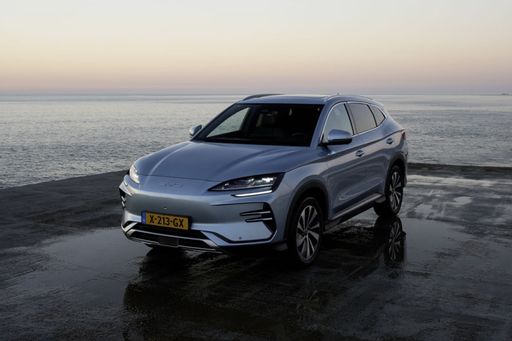
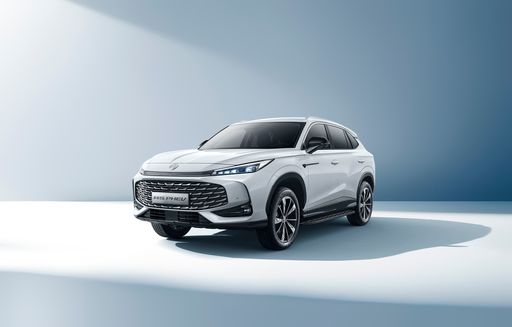
VS

MG HS vs BYD Seal U comparison

Compare performance (272 HP vs 324 HP), boot space and price (30,000 £ vs 34,300 £ ) at a glance. Find out which car is the better choice for you – MG HS or BYD Seal U?

MG HS vs BYD Seal U: Key differences

MG HS

5 (1 Reviews)
rate
  • somewhat cheaper
  • moderately lighter

BYD Seal U

4.1 (7 Reviews)
rate
  • a bit more power
  • significantly more electric range
  • a bit quicker 0–100 km/h
  • barely more trunk space

All details on performance, efficiency, range and trunk space can be found in the technical comparison below – including user reviews for both models.

HS

Head-to-head: BYD Seal U vs MG HS/EHS — an instant comparison

The BYD Seal U and the MG HS/EHS square up as two very different answers to modern driving needs, and this is a direct comparison you want if you’re weighing electric performance against compact-SUV practicality. Think of the BYD Seal U as the sleeker, more electric-minded contender, while the MG HS/EHS reads as the familiar compact SUV that comes in both conventional and electrified flavours. This comparison page highlights the real-world trade-offs — image, comfort, usability and driving feel — rather than a spec-sheet duel. If you’re searching for “BYD Seal U VS MG HS/EHS” to decide which suits your life, you’re in the right place.

Seal U

Two different attitudes: statement versus sensible

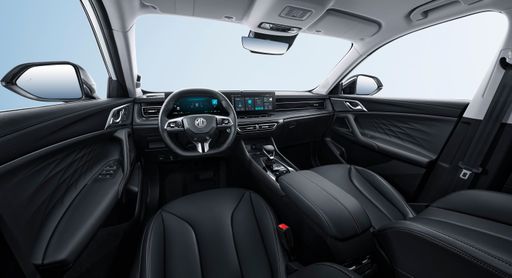
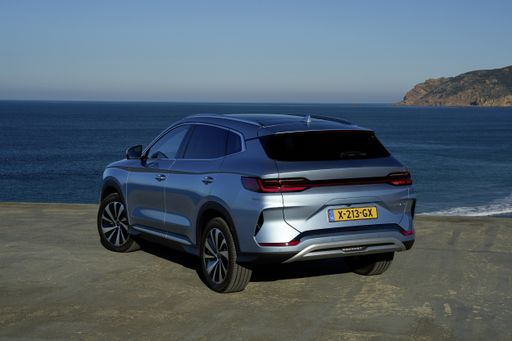
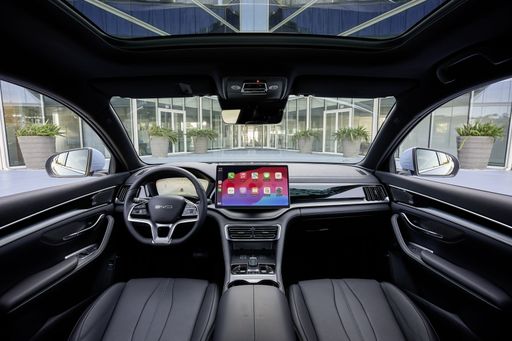
Personality-wise the BYD Seal U pushes a modern, slightly theatrical presence with sharper lines and an EV-first philosophy, while the MG HS/EHS plays it safer, leaning on mainstream SUV cues and broad appeal. Where the BYD Seal U feels like a tech-forward statement — taut suspension, cabin with digital emphasis — the MG HS/EHS trades drama for a more forgiving, conventional setup that soothes rather than thrills. Perceived material quality in the Seal U aims higher, but the MG’s cabin is all about familiar ergonomics and simple user-friendliness. The contrast is as much emotional as practical: one wants to impress, the other wants to be dependable.

HS

Daily life — city commutes, school runs and long hauls

For day-to-day chores the MG HS/EHS generally feels more like a family-friendly Swiss Army knife: upright seating, easy access and a forgiving ride that takes the edge off potholes and busy streets. The BYD Seal U tilts toward long-distance ease and highway composure, with an electric-focused drive that rewards motorway miles and smooth lanes. In tight urban environments the MG’s compact-SUV manners and lighter feel make parking and low-speed manoeuvres less fussy than the Seal U’s more planted, performance-leaning character. Both seat five comfortably, but the way they package space and accessibility sends a clear signal about who they’re aimed at.

Seal U

Buying it for the right reason: image, logic or comfort?

Choose the BYD Seal U if you want to be seen as embracing modern tech and sporty electrification; it’s the pick for drivers who value innovation and a sharper on-road persona. Pick the MG HS/EHS if you prefer a lower-risk, sensible purchase that covers family needs and daily errands without demanding a lifestyle change. The Seal U lets you justify an electric leap on style and on-road pep, while the MG HS/EHS lets you justify staying with a proven SUV shape and user-friendly controls. Both make sense — but for very different reasons — so your decision will say more about you than the cars.

HS

Who should shortlist the BYD Seal U?

The BYD Seal U will appeal most to the Tech-focused and Status/Expression buyer archetypes who want an EV that looks modern and drives with a sharper edge than a conventional SUV. If you enjoy gadgetry, a more premium feel and the idea of making a visible shift to electrification, the Seal U’s attitude fits you better than the MG HS/EHS. It’s also a strong pick for long-distance drivers who prize highway refinement and a composed, planted ride. If you need pure practicality above all else, the MG still deserves a look, but the Seal U rewards those who prioritise presence and progress.

Seal U

Who should lean toward the MG HS/EHS (and why the BYD Seal U still matters)

The MG HS/EHS suits Pragmatists and Comfort-oriented buyers who prize everyday ease, simple controls and a forgiving ride for school runs and supermarket trips. It’s the obvious choice for value-conscious families who like the reassurance of a conventional SUV shape with the option of electrified variants, while the BYD Seal U remains tempting for anyone wanting sharper tech and a more distinctive image. If your priority list begins with usability and low fuss, the MG makes life easier; if it starts with modernity and driving sparkle, the Seal U pulls ahead. Read on to see how those impressions translate into the nitty-gritty differences further down the page.

Here’s where it gets real: The technical differences in detail

HS

Costs and Efficiency:

Price and efficiency are often the first things buyers look at. Here it becomes clear which model has the long-term edge – whether at the pump, the plug, or in purchase price.

MG HS is somewhat cheaper – starting at 30,000 £ , while the BYD Seal U costs 34,300 £ . That’s a price difference of around 4,286 £.

As for electric range, the BYD Seal U offers significantly more range – reaching up to 500 km, about 400 km more than the MG HS.

Seal U

Engine and Performance:

Under the bonnet, it becomes clear which model is tuned for sportiness and which one takes the lead when you hit the accelerator.

When it comes to engine power, the BYD Seal U offers a bit more power – delivering 324 HP compared to 272 HP. That’s roughly 52 HP more horsepower.

When accelerating from 0 to 100 km/h, the BYD Seal U is a bit quicker – completing the sprint in 5.9 s, while the MG HS takes 6.8 s. That’s about 0.9 s quicker.

There’s also a difference in torque: the BYD Seal U delivers clearly more torque with 550 Nm compared to 350 Nm. That’s about 200 Nm more.

HS

Space and Everyday Use:

Cabin size, boot volume and payload all play a role in everyday practicality. Here, comfort and flexibility make the difference.

Both vehicles offer seating for 5 people.

In terms of curb weight, MG HS is moderately lighter – 1,735 kg compared to 1,940 kg. The difference is around 205 kg.

Looking at boot space, the BYD Seal U offers barely more boot space – 552 L compared to 507 L. That’s a difference of about 45 L.

When it comes to payload, the BYD Seal U carries only slightly more – 410 kg compared to 400 kg. That’s a difference of about 10 kg.

Who wins the race in the data check?

The BYD Seal U stands well ahead of its rival in the objective data comparison.
This result only shows which model scores more points on paper – not which of the two cars feels right for you.

from £34,300
Seal U

BYD Seal U

  • Engine Type : Electric, Plugin Hybrid
  • Transmission : Automatic
  • Drive Type : Front-Wheel Drive, All-Wheel Drive
  • Power HP : 218 - 324 HP
  • Consumption kWh/100km : 12.1 - 20.5 kWh/100km
  • Electric Range : 70 - 500 km
MG HS
BYD Seal U

Costs and Consumption

View detailed analysis

Engine and Performance

View detailed analysis

Dimensions and Body

View detailed analysis

MG HS

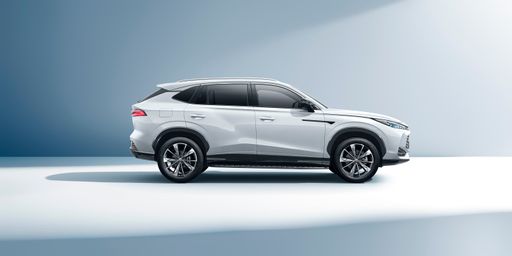
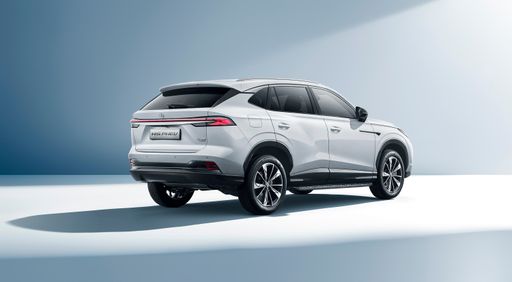
The MG HS, also known as the EHS in its hybrid variant, is a midsize SUV that combines modern design with a focus on comfort and technology. Its spacious interior offers a premium feel, enhanced by quality materials and an array of advanced features aimed at ensuring a smooth driving experience. Known for its efficiency, the MG HS/EHS delivers an enjoyable ride whether navigating city streets or taking on longer road trips.

details

BYD Seal U

The BYD Seal U pairs a sleek fastback silhouette with a surprisingly roomy, tech-rich cabin, giving electric chic without the showroom pretension. It's a smart pick for buyers after confident handling, sensible practicality and standout value — all wrapped up with a cheeky grin when you put your foot down.

details
MG HS
BYD Seal U

Costs and Consumption

Price
30,000 - 36,000 £
Price
34,300 - 39,800 £
Consumption L/100km
0.5 - 5.5 L/100km
Consumption L/100km
-
Consumption kWh/100km
-
Consumption kWh/100km
12.1 - 20.5 kWh/100km
Electric Range
100 km
Electric Range
70 - 500 km
Battery Capacity
-
Battery Capacity
-
co2
14 - 126 g/km
co2
0 - 71 g/km
Fuel tank capacity
-
Fuel tank capacity
-

Dimensions and Body

Body Type
SUV
Body Type
SUV
Seats
5
Seats
5
Doors
-
Doors
5
Curb weight
1,735 - 1,930 kg
Curb weight
1,940 - 2,147 kg
Trunk capacity
507 L
Trunk capacity
425 - 552 L
Length
-
Length
4,785 mm
Width
1,890 mm
Width
1,890 mm
Height
-
Height
1,668 mm
Max trunk capacity
-
Max trunk capacity
1,440 L
Payload
400 kg
Payload
410 kg

Engine and Performance

Engine Type
Full Hybrid, Plugin Hybrid
Engine Type
Electric, Plugin Hybrid
Transmission
Automatic
Transmission
Automatic
Transmission Detail
Automatic Gearbox
Transmission Detail
Reduction Gearbox, Automatic Gearbox
Drive Type
Front-Wheel Drive
Drive Type
Front-Wheel Drive, All-Wheel Drive
Power HP
224 - 272 HP
Power HP
218 - 324 HP
Acceleration 0-100km/h
6.8 - 7.9 s
Acceleration 0-100km/h
5.9 - 9.6 s
Max Speed
-
Max Speed
175 km/h
Torque
340 - 350 Nm
Torque
300 - 550 Nm
Number of Cylinders
4
Number of Cylinders
4
Power kW
165 - 200 kW
Power kW
160 - 238 kW
Engine capacity
1,496 cm3
Engine capacity
1,497 - 1,498 cm3

General

Model Year
2,025
Model Year
2,024 - 2,026
CO2 Efficiency Class
D, B
CO2 Efficiency Class
A, B
Brand
MG
Brand
BYD
DriveDuel uses data analysis and artificial intelligence to evaluate vehicle data and create content. Content is regularly reviewed and improved. The displayed prices are estimates based on German list prices, adjusted to the respective country’s VAT. Country-specific registration taxes are not included. This information is not legally binding.