VS

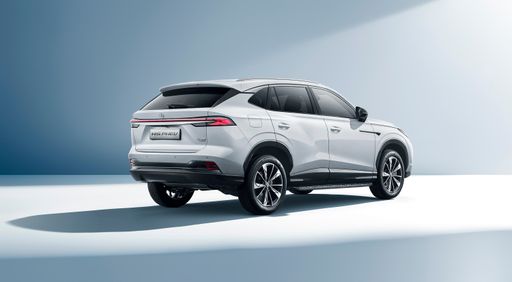
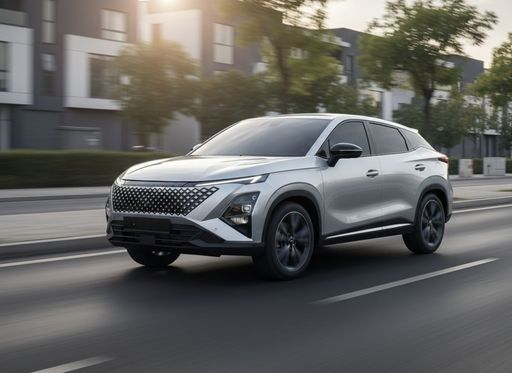
MG HS vs Omoda 5 comparison

Compare performance (272 HP vs 204 HP), boot space and price (30,000 £ vs 31,600 £ ) at a glance. Find out which car is the better choice for you – MG HS or Omoda 5?

MG HS vs Omoda 5: Key differences

MG HS

4.7 (7 Reviews)
rate
  • only slightly cheaper
  • visibly more power
  • moderately quicker 0–100 km/h
  • markedly more trunk space
details

Omoda 5

4.9 (5 Reviews)
rate
  • significantly more electric range
  • very slightly lighter
details

All details on performance, efficiency, range and trunk space can be found in the technical comparison below – including user reviews for both models.

By Achim Sedelmaier

HS

Omoda 5 VS MG HS — overview for buyers

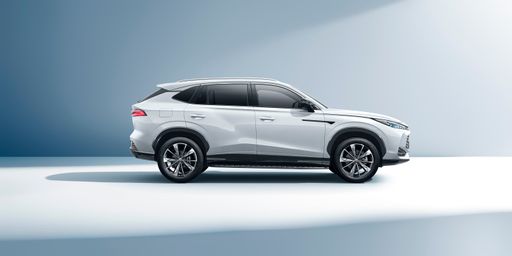
The Omoda 5 and MG HS arrive in the same shopping orbit but aim at different needs: Omoda 5 VS MG HS frames a choice between showroom-packed value and roomy practicality. The Omoda 5 sells itself on generous standard kit, a long warranty and a quiet hybrid option that smooths motorway miles. The MG HS leans on real rear-seat space and, in its plug‑in versions, an unusually useful electric driving range for daily errands. Both score well on safety equipment, yet they diverge where it matters day‑to‑day: rear-seat comfort, trunk usability and the feel of the drivetrain. Read on to see which trade-offs line up with your routine and priorities.
5

Character and driving feel

The Omoda 5 presents as a tuned-for-comfort compact SUV that settles into motorway cruising with composure, while the MG HS feels more like a roomy family car that rewards steady, effortless progress rather than engagement. Both cars share an indifferent, light steering feel that won’t please drivers after tight, communicative handling; the Omoda’s suspension tends to show a wippier motion over imperfect surfaces, whereas the MG HS can come across as heavier and less nimble but more planted when loaded. The Omoda’s hybrid option brings quieter acceleration and a more relaxed cabin under load; the MG HS’s PHEV focus favors silent short trips and a calm launch when the battery is used. If sporty responses and sharp steering are priorities, neither is ideal—if you prefer relaxed, forgiving behavior the differences become about personal taste and typical roads.

HS

Comfort and cabin quality

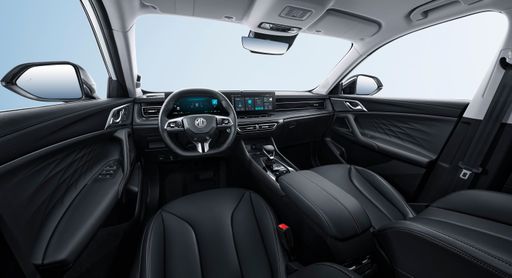
Inside, the MG HS typically reads as the more spacious and practically comfortable cabin: broader rear doors, more legroom and an upright rear bench that adults will find usable on longer rides. The Omoda 5 offers a more stylish, feature-rich front row and pleasing materials for the price, but its rear headroom and foot space feel more constrained, which shows on family trips. Noise treatment favors the Omoda’s hybrid setup under acceleration, while the MG HS can expose tyre and road noise on open motorways despite a generally composed ride. Both suffer from fiddly infotainment menus to some degree, but the MG’s system is often described as slower to respond, so tactile controls or phone mirroring become preferable for daily use.

Usability and practicality

Practicality is where the trade-offs are most obvious: the MG HS gives you genuinely useful rear-seat space and, in non‑PHEV guises, a larger boot area for weekend gear, whereas the Omoda 5’s cargo bay is shallower and its loading geometry less forgiving for tall or bulky items. The MG’s PHEV variants introduce compromises—higher load lips and reduced usable luggage room—that are practical headaches for frequent holiday packers despite the attractiveness of electric‑first commuting. The Omoda compensates with clever front‑row storage, abundant standard kit and a payload tolerance that suits buyers who load the car often. In short, choose the MG HS if rear-seat and general space are non‑negotiable; pick the Omoda 5 if you prioritise kit and everyday front‑row usability over maximum boot depth.

City friendliness and everyday usability

In town, the Omoda 5’s compact footprint and extensive camera aids make parking and tight manoeuvres straightforward, but its higher seating and limited rear visibility mean you’ll rely on cameras more than direct sightlines. The MG HS benefits from the PHEV’s ability to run silently around the neighbourhood and cuts fuel cost for short commutes, yet the car’s extra weight and occasionally stiff urban ride feel less nimble at low speeds. Both cars suffer from touch‑heavy or sluggish infotainment interactions that can be annoying in start‑stop city driving, though phone mirroring fixes many practical problems. If your daily pattern is short electric hops and rear passenger comfort, MG HS is the better city partner; if you value compactness and feature convenience, the Omoda 5 has the edge.

Who should buy which car?

Buy the Omoda 5 if your checklist prioritises headline equipment, a long warranty and a sedate, economical hybrid for mixed commuting, and you can accept a tighter rear bench and a less generous boot. Opt for the MG HS if rear‑seat space, family practicality and the real-world advantages of a plug‑in electric driving range are central to your use case, even if that means a higher load lip and slower infotainment interactions. The trade is clear: Omoda 5 sells maximum kit and reassurance for the money, MG HS delivers usable space and PHEV economy at the expense of some usability details. The next section drills into technical figures so you can match those everyday impressions to concrete numbers for range, power and cargo dimensions.

Here’s where it gets real: The technical differences in detail

HS

Costs and Efficiency:

Price and efficiency are key factors when choosing a car – and this is often where the real differences emerge.

MG HS is only slightly cheaper – starting at 30,000 £ , while the Omoda 5 costs 31,600 £ . That’s a price difference of around 1,637 £.

As for electric range, the Omoda 5 offers significantly more range – reaching up to 430 km, about 330 km more than the MG HS.

5

Engine and Performance:

Power, torque and acceleration are the classic benchmarks for car enthusiasts – and here, some clear differences start to show.

When it comes to engine power, the MG HS offers visibly more power – delivering 272 HP compared to 204 HP. That’s roughly 68 HP more horsepower.

When accelerating from 0 to 100 km/h, the MG HS is moderately quicker – completing the sprint in 6.8 s, while the Omoda 5 takes 7.6 s. That’s about 0.8 s quicker.

There’s also a difference in torque: the MG HS delivers marginally more torque with 350 Nm compared to 340 Nm. That’s about 10 Nm more.

HS

Space and Everyday Use:

Beyond pure performance, interior space and usability matter most in daily life. This is where you see which car is more practical and versatile.

Both vehicles offer seating for 5 people.

In terms of curb weight, Omoda 5 is very slightly lighter – 1,710 kg compared to 1,735 kg. The difference is around 25 kg.

Looking at boot space, the MG HS offers markedly more boot space – 507 L compared to 350 L. That’s a difference of about 157 L.

When it comes to payload, the Omoda 5 carries clearly more – 536 kg compared to 400 kg. That’s a difference of about 136 kg.

Who wins the race in the data check?

The Omoda 5 is clearly superior overall in the objective data comparison.
This result only shows which model scores more points on paper – not which of the two cars feels right for you.

£31,628
5

Omoda 5

  • Engine Type : Electric
  • Transmission : Automatic
  • Drive Type : Front-Wheel Drive
  • Power HP : 204 HP
  • Consumption kWh/100km : 15.9 kWh/100km
  • Electric Range : 430 km
MG HS
Omoda 5

Costs and Consumption

View detailed analysis

Engine and Performance

View detailed analysis

Dimensions and Body

View detailed analysis

MG HS

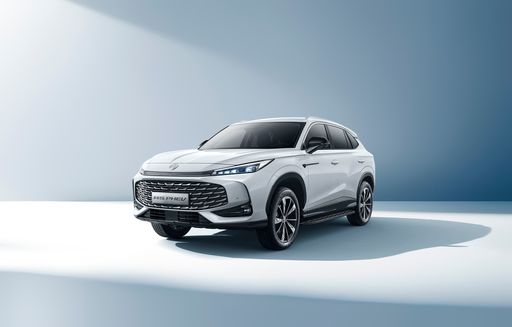
The MG HS, also known as the EHS in its hybrid variant, is a midsize SUV that combines modern design with a focus on comfort and technology. Its spacious interior offers a premium feel, enhanced by quality materials and an array of advanced features aimed at ensuring a smooth driving experience. Known for its efficiency, the MG HS/EHS delivers an enjoyable ride whether navigating city streets or taking on longer road trips.

details

Omoda 5

The Omoda 5 arrives as a stylish, tech-forward compact crossover that punches above its class with bold design and a surprisingly premium cabin. It’s an attractive choice for buyers who want modern gadgets, confident road manners and value without the usual showroom drama.

details
MG HS
Omoda 5

Costs and Consumption

Price
30,000 - 36,000 £
Price
31,600 £
Consumption L/100km
0.5 - 5.5 L/100km
Consumption L/100km
-
Consumption kWh/100km
-
Consumption kWh/100km
15.9 kWh/100km
Electric Range
100 km
Electric Range
430 km
Battery Capacity
-
Battery Capacity
-
co2
14 - 126 g/km
co2
0 g/km
Fuel tank capacity
-
Fuel tank capacity
-

Dimensions and Body

Body Type
SUV
Body Type
SUV
Seats
5
Seats
5
Doors
-
Doors
-
Curb weight
1,735 - 1,930 kg
Curb weight
1,710 kg
Trunk capacity
507 L
Trunk capacity
350 L
Length
-
Length
-
Width
1,890 mm
Width
1,830 mm
Height
-
Height
-
Max trunk capacity
-
Max trunk capacity
-
Payload
400 kg
Payload
536 kg

Engine and Performance

Engine Type
Full Hybrid, Plugin Hybrid
Engine Type
Electric
Transmission
Automatic
Transmission
Automatic
Transmission Detail
Automatic Gearbox
Transmission Detail
Reduction Gearbox
Drive Type
Front-Wheel Drive
Drive Type
Front-Wheel Drive
Power HP
224 - 272 HP
Power HP
204 HP
Acceleration 0-100km/h
6.8 - 7.9 s
Acceleration 0-100km/h
7.6 s
Max Speed
-
Max Speed
-
Torque
340 - 350 Nm
Torque
340 Nm
Number of Cylinders
4
Number of Cylinders
-
Power kW
165 - 200 kW
Power kW
150 kW
Engine capacity
1,496 cm3
Engine capacity
-

General

Model Year
2025
Model Year
2026
CO2 Efficiency Class
D, B
CO2 Efficiency Class
A
Brand
MG
Brand
Omoda
DriveDuel uses data analysis and artificial intelligence to evaluate vehicle data and create content. Content is regularly reviewed and improved. The displayed prices are estimates based on German list prices, adjusted to the respective country’s VAT. Country-specific registration taxes are not included. This information is not legally binding.