VS

Mitsubishi ASX vs Kia Niro comparison

Compare performance (158 HP vs 138 HP), boot space and price (21,400 £ vs 29,100 £ ) at a glance. Find out which car is the better choice for you – Mitsubishi ASX or Kia Niro?

Mitsubishi ASX vs Kia Niro: Key differences

Mitsubishi ASX

4.9 (2 Reviews)
rate
  • markedly cheaper
  • a bit more power
  • only slightly more efficient
  • markedly quicker 0–100 km/h
  • a bit lighter
details

Kia Niro

4.5 (2 Reviews)
rate
details

All details on performance, efficiency, range and trunk space can be found in the technical comparison below – including user reviews for both models.

By Achim Sedelmaier

ASX

As the automotive market continues to evolve, compact SUVs have become increasingly popular due to their versatility, efficiency, and advanced technology. In this article, we delve into a comparative analysis of two strong contenders in this segment: the Kia Niro and the Mitsubishi ASX. Both vehicles offer an intriguing mix of performance, fuel efficiency, and modern features. Let's explore how these two models stack up against each other.
Niro

Design and Dimensions

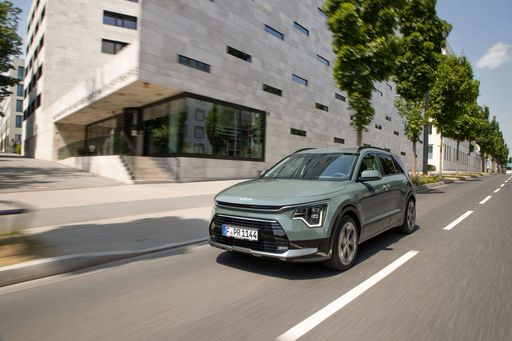
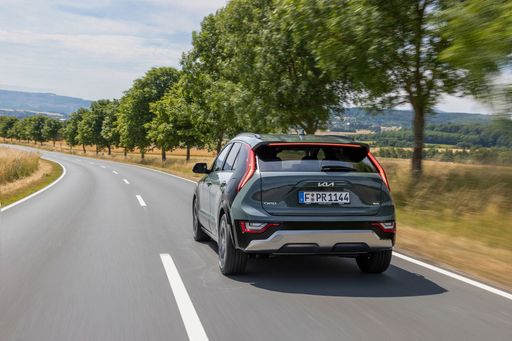
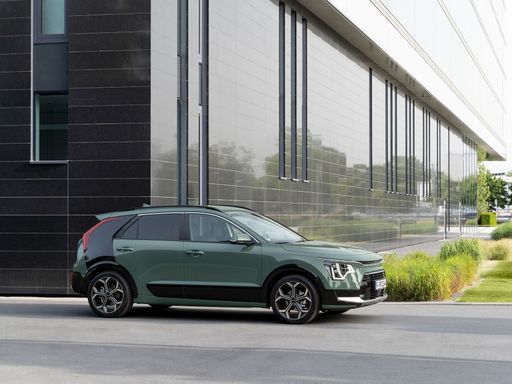
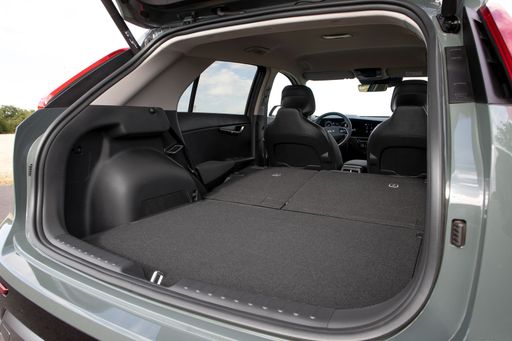
The Kia Niro, a stylish and modern-looking SUV, dimensions at 4420 mm in length, 1825 mm in width, and stands 1545 mm tall. Its design combines a sporty feel with practicality, featuring a spacious 451 liters of trunk capacity.

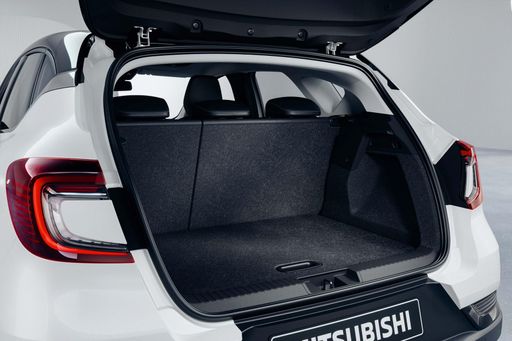
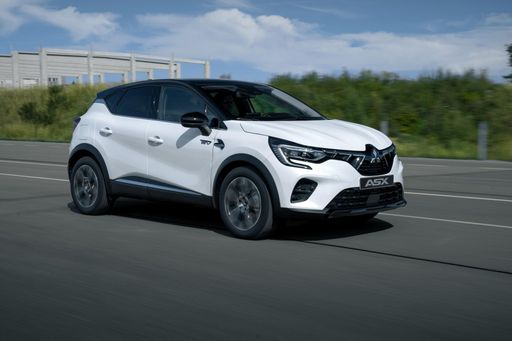
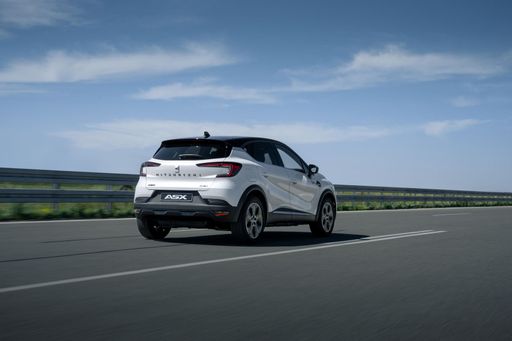
On the other hand, the Mitsubishi ASX measures slightly shorter at 4239 mm and is 1797 mm wide, with a height of 1575 mm. While it may have less trunk space at 484 liters, the ASX's design still offers a commanding road presence and rugged appeal.

ASX

Engine Options and Performance

The Kia Niro is notably versatile in its engine options, offering a range of powertrains including Full Hybrid and Plug-in Hybrid variants. The power output can go up to 171 HP depending on the variant, with a commendable torque figure of 265 Nm. Acceleration from 0 to 100 km/h takes approximately 10.4 seconds, highlighting its responsive nature on the road.

In contrast, Mitsubishi ASX comes equipped with various petrol engines, delivering between 91 HP to 158 HP depending on the selection. The ASX's most performant variant can accelerate from 0 to 100 km/h in as little as 8.5 seconds, showcasing a competitive edge in acceleration.

Niro

Fuel Efficiency

When it comes to fuel efficiency, the Kia Niro stands tall with a remarkable consumption figure as low as 4.4 L/100 km in hybrid forms. Its innovative setup, including a battery capacity of up to 11.1 kWh for plug-in variants, allows it to offer an electric range of 65 km, promoting eco-friendliness and savings on fuel costs.

Mitsubishi ASX, while being a solid contender, shows a higher average fuel consumption between 4.7 to 6 L/100 km, which might not appeal as strongly to the eco-conscious driver. Its battery capacity for hybrid models is lower at 0.6 kWh, and while it offers solid performance, the electric range is less competitive compared to the Niro.

ASX

Technological Innovations

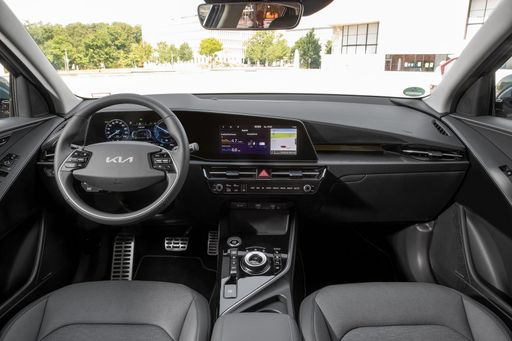
The Kia Niro is packed with cutting-edge technology. It features an intuitive infotainment system, driver assistance features, and an array of connectivity options. Kia’s commitment to safety is evident with systems like lane-keeping assist and advanced cruise control, making it a reliable choice for families.

Meanwhile, the Mitsubishi ASX offers a robust array of safety and convenience technology as well. Its dashboard is equipped with a modern infotainment unit, connectivity support, and essential safety features, though it may not be as refined as the offerings in the Niro.

Niro

Comfort and Interior

The Niro’s spacious interior is designed for both comfort and practicality, accommodating up to five passengers without compromising on legroom or headspace. The interior materials are of high quality, giving the cabin a premium feel.

The Mitsubishi ASX also provides a comfortable environment for passengers, featuring quality materials and decent headroom. However, it may not offer the same level of luxury and spaciousness present in the Niro, primarily due to its slightly more compact dimensions.

ASX

Conclusion

In summary, both the Kia Niro and Mitsubishi ASX offer compelling options for compact SUV enthusiasts, each with its own strengths. The Niro excels in fuel efficiency, technological innovation, and a spacious interior, making it an ideal family vehicle. Conversely, the ASX provides a spirited driving experience with diverse engine options and a rugged design that appeals to adventure seekers.

Ultimately, the choice between the two will depend on individual preferences and lifestyle needs. Whether you prioritize eco-friendly hybrid technology or a sporty driving dynamic, both the Kia Niro and Mitsubishi ASX are formidable contenders in the compact SUV arena.

Here’s where it gets real: The technical differences in detail

ASX

Costs and Efficiency:

Price and efficiency are often the first things buyers look at. Here it becomes clear which model has the long-term edge – whether at the pump, the plug, or in purchase price.

Mitsubishi ASX is markedly cheaper – starting at 21,400 £ , while the Kia Niro costs 29,100 £ . That’s a price difference of around 7,714 £.

Fuel consumption also shows a difference: the Mitsubishi ASX uses 4.4 L/100km and is only slightly more efficient than the Kia Niro with 4.5 L/100km. The difference is about 0.1 L/100km.

Niro

Engine and Performance:

Power, torque and acceleration say a lot about how a car feels on the road. This is where you see which model delivers more driving dynamics.

When it comes to engine power, the Mitsubishi ASX offers a bit more power – delivering 158 HP compared to 138 HP. That’s roughly 20 HP more horsepower.

When accelerating from 0 to 100 km/h, the Mitsubishi ASX is markedly quicker – completing the sprint in 8.9 s, while the Kia Niro takes 11.1 s. That’s about 2.2 s quicker.

There’s also a difference in torque: the Kia Niro delivers very slightly more torque with 265 Nm compared to 245 Nm. That’s about 20 Nm more.

ASX

Space and Everyday Use:

Beyond pure performance, interior space and usability matter most in daily life. This is where you see which car is more practical and versatile.

Both vehicles offer seating for 5 people.

In terms of curb weight, Mitsubishi ASX is a bit lighter – 1,296 kg compared to 1,474 kg. The difference is around 178 kg.

When it comes to payload, the Kia Niro carries barely more – 466 kg compared to 445 kg. That’s a difference of about 21 kg.

Who wins the race in the data check?

The Mitsubishi ASX stands well ahead of its rival in the objective data comparison.
This result only shows which model scores more points on paper – not which of the two cars feels right for you.

from £21,400
ASX

Mitsubishi ASX

  • Engine Type : Full Hybrid, Petrol, Petrol MHEV
  • Transmission : Automatic, Manuel
  • Drive Type : Front-Wheel Drive
  • Power HP : 115 - 158 HP
  • Consumption L/100km : 4.4 - 6 L/100km
Mitsubishi ASX
Kia Niro

Costs and Consumption

View detailed analysis

Engine and Performance

View detailed analysis

Dimensions and Body

View detailed analysis

Mitsubishi ASX

The Mitsubishi ASX is a compact crossover that mixes practicality with a no-nonsense personality, making it an easy choice for buyers who want sensible space without the showroom theatrics. It won't set your pulse racing, but its composed ride and user-friendly kit make it a dependable companion for daily errands and weekend escapes — reliable rather than flashy.

details

Kia Niro

The Kia Niro blends clever packaging and modern styling into a compact crossover that’s refreshingly sensible for daily life. It’s comfortable, economical and packed with user‑friendly tech, so if you want a fuss‑free family car with a touch of green credibility, the Niro is worth a test drive.

details
Mitsubishi ASX
Kia Niro

Costs and Consumption

Price
21,400 - 32,500 £
Price
29,100 - 33,800 £
Consumption L/100km
4.4 - 6 L/100km
Consumption L/100km
4.5 - 4.9 L/100km
Consumption kWh/100km
-
Consumption kWh/100km
-
Electric Range
-
Electric Range
-
Battery Capacity
-
Battery Capacity
-
co2
99 - 137 g/km
co2
102 - 111 g/km
Fuel tank capacity
-
Fuel tank capacity
-

Dimensions and Body

Body Type
SUV
Body Type
SUV
Seats
5
Seats
5
Doors
-
Doors
-
Curb weight
1,296 - 1,493 kg
Curb weight
1,474 kg
Trunk capacity
348 - 484 L
Trunk capacity
-
Length
-
Length
-
Width
1,797 mm
Width
1,825 mm
Height
-
Height
-
Max trunk capacity
-
Max trunk capacity
-
Payload
397 - 445 kg
Payload
466 kg

Engine and Performance

Engine Type
Full Hybrid, Petrol, Petrol MHEV
Engine Type
Full Hybrid
Transmission
Automatic, Manuel
Transmission
Automatic
Transmission Detail
Automatic Gearbox, Manual Gearbox, Dual-Clutch Automatic
Transmission Detail
Dual-Clutch Automatic
Drive Type
Front-Wheel Drive
Drive Type
Front-Wheel Drive
Power HP
115 - 158 HP
Power HP
138 HP
Acceleration 0-100km/h
8.9 - 12.3 s
Acceleration 0-100km/h
11.1 - 11.4 s
Max Speed
-
Max Speed
-
Torque
190 - 245 Nm
Torque
265 Nm
Number of Cylinders
3 - 4
Number of Cylinders
4
Power kW
84 - 116 kW
Power kW
102 kW
Engine capacity
1,199 - 1,789 cm3
Engine capacity
1,580 cm3

General

Model Year
2025
Model Year
2025
CO2 Efficiency Class
C, D, E
CO2 Efficiency Class
C
Brand
Mitsubishi
Brand
Kia
DriveDuel uses data analysis and artificial intelligence to evaluate vehicle data and create content. Content is regularly reviewed and improved. The displayed prices are estimates based on German list prices, adjusted to the respective country’s VAT. Country-specific registration taxes are not included. This information is not legally binding.