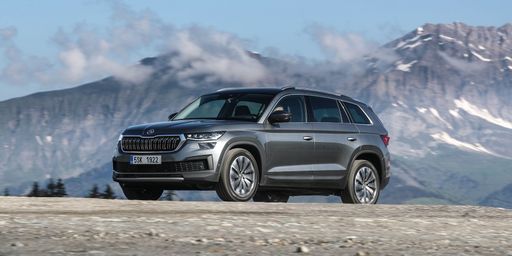
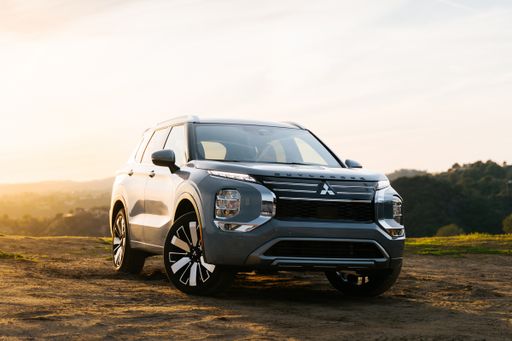
VS

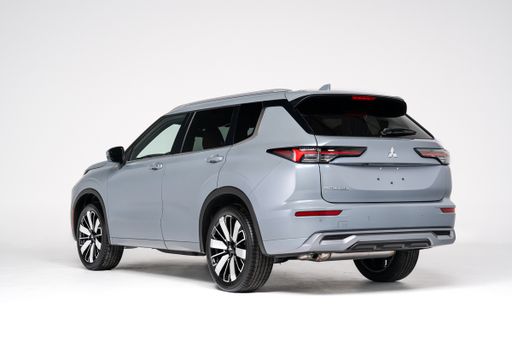
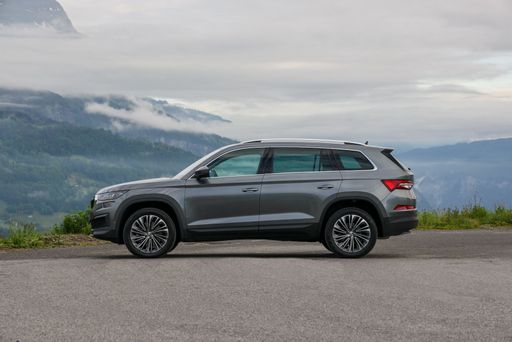
Mitsubishi Outlander vs Skoda Kodiaq comparison

Compare performance (306 HP vs 265 HP), boot space and price (42,800 £ vs 37,900 £ ) at a glance. Find out which car is the better choice for you – Mitsubishi Outlander or Skoda Kodiaq?

Mitsubishi Outlander vs Skoda Kodiaq: Key differences

Mitsubishi Outlander

4.7 (5 Reviews)
rate
  • slightly more power
details

Skoda Kodiaq

4.9 (5 Reviews)
rate
  • a bit cheaper
  • clearly more efficient
  • markedly more electric range
  • noticeably quicker 0–100 km/h
  • noticeably lighter
  • significantly more trunk space
details

All details on performance, efficiency, range and trunk space can be found in the technical comparison below – including user reviews for both models.

By Achim Sedelmaier

Outlander

Skoda Kodiaq VS Mitsubishi Outlander — two family SUVs with different priorities

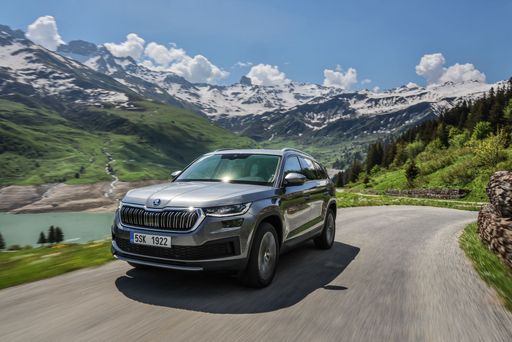
The Skoda Kodiaq and Mitsubishi Outlander occupy the same family‑SUV territory but approach the job from distinct angles. The Kodiaq feels like a roomy, pragmatic long‑distance companion that prioritises cargo, clever storage and highway composure, while the Outlander presents itself as a quietly refined PHEV with a focus on rear‑seat comfort and everyday electric driving. Where the Kodiaq trades a little urban agility for genuine space and towing ability, the Outlander trades some luggage practicality for a smoother, electrically‑leaning drive and additional off‑pavement confidence. Those contrasts define the rest of the comparison: practicality and load‑carrying on one side, low‑noise PHEV usability and traction tech on the other.
Kodiaq

Cabin feel and perceived quality

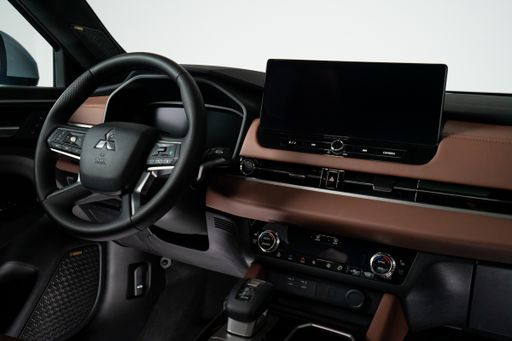
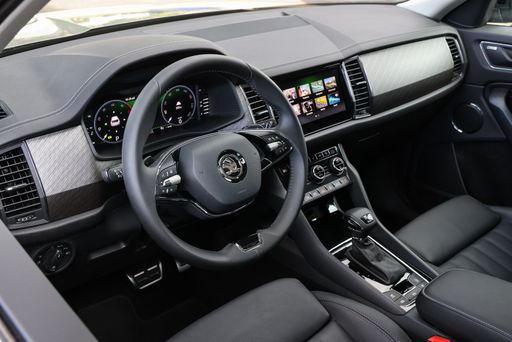
The Skoda Kodiaq gives a living‑room impression: airy proportions, a large, clear display and a generally tidy execution that emphasises usability through neat storage and smart dials. The Mitsubishi Outlander leans more functional—lots of real buttons, a higher seating position and material choices that feel robust rather than showy, which will appeal if you prefer tactile controls and a sober design. In everyday use the Kodiaq’s interior reads as slightly more modern and polished, whereas the Outlander feels deliberate and durable, with a cockpit geared to usability rather than flash. Both cabins are comfortable for long rides, but the Kodiaq tilts toward refinement while the Outlander signals practicality and longevity.

Outlander

Practicality, seating and family use

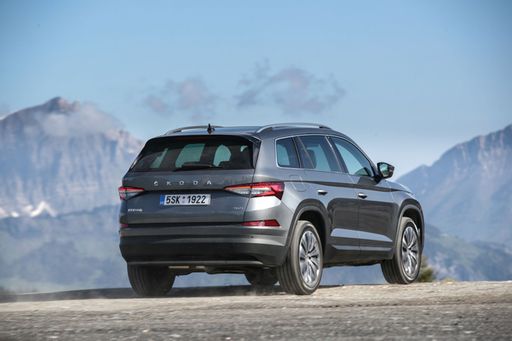
If you measure cars by what you can carry, the Skoda Kodiaq is obviously the more practical tool: a cavernous boot, flexible second row and the option of a third row that works for children on trips. The Mitsubishi Outlander counters with generous rear legroom and a raised rear seat that improves visibility and comfort for passengers, but its boot is compromised by electrified hardware and the space taken by charging equipment. Families who need maximum luggage, towing or occasional seven‑seat flexibility will gravitate toward the Kodiaq, while those who prioritise comfortable second‑row passengers and convenient power‑outlets for outdoor gear will find the Outlander more aligned with their needs. Both fit family life well, but they prioritise different kinds of cargo and passenger convenience.

Kodiaq

Long‑distance behavior and real‑world efficiency

On the motorway the Skoda Kodiaq feels very settled and composed, making long runs effortless and efficient when you pick the diesel or the plug‑in option with a real EV bias for daily errands. The Mitsubishi Outlander is exceptionally quiet and refined in mixed use and rewards regular charging with low day‑to‑day running costs, yet it is more sensitive to long runs without a charged battery and practical fast‑charging options are limited in Europe. That means Kodiaq owners get predictable long‑distance economy and towing confidence, whereas Outlander owners get excellent low‑noise cruising and economy—if they can recharge regularly. The trade‑off is clear: relentless trunk and towing usefulness versus an everyday‑electric serenity that depends on charging habits.

Outlander

City friendliness, controls and everyday usability

Despite its size the Skoda Kodiaq remains surprisingly easy to live with in town thanks to light steering, helpful sensors and intuitive knobs that keep common tasks quick and distraction‑free. The Mitsubishi Outlander is also city‑capable, with a high driving position and precise steering that aid visibility and manoeuvring, and its many physical switches make routine operations straightforward even with gloves on. Where they diverge is in charging and tech ergonomics: Kodiaq’s modern infotainment and configurable dials favour quick adjustments, whereas Outlander’s conservative layout and persistent assistant warnings can feel fussy until you adjust settings. For urban use, Kodiaq edges toward smarter integration of daily needs, while Outlander offers a no‑nonsense, tactile environment that rewards habit and routine.

Kodiaq

Buyer fit and the trade‑offs that matter before you dive into specs

Choose the Skoda Kodiaq if you prioritise maximum load‑carrying, optional seven‑seat flexibility and a composed long‑distance demeanour that makes family holidays and towing straightforward. Opt for the Mitsubishi Outlander if you want a quiet, PHEV‑centric daily driver with generous rear‑seat comfort, strong traction tech and practical touches for outdoor use, provided you can live with a smaller boot and slower or less convenient public fast‑charging. The decision comes down to whether you value cargo and towing breadth over an electric‑first, comfortable rear‑seat experience; both cars deliver family SUV virtues, but they do so in different ways — the detailed technical comparison that follows will show how those differences are achieved and where they matter most.

Here’s where it gets real: The technical differences in detail

Outlander

Costs and Efficiency:

When it comes to price and running costs, the biggest differences usually appear. This is often where you see which car fits your budget better in the long run.

Skoda Kodiaq is a bit cheaper – starting at 37,900 £ , while the Mitsubishi Outlander costs 42,800 £ . That’s a price difference of around 4,971 £.

Fuel consumption also shows a difference: the Skoda Kodiaq uses 1.5 L/100km and is clearly more efficient than the Mitsubishi Outlander with 2.6 L/100km. The difference is about 1.1 L/100km.

As for electric range, the Skoda Kodiaq offers markedly more range – reaching up to 122 km, about 37 km more than the Mitsubishi Outlander.

Kodiaq

Engine and Performance:

Under the bonnet, it becomes clear which model is tuned for sportiness and which one takes the lead when you hit the accelerator.

When it comes to engine power, the Mitsubishi Outlander offers slightly more power – delivering 306 HP compared to 265 HP. That’s roughly 41 HP more horsepower.

When accelerating from 0 to 100 km/h, the Skoda Kodiaq is noticeably quicker – completing the sprint in 6.3 s, while the Mitsubishi Outlander takes 7.9 s. That’s about 1.6 s quicker.

Outlander

Space and Everyday Use:

Whether family car or daily driver – which one offers more room, flexibility and comfort?

Both vehicles offer seating for 5 people.

In terms of curb weight, Skoda Kodiaq is noticeably lighter – 1,684 kg compared to 2,156 kg. The difference is around 472 kg.

Looking at boot space, the Skoda Kodiaq offers significantly more boot space – 910 L compared to 498 L. That’s a difference of about 412 L.

When it comes to payload, the Skoda Kodiaq carries barely more – 563 kg compared to 529 kg. That’s a difference of about 34 kg.

Who wins the race in the data check?

The Skoda Kodiaq is decisively ahead in the objective data comparison.
This result only shows which model scores more points on paper – not which of the two cars feels right for you.

from £37,900
Kodiaq

Skoda Kodiaq

  • Engine Type Petrol, Petrol MHEV, Diesel, Plugin Hybrid
  • Transmission Automatic
  • Drive Type All-Wheel Drive, Front-Wheel Drive
  • Power HP 150 - 265 HP
  • Consumption L/100km 1.5 - 8.2 L/100km
  • Electric Range 119 - 122 km
Mitsubishi Outlander
Skoda Kodiaq

Costs and Consumption

View detailed analysis

Engine and Performance

View detailed analysis

Dimensions and Body

View detailed analysis

Mitsubishi Outlander

The Mitsubishi Outlander is a sensible family SUV that blends roomy practicality with a calm, assured ride—ideal for school runs and weekend getaways. It won’t set pulses racing, but its tidy interior, straightforward equipment and low-stress ownership make it a smart, unfussy pick for buyers who prefer reliability over flash.

details

Skoda Kodiaq

The Skoda Kodiaq is a practical, well built family SUV that puts space, comfort and usefulness ahead of showy gimmicks. Its composed ride, clever interior packaging and sensible feature set make it an easy, unpretentious choice for daily driving and longer journeys.

details
Mitsubishi Outlander
Skoda Kodiaq

Costs and Consumption

Price
42,800 - 54,600 £
Price
37,900 - 50,600 £
Consumption L/100km
2.6 - 2.7 L/100km
Consumption L/100km
1.5 - 8.2 L/100km
Consumption kWh/100km
-
Consumption kWh/100km
-
Electric Range
83 - 85 km
Electric Range
119 - 122 km
Battery Capacity
-
Battery Capacity
-
co2
60 g/km
co2
35 - 186 g/km
Fuel tank capacity
-
Fuel tank capacity
-

Dimensions and Body

Body Type
SUV
Body Type
SUV
Seats
5
Seats
5
Doors
-
Doors
-
Curb weight
2,156 - 2,232 kg
Curb weight
1,684 - 1,970 kg
Trunk capacity
498 L
Trunk capacity
745 - 910 L
Length
-
Length
-
Width
1,862 mm
Width
1,864 mm
Height
-
Height
-
Max trunk capacity
-
Max trunk capacity
-
Payload
453 - 529 kg
Payload
460 - 563 kg

Engine and Performance

Engine Type
Plugin Hybrid
Engine Type
Petrol, Petrol MHEV, Diesel, Plugin Hybrid
Transmission
-
Transmission
Automatic
Transmission Detail
-
Transmission Detail
Dual-Clutch Automatic
Drive Type
All-Wheel Drive
Drive Type
All-Wheel Drive, Front-Wheel Drive
Power HP
306 HP
Power HP
150 - 265 HP
Acceleration 0-100km/h
7.9 s
Acceleration 0-100km/h
6.3 - 9.7 s
Max Speed
-
Max Speed
-
Torque
-
Torque
250 - 400 Nm
Number of Cylinders
4
Number of Cylinders
4
Power kW
225 kW
Power kW
110 - 195 kW
Engine capacity
2,360 cm3
Engine capacity
1,498 - 1,984 cm3

General

Model Year
2,025 - 2,026
Model Year
2,024 - 2,025
CO2 Efficiency Class
B
CO2 Efficiency Class
F, G, E, B
Brand
Mitsubishi
Brand
Skoda
DriveDuel uses data analysis and artificial intelligence to evaluate vehicle data and create content. Content is regularly reviewed and improved. The displayed prices are estimates based on German list prices, adjusted to the respective country’s VAT. Country-specific registration taxes are not included. This information is not legally binding.