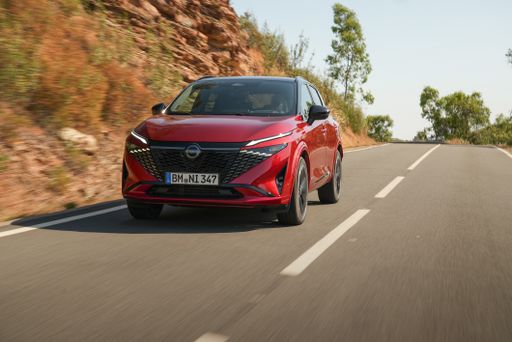
@ Nissan Motor Corporation
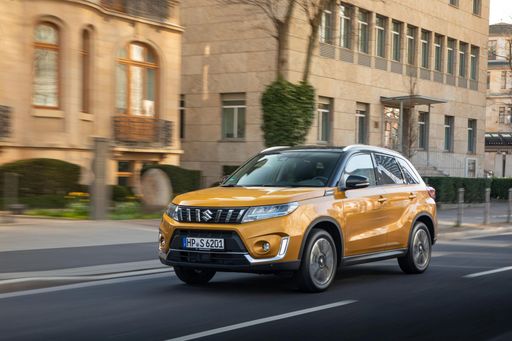
@ Suzuki Motor Corporation
VS

Nissan Qashqai vs Suzuki Vitara – Which model is better for everyday use?

Everyday use, family trips or long-distance drives – here’s where the differences show.
Discover whether Nissan Qashqai or Suzuki Vitara fits your lifestyle better.

Qashqai @ Nissan Motor Corporation

In the ever-evolving world of compact SUVs, the Nissan Qashqai and Suzuki Vitara have carved out their individual niches. Both vehicles boast a dynamic blend of style, efficiency, and technology, making them strong contenders in the market. In this article, we will explore the technical specifications, innovations, and unique offerings of both models to help potential buyers make an informed decision.

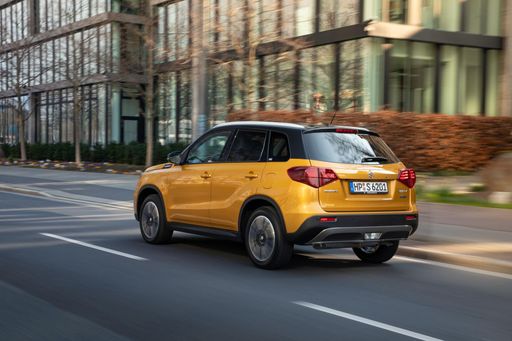
Vitara @ Suzuki Motor Corporation

Design and Dimensions

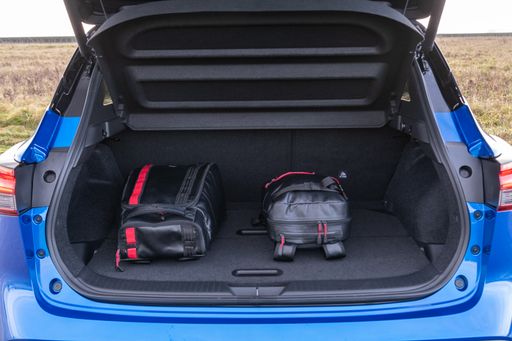
The Nissan Qashqai stands at 4425mm in length, 1835mm in width, and 1625mm in height, giving it a robust presence on the road. Weighing between 1420kg and 1665kg, the Qashqai offers a spacious interior designed for comfort and practicality with a trunk capacity of up to 504 liters.

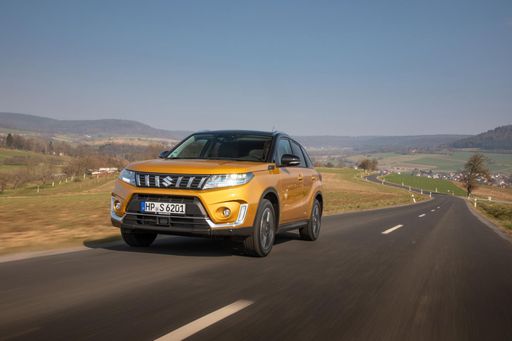
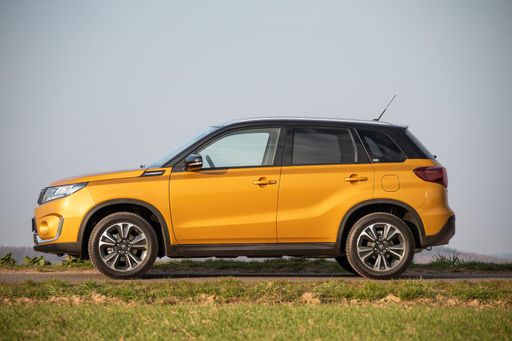
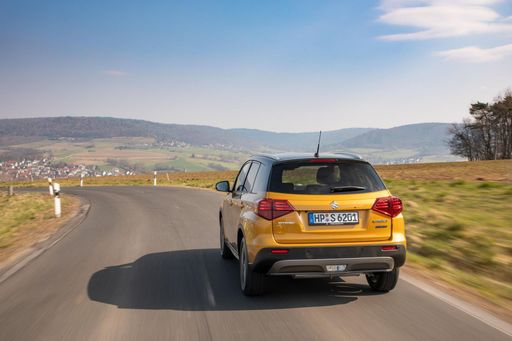
In contrast, the Suzuki Vitara is slightly smaller, measuring 4185mm in length, 1775mm in width, and 1595mm in height. With a curb weight ranging from 1255kg to 1395kg, the Vitara’s lighter construction enhances maneuverability. However, it sacrifices a bit of cargo space with a trunk capacity of 375 liters, which may be a consideration for families or adventurers needing additional storage.

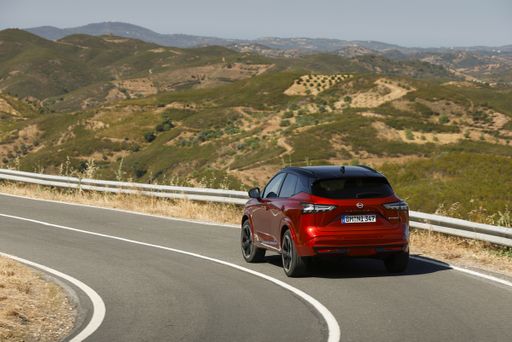
Qashqai @ Nissan Motor Corporation

Performance and Engine Options

The Qashqai offers a range of engine options, including petrol mild hybrid and full hybrid variants, with outputs between 140 to 190 horsepower. Notably, it can achieve a fuel consumption as low as 5.1 L/100km, coupled with torque figures ranging from 240 to 330 Nm. The Qashqai also impressively accelerates from 0-100 km/h in as little as 7.9 seconds, depending on the variant chosen. Drivers can choose between manual and automatic transmissions, including a continuously variable transmission (CVT), further enhancing the driving experience.

On the other hand, the Vitara features lower power outputs, peaking at 129 horsepower. It also employs petrol mild hybrid technology, achieving fuel consumption figures as efficient as 5.0 L/100km. The Vitara’s torque output is rated at 235 Nm, and its acceleration times show a wider range, with the quickest variant reaching 100 km/h in 9.5 seconds. Transmission options include manual and automated manual selections, providing adequate versatility for various driving styles.


Vitara @ Suzuki Motor Corporation

Technology and Features

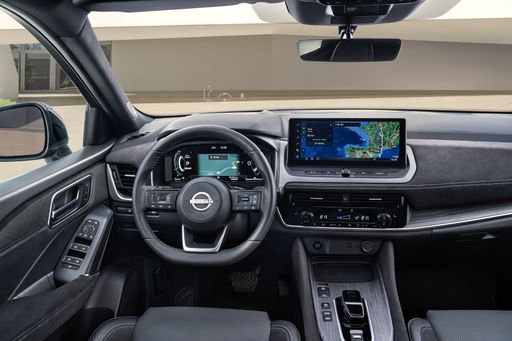
Both models embrace modern technology, enhancing the driving experience. The Nissan Qashqai is equipped with an advanced driver assistance system that includes features like adaptive cruise control, emergency braking, and lane departure warning, all aimed at increasing safety on the road. Additionally, the Qashqai integrates smart connectivity options such as smartphone mirroring and an intuitive infotainment system.

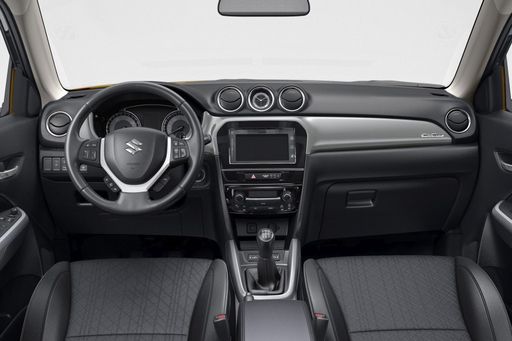
The Suzuki Vitara also emphasizes safety with features like autonomous emergency braking and a lane-keeping assist system. While it may not have all the bells and whistles of the Qashqai, the Vitara provides a user-friendly infotainment system with connectivity options that cater to today’s tech-savvy drivers.

Qashqai @ Nissan Motor Corporation

Environmental Impact

When evaluating the environmental footprint, the Qashqai shines with lower CO2 emissions ranging from 116 g/km to 154 g/km, classifying it within various CO2 efficiency ratings from E to D. This is a substantial aspect for environmentally conscious consumers.

The Suzuki Vitara, while efficient, produces higher emissions at rates between 113 g/km and 129 g/km, placing it within the C to D efficiency classes. Although it presents commendable performance, the Qashqai holds an edge in eco-friendliness.

Vitara @ Suzuki Motor Corporation

Final Thoughts

Choosing between the Nissan Qashqai and Suzuki Vitara ultimately depends on personal preferences and needs. The Qashqai leans towards a more powerful and feature-rich offering with advanced technology, safety, and efficiency advantages. Meanwhile, the Vitara provides a lightweight and agile alternative, appealing for those seeking reliability and practicality in a compact SUV.

Whether navigating city streets or exploring the great outdoors, both the Nissan Qashqai and Suzuki Vitara present compelling choices for consumers looking to balance performance, efficiency, and innovative technology in a competitive segment. The next step is to test drive both models to discover which one feels right for you!

Here’s where it gets real: The technical differences in detail

Qashqai @ Nissan Motor Corporation

Costs and Efficiency:

Price and efficiency are key factors when choosing a car – and this is often where the real differences emerge.

Suzuki Vitara has a noticeable advantage in terms of price – it starts at 23600 £, while the Nissan Qashqai costs 29600 £. That’s a price difference of around 6034 £.

Fuel consumption also shows a difference: Nissan Qashqai manages with 4.50 L and is therefore a bit more efficient than the Suzuki Vitara with 5 L. The difference is about 0.50 L per 100 km.

Vitara @ Suzuki Motor Corporation

Engine and Performance:

Under the bonnet, it becomes clear which model is tuned for sportiness and which one takes the lead when you hit the accelerator.

When it comes to engine power, the Nissan Qashqai has a evident edge – offering 205 HP compared to 129 HP. That’s roughly 76 HP more horsepower.

In acceleration from 0 to 100 km/h, the Nissan Qashqai is clearly perceptible quicker – completing the sprint in 7.60 s, while the Suzuki Vitara takes 9.50 s. That’s about 1.90 s faster.

In terms of top speed, the Nissan Qashqai performs minimal better – reaching 206 km/h, while the Suzuki Vitara tops out at 190 km/h. The difference is around 16 km/h.

There’s also a difference in torque: Nissan Qashqai pulls evident stronger with 330 Nm compared to 235 Nm. That’s about 95 Nm difference.

Qashqai @ Nissan Motor Corporation

Space and Everyday Use:

Cabin size, boot volume and payload all play a role in everyday practicality. Here, comfort and flexibility make the difference.

Both vehicles offer seating for 5 people.

In curb weight, Suzuki Vitara is to a small extent lighter – 1255 kg compared to 1420 kg. The difference is around 165 kg.

In terms of boot space, the Nissan Qashqai offers clearly perceptible more room – 504 L compared to 375 L. That’s a difference of about 129 L.

In maximum load capacity, the Nissan Qashqai performs evident better – up to 1447 L, which is about 327 L more than the Suzuki Vitara.

When it comes to payload, Nissan Qashqai distinct takes the win – 520 kg compared to 400 kg. That’s a difference of about 120 kg.

Who wins the race?

The Nissan Qashqai proves to be leaves the rival little chance and therefore becomes our DriveDuel Champion!
Nissan Qashqai is the better all-rounder in this comparison.

from about £29,600
Qashqai @ Nissan Motor Corporation

Nissan Qashqai

  • Engine Type : Petrol MHEV, Full Hybrid
  • Transmission : Manuel, Automatic
  • Drive Type : Front-Wheel Drive, All-Wheel Drive
  • Power HP : 140 - 205 HP
  • Consumption L/100km : 4.5 - 6.8 L

Nissan Qashqai

The Nissan Qashqai blends practical, family-friendly packaging with SUV styling that refuses to shout, making it a sensible and dependable choice for everyday life. It’s comfortable to live with, economical on the road, and neatly equipped enough to feel modern without ever feeling precious — perfect if you want crossover versatility without the drama.

details

Suzuki Vitara

5 (1)
rate

The Vitara is a city-smart SUV with a cheeky streak of off-road promise, perfect for drivers who want practicality without pretense. It’s honest, easy to live with and surprisingly likeable, a sensible companion for everyday adventures and weekend escapes.

details
Nissan Qashqai
Suzuki Vitara
Qashqai @ Nissan Motor Corporation
Vitara @ Suzuki Motor Corporation

Costs and Consumption

Price
29600 - 39900 £
Price
23600 - 30900 £
Consumption L/100km
4.5 - 6.8 L
Consumption L/100km
5 - 5.9 L
Consumption kWh/100km
-
Consumption kWh/100km
-
Electric Range
-
Electric Range
-
Battery Capacity
-
Battery Capacity
-
co2
102 - 154 g/km
co2
113 - 138 g/km
Fuel tank capacity
55 L
Fuel tank capacity
47 L

Dimensions and Body

Body Type
SUV
Body Type
SUV
Seats
5
Seats
5
Doors
5
Doors
5
Curb weight
1420 - 1665 kg
Curb weight
1255 - 1395 kg
Trunk capacity
479 - 504 L
Trunk capacity
289 - 375 L
Length
4425 mm
Length
4185 mm
Width
1835 mm
Width
1775 mm
Height
1625 mm
Height
1595 mm
Max trunk capacity
1422 - 1447 L
Max trunk capacity
1046 - 1120 L
Payload
466 - 520 kg
Payload
375 - 400 kg

Engine and Performance

Engine Type
Petrol MHEV, Full Hybrid
Engine Type
Petrol MHEV, Full Hybrid
Transmission
Manuel, Automatic
Transmission
Manuel, Automatic
Transmission Detail
Manual Gearbox, CVT, Reduction Gearbox
Transmission Detail
Manual Gearbox, Automated Manual, Automatic Gearbox
Drive Type
Front-Wheel Drive, All-Wheel Drive
Drive Type
Front-Wheel Drive, All-Wheel Drive
Power HP
140 - 205 HP
Power HP
110 - 129 HP
Acceleration 0-100km/h
7.6 - 10.2 s
Acceleration 0-100km/h
9.5 - 12.7 s
Max Speed
170 - 206 km/h
Max Speed
180 - 190 km/h
Torque
240 - 330 Nm
Torque
235 Nm
Number of Cylinders
3 - 4
Number of Cylinders
4
Power kW
103 - 151 kW
Power kW
81 - 95 kW
Engine capacity
1332 - 1498 cm3
Engine capacity
1373 - 1462 cm3

General

Model Year
2025
Model Year
2024 - 2025
CO2 Efficiency Class
E, C
CO2 Efficiency Class
D, C, E
Brand
Nissan
Brand
Suzuki
Is the Nissan Qashqai offered with different drivetrains?

Available configurations include Front-Wheel Drive or All-Wheel Drive.

The prices and data displayed are estimates based on German list prices and may vary by country. This information is not legally binding.