VS

Omoda 5 vs Hyundai Tucson comparison

Compare performance (204 HP vs 288 HP), boot space and price (31,600 £ vs 20,900 £ ) at a glance. Find out which car is the better choice for you – Omoda 5 or Hyundai Tucson?

Omoda 5 vs Hyundai Tucson: Key differences

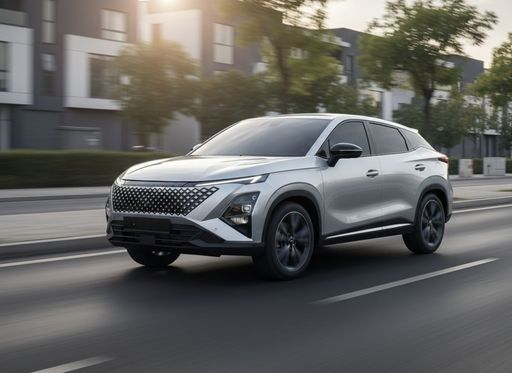
Omoda 5

5 (4 Reviews)
rate
  • clearly more electric range
details

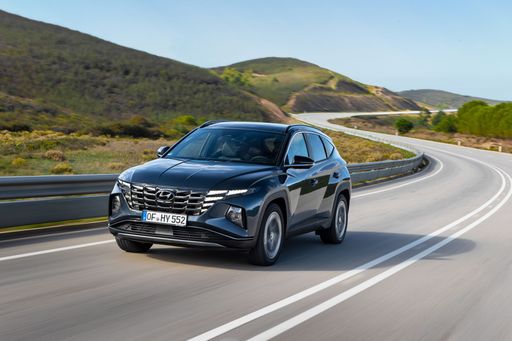
Hyundai Tucson

4.6 (4 Reviews)
rate
  • significantly cheaper
  • visibly more power
  • barely quicker 0–100 km/h
  • moderately lighter
  • significantly more trunk space
details

All details on performance, efficiency, range and trunk space can be found in the technical comparison below – including user reviews for both models.

By Achim Sedelmaier

5

The Battle of the SUVs: Hyundai Tucson vs. Omoda 5

In the ever-evolving SUV segment, versatility and innovation drive popularity. Today, we juxtapose two contenders: the Hyundai Tucson and the Omoda 5. Each brings unique features, aiming to capture the hearts of SUV enthusiasts. Let’s delve into the technical details and innovations shaping each vehicle's appeal.

Tucson

Engine Options and Performance

The Hyundai Tucson offers a plethora of powertrain options, including Diesel MHEV, Petrol MHEV, Petrol, Full Hybrid, and Plug-in Hybrid. With power outputs ranging from 136 to 252 horsepower and torque between 265 to 367 Nm, the Tucson is engineered to offer flexibility. Acceleration from 0-100 km/h varies depending on the variant, with times between 7.9 and 11.6 seconds, ensuring options for those who prioritize performance or efficiency. The all-wheel-drive variants enhance driving dynamics, especially in rough terrains.

Contrastingly, the Omoda 5 is streamlined around a singular choice: a petrol engine that delivers 204 horsepower and a torque of 290 Nm. It accomplishes the 0-100 km/h sprint in a swift 7.8 seconds, branding itself as an agile candidate with a top speed of 220 km/h. This emphasis on streamlined power represents a different approach, positioning itself as a sportier, efficiency-focused vehicle.


Innovation in Transmission and Drive

The Hyundai Tucson offers both manual and automatic transmission options, with the Dual-Clutch Automatic standing out for its smooth gear shifts and efficient power delivery. The Tucson's capability for both front-wheel and all-wheel drive makes it a versatile choice for diverse road conditions.

Meanwhile, the Omoda 5 exclusively opts for a Dual-Clutch Automatic transmission coupled with front-wheel drive, focusing on delivering a sporty and engaging driving experience. This simplicity in design showcases a strategic choice towards performance and usability.

Space and Utility

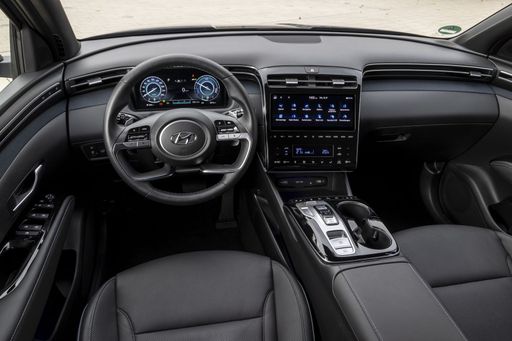
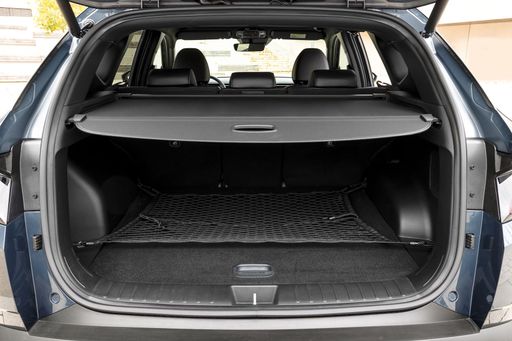
Space is a crucial factor for SUV buyers. The Hyundai Tucson’s trunk capacity ranges from 546 to 620 liters, reflecting its emphasis on practicality and family-friendly versatility. Combined with a spacious cabin, it’s well-suited for long trips and daily commutes alike.

The Omoda 5 presents an alternative with its bold aesthetic choices, but information on trunk capacity is not provided, likely indicating a focus away from comprehensive cargo solutions. Its design could appeal to those valuing interior aesthetics and modern design elements over expansive storage capacity.

Dimensions and Design

Both SUVs exude distinctive styles. The Hyundai Tucson, with dimensions of 4510-4520 mm in length and 1865 mm in width, presents a robust and dominant road presence. Its varying height options, around 1650 mm, accommodate diverse driving preferences.

The Omoda 5, slightly more compact at 4424 mm in length and 1830 mm in width, projects a sleek profile with a height of 1588 mm. This reflects a contemporary design approach, appealing to urban drivers seeking style without compromising performance.

Conclusion: A Matter of Preference and Priorities

Ultimately, the decision between the Hyundai Tucson and the Omoda 5 hinges on personal priorities. The Tucson offers a versatile, all-encompassing package for families and adventure seekers craving variety and capability. On the other hand, the Omoda 5 caters to those seeking a modern, sporty experience with a focus on design and performance.

Both models represent the dynamic innovations within the SUV sector, tailored to meet the evolving demands of today's automotive enthusiasts.

Here’s where it gets real: The technical differences in detail

5

Costs and Efficiency:

Price and efficiency are often the first things buyers look at. Here it becomes clear which model has the long-term edge – whether at the pump, the plug, or in purchase price.

Hyundai Tucson is significantly cheaper – starting at 20,900 £ , while the Omoda 5 costs 31,600 £ . That’s a price difference of around 10,731 £.

As for electric range, the Omoda 5 offers clearly more range – reaching up to 430 km, about 360 km more than the Hyundai Tucson.

Tucson

Engine and Performance:

Power, torque and acceleration are the classic benchmarks for car enthusiasts – and here, some clear differences start to show.

When it comes to engine power, the Hyundai Tucson offers visibly more power – delivering 288 HP compared to 204 HP. That’s roughly 84 HP more horsepower.

When accelerating from 0 to 100 km/h, the Hyundai Tucson is barely quicker – completing the sprint in 7.5 s, while the Omoda 5 takes 7.6 s. That’s about 0.1 s quicker.

There’s also a difference in torque: the Hyundai Tucson delivers moderately more torque with 379 Nm compared to 340 Nm. That’s about 39 Nm more.

Space and Everyday Use:

Cabin size, boot volume and payload all play a role in everyday practicality. Here, comfort and flexibility make the difference.

Both vehicles offer seating for 5 people.

In terms of curb weight, Hyundai Tucson is moderately lighter – 1,542 kg compared to 1,710 kg. The difference is around 168 kg.

Looking at boot space, the Hyundai Tucson offers significantly more boot space – 620 L compared to 350 L. That’s a difference of about 270 L.

When it comes to payload, the Hyundai Tucson carries very slightly more – 545 kg compared to 536 kg. That’s a difference of about 9 kg.

Who wins the race in the data check?

The Omoda 5 is barely ahead in the objective data comparison.
This result only shows which model scores more points on paper – not which of the two cars feels right for you.

£31,628
5

Omoda 5

  • Engine Type : Electric
  • Transmission : Automatic
  • Drive Type : Front-Wheel Drive
  • Power HP : 204 HP
  • Consumption kWh/100km : 15.9 kWh/100km
  • Electric Range : 430 km
Omoda 5
Hyundai Tucson

Costs and Consumption

View detailed analysis

Engine and Performance

View detailed analysis

Dimensions and Body

View detailed analysis

Omoda 5

The Omoda 5 arrives as a stylish, tech-forward compact crossover that punches above its class with bold design and a surprisingly premium cabin. It’s an attractive choice for buyers who want modern gadgets, confident road manners and value without the usual showroom drama.

details

Hyundai Tucson

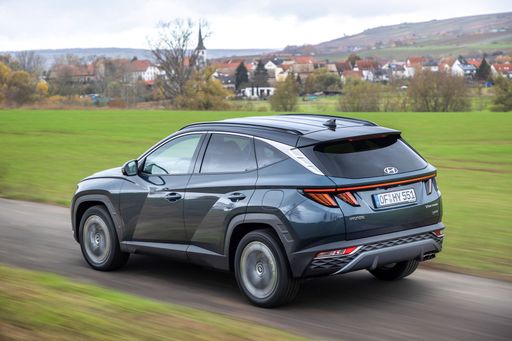
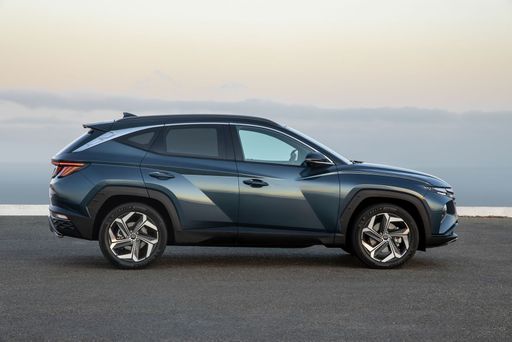
Hyundai Tucson marries bold, sculpted looks with a clever, roomy cabin that feels smarter than its price tag suggests. It's composed on the road, easy to live with day-to-day, and a sensible choice for buyers who want SUV style without the showroom theatrics.

details
Omoda 5
Hyundai Tucson

Costs and Consumption

Price
31,600 £
Price
20,900 - 47,900 £
Consumption L/100km
-
Consumption L/100km
2.7 - 7.6 L/100km
Consumption kWh/100km
15.9 kWh/100km
Consumption kWh/100km
-
Electric Range
430 km
Electric Range
63 - 70 km
Battery Capacity
-
Battery Capacity
-
co2
0 g/km
co2
62 - 172 g/km
Fuel tank capacity
-
Fuel tank capacity
-

Dimensions and Body

Body Type
SUV
Body Type
SUV
Seats
5
Seats
5
Doors
-
Doors
-
Curb weight
1,710 kg
Curb weight
1,542 - 1,893 kg
Trunk capacity
350 L
Trunk capacity
546 - 620 L
Length
-
Length
-
Width
1,830 mm
Width
1,865 mm
Height
-
Height
-
Max trunk capacity
-
Max trunk capacity
-
Payload
536 kg
Payload
518 - 545 kg

Engine and Performance

Engine Type
Electric
Engine Type
Petrol, Full Hybrid, Plugin Hybrid, Diesel MHEV
Transmission
Automatic
Transmission
Manuel, Automatic
Transmission Detail
Reduction Gearbox
Transmission Detail
Manual Gearbox, Dual-Clutch Automatic, Automatic Gearbox
Drive Type
Front-Wheel Drive
Drive Type
Front-Wheel Drive, All-Wheel Drive
Power HP
204 HP
Power HP
136 - 288 HP
Acceleration 0-100km/h
7.6 s
Acceleration 0-100km/h
7.5 - 11.6 s
Max Speed
-
Max Speed
-
Torque
340 Nm
Torque
250 - 379 Nm
Number of Cylinders
-
Number of Cylinders
4
Power kW
150 kW
Power kW
100 - 212 kW
Engine capacity
-
Engine capacity
1,598 cm3

General

Model Year
2026
Model Year
2025
CO2 Efficiency Class
A
CO2 Efficiency Class
F, D, E, B
Brand
Omoda
Brand
Hyundai
DriveDuel uses data analysis and artificial intelligence to evaluate vehicle data and create content. Content is regularly reviewed and improved. The displayed prices are estimates based on German list prices, adjusted to the respective country’s VAT. Country-specific registration taxes are not included. This information is not legally binding.