VS

Vauxhall Mokka vs Kia Sportage comparison

Compare performance (281 HP vs 288 HP), boot space and price (23,000 £ vs 29,100 £ ) at a glance. Find out which car is the better choice for you – Vauxhall Mokka or Kia Sportage?

Vauxhall Mokka vs Kia Sportage: Key differences

Vauxhall Mokka

4.3 (5 Reviews)
rate
  • markedly cheaper
  • substantially more electric range
  • clearly quicker 0–100 km/h
  • somewhat lighter
details

Kia Sportage

5 (3 Reviews)
rate
  • marginally more power
  • significantly more efficient
  • clearly more trunk space
details

All details on performance, efficiency, range and trunk space can be found in the technical comparison below – including user reviews for both models.

By Achim Sedelmaier

Mokka

Kia Sportage VS Vauxhall Mokka — quick comparison

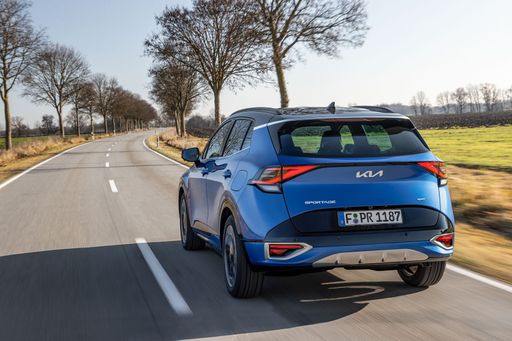
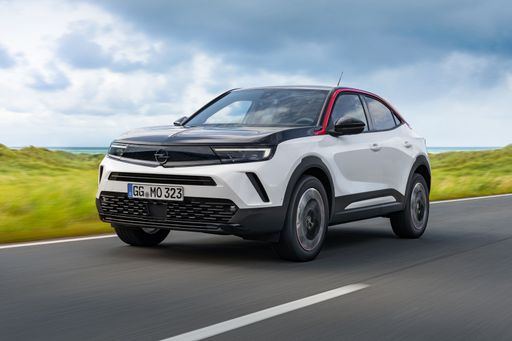
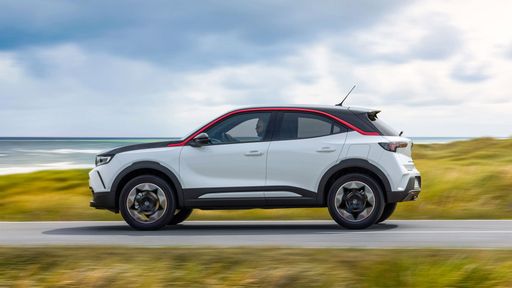
Kia Sportage and Vauxhall Mokka sit on opposite ends of the compact-SUV spectrum: one leans into space and calm motorway manners, the other into city agility and a sharper stylistic pitch. The Sportage presents itself as a roomy, comfort-first family SUV with practical details for luggage and rear passengers, while the Mokka trades interior volume for tighter dimensions that make urban life easier. That trade-off extends to drivetrain choices and ownership priorities — the Sportage emphasises long-haul usability and warranty peace-of-mind, the Mokka highlights easy parking, efficient electrified options and a more youthful cabin. Read on for where each car really fits day-to-day driving rather than a list of specs.
Sportage

Character and driving feel

The Kia Sportage drives like a settled, grown-up SUV: refined on long runs, composed through corners but intentionally undramatic for anyone chasing thrills. The Vauxhall Mokka feels lighter and more alert around town, with EV and hybrid options bringing immediate response and a quieter, point-and-shoot city experience. That means the Sportage rewards steady, relaxed driving and high-mileage commuters, while the Mokka feels more rewarding in tight traffic and short hops where agility matters. If you want emotion and a livelier on‑ramp shove, look to the sportier Mokka variants; if you prefer steady confidence at speed, the Sportage is the natural candidate.

Mokka

Comfort and long-distance behaviour

For long trips the Kia Sportage simply breathes easier: generous rear legroom, supportive seats and a noise-insulating setup that makes motorway miles less tiring for driver and passengers. The Vauxhall Mokka can be comfortable up front, but rear occupants will notice the tighter space and the suspension can feel more nervous on imperfect high-speed surfaces. Electric Mokka models add a layer of acoustic calm in city and suburban use, but real-world range and charging rhythm change how you plan longer journeys. In short, Sportage favours family road trips; Mokka suits shorter, more frequent runs with occasional longer drives if you accept compromises.

Sportage

Practicality and everyday usability

Practicality is where the Kia Sportage makes the clearest statement: a large, flexible boot and smart 40:20:40 rear split let you mix passengers and cargo with minimal fuss, so weekend gear and family errands are straightforward. The Vauxhall Mokka answers with city-oriented strengths — compact exterior dimensions, light steering and simpler control layouts that make daily manoeuvres and parking less stressful. That convenience comes at the cost of cargo volume and a higher loading lip, so frequent bulky loads or taller passengers will feel constrained in the Mokka. If your life includes regular family duties and luggage, the Sportage is the more utilitarian choice; if you prioritise weekday urban ease, the Mokka wins on convenience.

Mokka

Cabin feel, perceived quality and usability

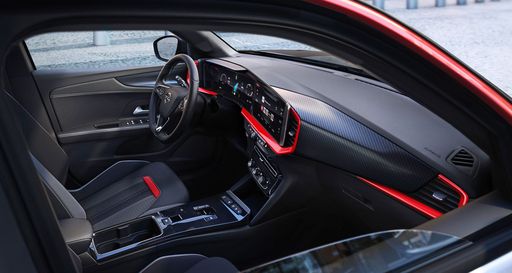
The Kia Sportage presents a more upmarket cabin impression with thoughtful storage, solid switchgear in primary touchpoints and an overall sense of substance, though some touch-based climate controls demand getting used to. The Vauxhall Mokka offers a minimalist, modern dashboard that reads well at a glance and keeps essential controls easy to find, but numerous hard plastics and a snug rear give a less premium tactile experience. Ergonomically, the Mokka’s separate climate buttons score points for everyday use, while the Sportage’s layout rewards longer familiarity with slightly more refinement. Both interiors feel contemporary, yet the Sportage leans toward family-oriented refinement and the Mokka toward functional, city-first simplicity.

Sportage

Buyer fit and how to choose

Choose the Kia Sportage if you are a family or regular long-distance traveller who values rear space, boot flexibility and a relaxed highway demeanour coupled with a strong warranty story. Opt for the Vauxhall Mokka if you live in urban or suburban areas, prize easy parking and crisp initial throttle response from hybrid or electric options, and rarely need to ferry full-size adults in the back. For buyers weighing fuel, range and daily usability the technical comparison that follows will clarify trade-offs like cargo volume, drivetrain economy and performance. Use those numbers to confirm the lived differences described here: roomy, composed Sportage versus compact, city‑focused Mokka.

Here’s where it gets real: The technical differences in detail

Mokka

Costs and Efficiency:

Looking at overall running costs, both models reveal some interesting differences in everyday economy.

Vauxhall Mokka is markedly cheaper – starting at 23,000 £ , while the Kia Sportage costs 29,100 £ . That’s a price difference of around 6,086 £.

Fuel consumption also shows a difference: the Kia Sportage uses 2.9 L/100km and is significantly more efficient than the Vauxhall Mokka with 4.9 L/100km. The difference is about 2 L/100km.

As for electric range, the Vauxhall Mokka offers substantially more range – reaching up to 403 km, about 337 km more than the Kia Sportage.

Sportage

Engine and Performance:

Under the bonnet, it becomes clear which model is tuned for sportiness and which one takes the lead when you hit the accelerator.

When it comes to engine power, the Kia Sportage offers marginally more power – delivering 288 HP compared to 281 HP. That’s roughly 7 HP more horsepower.

When accelerating from 0 to 100 km/h, the Vauxhall Mokka is clearly quicker – completing the sprint in 5.9 s, while the Kia Sportage takes 7.5 s. That’s about 1.6 s quicker.

There’s also a difference in torque: the Kia Sportage delivers marginally more torque with 380 Nm compared to 345 Nm. That’s about 35 Nm more.

Mokka

Space and Everyday Use:

Cabin size, boot volume and payload all play a role in everyday practicality. Here, comfort and flexibility make the difference.

Both vehicles offer seating for 5 people.

In terms of curb weight, Vauxhall Mokka is somewhat lighter – 1,294 kg compared to 1,552 kg. The difference is around 258 kg.

Looking at boot space, the Kia Sportage offers clearly more boot space – 587 L compared to 350 L. That’s a difference of about 237 L.

When it comes to payload, the Kia Sportage carries markedly more – 580 kg compared to 400 kg. That’s a difference of about 180 kg.

Who wins the race in the data check?

The Vauxhall Mokka is clearly ahead overall in the objective data comparison.
This result only shows which model scores more points on paper – not which of the two cars feels right for you.

from £23,000
Mokka

Vauxhall Mokka

  • Engine Type : Electric, Petrol, Petrol MHEV
  • Transmission : Automatic, Manuel
  • Drive Type : Front-Wheel Drive
  • Power HP : 136 - 281 HP
  • Consumption L/100km : 4.9 - 5.7 L/100km
  • Consumption kWh/100km : 15.4 - 18.5 kWh/100km
  • Electric Range : 336 - 403 km
Vauxhall Mokka
Kia Sportage

Costs and Consumption

View detailed analysis

Engine and Performance

View detailed analysis

Dimensions and Body

View detailed analysis

Vauxhall Mokka

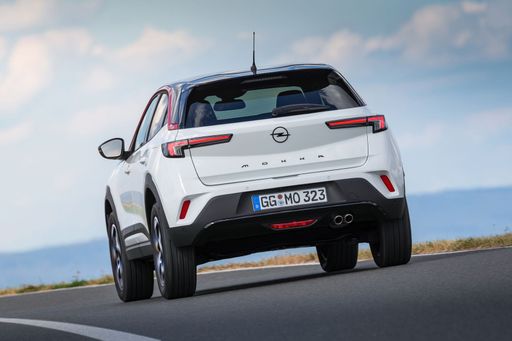
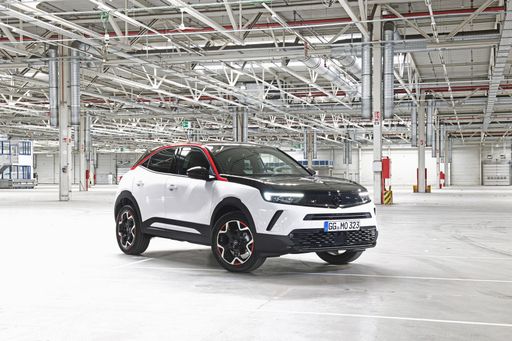
The Opel Mokka is a compact crossover that blends bold, modern styling with a practical, city-friendly footprint. It delivers a comfortable ride and a well-appointed interior with straightforward tech, making it a smart choice for urban drivers who want a stylish yet sensible small SUV.

details

Kia Sportage

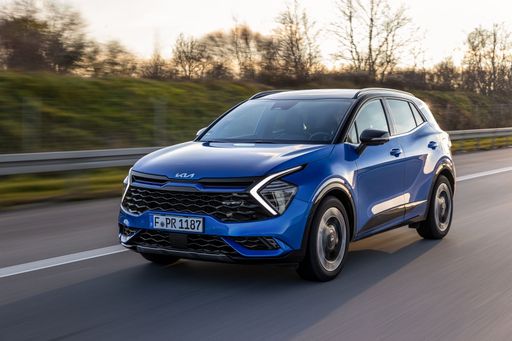
The Kia Sportage is a roomy, well-equipped compact SUV that balances comfort and practicality for daily driving. It delivers a modern interior, composed ride, and strong value for buyers who want versatility without fuss.

details
Vauxhall Mokka
Kia Sportage

Costs and Consumption

Price
23,000 - 40,500 £
Price
29,100 - 47,100 £
Consumption L/100km
4.9 - 5.7 L/100km
Consumption L/100km
2.9 - 7.8 L/100km
Consumption kWh/100km
15.4 - 18.5 kWh/100km
Consumption kWh/100km
-
Electric Range
336 - 403 km
Electric Range
63 - 66 km
Battery Capacity
-
Battery Capacity
-
co2
0 - 129 g/km
co2
67 - 177 g/km
Fuel tank capacity
-
Fuel tank capacity
-

Dimensions and Body

Body Type
SUV
Body Type
SUV
Seats
5
Seats
5
Doors
-
Doors
-
Curb weight
1,294 - 1,672 kg
Curb weight
1,552 - 1,896 kg
Trunk capacity
310 - 350 L
Trunk capacity
526 - 587 L
Length
-
Length
-
Width
1,787 mm
Width
1,865 mm
Height
-
Height
-
Max trunk capacity
-
Max trunk capacity
-
Payload
388 - 400 kg
Payload
533 - 580 kg

Engine and Performance

Engine Type
Electric, Petrol, Petrol MHEV
Engine Type
Petrol, Full Hybrid, Diesel MHEV, Plugin Hybrid
Transmission
Automatic, Manuel
Transmission
Manuel, Automatic
Transmission Detail
Reduction Gearbox, Manual Gearbox, Dual-Clutch Automatic
Transmission Detail
Manual Gearbox, Dual-Clutch Automatic, Automatic Gearbox
Drive Type
Front-Wheel Drive
Drive Type
Front-Wheel Drive, All-Wheel Drive
Power HP
136 - 281 HP
Power HP
136 - 288 HP
Acceleration 0-100km/h
5.9 - 9 s
Acceleration 0-100km/h
7.5 - 11.6 s
Max Speed
-
Max Speed
-
Torque
230 - 345 Nm
Torque
250 - 380 Nm
Number of Cylinders
3
Number of Cylinders
4
Power kW
100 - 207 kW
Power kW
100 - 212 kW
Engine capacity
1,199 cm3
Engine capacity
1,598 cm3

General

Model Year
2,024 - 2,025
Model Year
2,025 - 2,026
CO2 Efficiency Class
A, D, C
CO2 Efficiency Class
F, D, E, G, B
Brand
Vauxhall
Brand
Kia
DriveDuel uses data analysis and artificial intelligence to evaluate vehicle data and create content. Content is regularly reviewed and improved. The displayed prices are estimates based on German list prices, adjusted to the respective country’s VAT. Country-specific registration taxes are not included. This information is not legally binding.