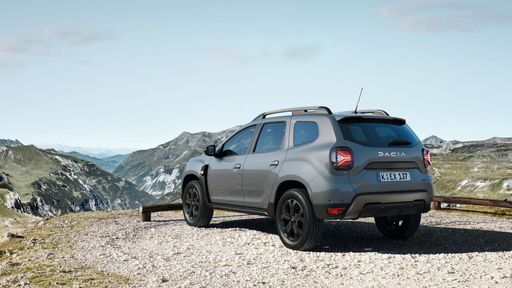
VS

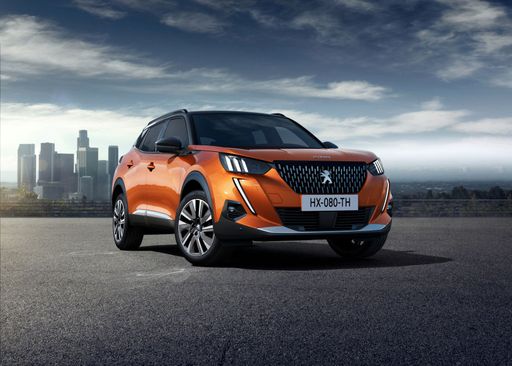
Peugeot 2008 vs Dacia Duster comparison

Compare performance (156 HP vs 158 HP), boot space and price (24,800 £ vs 16,300 £ ) at a glance. Find out which car is the better choice for you – Peugeot 2008 or Dacia Duster?

Peugeot 2008 vs Dacia Duster: Key differences

Peugeot 2008

5 (1 Reviews)
rate
  • moderately quicker 0–100 km/h
  • only slightly lighter

Dacia Duster

5 (2 Reviews)
rate
  • substantially cheaper
  • only slightly more power
  • only slightly more efficient
  • moderately more trunk space

All details on performance, efficiency, range and trunk space can be found in the technical comparison below – including user reviews for both models.

2008

Compact SUVs Face-Off: Dacia Duster vs Peugeot 2008

The automotive world is buzzing with the release of two popular compact SUVs, the Dacia Duster and the Peugeot 2008. Both models promise a blend of practicality, comfort, and versatility, yet they cater to slightly different needs. Let's delve into the specifics and see how they stack up against each other.
Duster

Engine Choices and Performance

Under the hood, the Dacia Duster offers a diverse range of engine types, including LPG, Full Hybrid, and Petrol MHEV. With power outputs ranging from 91 to 140 horsepower, it can cater to both economy-minded drivers and those seeking more performance. The full hybrid engine provides the bonus of reduced fuel consumption, making it an attractive option.

The Peugeot 2008, on the other hand, comes with Petrol and Electric engine options. The power ranges from 101 to 156 horsepower, with the electric model boasting a maximum range of up to 406 kilometers. Insights into consumption reveal a competitive edge in terms of efficiency, particularly with the electric model consuming only 15.5 kWh per 100 kilometers.

2008

Transmission and Drive Type

Both models embrace modern transmission technology, with the Duster offering manual and automated manual gearboxes, and Peugeot 2008 featuring a dual-clutch automatic gearbox. Duster's all-wheel-drive option offers a rugged appeal for those inclined towards off-road adventures. In contrast, the 2008 focuses solely on front-wheel-drive, emphasizing urban efficiency.

Duster

Interior Space and Comfort

Both vehicles seat five passengers comfortably, with slight differences in trunk capacity. The Dacia Duster provides generous cargo space, ranging from 430 to 517 liters, perfect for family trips or outdoor excursions. The Peugeot 2008 offers 434 liters, making it a viable option for those who seek a balance between passenger and cargo space.

2008

Dimensions and Design

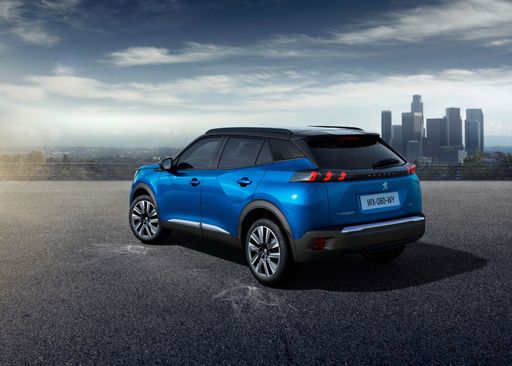
While both SUVs exhibit a strong presence on the road, the dimensional differences reflect their unique attitudes. The Dacia Duster, at 4343mm in length and 1813mm in width, proposes a slightly bulkier silhouette, apt for those who appreciate robust design cues. Conversely, the 2008 stands at 4304mm in length and 1770mm in width, representing a more streamlined approach that appeals to urban environments.

Duster

Tech and Innovations

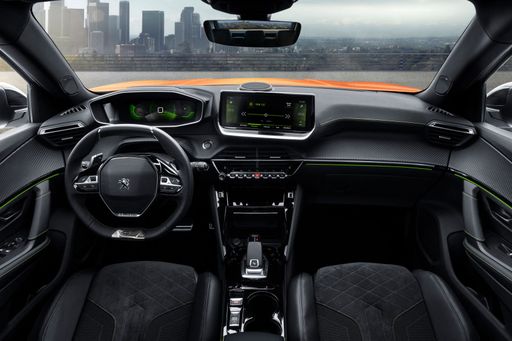
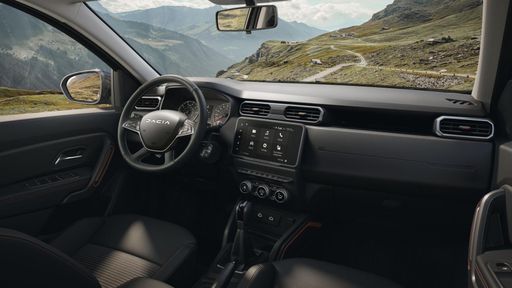
Both SUVs are packed with modern technological advancements aimed at enhancing driving experience. The Dacia Duster, aiming for affordability, incorporates essential tech features without an overload of gadgets. The Peugeot 2008, renowned for its contemporary flair, offers a host of digital features, especially with its electric variant, aiming to provide a futuristic driving experience.

2008

Verdict: Which SUV Takes the Crown?

Choosing between the Dacia Duster and the Peugeot 2008 ultimately boils down to personal preference and lifestyle demands. The Dacia Duster might attract those looking for a rugged, value-driven option with off-road capability. Meanwhile, the Peugeot 2008 might appeal to tech-savvy urbanites or those intrigued by electric mobility.

Both models excel in their own right, proving that the compact SUV segment continues to thrive with diverse options catering to various consumer needs.

Here’s where it gets real: The technical differences in detail

2008

Costs and Efficiency:

When it comes to price and running costs, the biggest differences usually appear. This is often where you see which car fits your budget better in the long run.

Dacia Duster is substantially cheaper – starting at 16,300 £ , while the Peugeot 2008 costs 24,800 £ . That’s a price difference of around 8,485 £.

Fuel consumption also shows a difference: the Dacia Duster uses 4.7 L/100km and is only slightly more efficient than the Peugeot 2008 with 4.9 L/100km. The difference is about 0.2 L/100km.

Duster

Engine and Performance:

Power, torque and acceleration are the classic benchmarks for car enthusiasts – and here, some clear differences start to show.

When it comes to engine power, the Dacia Duster offers only slightly more power – delivering 158 HP compared to 156 HP. That’s roughly 2 HP more horsepower.

When accelerating from 0 to 100 km/h, the Peugeot 2008 is moderately quicker – completing the sprint in 8.3 s, while the Dacia Duster takes 9.4 s. That’s about 1.1 s quicker.

Looking at top speed, the Peugeot 2008 is somewhat faster – reaching 206 km/h, while the Dacia Duster tops out at 180 km/h. The difference is around 26 km/h.

There’s also a difference in torque: the Peugeot 2008 delivers somewhat more torque with 270 Nm compared to 230 Nm. That’s about 40 Nm more.

2008

Space and Everyday Use:

Whether family car or daily driver – which one offers more room, flexibility and comfort?

Both vehicles offer seating for 5 people.

In terms of curb weight, Peugeot 2008 is only slightly lighter – 1,263 kg compared to 1,377 kg. The difference is around 114 kg.

Looking at boot space, the Dacia Duster offers moderately more boot space – 517 L compared to 434 L. That’s a difference of about 83 L.

For maximum load capacity, the Dacia Duster offers barely more capacity – up to 1,609 L, about 142 L more than the Peugeot 2008.

When it comes to payload, the Dacia Duster carries marginally more – 453 kg compared to 447 kg. That’s a difference of about 6 kg.

Who wins the race in the data check?

The Peugeot 2008 holds a decisive overall lead in the objective data comparison.
This result only shows which model scores more points on paper – not which of the two cars feels right for you.

from £24,800
2008

Peugeot 2008

  • Engine Type : Electric, Petrol MHEV, Petrol
  • Transmission : Automatic, Manuel
  • Drive Type : Front-Wheel Drive
  • Power HP : 101 - 156 HP
  • Consumption L/100km : 4.9 - 5.7 L/100km
  • Consumption kWh/100km : 15.3 - 15.5 kWh/100km
  • Electric Range : 405 - 406 km
Peugeot 2008
Dacia Duster

Costs and Consumption

View detailed analysis

Engine and Performance

View detailed analysis

Dimensions and Body

View detailed analysis

Peugeot 2008

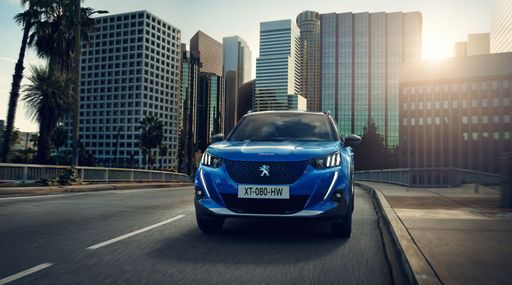
The Peugeot 2008 is a stylish, city-friendly crossover that packs big character into a compact package, turning mundane errands into a mildly entertaining drive. Its clever interior layout, polished looks and confident ride make it a smart choice for buyers who want practical daily sense with a touch of flair.

details

Dacia Duster

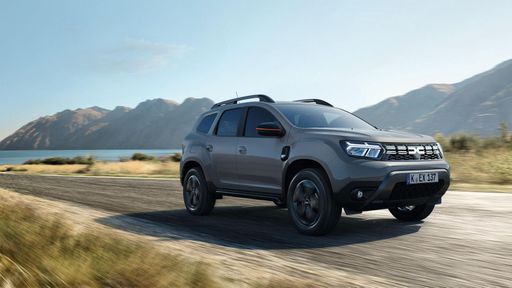
The Dacia Duster is a no-nonsense compact SUV that delivers rugged practicality and surprisingly comfortable everyday driving without fuss. It might not win any beauty contests, but its honest design, easy-to-live-with cabin and tough attitude make it a smart pick for buyers who want reliable transport without luxury frills.

details
Peugeot 2008
Dacia Duster

Costs and Consumption

Price
24,800 - 40,400 £
Price
16,300 - 24,900 £
Consumption L/100km
4.9 - 5.7 L/100km
Consumption L/100km
4.7 - 7.6 L/100km
Consumption kWh/100km
15.3 - 15.5 kWh/100km
Consumption kWh/100km
-
Electric Range
405 - 406 km
Electric Range
-
Battery Capacity
51 kWh
Battery Capacity
0.6 kWh
co2
0 - 129 g/km
co2
107 - 140 g/km
Fuel tank capacity
44 L
Fuel tank capacity
50 L

Dimensions and Body

Body Type
SUV
Body Type
SUV
Seats
5
Seats
5
Doors
5
Doors
5
Curb weight
1,263 - 1,623 kg
Curb weight
1,377 - 1,455 kg
Trunk capacity
434 L
Trunk capacity
348 - 517 L
Length
4,304 mm
Length
4,343 mm
Width
1,770 mm
Width
1,813 mm
Height
1,523 mm
Height
1,656 - 1,659 mm
Max trunk capacity
1,467 L
Max trunk capacity
1,414 - 1,609 L
Payload
407 - 447 kg
Payload
402 - 453 kg

Engine and Performance

Engine Type
Electric, Petrol MHEV, Petrol
Engine Type
Petrol MHEV, Full Hybrid, LPG
Transmission
Automatic, Manuel
Transmission
Manuel, Automatic
Transmission Detail
Reduction Gearbox, Dual-Clutch Automatic, Manual Gearbox
Transmission Detail
Manual Gearbox, Automated Manual, Dual-Clutch Automatic
Drive Type
Front-Wheel Drive
Drive Type
Front-Wheel Drive, All-Wheel Drive
Power HP
101 - 156 HP
Power HP
115 - 158 HP
Acceleration 0-100km/h
8.3 - 10.9 s
Acceleration 0-100km/h
9.4 - 11.7 s
Max Speed
150 - 206 km/h
Max Speed
180 km/h
Torque
205 - 270 Nm
Torque
190 - 230 Nm
Number of Cylinders
3
Number of Cylinders
3 - 4
Power kW
74 - 115 kW
Power kW
84 - 116 kW
Engine capacity
1,199 cm3
Engine capacity
1,199 - 1,789 cm3

General

Model Year
2,023 - 2,026
Model Year
2,025 - 2,026
CO2 Efficiency Class
A, C, D
CO2 Efficiency Class
D, C
Brand
Peugeot
Brand
Dacia
DriveDuel uses data analysis and artificial intelligence to evaluate vehicle data and create content. Content is regularly reviewed and improved. The displayed prices are estimates based on German list prices, adjusted to the respective country’s VAT. Country-specific registration taxes are not included. This information is not legally binding.