VS

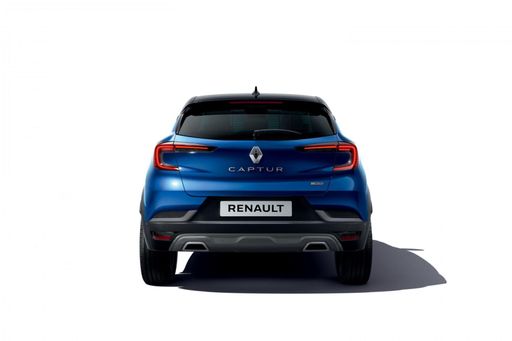
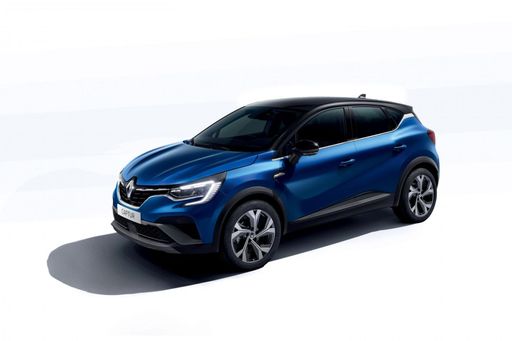
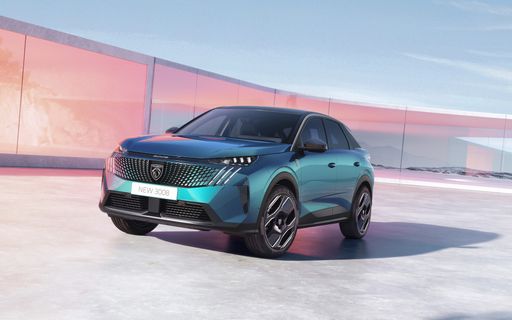
Peugeot 3008 vs Renault Captur comparison

Compare performance (325 HP vs 158 HP), boot space and price (36,500 £ vs 21,400 £ ) at a glance. Find out which car is the better choice for you – Peugeot 3008 or Renault Captur?

Peugeot 3008 vs Renault Captur: Key differences

Peugeot 3008

3.5 (6 Reviews)
rate
  • considerably more power
  • clearly more efficient
  • clearly quicker 0–100 km/h
  • a bit more trunk space
details

Renault Captur

4.8 (7 Reviews)
rate
  • significantly cheaper
  • markedly lighter
details

All details on performance, efficiency, range and trunk space can be found in the technical comparison below – including user reviews for both models.

By Achim Sedelmaier

3008

Peugeot 3008 VS Renault Captur — quick take

Peugeot 3008 VS Renault Captur sets up a clear clash of priorities: the 3008 aims for an upscale, lounge‑like experience while the Captur focuses on compact practicality and digital convenience. The Peugeot feels like a step up in material quality and motorway serenity, trading off some everyday space and a few usability quirks. The Renault wins on adaptability and price sensibility, with a sliding rear bench and a tech suite that suits families and city users. Choosing between them is about whether you value cabin refinement and long‑haul calm or modular everyday utility and smarter connectivity. Below we unpack how those differences play out in real ownership scenarios.
Captur

Cabin atmosphere and perceived quality

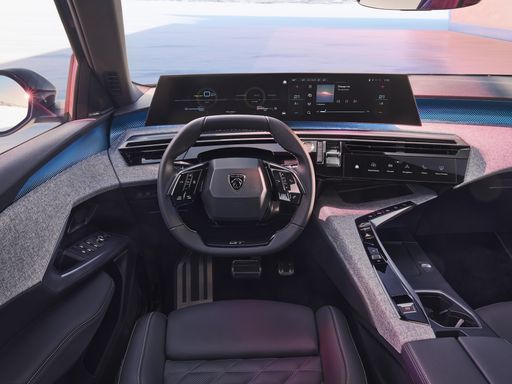
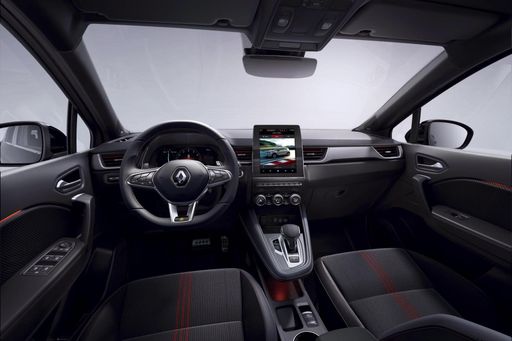
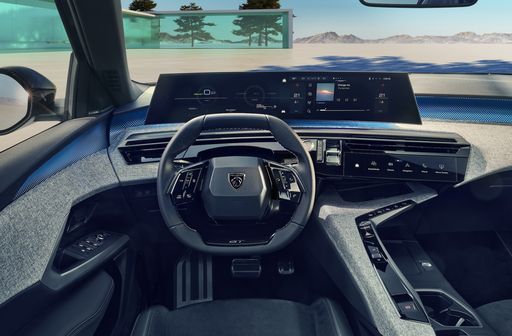
The Peugeot 3008 creates a noticeably more premium impression: surfaces, trim choices and a composed cockpit layout feel like they belong to a larger car, and that creates a calm, boutique atmosphere on every drive. The Renault Captur punches above its class with tidy finishes and a very usable touchscreen environment, but it still shows harder plastics and simpler switchgear in less visible areas. Ergonomically the 3008’s i‑Cockpit rewards time and adaptation, while the Captur’s Google‑centric setup is quicker to live with for most people. In short, if you want a cabin that impresses passengers, the 3008 does it; if you want an intuitive, modern interior without premium pretence, the Captur is more straightforward.

3008

Comfort and long‑distance behaviour

On long motorway runs the Peugeot 3008 feels engineered for quiet, relaxed cruising — seats and insulation turn hours behind the wheel into a low‑fatigue experience. The Renault Captur is surprisingly composed for its class and its hybrid variants glide through city traffic almost silently, but under sustained high‑speed load it becomes more audible and a touch less composed than the Peugeot. Around town the Captur’s smaller footprint and light steering make it easy to place, whereas the 3008 trades a bit of small‑speed compliance for a more solid highway demeanour. If frequent long trips are a big part of your life the 3008 leans towards comfort; if your mileage is mixed and city time dominates, the Captur’s hybrid calm is very appealing.

Captur

Practicality and family usability

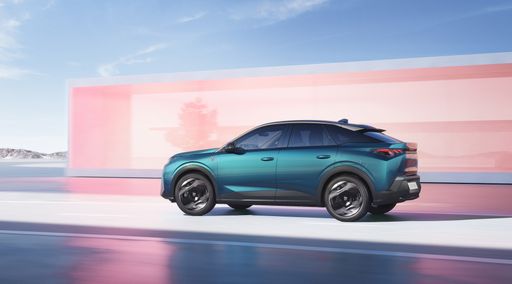
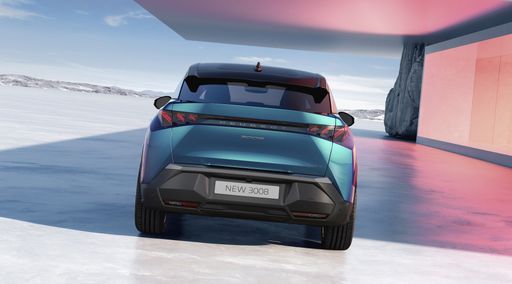
The Renault Captur is the more pragmatic choice for everyday family life thanks to its sliding rear bench, flexible load floor and generally more usable cargo area for day‑to‑day chores. The Peugeot 3008’s coupé‑like silhouette and clever styling deliver character but cost some rear‑seat airiness and make the boot a bit less easy to live with for bulky items. Both cars have sensible safety and convenience kit, but parents will notice the Captur’s smarter packaging — easier child seat positioning and more adaptable cargo layouts. If you frequently rearrange the cabin for kids, bikes or shopping, the Captur will frustrate less; if you mainly need comfortable seating for four plus an occasional suitcase, the 3008’s ambience might win out.

3008

City friendliness, tech and day‑to‑day ergonomics

In urban use the Captur shows its strengths with compact external dimensions, helpful camera systems and an infotainment setup that integrates navigation and voice naturally through Google services. The Peugeot 3008 is also city‑able — its light steering and small turning circle are plusses — but the i‑Cockpit controls and some buried menus can be fiddlier when you want rapid adjustments. Storage and small‑item usability tilt in the Captur’s favour too, while the 3008 rewards those who prioritise tactile quality over the last cubby or two. For tech‑savvy daily drivers who want straightforward connectivity, the Captur feels more modern; for drivers who want a touch of refinement and can live with a learning curve, the 3008 delivers.

Captur

Who should pick which car — buyer fit and trade‑offs

If you prioritise a hushed cabin, premium materials and long‑distance composure, the Peugeot 3008 is the natural lean: it’s aimed at buyers who value comfort and interior feel over raw practicality. If your life runs on school runs, short trips and clever space solutions — and you want excellent connectivity without a premium price — the Renault Captur is the more logical pick. The trade‑off is straightforward: choose the 3008 for lounge‑like refinement and motorway serenity, choose the Captur for everyday versatility, lower entry cost and city friendliness. The technical comparison that follows will show how those character choices translate into drivetrain, efficiency and cargo numbers to help finalise which trade‑offs you want to live with.

Here’s where it gets real: The technical differences in detail

3008

Costs and Efficiency:

Price and efficiency are key factors when choosing a car – and this is often where the real differences emerge.

Renault Captur is significantly cheaper – starting at 21,400 £ , while the Peugeot 3008 costs 36,500 £ . That’s a price difference of around 15,129 £.

Fuel consumption also shows a difference: the Peugeot 3008 uses 2.4 L/100km and is clearly more efficient than the Renault Captur with 4.4 L/100km. The difference is about 2 L/100km.

Captur

Engine and Performance:

Power, torque and acceleration are the classic benchmarks for car enthusiasts – and here, some clear differences start to show.

When it comes to engine power, the Peugeot 3008 offers considerably more power – delivering 325 HP compared to 158 HP. That’s roughly 167 HP more horsepower.

When accelerating from 0 to 100 km/h, the Peugeot 3008 is clearly quicker – completing the sprint in 6 s, while the Renault Captur takes 8.9 s. That’s about 2.9 s quicker.

There’s also a difference in torque: the Peugeot 3008 delivers clearly more torque with 511 Nm compared to 265 Nm. That’s about 246 Nm more.

3008

Space and Everyday Use:

Cabin size, boot volume and payload all play a role in everyday practicality. Here, comfort and flexibility make the difference.

Both vehicles offer seating for 5 people.

In terms of curb weight, Renault Captur is markedly lighter – 1,323 kg compared to 1,648 kg. The difference is around 325 kg.

Looking at boot space, the Peugeot 3008 offers a bit more boot space – 520 L compared to 422 L. That’s a difference of about 98 L.

When it comes to payload, the Peugeot 3008 carries only slightly more – 467 kg compared to 453 kg. That’s a difference of about 14 kg.

Who wins the race in the data check?

The Peugeot 3008 is clearly superior overall in the objective data comparison.
This result only shows which model scores more points on paper – not which of the two cars feels right for you.

from £36,500
3008

Peugeot 3008

  • Engine Type : Electric, Petrol MHEV, Plugin Hybrid
  • Transmission : Automatic
  • Drive Type : Front-Wheel Drive, All-Wheel Drive
  • Power HP : 145 - 325 HP
  • Consumption L/100km : 2.4 - 5.3 L/100km
  • Consumption kWh/100km : 16.9 - 17.4 kWh/100km
  • Electric Range : 81 - 698 km
Peugeot 3008
Renault Captur

Costs and Consumption

View detailed analysis

Engine and Performance

View detailed analysis

Dimensions and Body

View detailed analysis

Peugeot 3008

The Peugeot 3008 blends striking, modern styling with a comfortable, well-appointed interior that feels more premium than its class. It's practical and composed on the road, with clever storage and driver-focused tech that make it an easy choice for everyday family life or longer, relaxed drives.

details

Renault Captur

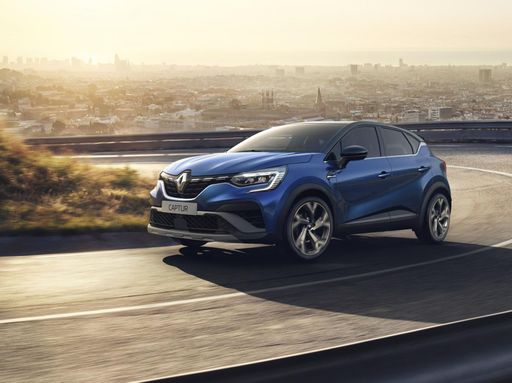
The Renault Captur is a stylish and practical compact crossover that combines a high seating position and easy manoeuvrability with a comfortable, well‑equipped cabin. Its flexible interior layout and modern infotainment make it a sensible, polished choice for city drivers and small families.

details
Peugeot 3008
Renault Captur

Costs and Consumption

Price
36,500 - 52,200 £
Price
21,400 - 28,400 £
Consumption L/100km
2.4 - 5.3 L/100km
Consumption L/100km
4.4 - 6 L/100km
Consumption kWh/100km
16.9 - 17.4 kWh/100km
Consumption kWh/100km
-
Electric Range
81 - 698 km
Electric Range
-
Battery Capacity
-
Battery Capacity
-
co2
0 - 121 g/km
co2
100 - 137 g/km
Fuel tank capacity
-
Fuel tank capacity
-

Dimensions and Body

Body Type
SUV
Body Type
SUV
Seats
5
Seats
5
Doors
-
Doors
-
Curb weight
1,648 - 2,266 kg
Curb weight
1,323 - 1,441 kg
Trunk capacity
470 - 520 L
Trunk capacity
326 - 422 L
Length
-
Length
-
Width
1,895 mm
Width
1,797 mm
Height
-
Height
-
Max trunk capacity
-
Max trunk capacity
-
Payload
432 - 467 kg
Payload
447 - 453 kg

Engine and Performance

Engine Type
Electric, Petrol MHEV, Plugin Hybrid
Engine Type
Full Hybrid, Petrol, Petrol MHEV
Transmission
Automatic
Transmission
Automatic, Manuel
Transmission Detail
Reduction Gearbox, Dual-Clutch Automatic
Transmission Detail
Automatic Gearbox, Manual Gearbox, Dual-Clutch Automatic
Drive Type
Front-Wheel Drive, All-Wheel Drive
Drive Type
Front-Wheel Drive
Power HP
145 - 325 HP
Power HP
115 - 158 HP
Acceleration 0-100km/h
6 - 10.2 s
Acceleration 0-100km/h
8.9 - 12.3 s
Max Speed
-
Max Speed
-
Torque
230 - 511 Nm
Torque
160 - 265 Nm
Number of Cylinders
3 - 4
Number of Cylinders
3 - 4
Power kW
107 - 239 kW
Power kW
84 - 116 kW
Engine capacity
1,199 - 1,598 cm3
Engine capacity
1,199 - 1,789 cm3

General

Model Year
2,024 - 2,026
Model Year
2025
CO2 Efficiency Class
A, D, B
CO2 Efficiency Class
C, D, E
Brand
Peugeot
Brand
Renault
DriveDuel uses data analysis and artificial intelligence to evaluate vehicle data and create content. Content is regularly reviewed and improved. The displayed prices are estimates based on German list prices, adjusted to the respective country’s VAT. Country-specific registration taxes are not included. This information is not legally binding.