VS

Peugeot Traveller vs Peugeot Rifter comparison

Compare performance (180 HP vs 136 HP), boot space and price (34,800 £ vs 22,900 £ ) at a glance. Find out which car is the better choice for you – Peugeot Traveller or Peugeot Rifter?

Peugeot Traveller vs Peugeot Rifter: Key differences

Peugeot Traveller

  • clearly more power
  • very slightly more electric range
  • very slightly quicker 0–100 km/h
  • significantly more trunk space

Peugeot Rifter

4.7 (1 Reviews)
rate
  • significantly cheaper
  • clearly more efficient
  • markedly more efficient
  • noticeably lighter
Traveller

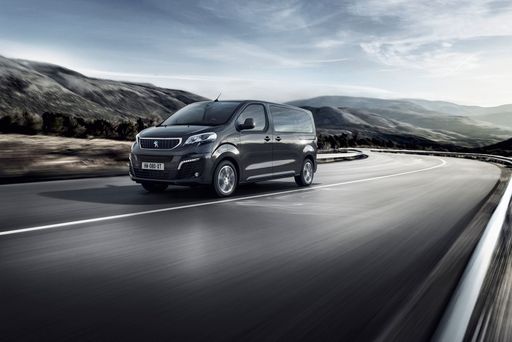
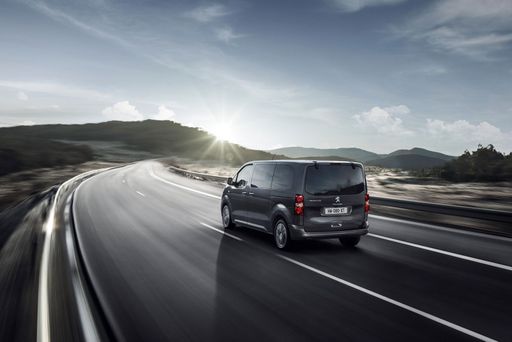
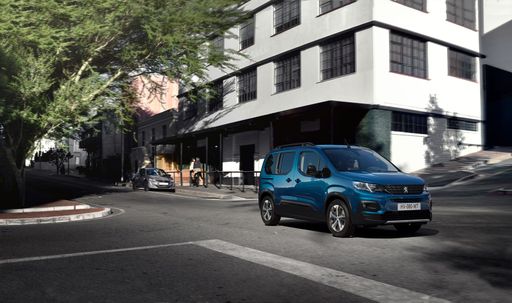
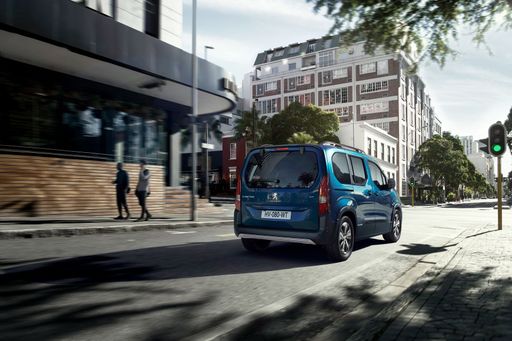
In the automotive world, the competition can be fierce, even within the same brand. Peugeot, a name synonymous with innovation and quality, offers a range of vehicles that cater to various needs and preferences. This article aims to compare two upcoming models from Peugeot—one a compact High Roof Wagon and the other a versatile Bus model. We will delve into the technical aspects and innovations that define these vehicles in the 2024 lineup.
Rifter

Peugeot High Roof Wagon: Versatility Meets Efficiency

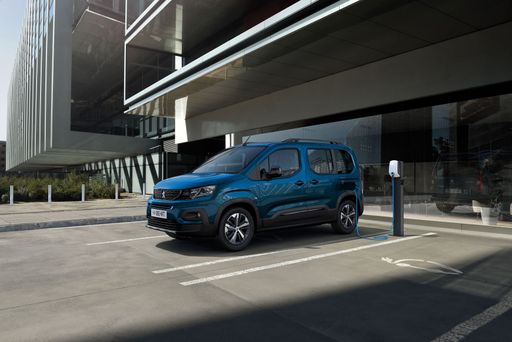
The Peugeot High Roof Wagon is designed to provide a robust combination of space, comfort, and efficiency. Available with multiple engine types including electric, petrol, and diesel, this model boasts versatility suitable for both families and professionals.

The electric variant of the High Roof Wagon operates with impressive figures, featuring a power output of 136 HP and a torque of 270 Nm. It offers an electric range of up to 340 km, positioning it as an excellent choice for eco-conscious consumers. Meanwhile, the petrol and diesel options provide a range of horsepower from 102 to 130 HP, ensuring that drivers have adequate power for various driving conditions.

Traveller

Fuel Efficiency and Performance

This model stands out with its efficient fuel consumption rates that range between 5.4 to 7.0 L/100km for petrol and diesel engines, while the electric variant consumes 19.1 kWh/100km. The acceleration from 0-100 km/h ranges from a brisk 10.8 seconds to 13.6 seconds depending on the engine type, ensuring responsive performance for everyday use.

Rifter

Dimensions and Practicality

With a length of up to 4755 mm and a trunk capacity of 1050 L, the High Roof Wagon provides ample space for passenger comfort and cargo needs. The model offers configurations for 5 or 7 seats, catering perfectly to family outings or professional commitments.

Traveller

Peugeot Bus: The Road Warrior

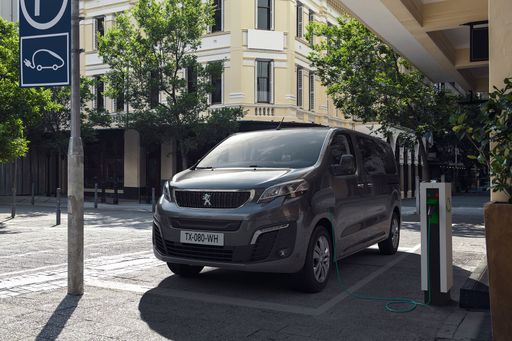
On the other side, the Peugeot Bus serves as a powerhouse for larger groups and commercial uses. This model offers a durable build with a width of 1920 mm and a height of 1890 mm, ensuring it commands attention on the road. Its engine lineup comprises both diesel and electric options, with power ranging from 136 to 177 HP and torque figures reaching up to 400 Nm.

Rifter

Electric Range and Fuel Consumption

The bus variant excels in fuel efficiency with consumption figures hovering around 7.3 to 7.5 L/100 km for diesel engines. Electric versions consume approximately 24.3 kWh/100 km, with an electric range extending to 351 km, making it a reliable choice for urban transport and longer journeys alike.

The Bus can accelerate from 0-100 km/h in between 10.6 to 14.2 seconds, providing adequate power for city and highway driving conditions. It achieves a top speed of 185 km/h, ideal for intercity travel.

Traveller

Comfort for Passengers

With seating for 8, the Peugeot Bus allows for diverse applications—from family road trips to commuter transportation. Trunk capacities of up to 2011 L ensure that passengers can bring ample luggage or equipment, enhancing its practicality for various uses.

Rifter

Conclusion: The Best of Peugeot

Comparing the High Roof Wagon and the Bus reveals how Peugeot caters to a wide spectrum of automotive needs. Both vehicles uphold the brand's reputation for innovation while offering unique advantages tailored to distinct customer demands. Whether you need a spacious and efficient family vehicle or a robust transport solution for larger groups, Peugeot's latest offerings in 2024 promise to deliver quality and performance that stands the test of time.

Here’s where it gets real: The technical differences in detail

Traveller

Costs and Efficiency:

When it comes to price and running costs, the biggest differences usually appear. This is often where you see which car fits your budget better in the long run.

Peugeot Rifter is significantly cheaper – starting at 22,900 £ , while the Peugeot Traveller costs 34,800 £ . That’s a price difference of around 11,965 £.

Fuel consumption also shows a difference: the Peugeot Rifter uses 5.4 L/100km and is clearly more efficient than the Peugeot Traveller with 7 L/100km. The difference is about 1.6 L/100km.

In terms of energy consumption, the Peugeot Rifter is markedly more efficient: consuming 18.3 kWh/100km compared to 24.3 kWh/100km for the Peugeot Traveller. That’s a difference of about 6 kWh/100km.

As for electric range, the Peugeot Traveller offers very slightly more range – reaching up to 351 km, about 12 km more than the Peugeot Rifter.

Rifter

Engine and Performance:

Power, torque and acceleration are the classic benchmarks for car enthusiasts – and here, some clear differences start to show.

When it comes to engine power, the Peugeot Traveller offers clearly more power – delivering 180 HP compared to 136 HP. That’s roughly 44 HP more horsepower.

When accelerating from 0 to 100 km/h, the Peugeot Traveller is very slightly quicker – completing the sprint in 10.6 s, while the Peugeot Rifter takes 11.3 s. That’s about 0.7 s quicker.

Looking at top speed, the Peugeot Rifter is only slightly faster – reaching 132 km/h, while the Peugeot Traveller tops out at 130 km/h. The difference is around 2 km/h.

There’s also a difference in torque: the Peugeot Traveller delivers visibly more torque with 400 Nm compared to 300 Nm. That’s about 100 Nm more.

Traveller

Space and Everyday Use:

Cabin size, boot volume and payload all play a role in everyday practicality. Here, comfort and flexibility make the difference.

Seats: Peugeot Traveller offers more seats – 8 vs 7.

In terms of curb weight, Peugeot Rifter is noticeably lighter – 1,498 kg compared to 1,953 kg. The difference is around 455 kg.

Looking at boot space, the Peugeot Traveller offers significantly more boot space – 2,011 L compared to 1,050 L. That’s a difference of about 961 L.

For maximum load capacity, the Peugeot Rifter offers marginally more capacity – up to 3,500 L, about 200 L more than the Peugeot Traveller.

When it comes to payload, the Peugeot Traveller carries a bit more – 914 kg compared to 814 kg. That’s a difference of about 100 kg.

Who wins the race in the data check?

The Peugeot Traveller comes out modestly ahead in the objective data comparison.
This result only shows which model scores more points on paper – not which of the two cars feels right for you.

from £34,800
Traveller

Peugeot Traveller

  • Engine Type : Electric, Diesel
  • Transmission : Automatic
  • Drive Type : Front-Wheel Drive
  • Power HP : 136 - 180 HP
  • Consumption L/100km : 7 - 7.1 L/100km
  • Consumption kWh/100km : 24.3 - 25 kWh/100km
  • Electric Range : 217 - 351 km
Peugeot Traveller
Peugeot Rifter

Costs and Consumption

View detailed analysis

Engine and Performance

View detailed analysis

Dimensions and Body

View detailed analysis

Peugeot Traveller

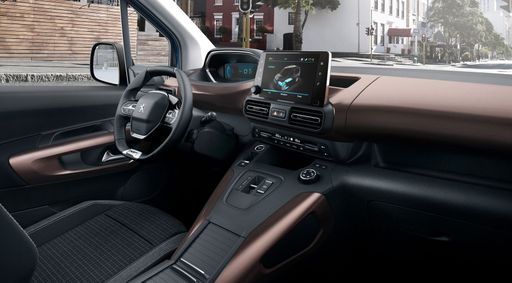
The Peugeot Traveller is a roomy, refined people‑carrier that dresses up everyday practicality with an unexpectedly classy interior. Perfect for family getaways or executive shuttles, it pairs flexible seating and clever storage with a calm, composed ride — useful, sensible, and quietly likeable.

details

Peugeot Rifter

The Peugeot Rifter is a practical, family-friendly people carrier that makes everyday errands and weekend escapes feel effortless thanks to its airy cabin and clever, flexible interior. With chunky, purposeful styling and storage solutions everywhere, the Rifter manages to be both unashamedly useful and unexpectedly likeable.

details
Peugeot Traveller
Peugeot Rifter

Costs and Consumption

Price
34,800 - 52,200 £
Price
22,900 - 36,600 £
Consumption L/100km
7 - 7.1 L/100km
Consumption L/100km
5.4 - 6.5 L/100km
Consumption kWh/100km
24.3 - 25 kWh/100km
Consumption kWh/100km
18.3 - 19.1 kWh/100km
Electric Range
217 - 351 km
Electric Range
328 - 339 km
Battery Capacity
-
Battery Capacity
-
co2
0 - 188 g/km
co2
0 - 157 g/km
Fuel tank capacity
-
Fuel tank capacity
-

Dimensions and Body

Body Type
Bus
Body Type
High Roof Estate
Seats
8
Seats
5 - 7
Doors
5
Doors
4 - 5
Curb weight
1,953 - 2,240 kg
Curb weight
1,498 - 1,941 kg
Trunk capacity
1,624 - 2,011 L
Trunk capacity
322 - 1,050 L
Length
4,983 - 5,333 mm
Length
4,405 - 4,755 mm
Width
1,920 mm
Width
1,848 mm
Height
1,890 mm
Height
1,818 - 1,837 mm
Max trunk capacity
2,700 - 3,300 L
Max trunk capacity
3,000 - 3,500 L
Payload
850 - 914 kg
Payload
489 - 814 kg

Engine and Performance

Engine Type
Electric, Diesel
Engine Type
Electric, Petrol, Diesel
Transmission
Automatic
Transmission
Automatic, Manuel
Transmission Detail
Reduction Gearbox, Automatic Gearbox
Transmission Detail
Reduction Gearbox, Manual Gearbox, Automatic Gearbox
Drive Type
Front-Wheel Drive
Drive Type
Front-Wheel Drive
Power HP
136 - 180 HP
Power HP
102 - 136 HP
Acceleration 0-100km/h
10.6 - 14.2 s
Acceleration 0-100km/h
11.3 - 13.5 s
Max Speed
130 km/h
Max Speed
132 km/h
Torque
270 - 400 Nm
Torque
205 - 300 Nm
Number of Cylinders
4
Number of Cylinders
3 - 4
Power kW
100 - 132 kW
Power kW
75 - 100 kW
Engine capacity
2,184 cm3
Engine capacity
1,199 - 1,499 cm3

General

Model Year
2,024 - 2,025
Model Year
2,024 - 2,026
CO2 Efficiency Class
A, G
CO2 Efficiency Class
A, E, F
Brand
Peugeot
Brand
Peugeot
DriveDuel uses data analysis and artificial intelligence to evaluate vehicle data and create content. Content is regularly reviewed and improved. The displayed prices are estimates based on German list prices, adjusted to the respective country’s VAT. Country-specific registration taxes are not included. This information is not legally binding.