VS

Polestar 4 vs Volvo EC40 comparison

Compare performance (544 HP vs 442 HP), boot space and price (53,100 £ vs 46,500 £ ) at a glance. Find out which car is the better choice for you – Polestar 4 or Volvo EC40?

Polestar 4 vs Volvo EC40: Key differences

Polestar 4

4.8 (9 Reviews)
rate
  • slightly more power
  • only slightly more electric range
  • visibly quicker 0–100 km/h
  • noticeably more trunk space
details

Volvo EC40

4.7 (1 Reviews)
rate
  • somewhat cheaper
  • marginally more efficient
  • only slightly lighter
details

All details on performance, efficiency, range and trunk space can be found in the technical comparison below – including user reviews for both models.

By Achim Sedelmaier

4

A Tale of Two Electric SUVs: Volvo EC40 vs. Polestar 4

The automotive landscape is rapidly evolving, especially with the rise of electric vehicles (EVs). Among the notable contenders in the SUV segment are the Volvo EC40 and the Polestar 4. Both vehicles boast impressive specifications and a commitment to sustainability, but they cater to slightly different segments of the market. This comparison will delve into the technical aspects, innovations, and overall driving experiences offered by these two electric SUVs.
EC40

Powertrain and Performance

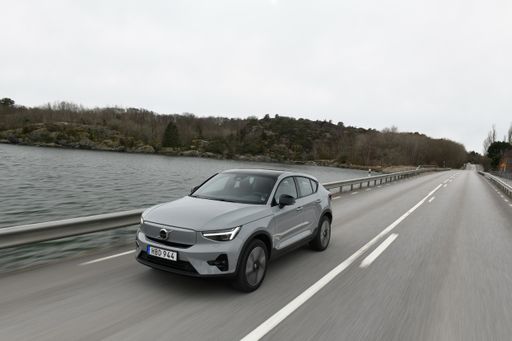
The Volvo EC40 strikes a balance between power and efficiency, offering a rear-wheel drive layout powered by a 238 to 252 HP electric motor. It can accelerate from 0 to 100 km/h in 7.3 seconds, making it a brisk performer for urban and suburban driving. With a torque output of 420 Nm, the EC40 ensures a smooth drive while maintaining energy efficiency, consuming about 16.2-16.7 kWh per 100 km depending on the variant.

On the flip side, the Polestar 4 offers a significantly more powerful driving experience with options of either rear-wheel or all-wheel drive. It packs an astonishing 272 HP or a monstrous 544 HP in its performance variant, allowing it to rocket from 0 to 100 km/h in just 3.8 seconds. Its torque ranges from 343 Nm in the base model to 686 Nm in the high-performance version, underscoring its sporty credentials. However, this power comes at a cost; the Polestar 4 consumes between 17.8-18.7 kWh for every 100 km traveled.

4

Range and Battery Capacity

When it comes to range, the Volvo EC40 boasts an impressive electric range of 487 to 584 km, depending on the battery capacity chosen (67 kWh or 79 kWh). This makes it suitable for long-distance travel with adequate planning for charging stops.

Conversely, the Polestar 4 takes the lead in this category, with an electric range that varies from 590 to 620 km thanks to its larger 94 kWh battery. This extended range opens up possibilities for road trips and less frequent charging, making it a great option for those who prioritize long journeys.

Dimensions and Interior Space

In terms of size, the Volvo EC40 measures 4,440 mm in length, 1,873 mm in width, and 1,591 mm in height, providing ample interior space for five passengers and cargo. The trunk capacity is measured at 404 liters, allowing for practical storage options.

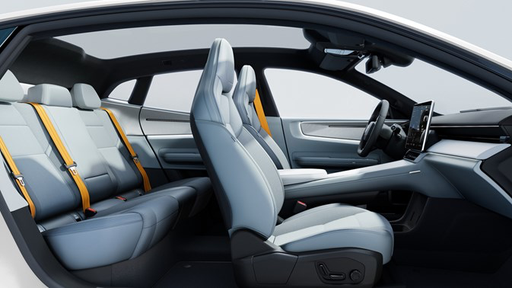
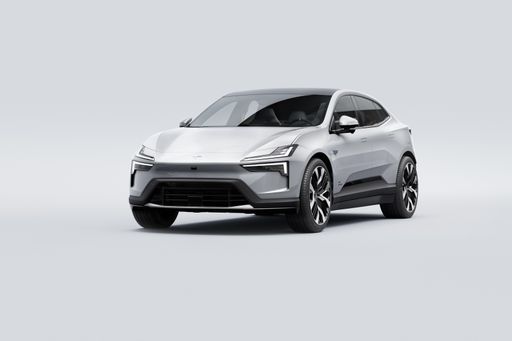
The Polestar 4 is notably larger, with measurements of 4,840 mm in length, 2,008 mm in width, and a height of 1,534 mm. This larger dimensions translate into a roomier cabin, accommodating the same number of passengers but with a more expansive trunk capacity of 526 liters. This can enhance the overall utility of the vehicle, especially for families or those requiring more cargo space.

Innovative Features and Technology

Both models are loaded with cutting-edge technology and safety features. The Volvo EC40 maintains Volvo’s reputation for safety, with advanced driver-assistance systems that enhance driving security and autonomy. The infotainment system integrates seamlessly with popular apps and services, providing an intuitive user experience.

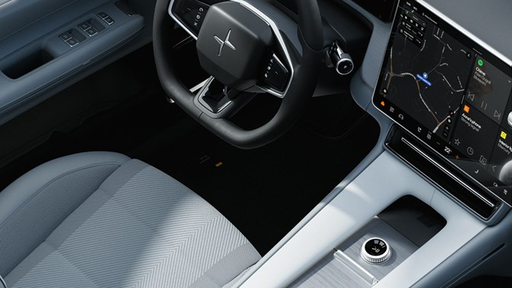
The Polestar 4, on the other hand, features a more performance-oriented interface, offering an array of driving modes that cater to the preferences of enthusiasts. Additionally, it provides state-of-the-art connectivity options, including smartphone integration and over-the-air updates for its software, ensuring that users can enjoy the latest features without visiting a dealership.

Conclusion

Choosing between the Volvo EC40 and the Polestar 4 ultimately comes down to individual preferences. The EC40 is an efficient and practical SUV that emphasizes safety and a sustainable driving experience. Meanwhile, the Polestar 4 stands out as a powerful and stylish option for performance enthusiasts looking for a sporty yet functional electric SUV. Both vehicles are commendable in their own rights, and potential buyers will find it hard to go wrong with either choice in the burgeoning electric SUV market.

Here’s where it gets real: The technical differences in detail

4

Costs and Efficiency:

When it comes to price and running costs, the biggest differences usually appear. This is often where you see which car fits your budget better in the long run.

Volvo EC40 is somewhat cheaper – starting at 46,500 £ , while the Polestar 4 costs 53,100 £ . That’s a price difference of around 6,523 £.

In terms of energy consumption, the Volvo EC40 is marginally more efficient: consuming 16.2 kWh/100km compared to 17.8 kWh/100km for the Polestar 4. That’s a difference of about 1.6 kWh/100km.

As for electric range, the Polestar 4 offers only slightly more range – reaching up to 620 km, about 35 km more than the Volvo EC40.

EC40

Engine and Performance:

Under the bonnet, it becomes clear which model is tuned for sportiness and which one takes the lead when you hit the accelerator.

When it comes to engine power, the Polestar 4 offers slightly more power – delivering 544 HP compared to 442 HP. That’s roughly 102 HP more horsepower.

When accelerating from 0 to 100 km/h, the Polestar 4 is visibly quicker – completing the sprint in 3.8 s, while the Volvo EC40 takes 4.6 s. That’s about 0.8 s quicker.

There’s also a difference in torque: the Polestar 4 delivers barely more torque with 686 Nm compared to 670 Nm. That’s about 16 Nm more.

4

Space and Everyday Use:

Cabin size, boot volume and payload all play a role in everyday practicality. Here, comfort and flexibility make the difference.

Both vehicles offer seating for 5 people.

In terms of curb weight, Volvo EC40 is only slightly lighter – 2,065 kg compared to 2,230 kg. The difference is around 165 kg.

Looking at boot space, the Polestar 4 offers noticeably more boot space – 526 L compared to 404 L. That’s a difference of about 122 L.

When it comes to payload, the Polestar 4 carries barely more – 455 kg compared to 435 kg. That’s a difference of about 20 kg.

Who wins the race in the data check?

The Polestar 4 is clearly superior overall in the objective data comparison.
This result only shows which model scores more points on paper – not which of the two cars feels right for you.

from £53,100
4

Polestar 4

  • Engine Type : Electric
  • Transmission : Automatic
  • Drive Type : All-Wheel Drive, Rear-Wheel Drive
  • Power HP : 272 - 544 HP
  • Consumption kWh/100km : 17.8 - 18.7 kWh/100km
  • Electric Range : 590 - 620 km
Polestar 4
Volvo EC40

Costs and Consumption

View detailed analysis

Engine and Performance

View detailed analysis

Dimensions and Body

View detailed analysis

Polestar 4

The Polestar 4 wears a coupe-like profile and a Scandinavian-minimal interior that feels premium and unexpectedly roomy, with composed handling that makes urban driving and country roads a pleasure. For buyers who want an electric car that turns heads without shouting, the Polestar 4 is a stylish, clever choice that balances practicality with personality.

details

Volvo EC40

The Volvo EC40 feels like a polished slice of Scandinavian calm on wheels, blending minimalist design with a cocoon-like interior that makes everyday driving surprisingly serene. It’s an electric compact that puts safety and comfort front and center, while still injecting enough personality and tech-savvy charm to keep city buyers smiling.

details
Polestar 4
Volvo EC40

Costs and Consumption

Price
53,100 - 59,900 £
Price
46,500 - 59,000 £
Consumption L/100km
-
Consumption L/100km
-
Consumption kWh/100km
17.8 - 18.7 kWh/100km
Consumption kWh/100km
16.2 - 17.3 kWh/100km
Electric Range
590 - 620 km
Electric Range
486 - 585 km
Battery Capacity
94 kWh
Battery Capacity
-
co2
0 g/km
co2
0 g/km
Fuel tank capacity
-
Fuel tank capacity
-

Dimensions and Body

Body Type
SUV
Body Type
SUV
Seats
5
Seats
5
Doors
5
Doors
-
Curb weight
2,230 - 2,355 kg
Curb weight
2,065 - 2,185 kg
Trunk capacity
526 L
Trunk capacity
404 L
Length
4,840 mm
Length
-
Width
2,008 mm
Width
1,873 mm
Height
1,534 mm
Height
-
Max trunk capacity
1,536 L
Max trunk capacity
-
Payload
455 kg
Payload
395 - 435 kg

Engine and Performance

Engine Type
Electric
Engine Type
Electric
Transmission
Automatic
Transmission
Automatic
Transmission Detail
Reduction Gearbox
Transmission Detail
Reduction Gearbox
Drive Type
All-Wheel Drive, Rear-Wheel Drive
Drive Type
Rear-Wheel Drive, All-Wheel Drive
Power HP
272 - 544 HP
Power HP
238 - 442 HP
Acceleration 0-100km/h
3.8 - 7.1 s
Acceleration 0-100km/h
4.6 - 7.3 s
Max Speed
200 km/h
Max Speed
-
Torque
343 - 686 Nm
Torque
420 - 670 Nm
Number of Cylinders
-
Number of Cylinders
-
Power kW
200 - 400 kW
Power kW
175 - 325 kW
Engine capacity
-
Engine capacity
-

General

Model Year
2024
Model Year
2,024 - 2,026
CO2 Efficiency Class
A
CO2 Efficiency Class
A
Brand
Polestar
Brand
Volvo
DriveDuel uses data analysis and artificial intelligence to evaluate vehicle data and create content. Content is regularly reviewed and improved. The displayed prices are estimates based on German list prices, adjusted to the respective country’s VAT. Country-specific registration taxes are not included. This information is not legally binding.