VS

Renault Captur vs Kia Sportage comparison

Compare performance (158 HP vs 288 HP), boot space and price (21,100 £ vs 30,200 £ ) at a glance. Find out which car is the better choice for you – Renault Captur or Kia Sportage?

Renault Captur vs Kia Sportage: Key differences

Renault Captur

4.8 (5 Reviews)
rate
  • significantly cheaper
  • somewhat lighter

Kia Sportage

4.9 (2 Reviews)
rate
  • substantially more power
  • significantly more efficient
  • slightly quicker 0–100 km/h
  • clearly more trunk space

All details on performance, efficiency, range and trunk space can be found in the technical comparison below – including user reviews for both models.

Captur

Introduction

The automotive market is filled with exciting choices, but few segments compete as fiercely as the compact SUV category. Two stellar contenders in this arena are the Kia Sportage and the Renault Captur. Both vehicles offer a blend of modern styling, innovative features, and superior performance that appeal to a wide range of drivers. In this article, we will carefully compare these two models across various aspects, including technical specifications, driving experience, and cutting-edge technology.
Sportage

Design and Dimensions

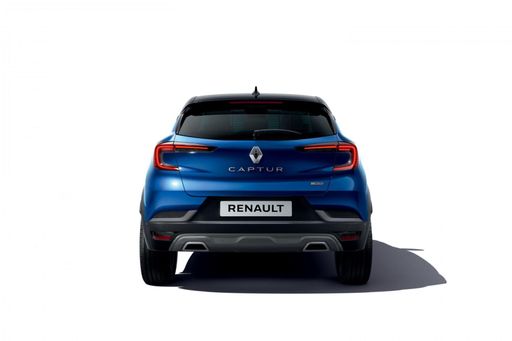
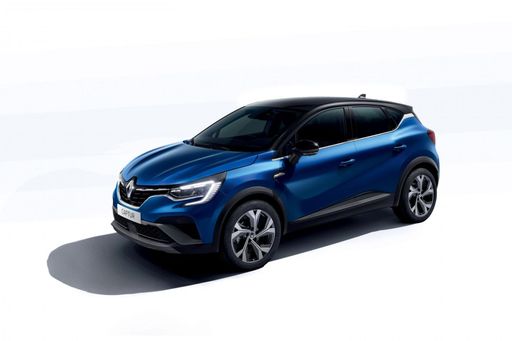
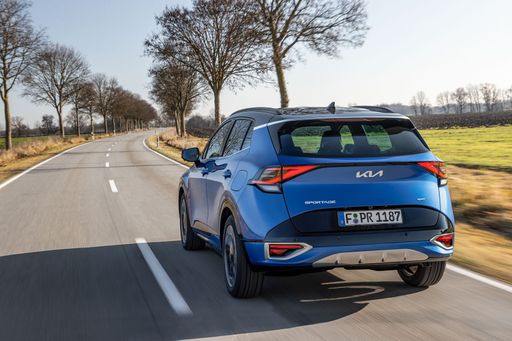
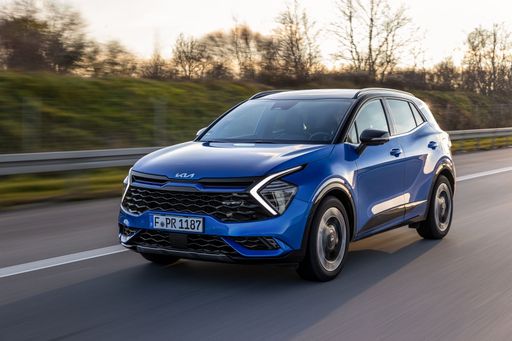
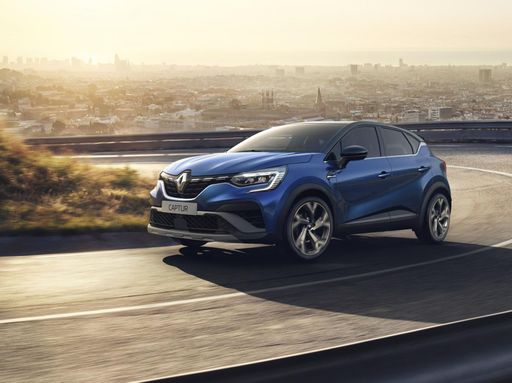
The Kia Sportage boasts a robust SUV design with more aggressive lines and a larger stance, featuring a length of 4515 mm, a width of 1865 mm, and a height of 1650 mm. In contrast, the Renault Captur presents a more compact and elegant profile, measuring 4239 mm in length, 1797 mm in width, and 1575 mm in height. While the Sportage offers a more spacious cabin, the Captur's design makes it an agile option ideal for urban environments.

Captur

Engine Options and Performance

Under the hood, the Kia Sportage excels with a range of engine choices. It offers Diesel MHEV, Petrol MHEV, Full Hybrid, Petrol, and Plug-in Hybrid options, with power ranging from 136 HP to a formidable 252 HP. This versatility is matched by an impressive torque range of 265 to 350 Nm. The Renault Captur, while more limited, still provides considerable power with engines delivering between 91 HP and 158 HP, all running on Petrol, LPG, or as a Full Hybrid.

The Kia Sportage outperforms the Captur in acceleration, with times ranging from 8.3 to 11.6 seconds for 0-100 km/h, compared to the Captur's range of 8.5 to 14.3 seconds. This may reflect the Sportage's emphasis on a more dynamic driving experience, especially in its higher-powered configurations.

Sportage

Fuel Efficiency and Emissions

When it comes to fuel efficiency, the Renault Captur takes the lead with its most economical variant achieving consumption figures as low as 4.7 L/100 km. The Kia Sportage is also efficient but generally registers higher consumption, ranging from 5.9 to 7.2 L/100 km depending on the engine choice. The Captur is slightly ahead in terms of CO2 emissions as well, achieving ratings as low as 106 g/km compared to the Sportage's starting emissions of 132 g/km.

Captur

Interior Space and Technology

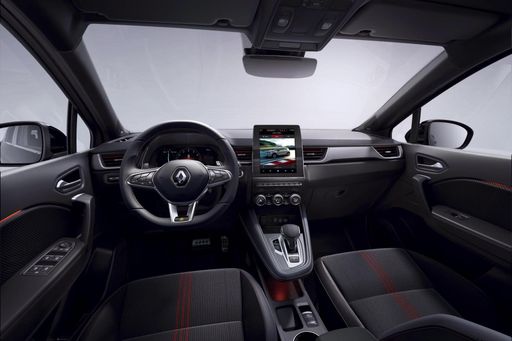
Interior comfort and technological innovation are areas where both vehicles shine. The Kia Sportage features a roomy interior with a trunk capacity of 526 to 587 liters, making it highly practical for families and travel enthusiasts. The Captur, although smaller, still offers a commendable trunk space of up to 422 liters, sufficient for everyday needs.

Both models are equipped with various technological advancements. The Sportage offers features such as touchscreen infotainment systems, advanced driver assistance systems, and connectivity options. The Captur also incorporates modern tech, including smartphone integration and various safety features, but may not match the breadth available in the Sportage.

Sportage

Driving Experience

The driving experience varies significantly between the two. The Kia Sportage features options for both front-wheel and all-wheel-drive systems, offering enhanced control and stability in diverse conditions. Its ride quality is generally more refined and suited for longer voyages. Meanwhile, the Renault Captur is primarily front-wheel drive, and its lighter frame allows for agile maneuverability, making it perfect for city driving.

Captur

Conclusion

Choosing between the Kia Sportage and Renault Captur ultimately depends on individual priorities. If performance, spaciousness, and versatility are at the top of your list, the Sportage stands out as a solid choice. On the other hand, if you are looking for a compact SUV with excellent fuel efficiency and modern features tailored to urban environments, the Captur is a commendable contender. Both vehicles reflect thoughtful engineering and innovative design, making them worthy of consideration in the compact SUV market.

Here’s where it gets real: The technical differences in detail

Captur

Costs and Efficiency:

When it comes to price and running costs, the biggest differences usually appear. This is often where you see which car fits your budget better in the long run.

Renault Captur is significantly cheaper – starting at 21,100 £ , while the Kia Sportage costs 30,200 £ . That’s a price difference of around 9,034 £.

Fuel consumption also shows a difference: the Kia Sportage uses 2.9 L/100km and is significantly more efficient than the Renault Captur with 4.4 L/100km. The difference is about 1.5 L/100km.

Sportage

Engine and Performance:

Power, torque and acceleration say a lot about how a car feels on the road. This is where you see which model delivers more driving dynamics.

When it comes to engine power, the Kia Sportage offers substantially more power – delivering 288 HP compared to 158 HP. That’s roughly 130 HP more horsepower.

When accelerating from 0 to 100 km/h, the Kia Sportage is slightly quicker – completing the sprint in 7.5 s, while the Renault Captur takes 8.9 s. That’s about 1.4 s quicker.

There’s also a difference in torque: the Kia Sportage delivers noticeably more torque with 380 Nm compared to 265 Nm. That’s about 115 Nm more.

Captur

Space and Everyday Use:

Beyond pure performance, interior space and usability matter most in daily life. This is where you see which car is more practical and versatile.

Both vehicles offer seating for 5 people.

In terms of curb weight, Renault Captur is somewhat lighter – 1,323 kg compared to 1,552 kg. The difference is around 229 kg.

Looking at boot space, the Kia Sportage offers clearly more boot space – 587 L compared to 422 L. That’s a difference of about 165 L.

When it comes to payload, the Kia Sportage carries noticeably more – 580 kg compared to 453 kg. That’s a difference of about 127 kg.

Who wins the race in the data check?

The Kia Sportage holds a decisive overall lead in the objective data comparison.
This result only shows which model scores more points on paper – not which of the two cars feels right for you.

from £30,200
Sportage

Kia Sportage

  • Engine Type : Petrol, Full Hybrid, Diesel MHEV, Plugin Hybrid
  • Transmission : Manuel, Automatic
  • Drive Type : Front-Wheel Drive, All-Wheel Drive
  • Power HP : 136 - 288 HP
  • Consumption L/100km : 2.9 - 7.8 L/100km
  • Electric Range : 63 - 66 km
Renault Captur
Kia Sportage

Costs and Consumption

View detailed analysis

Engine and Performance

View detailed analysis

Dimensions and Body

View detailed analysis

Renault Captur

The Renault Captur is a cheeky little crossover that pairs city-friendly agility with a roomy, well-thought-out cabin and enough style to turn heads at the lights. It’s a sensible choice for buyers who want practical versatility and a dash of personality on their daily drives, without taking itself too seriously.

details

Kia Sportage

The Kia Sportage proves you don't have to choose between style and sensible family motoring, wrapping modern, confident looks around a roomy, well-equipped cabin. It's an easy car to live with — comfortable on daily runs, pleasantly engaging when you want a bit of fun, and kind to your wallet so you can keep smiling at the fuel pump.

details
Renault Captur
Kia Sportage

Costs and Consumption

Price
21,100 - 28,400 £
Price
30,200 - 47,100 £
Consumption L/100km
4.4 - 6 L/100km
Consumption L/100km
2.9 - 7.8 L/100km
Consumption kWh/100km
-
Consumption kWh/100km
-
Electric Range
-
Electric Range
63 - 66 km
Battery Capacity
-
Battery Capacity
-
co2
100 - 137 g/km
co2
67 - 177 g/km
Fuel tank capacity
48 L
Fuel tank capacity
-

Dimensions and Body

Body Type
SUV
Body Type
SUV
Seats
5
Seats
5
Doors
5
Doors
-
Curb weight
1,323 - 1,441 kg
Curb weight
1,552 - 1,896 kg
Trunk capacity
326 - 422 L
Trunk capacity
526 - 587 L
Length
4,239 mm
Length
-
Width
1,797 mm
Width
1,865 mm
Height
1,575 mm
Height
-
Max trunk capacity
1,363 L
Max trunk capacity
-
Payload
447 - 453 kg
Payload
533 - 580 kg

Engine and Performance

Engine Type
Full Hybrid, Petrol, Petrol MHEV
Engine Type
Petrol, Full Hybrid, Diesel MHEV, Plugin Hybrid
Transmission
Automatic, Manuel
Transmission
Manuel, Automatic
Transmission Detail
Automatic Gearbox, Manual Gearbox, Dual-Clutch Automatic
Transmission Detail
Manual Gearbox, Dual-Clutch Automatic, Automatic Gearbox
Drive Type
Front-Wheel Drive
Drive Type
Front-Wheel Drive, All-Wheel Drive
Power HP
115 - 158 HP
Power HP
136 - 288 HP
Acceleration 0-100km/h
8.9 - 12.3 s
Acceleration 0-100km/h
7.5 - 11.6 s
Max Speed
180 km/h
Max Speed
-
Torque
160 - 265 Nm
Torque
250 - 380 Nm
Number of Cylinders
3 - 4
Number of Cylinders
4
Power kW
84 - 116 kW
Power kW
100 - 212 kW
Engine capacity
1,199 - 1,789 cm3
Engine capacity
1,598 cm3

General

Model Year
2,025
Model Year
2,025 - 2,026
CO2 Efficiency Class
C, D, E
CO2 Efficiency Class
F, D, E, G, B
Brand
Renault
Brand
Kia
DriveDuel uses data analysis and artificial intelligence to evaluate vehicle data and create content. Content is regularly reviewed and improved. The displayed prices are estimates based on German list prices, adjusted to the respective country’s VAT. Country-specific registration taxes are not included. This information is not legally binding.