VS

Renault Clio vs Honda Jazz comparison

Compare performance (158 HP vs 122 HP), boot space and price (17,100 £ vs 23,100 £ ) at a glance. Find out which car is the better choice for you – Renault Clio or Honda Jazz?

Renault Clio vs Honda Jazz: Key differences

Renault Clio

4.7 (1 Reviews)
rate
  • markedly cheaper
  • clearly more power
  • barely more efficient
  • somewhat quicker 0–100 km/h
  • barely lighter
  • marginally more trunk space
details

Honda Jazz

4.6 (4 Reviews)
rate
details

All details on performance, efficiency, range and trunk space can be found in the technical comparison below – including user reviews for both models.

By Achim Sedelmaier

Clio

Honda Jazz VS Renault Clio — a practical head-to-head for compact-car buyers

Honda Jazz VS Renault Clio sets up a classic choice between clever packaging and modern tech: the Jazz trades small-car agility for astonishing interior flexibility, while the Clio brings sharper road manners and a more tech-forward cabin. The Jazz feels like a compact mini‑MPV that prioritises visibility, easy ingress and day‑to‑day usefulness. The Clio angles itself at buyers who want a composed highway car with up‑to‑date infotainment and low running costs. This comparison focuses on the real-world consequences of those differences — comfort, practicality, long‑distance behaviour and buyer fit — before you dive into numbers and specs. Read on to see which of the two answers the kinds of compromises you’re willing to live with every day.
Jazz

Character and driving feel

The Honda Jazz is relaxed and predictable, built around a smooth, city‑centric hybrid setup that makes low‑speed driving effortless but never sporty. The Renault Clio feels livelier in traffic and more confident when you ask it to accelerate — it’s the one that will make motorway overtakes feel less like a negotiation. Jazz’s suspension leans towards comfort and a soft ride, which soaks up town potholes at the expense of body roll, while Clio’s chassis is tuned to feel firmer and more composed, especially on faster roads. In short, choose Jazz if you prize calm, uncomplicated progress; choose Clio if you want a compact car that feels more grown‑up on the move.

Clio

Cabin feel, comfort and perceived quality

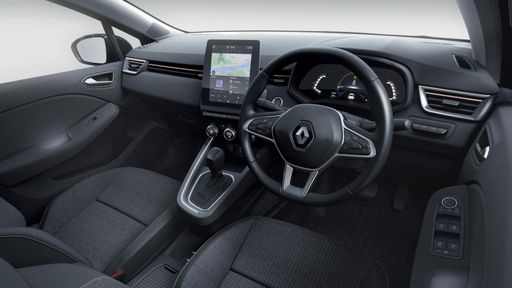
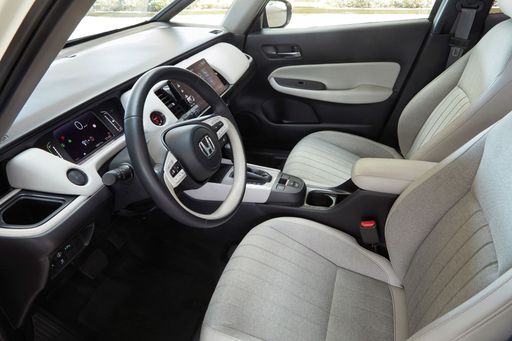
Step into the Honda Jazz and the immediate impression is of space and sensible ergonomics: high seating, broad glass and physical controls that make everyday use instinctive. The Renault Clio’s cabin leans harder into modernity — a sleeker dash, a snappier Google‑based infotainment and a techy ambience that raises perceived value, particularly in higher trims. Jazz wins on rear‑seat comfort and a flatter floor that actually makes three‑seat arrangements and child seats easier, whereas Clio can feel tighter in the back despite nicer materials up front in some versions. Both make compromises: Jazz keeps a functional, durable feel with some visible hard plastics, while Clio offers sharper presentation but middling material quality in mid‑spec cars.

Jazz

Practicality and family usability

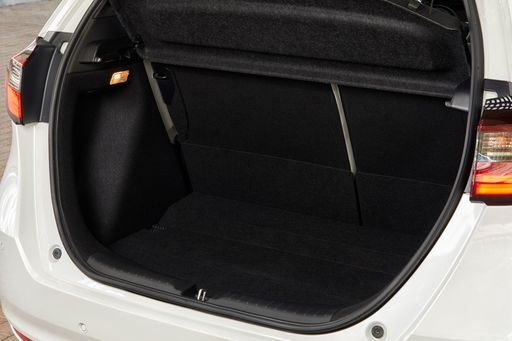
The Honda Jazz is the practical champion for awkward loads thanks to its adaptable seating and a low, easy‑to‑use boot area — odd‑shaped items and taller cargo are where it really shines. The Renault Clio offers a larger boot in its conventional petrol form, which helps on family trips, but its hybrid layout cuts into luggage space and brings a higher loading lip that makes heavy handling less comfortable. Jazz’s “Magic” flexibility also means rear passengers get a genuine flat floor and more usable legroom, while Clio’s rear is more about compromise: adequate for short runs but tighter for full‑grown adults. If you regularly carry bulky, irregular items or want simple family practicality, Jazz has the edge; if trunk volume for suitcases is the priority (and you pick the petrol), Clio can be more convincing.

Clio

City friendliness versus long‑distance behavior

In the urban role the Honda Jazz is hard to beat: its excellent outward visibility, compact footprint and hybrid system deliver low real‑world consumption around town and make parking and stop‑start driving easy. The Renault Clio also works very well in the city — it’s compact and has a high electric drive proportion in everyday use — but its smaller rear window and tighter rear seat mean you’ll miss Jazz’s all‑round practicality in family runs. On the motorway the Clio’s more composed ride and quieter long‑distance demeanour give it the advantage for frequent A‑road or highway miles. Conversely, Jazz owners will appreciate the relaxed seating position and practical cabin on mixed trips, but should expect higher noise and fuel use when the engine is pushed on sustained fast runs.

Jazz

Buyer fit: who should pick which car and why

If you’re a city commuter or family prioritising interior flexibility, easy loading and the most forgiving everyday ergonomics, the Honda Jazz maps to that role with very few compromises. If your priorities are lower running costs, a modern infotainment experience and a compact car that feels composed on motorways, the Renault Clio is the smarter economic and tech choice. Price sensitivity, how often you carry bulky cargo versus passengers, and how much time you spend on the motorway will sort most buyers quickly: Jazz for pragmatic space and visibility, Clio for efficiency and cabin tech. For a clearer decision on drivetrain refinement, boot practicability and performance trade‑offs, the technical section that follows drills into the exact differences you’ll feel in daily driving.

Here’s where it gets real: The technical differences in detail

Clio

Costs and Efficiency:

Looking at overall running costs, both models reveal some interesting differences in everyday economy.

Renault Clio is markedly cheaper – starting at 17,100 £ , while the Honda Jazz costs 23,100 £ . That’s a price difference of around 6,043 £.

Fuel consumption also shows a difference: the Renault Clio uses 4.1 L/100km and is barely more efficient than the Honda Jazz with 4.5 L/100km. The difference is about 0.4 L/100km.

Jazz

Engine and Performance:

Power, torque and acceleration are the classic benchmarks for car enthusiasts – and here, some clear differences start to show.

When it comes to engine power, the Renault Clio offers clearly more power – delivering 158 HP compared to 122 HP. That’s roughly 36 HP more horsepower.

When accelerating from 0 to 100 km/h, the Renault Clio is somewhat quicker – completing the sprint in 8.3 s, while the Honda Jazz takes 9.4 s. That’s about 1.1 s quicker.

There’s also a difference in torque: the Honda Jazz delivers noticeably more torque with 253 Nm compared to 190 Nm. That’s about 63 Nm more.

Clio

Space and Everyday Use:

Beyond pure performance, interior space and usability matter most in daily life. This is where you see which car is more practical and versatile.

Both vehicles offer seating for 5 people.

In terms of curb weight, Renault Clio is barely lighter – 1,202 kg compared to 1,302 kg. The difference is around 100 kg.

Looking at boot space, the Renault Clio offers marginally more boot space – 327 L compared to 304 L. That’s a difference of about 23 L.

When it comes to payload, the Renault Clio carries a bit more – 463 kg compared to 388 kg. That’s a difference of about 75 kg.

Who wins the race in the data check?

The Renault Clio is far ahead overall in the objective data comparison.
This result only shows which model scores more points on paper – not which of the two cars feels right for you.

from £17,100
Clio

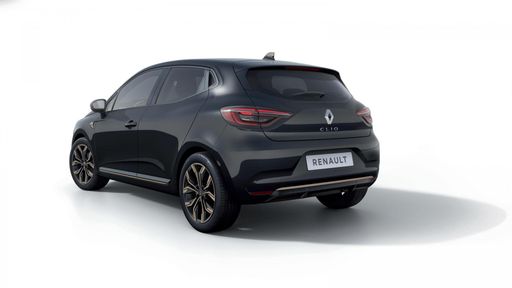
Renault Clio

  • Engine Type : Petrol, Full Hybrid
  • Transmission : Manuel, Automatic
  • Drive Type : Front-Wheel Drive
  • Power HP : 115 - 158 HP
  • Consumption L/100km : 4.1 - 5.2 L/100km
Renault Clio
Honda Jazz

Costs and Consumption

View detailed analysis

Engine and Performance

View detailed analysis

Dimensions and Body

View detailed analysis

Renault Clio

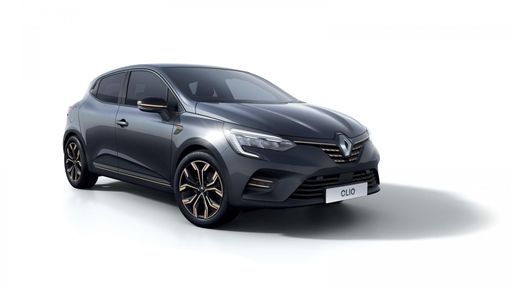
The Renault Clio is a smartly styled and practical compact hatch that feels at home in city traffic while offering a surprisingly refined ride. It pairs user-friendly tech and a comfortable interior with a reputation for being economical and easy to live with.

details

Honda Jazz

The Honda Jazz is a supremely practical small hatch that hides clever packaging and more usable space than it lets on, with friendly styling and an unfussy charm. It’s economical to run, easy to park and perfect for buyers who want reliable, versatile daily motoring without the hassle.

details
Renault Clio
Honda Jazz

Costs and Consumption

Price
17,100 - 23,700 £
Price
23,100 - 26,700 £
Consumption L/100km
4.1 - 5.2 L/100km
Consumption L/100km
4.5 - 4.8 L/100km
Consumption kWh/100km
-
Consumption kWh/100km
-
Electric Range
-
Electric Range
-
Battery Capacity
-
Battery Capacity
-
co2
92 - 118 g/km
co2
102 - 108 g/km
Fuel tank capacity
-
Fuel tank capacity
-

Dimensions and Body

Body Type
Hatchback
Body Type
Hatchback
Seats
5
Seats
5
Doors
-
Doors
-
Curb weight
1,202 - 1,316 kg
Curb weight
1,302 - 1,321 kg
Trunk capacity
301 - 327 L
Trunk capacity
304 L
Length
-
Length
-
Width
1,768 mm
Width
-
Height
-
Height
-
Max trunk capacity
-
Max trunk capacity
-
Payload
453 - 463 kg
Payload
369 - 388 kg

Engine and Performance

Engine Type
Petrol, Full Hybrid
Engine Type
Full Hybrid
Transmission
Manuel, Automatic
Transmission
Automatic
Transmission Detail
Manual Gearbox, Dual-Clutch Automatic, Automatic Gearbox
Transmission Detail
CVT
Drive Type
Front-Wheel Drive
Drive Type
Front-Wheel Drive
Power HP
115 - 158 HP
Power HP
122 HP
Acceleration 0-100km/h
8.3 - 10.3 s
Acceleration 0-100km/h
9.4 - 9.7 s
Max Speed
-
Max Speed
-
Torque
190 Nm
Torque
253 Nm
Number of Cylinders
3 - 4
Number of Cylinders
4
Power kW
84 - 116 kW
Power kW
90 kW
Engine capacity
1,199 - 1,789 cm3
Engine capacity
1,498 cm3

General

Model Year
2026
Model Year
2025
CO2 Efficiency Class
C, D, B
CO2 Efficiency Class
C
Brand
Renault
Brand
Honda
DriveDuel uses data analysis and artificial intelligence to evaluate vehicle data and create content. Content is regularly reviewed and improved. The displayed prices are estimates based on German list prices, adjusted to the respective country’s VAT. Country-specific registration taxes are not included. This information is not legally binding.