VS

Renault Clio vs Peugeot 308 comparison

Compare performance (158 HP vs 195 HP), boot space and price (17,100 £ vs 29,200 £ ) at a glance. Find out which car is the better choice for you – Renault Clio or Peugeot 308?

Renault Clio vs Peugeot 308: Key differences

Renault Clio

4.7 (1 Reviews)
rate
  • clearly cheaper
  • visibly lighter

Peugeot 308

5 (1 Reviews)
rate
  • somewhat more power
  • significantly more efficient
  • very slightly quicker 0–100 km/h
  • noticeably more trunk space

All details on performance, efficiency, range and trunk space can be found in the technical comparison below – including user reviews for both models.

By Achim Sedelmaier

Clio

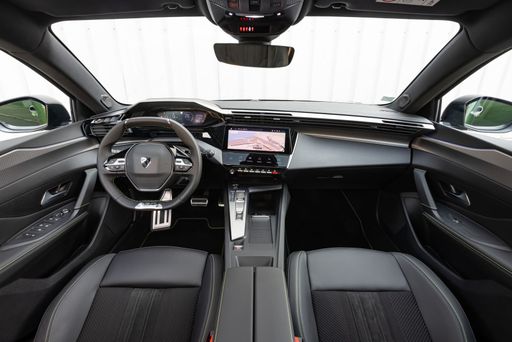
The French Duel: Peugeot 308 vs Renault Clio

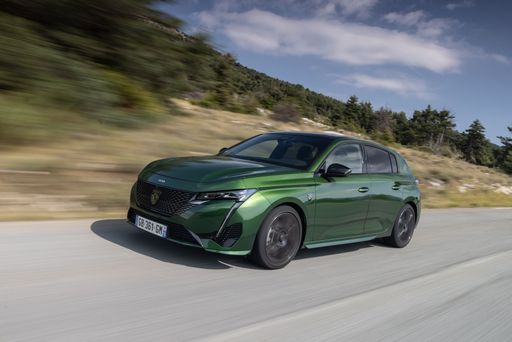
The French automotive scene has always offered a rich tapestry of style, performance, and engineering prowess. At the heart of this tapestry are two standout hatchbacks: the Peugeot 308 and the Renault Clio. Both models for 2023 and 2024 have seen exciting updates. Let's dive into the technical aspects and innovations each brings to the table.

308

Engine and Performance

The Peugeot 308 offers a diverse range of engine types, including Petrol, Diesel, Mild Hybrid Electric Vehicle (MHEV), Plugin Hybrid, and Electric. This variety caters to a wide audience with different needs. For petrol enthusiasts, you can choose from a power range of 130 HP to 156 HP, delivering a robust performance. The plugin hybrid and electric versions come with power ratings of 180 HP and 225 HP, respectively, alongside impressive electric ranges, ideal for eco-conscious buyers.

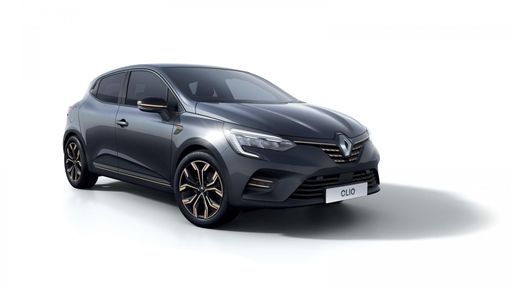
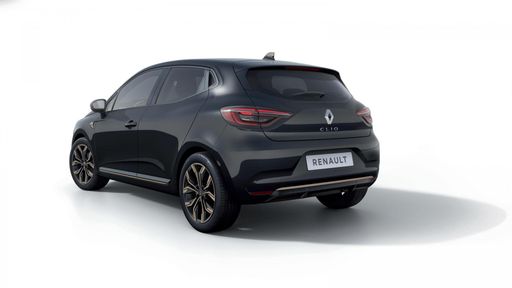
On the other hand, the Renault Clio is no slouch. It's available with Petrol, LPG, and Full Hybrid engines. The Full Hybrid engine delivers 143 HP with excellent fuel efficiency, boasting a consumption rate of 4.3 L/100km. While petrol variants peak at 100 HP, they still maintain good efficiency with a CO2 rating as low as 97 g/km, making the Clio a sensible choice for city dwellers.


Clio

Transmission and Drive

Both the 308 and the Clio come equipped with manual and automatic transmissions. The 308 adds a touch of sophistication with dual-clutch automatic and reduction gearbox options, lending a smooth drive experience. It's paired with a front-wheel-drive system which, like the Renault Clio, provides stability and efficient handling on various road types.

The Renault Clio, while offering fewer transmission choices, focuses on delivering an intuitive drive with its CVT and automatic gearbox options. These systems are crafted to enhance the dynamic feel of urban driving.

308

Efficiency and Economy

The Peugeot 308 shines with its variety in consumption metrics. Depending on the engine type, it showcases consumption figures such as 5.1 L/100km for hybrid variants and a remarkable 15.6 kWh/100km for the electric model. The 57 km electric-only range on the hybrid is perfect for daily errands.

In terms of fuel economy, the Clio's standout feature is its hybrid's substantial economy, achieving a consumption rate of 4.3 L/100km. The Clio remains competitive with petrol options ranging from 5.3 to 7 L/100km, striking a balance between performance and cost-effectiveness.

Clio

Dimensions and Practicality

Space is a key consideration for hatchback buyers. The Peugeot 308 measures 4367 mm in length and provides a generous trunk capacity of 412 liters, ideal for family trips and longer journeys. The car also offers a payload ranging up to 510 kg, accommodating a wide array of needs.

The more compact Renault Clio measures 4053 mm in length but impresses with an efficient trunk capacity of 391 liters. While smaller, it's perfectly suited for city living and tight parking spaces, offering a practical payload of up to 406 kg.

308

Conclusion: Versatility vs. Compact Efficiency

Choosing between the Peugeot 308 and the Renault Clio largely depends on your priorities. The 308 offers a broad spectrum of engine options and better power for those desiring versatility and dynamic performance. Meanwhile, the Renault Clio stands as an exemplar of compact efficiency, particularly appealing to urban lifestyles with its smart use of space and fuel economy.

Both vehicles showcase the best of French automotive engineering, promising drivers comfort, technology, and reliability in their respective ways. Whether you lean towards the power and luxury of the Peugeot 308 or the practical, urban charm of the Renault Clio, both are sure to deliver a noteworthy driving experience.

Here’s where it gets real: The technical differences in detail

Clio

Costs and Efficiency:

When it comes to price and running costs, the biggest differences usually appear. This is often where you see which car fits your budget better in the long run.

Renault Clio is clearly cheaper – starting at 17,100 £ , while the Peugeot 308 costs 29,200 £ . That’s a price difference of around 12,180 £.

Fuel consumption also shows a difference: the Peugeot 308 uses 2.3 L/100km and is significantly more efficient than the Renault Clio with 4.1 L/100km. The difference is about 1.8 L/100km.

308

Engine and Performance:

Under the bonnet, it becomes clear which model is tuned for sportiness and which one takes the lead when you hit the accelerator.

When it comes to engine power, the Peugeot 308 offers somewhat more power – delivering 195 HP compared to 158 HP. That’s roughly 37 HP more horsepower.

When accelerating from 0 to 100 km/h, the Peugeot 308 is very slightly quicker – completing the sprint in 7.6 s, while the Renault Clio takes 8.3 s. That’s about 0.7 s quicker.

Looking at top speed, the Peugeot 308 is slightly faster – reaching 225 km/h, while the Renault Clio tops out at 180 km/h. The difference is around 45 km/h.

There’s also a difference in torque: the Peugeot 308 delivers visibly more torque with 300 Nm compared to 190 Nm. That’s about 110 Nm more.

Clio

Space and Everyday Use:

Beyond pure performance, interior space and usability matter most in daily life. This is where you see which car is more practical and versatile.

Both vehicles offer seating for 5 people.

In terms of curb weight, Renault Clio is visibly lighter – 1,202 kg compared to 1,453 kg. The difference is around 251 kg.

Looking at boot space, the Peugeot 308 offers noticeably more boot space – 412 L compared to 327 L. That’s a difference of about 85 L.

For maximum load capacity, the Peugeot 308 offers somewhat more capacity – up to 1,323 L, about 147 L more than the Renault Clio.

When it comes to payload, the Peugeot 308 carries marginally more – 503 kg compared to 463 kg. That’s a difference of about 40 kg.

Who wins the race in the data check?

The Peugeot 308 is clearly superior overall in the objective data comparison.
This result only shows which model scores more points on paper – not which of the two cars feels right for you.

from £29,200
308

Peugeot 308

  • Engine Type : Petrol MHEV, Diesel, Plugin Hybrid, Electric
  • Transmission : Automatic
  • Drive Type : Front-Wheel Drive
  • Power HP : 131 - 195 HP
  • Consumption L/100km : 2.3 - 5.1 L/100km
  • Consumption kWh/100km : 15.6 kWh/100km
  • Electric Range : 78 - 450 km
Renault Clio
Peugeot 308

Costs and Consumption

View detailed analysis

Engine and Performance

View detailed analysis

Dimensions and Body

View detailed analysis

Renault Clio

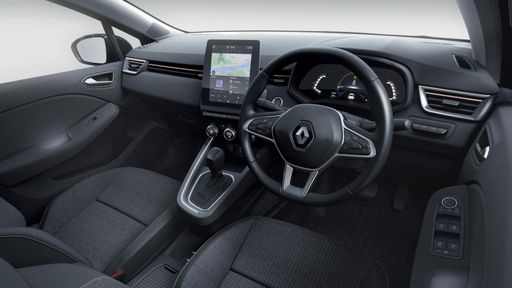
The Clio punches above its weight with chic French styling and a surprisingly grown-up cabin that makes city driving feel effortlessly stylish. It's an easy-to-live-with choice that keeps ownership simple and even manages to put a grin on your face when the traffic gets dull.

details

Peugeot 308

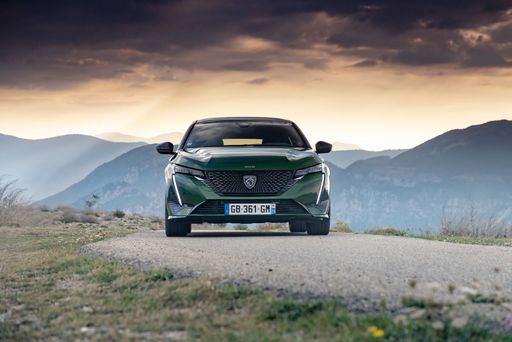
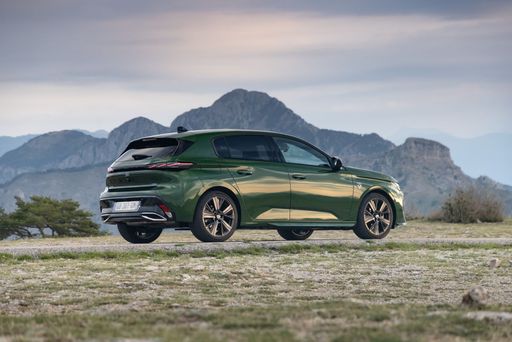
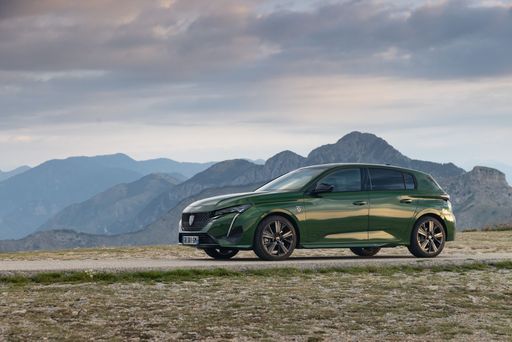
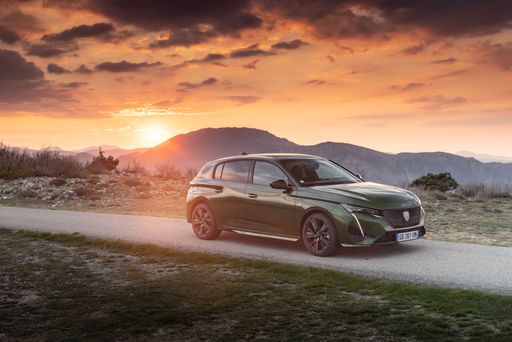
The Peugeot 308 brings a sleek, feline profile and an unexpectedly upscale cabin, with clever packaging and materials that feel a touch more premium than you might expect. It’s composed on the road, easy to live with for daily life, and a smart choice if you want a stylish hatch that still behaves when the road gets interesting.

details
Renault Clio
Peugeot 308

Costs and Consumption

Price
17,100 - 23,700 £
Price
29,200 - 42,600 £
Consumption L/100km
4.1 - 5.1 L/100km
Consumption L/100km
2.3 - 5.1 L/100km
Consumption kWh/100km
-
Consumption kWh/100km
15.6 kWh/100km
Electric Range
-
Electric Range
78 - 450 km
Battery Capacity
-
Battery Capacity
0.4 kWh
co2
92 - 115 g/km
co2
0 - 133 g/km
Fuel tank capacity
39 - 42 L
Fuel tank capacity
42 - 52 L

Dimensions and Body

Body Type
Hatchback
Body Type
Hatchback
Seats
5
Seats
5
Doors
5
Doors
5
Curb weight
1,202 - 1,316 kg
Curb weight
1,453 - 1,749 kg
Trunk capacity
301 - 327 L
Trunk capacity
314 - 412 L
Length
4,116 mm
Length
4,367 mm
Width
1,768 mm
Width
1,852 mm
Height
1,451 mm
Height
1,438 mm
Max trunk capacity
1,094 - 1,176 L
Max trunk capacity
1,258 - 1,323 L
Payload
453 - 463 kg
Payload
430 - 503 kg

Engine and Performance

Engine Type
Petrol, Full Hybrid
Engine Type
Petrol MHEV, Diesel, Plugin Hybrid, Electric
Transmission
Manuel, Automatic
Transmission
Automatic
Transmission Detail
Manual Gearbox, Dual-Clutch Automatic, Automatic Gearbox
Transmission Detail
Dual-Clutch Automatic, Automatic Gearbox, Reduction Gearbox
Drive Type
Front-Wheel Drive
Drive Type
Front-Wheel Drive
Power HP
115 - 158 HP
Power HP
131 - 195 HP
Acceleration 0-100km/h
8.3 - 10.1 s
Acceleration 0-100km/h
7.6 - 10.6 s
Max Speed
180 km/h
Max Speed
170 - 225 km/h
Torque
190 Nm
Torque
230 - 300 Nm
Number of Cylinders
3 - 4
Number of Cylinders
3 - 4
Power kW
84 - 116 kW
Power kW
96 - 144 kW
Engine capacity
1,199 - 1,789 cm3
Engine capacity
1,199 - 1,598 cm3

General

Model Year
2,026
Model Year
2,025 - 2,026
CO2 Efficiency Class
C, B
CO2 Efficiency Class
C, D, B, A
Brand
Renault
Brand
Peugeot
DriveDuel uses data analysis and artificial intelligence to evaluate vehicle data and create content. Content is regularly reviewed and improved. The displayed prices are estimates based on German list prices, adjusted to the respective country’s VAT. Country-specific registration taxes are not included. This information is not legally binding.