VS

Renault Master Transporter vs Ford Transit Transporter comparison

Compare performance (170 HP vs 269 HP), boot space and price (38,600 £ vs 67,300 £ ) at a glance. Find out which car is the better choice for you – Renault Master Transporter or Ford Transit Transporter?

Renault Master Transporter vs Ford Transit Transporter: Key differences

Renault Master Transporter

  • considerably cheaper
  • a bit more electric range
details

Ford Transit Transporter

  • noticeably more power
details

By Achim Sedelmaier

Master Transporter

Battle of the Vans: Ford Transit vs. Renault Master

In the bustling world of cargo vans, the Ford Transit and Renault Master are titans, each bringing their unique blend of engineering and innovation to the table. As the debate rages on over which transporter reigns supreme, let's delve into the technical aspects and recent innovations of these two impressive vehicles.

Transit Transporter

Under the Hood: Engines and Performance

The Ford Transit offers a versatile engine lineup, featuring both diesel and electric options. With horsepower ranging from 105 to 269, the Transit is equipped to handle various demands. The diesel engines come with either a manual or automatic gearbox, while the electric variant boasts a reduction gearbox. For the eco-conscious, the Transit’s electric range reaches up to 317 km, powered by a 68 kWh battery. Torque is a strong point for Transit, offering between 310 and 430 Nm across its range.

Not to be outdone, the Renault Master matches the Transit with its own versatile engine choices. It offers diesel engines delivering between 105 and 180 HP, alongside an all-electric option. The Master’s top electric range hits 409 km, setting a high bar in the segment. Transmission options include both manual and automated manual gearboxes, providing a smooth driving experience. Torque stands robust as well, ranging from 245 to 400 Nm.


Fuel Efficiency and Eco-Friendliness

For fuel consumption, the Ford Transit offers competitive figures, with diesel variants consuming between 7.9 to 10.3 L/100km and electric consumption ranging from 21.3 to 32 kWh/100km. The Transit further offers an eco-friendly edge with its CO2 efficiency class ranging from A to G, reflecting its commitment to lower emissions.

The Renault Master shows its strengths in fuel efficiency as well. Diesel options have a consumption of 7.4 to 13.7 L/100km, and its electric variant ranges from 25.1 to 31 kWh/100km. Its CO2 efficiency classifications vary but include top scores, emphasizing Renault's push towards sustainability.

Dimensions and Capacity: Space Matters

The Ford Transit measures a range of lengths from 5531 mm to 6704 mm, a width of 2059 mm, and height variations between 2530 mm and 2778 mm. This provides ample room for cargo and passengers, especially with payload capacities hitting up to 2607 kg.

The Renault Master slightly edges out in dimensions, boasting lengths from 5075 mm to 6875 mm. Its width spans up to 2080 mm with heights reaching 2808 mm. The Master supports substantial payloads as well, offering capacities exceeding 2000 kg in select models.

Innovation and Modern Features

Both vehicles integrate innovations that advance comfort and utility for drivers and passengers. The Ford Transit comes with numerous seating configurations, offering 3 to 6 seats, tailored for varied business needs. The introduction of an all-wheel drive variant adds an extra level of adaptability on challenging road surfaces.

The Renault Master capitalizes on its spacious design, supporting configurations with up to 7 seats. Its modern touch includes advancements in automated manual transmissions and impressive acceleration metrics within its electric models, showcasing versatility.

The Verdict

Choosing between the Ford Transit and Renault Master depends largely on specific needs, whether it's maximum cargo space, superior electric range, or engine power. The Transit shines with its versatile configurations and robust eco-friendly technology, while the Master excels in range and spacious designs. Both models deliver innovations that keep them competitive in the ever-evolving transporter market, promising reliability, efficiency, and performance.

Here’s where it gets real: The technical differences in detail

Master Transporter

Costs and Efficiency:

Price and efficiency are often the first things buyers look at. Here it becomes clear which model has the long-term edge – whether at the pump, the plug, or in purchase price.

Renault Master Transporter is considerably cheaper – starting at 38,600 £ , while the Ford Transit Transporter costs 67,300 £ . That’s a price difference of around 28,662 £.

As for electric range, the Renault Master Transporter offers a bit more range – reaching up to 448 km, about 46 km more than the Ford Transit Transporter.

Transit Transporter

Engine and Performance:

Under the bonnet, it becomes clear which model is tuned for sportiness and which one takes the lead when you hit the accelerator.

When it comes to engine power, the Ford Transit Transporter offers noticeably more power – delivering 269 HP compared to 170 HP. That’s roughly 99 HP more horsepower.

There’s also a difference in torque: the Ford Transit Transporter delivers a bit more torque with 430 Nm compared to 380 Nm. That’s about 50 Nm more.

Space and Everyday Use:

Whether family car or daily driver – which one offers more room, flexibility and comfort?

Both vehicles offer seating for 6 people.

Who wins the race in the data check?

The Ford Transit Transporter is narrowly ahead in the objective data comparison.
This result only shows which model scores more points on paper – not which of the two cars feels right for you.

from £67,300
Transit Transporter

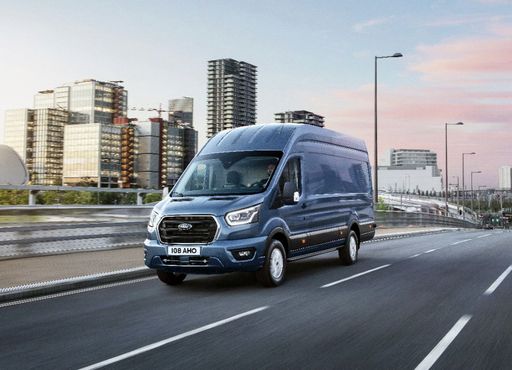
Ford Transit Transporter

  • Engine Type : Electric
  • Transmission : Automatic
  • Drive Type : Rear-Wheel Drive
  • Power HP : 184 - 269 HP
  • Electric Range : 341 - 402 km
Renault Master Transporter
Ford Transit Transporter

Costs and Consumption

View detailed analysis

Engine and Performance

View detailed analysis

Dimensions and Body

View detailed analysis

Renault Master Transporter

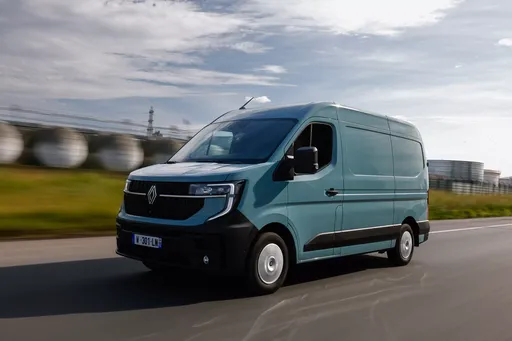
The Renault Master is a pragmatic workhorse that swallows cargo with an unbothered grin, offering clever practicality and load-friendly packaging for tradespeople and fleet buyers. It won’t excite like a sports car, but it steers predictably, runs economically and gets the job done day after day — like a reliable colleague who never calls in sick.

details

Ford Transit Transporter

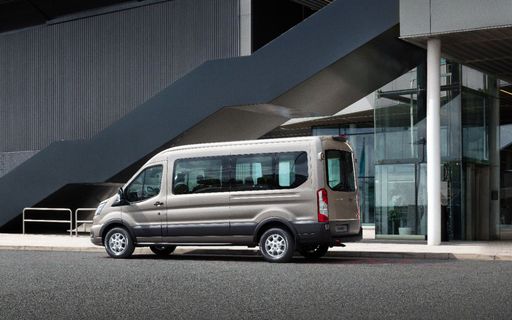
The Ford Transit is the no-nonsense workhorse that turns heavy-duty hauling into a surprisingly civilized experience, with a cabin that favors practicality over pretense. It’s the go-to for tradespeople and fleet managers who want reliability, adaptability and low running headaches — not showy gimmicks.

details
Renault Master Transporter
Ford Transit Transporter

Costs and Consumption

Price
38,600 - 55,400 £
Price
67,300 - 73,000 £
Consumption L/100km
6.8 - 7.7 L/100km
Consumption L/100km
-
Consumption kWh/100km
22.7 - 22.9 kWh/100km
Consumption kWh/100km
-
Electric Range
445 - 448 km
Electric Range
341 - 402 km
Battery Capacity
-
Battery Capacity
-
co2
0 - 203 g/km
co2
0 g/km
Fuel tank capacity
-
Fuel tank capacity
-

Dimensions and Body

Body Type
Cargo Van
Body Type
Cargo Van
Seats
3 - 6
Seats
3 - 6
Doors
-
Doors
-
Curb weight
2,128 - 2,461 kg
Curb weight
-
Trunk capacity
-
Trunk capacity
-
Length
-
Length
-
Width
2,080 mm
Width
2,059 mm
Height
-
Height
-
Max trunk capacity
-
Max trunk capacity
-
Payload
1,078 - 1,846 kg
Payload
-

Engine and Performance

Engine Type
Diesel, Electric
Engine Type
Electric
Transmission
Manuel, Automatic
Transmission
Automatic
Transmission Detail
Manual Gearbox, Automatic Gearbox, Reduction Gearbox
Transmission Detail
Reduction Gearbox
Drive Type
Front-Wheel Drive
Drive Type
Rear-Wheel Drive
Power HP
130 - 170 HP
Power HP
184 - 269 HP
Acceleration 0-100km/h
-
Acceleration 0-100km/h
-
Max Speed
-
Max Speed
-
Torque
300 - 380 Nm
Torque
430 Nm
Number of Cylinders
4
Number of Cylinders
-
Power kW
96 - 125 kW
Power kW
135 - 198 kW
Engine capacity
1,997 cm3
Engine capacity
-

General

Model Year
2025
Model Year
2024
CO2 Efficiency Class
G, A
CO2 Efficiency Class
A
Brand
Renault
Brand
Ford
DriveDuel uses data analysis and artificial intelligence to evaluate vehicle data and create content. Content is regularly reviewed and improved. The displayed prices are estimates based on German list prices, adjusted to the respective country’s VAT. Country-specific registration taxes are not included. This information is not legally binding.