
VS

Renault Master Transporter vs Peugeot Boxer comparison

Compare performance (170 HP vs 279 HP), boot space and price (38,600 £ vs 35,500 £ ) at a glance. Find out which car is the better choice for you – Renault Master Transporter or Peugeot Boxer?

Renault Master Transporter vs Peugeot Boxer: Key differences

Renault Master Transporter

  • slightly more efficient
  • somewhat more efficient
  • marginally more electric range
details

Peugeot Boxer

  • marginally cheaper
  • clearly more power
  • barely lighter
details

By Achim Sedelmaier

Master Transporter

Peugeot Boxer vs Renault Master Transporter: A Comprehensive Comparison

In the competitive world of commercial vehicles, the Peugeot Boxer and Renault Master Transporter stand out as two of the most reliable options for businesses requiring versatility, efficiency, and robust performance. This article delves into their noteworthy features, technical specifications, innovations, and what sets them apart in the transportation segment.
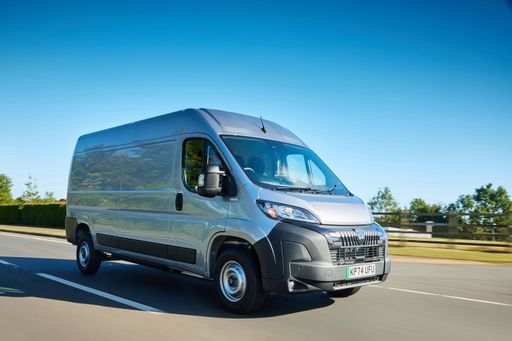
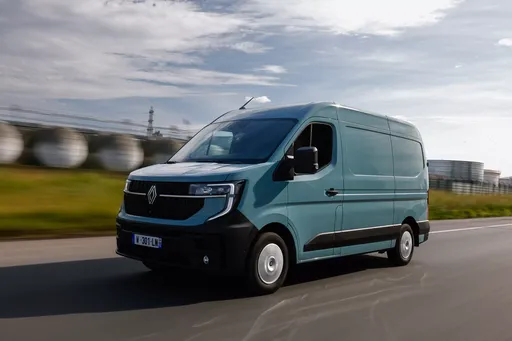
Boxer

Engine Performance and Fuel Efficiency

The Peugeot Boxer offers a range of diesel engine options that deliver power outputs of 120, 140, 165, and 136 HP, while the electric variant gives a silent and clean operation with ranges of up to 247 km. The Boxer has a maximum torque ranging from 260 to 370 Nm, making it an excellent choice for heavy loads. Fuel consumption figures range from 7.9 to 8.9 L/100km for diesel engines, ensuring cost-efficiency over long distances.

On the other hand, the Renault Master also boasts a robust lineup of diesel engines producing between 76 and 180 HP. This offers businesses a flexible choice depending on their specific load requirements and operating conditions. Torque figures peak at 400 Nm, enhancing its capability when dealing with heavier payloads. The Master outshines in fuel efficiency with consumption rates as low as 7.4 L/100km, alongside electric variants that achieve a range of 409 km.

Transmission and Drive Options

The Boxer comes with multiple transmission options including manual and automatic gearboxes, thus catering to different driving preferences. Its front-wheel-drive layout contributes to better traction and handling, particularly under loaded conditions.

The Renault Master, however, provides a more diversified experience, offering both front-wheel and rear-wheel drive configurations. This flexibility helps maximize its load handling and enhances stability, especially when transporting heavier goods. The Master utilizes manual and automated manual transmissions for improved driving convenience.

Dimensions and Payload Capacity

When it comes to cargo dimensions, both vehicles are designed to optimize space. The Peugeot Boxer has a maximum length of 6363 mm, offering an impressive payload capacity that ranges up to 1835 kg. With a variety of body types and sizes, it can adapt to numerous commercial uses.

Conversely, the Renault Master provides a larger footprint, measuring up to 6875 mm in length. Its payload capacity can reach as much as 2073 kg, making it better suited for transporting heavier or bulkier items. This aspect can be a significant deciding factor for businesses focused on maximum load potential.

Technological Innovations

In terms of technology, the Peugeot Boxer integrates several advanced driver-assistance systems to enhance safety and ergonomics, including lane departure warning, parking sensors, and a connected infotainment system that keeps drivers informed and connected.

Renault also emphasizes innovation with the Master, incorporating a highly intuitive digital dashboard that provides relevant driving information at a glance. The vehicle features advanced connectivity options and certain models equipped with a full suite of driver assistance technologies aimed at minimizing accident risks and improving overall driving efficiency.

Conclusion: Which is the Right Van for You?

Choosing between the Peugeot Boxer and Renault Master Transporter ultimately hinges on your specific requirements. If you prioritize rear-wheel drive capabilities and a larger cargo space with competitive fuel efficiency, the Renault Master is likely your best bet. However, if you need a lighter and more agile van with commendable electric options, the Peugeot Boxer would be the ideal choice.

Both vans deliver impressive performance and versatility, showcasing the best of modern commercial vehicle engineering. Your decision should be guided by your operational needs, load requirements, and personal preference in driving dynamics.

Here’s where it gets real: The technical differences in detail

Master Transporter

Costs and Efficiency:

Looking at overall running costs, both models reveal some interesting differences in everyday economy.

Peugeot Boxer is marginally cheaper – starting at 35,500 £ , while the Renault Master Transporter costs 38,600 £ . That’s a price difference of around 3,100 £.

Fuel consumption also shows a difference: the Renault Master Transporter uses 6.8 L/100km and is slightly more efficient than the Peugeot Boxer with 7.5 L/100km. The difference is about 0.7 L/100km.

In terms of energy consumption, the Renault Master Transporter is somewhat more efficient: consuming 22.7 kWh/100km compared to 26.2 kWh/100km for the Peugeot Boxer. That’s a difference of about 3.5 kWh/100km.

As for electric range, the Renault Master Transporter offers marginally more range – reaching up to 448 km, about 24 km more than the Peugeot Boxer.

Boxer

Engine and Performance:

Power, torque and acceleration are the classic benchmarks for car enthusiasts – and here, some clear differences start to show.

When it comes to engine power, the Peugeot Boxer offers clearly more power – delivering 279 HP compared to 170 HP. That’s roughly 109 HP more horsepower.

There’s also a difference in torque: the Peugeot Boxer delivers slightly more torque with 450 Nm compared to 380 Nm. That’s about 70 Nm more.

Space and Everyday Use:

Whether family car or daily driver – which one offers more room, flexibility and comfort?

Seats: Peugeot Boxer offers more seats – 7 vs 6.

In terms of curb weight, Peugeot Boxer is barely lighter – 2,075 kg compared to 2,128 kg. The difference is around 53 kg.

When it comes to payload, the Peugeot Boxer carries slightly more – 2,080 kg compared to 1,846 kg. That’s a difference of about 234 kg.

Who wins the race in the data check?

The Peugeot Boxer holds a decisive overall lead in the objective data comparison.
This result only shows which model scores more points on paper – not which of the two cars feels right for you.

from £35,500
Boxer

Peugeot Boxer

  • Engine Type : Diesel, Electric
  • Transmission : Manuel, Automatic
  • Drive Type : Front-Wheel Drive
  • Power HP : 120 - 279 HP
  • Consumption L/100km : 7.5 - 9 L/100km
  • Consumption kWh/100km : 26.2 kWh/100km
  • Electric Range : 424 km
Renault Master Transporter
Peugeot Boxer

Costs and Consumption

View detailed analysis

Engine and Performance

View detailed analysis

Dimensions and Body

View detailed analysis

Renault Master Transporter

The Renault Master is a pragmatic workhorse that swallows cargo with an unbothered grin, offering clever practicality and load-friendly packaging for tradespeople and fleet buyers. It won’t excite like a sports car, but it steers predictably, runs economically and gets the job done day after day — like a reliable colleague who never calls in sick.

details

Peugeot Boxer

The Peugeot Boxer wears its workmanlike practicality with a surprising amount of style, offering an interior that’s easy to live with for tradespeople and small businesses. It’s a sensible, no-nonsense choice if you need reliable load space and low running costs, with clever details that make daily life easier and an exterior that won’t embarrass when you arrive on site.

details
Renault Master Transporter
Peugeot Boxer

Costs and Consumption

Price
38,600 - 55,400 £
Price
35,500 - 57,800 £
Consumption L/100km
6.8 - 7.7 L/100km
Consumption L/100km
7.5 - 9 L/100km
Consumption kWh/100km
22.7 - 22.9 kWh/100km
Consumption kWh/100km
26.2 kWh/100km
Electric Range
445 - 448 km
Electric Range
424 km
Battery Capacity
-
Battery Capacity
-
co2
0 - 203 g/km
co2
0 - 233 g/km
Fuel tank capacity
-
Fuel tank capacity
-

Dimensions and Body

Body Type
Cargo Van
Body Type
Cargo Van
Seats
3 - 6
Seats
3 - 7
Doors
-
Doors
-
Curb weight
2,128 - 2,461 kg
Curb weight
2,075 - 2,940 kg
Trunk capacity
-
Trunk capacity
-
Length
-
Length
-
Width
2,080 mm
Width
2,050 mm
Height
-
Height
-
Max trunk capacity
-
Max trunk capacity
-
Payload
1,078 - 1,846 kg
Payload
560 - 2,080 kg

Engine and Performance

Engine Type
Diesel, Electric
Engine Type
Diesel, Electric
Transmission
Manuel, Automatic
Transmission
Manuel, Automatic
Transmission Detail
Manual Gearbox, Automatic Gearbox, Reduction Gearbox
Transmission Detail
Manual Gearbox, Automatic Gearbox, Reduction Gearbox
Drive Type
Front-Wheel Drive
Drive Type
Front-Wheel Drive
Power HP
130 - 170 HP
Power HP
120 - 279 HP
Acceleration 0-100km/h
-
Acceleration 0-100km/h
-
Max Speed
-
Max Speed
-
Torque
300 - 380 Nm
Torque
320 - 450 Nm
Number of Cylinders
4
Number of Cylinders
4
Power kW
96 - 125 kW
Power kW
88 - 205 kW
Engine capacity
1,997 cm3
Engine capacity
2,184 cm3

General

Model Year
2025
Model Year
2,024 - 2,025
CO2 Efficiency Class
G, A
CO2 Efficiency Class
G, A
Brand
Renault
Brand
Peugeot
DriveDuel uses data analysis and artificial intelligence to evaluate vehicle data and create content. Content is regularly reviewed and improved. The displayed prices are estimates based on German list prices, adjusted to the respective country’s VAT. Country-specific registration taxes are not included. This information is not legally binding.








