VS

Renault Mégane vs Kia EV3 comparison

Compare performance (218 HP vs 204 HP), boot space and price (35,100 £ vs 30,800 £ ) at a glance. Find out which car is the better choice for you – Renault Mégane or Kia EV3?

Renault Mégane vs Kia EV3: Key differences

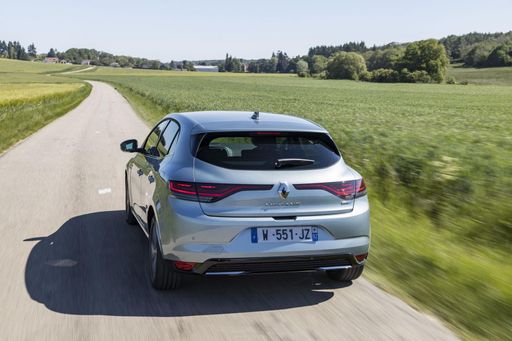
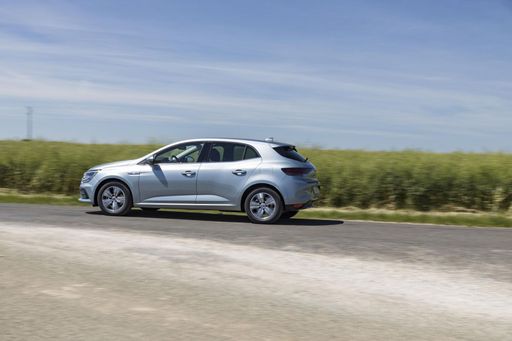
Renault Mégane

  • very slightly more power
  • very slightly quicker 0–100 km/h
  • barely lighter
details

Kia EV3

4.7 (3 Reviews)
rate
  • slightly cheaper
  • marginally more efficient
  • clearly more electric range
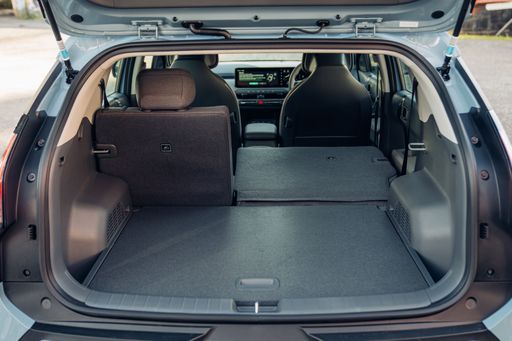
  • slightly more trunk space
details

All details on performance, efficiency, range and trunk space can be found in the technical comparison below – including user reviews for both models.

By Achim Sedelmaier

Mégane

The rise of electric vehicles has ushered in a new era where drivers are not only becoming eco-conscious but also tech-savvy. The Kia EV3 and Renault Mégane have emerged as standout options in the electric SUV segment for 2024. As automakers hone their electrification strategies, we delve into a detailed comparison between these two electric SUVs, focusing on their specifications, innovations, and overall appeal.
EV3

Power and Performance

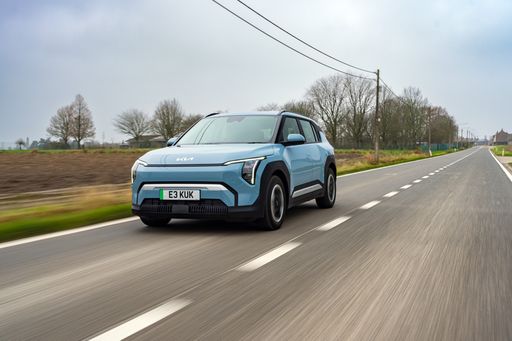
The Kia EV3 boasts a powerful range of configurations with a maximum output of up to 204 HP and torque of 283 Nm. This allows the EV3 to accelerate from 0-100 km/h in a brisk 7.5 seconds, indicating an engaging driving experience. The EV3's electric range is notable too, offering between 436 km to an impressive 605 km, depending on the chosen battery pack—58.3 kWh or 81.4 kWh.

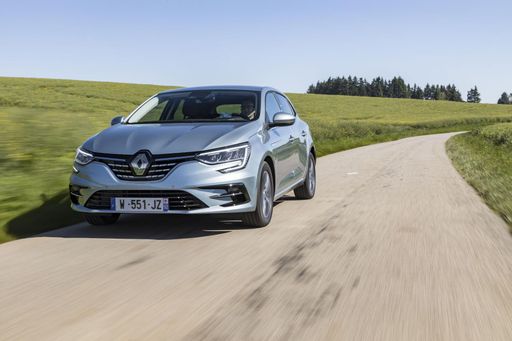
In comparison, the Renault Mégane, while slightly less powerful at its maximum output of 218 HP, also provides robust performance with torque peaking at 300 Nm. The Mégane can accelerate from 0-100 km/h in just 7.4 seconds, showcasing its sporty disposition. However, its maximum electric range is lower than the EV3, clocking in at around 460 km at its best. Both vehicles utilize an automatic transmission with a reduction gearbox, ensuring smooth power delivery.

Mégane

Efficiency and Battery Technology

When it comes to energy consumption, both vehicles have optimized their power usage to reduce environmental impact. The Kia EV3 has a consumption rate of 14.9 to 16.2 kWh/100 km, while the Renault Mégane ranges from 14.9 to 15.4 kWh/100 km. Despite the slight differences, both models achieve an impressive CO2 efficiency class of A, with zero emissions during operation, placing them firmly in the eco-friendly category of vehicles.

EV3

Size and Comfort

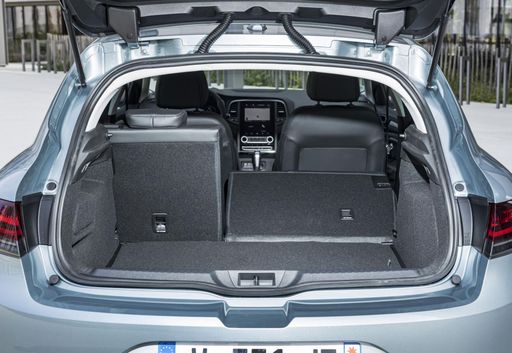
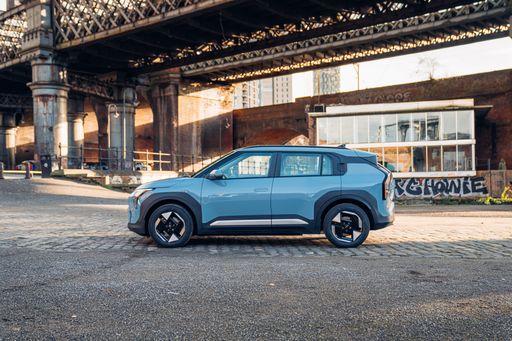
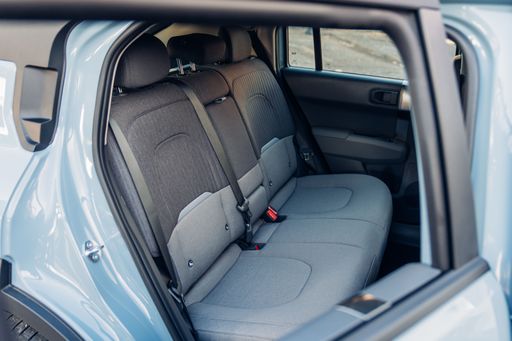
In terms of dimensions, the Kia EV3 is slightly larger, measuring 4300 mm in length, 1850 mm in width, and 1560 mm in height. This translates into more interior space for occupants and cargo alike, as the EV3 offers a trunk capacity of 460 liters. On the other hand, the Renault Mégane, with dimensions of 4200 mm in length and 1768 mm in width, provides a comfortable ride but with a smaller trunk capacity of 389 liters. Both models comfortably seat five adults, making them practical for families.

Mégane

Innovative Features

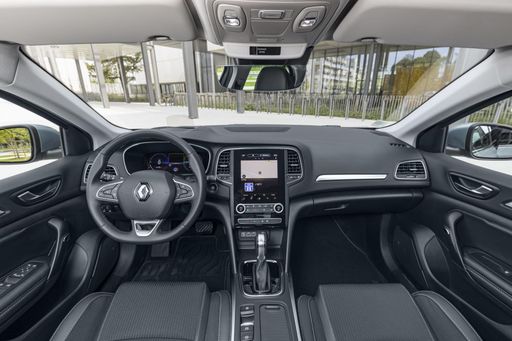
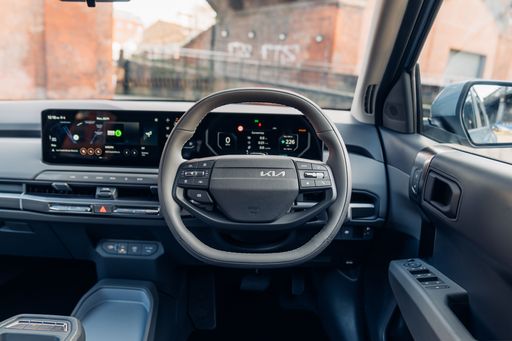
As expected from modern electric SUVs, both vehicles come packed with technology and safety features. The Kia EV3 stands out with its advanced driver-assistance systems, highlighted by a state-of-the-art infotainment system that integrates seamlessly with smartphones. Features like adaptive cruise control, lane-keeping assist, and various driving modes enhance the driving experience.

Renault has also made strides in innovative technology for the Mégane. Alongside similar driver-assistance features, it includes a cutting-edge multimedia system with voice recognition, ensuring ease of use while on the road. The integration of features like wireless charging and a premium sound system makes every journey enjoyable.

EV3

Conclusion: Which SUV Reigns Supreme?

In summary, both the Kia EV3 and Renault Mégane cater to the growing demand for electric SUVs, but they bring their strengths to the table. The Kia EV3 offers superior range, performance, and cargo space, making it a strong contender for those prioritizing practicality. In contrast, the Renault Mégane appeals to those looking for sportier performance and innovative tech features within a slightly smaller package.

Ultimately, the choice between these two models hinges on individual preferences—whether you lean towards Kia's extended range and space or Renault’s sporty dynamism and cutting-edge technology. The electric vehicle revolution is here, and both the Kia EV3 and Renault Mégane stand at the forefront, ready to electrify the roads.

Here’s where it gets real: The technical differences in detail

Mégane

Costs and Efficiency:

Looking at overall running costs, both models reveal some interesting differences in everyday economy.

Kia EV3 is slightly cheaper – starting at 30,800 £ , while the Renault Mégane costs 35,100 £ . That’s a price difference of around 4,209 £.

In terms of energy consumption, the Kia EV3 is marginally more efficient: consuming 14.9 kWh/100km compared to 15.4 kWh/100km for the Renault Mégane. That’s a difference of about 0.5 kWh/100km.

As for electric range, the Kia EV3 offers clearly more range – reaching up to 605 km, about 153 km more than the Renault Mégane.

EV3

Engine and Performance:

Power, torque and acceleration are the classic benchmarks for car enthusiasts – and here, some clear differences start to show.

When it comes to engine power, the Renault Mégane offers very slightly more power – delivering 218 HP compared to 204 HP. That’s roughly 14 HP more horsepower.

When accelerating from 0 to 100 km/h, the Renault Mégane is very slightly quicker – completing the sprint in 7.4 s, while the Kia EV3 takes 7.5 s. That’s about 0.1 s quicker.

Looking at top speed, the Kia EV3 is marginally faster – reaching 170 km/h, while the Renault Mégane tops out at 160 km/h. The difference is around 10 km/h.

There’s also a difference in torque: the Renault Mégane delivers only slightly more torque with 300 Nm compared to 283 Nm. That’s about 17 Nm more.

Mégane

Space and Everyday Use:

Cabin size, boot volume and payload all play a role in everyday practicality. Here, comfort and flexibility make the difference.

Both vehicles offer seating for 5 people.

In terms of curb weight, Renault Mégane is barely lighter – 1,719 kg compared to 1,800 kg. The difference is around 81 kg.

Looking at boot space, the Kia EV3 offers slightly more boot space – 460 L compared to 389 L. That’s a difference of about 71 L.

For maximum load capacity, the Renault Mégane offers marginally more capacity – up to 1,332 L, about 81 L more than the Kia EV3.

When it comes to payload, the Kia EV3 carries marginally more – 470 kg compared to 446 kg. That’s a difference of about 24 kg.

Who wins the race in the data check?

The Kia EV3 comes out modestly ahead in the objective data comparison.
This result only shows which model scores more points on paper – not which of the two cars feels right for you.

from £30,800
EV3

Kia EV3

  • Engine Type : Electric
  • Transmission : Automatic
  • Drive Type : Front-Wheel Drive
  • Power HP : 204 HP
  • Consumption kWh/100km : 14.9 - 16.2 kWh/100km
  • Electric Range : 436 - 605 km
Renault Mégane
Kia EV3

Costs and Consumption

View detailed analysis

Engine and Performance

View detailed analysis

Dimensions and Body

View detailed analysis

Renault Mégane

The Renault Mégane blends Gallic flair with practical everyday charm, showing that sensible transport can still have personality and poise. It’s a smart pick for buyers who want a comfortable, stylish hatchback that feels a little more special than the usual commute companion.

details

Kia EV3

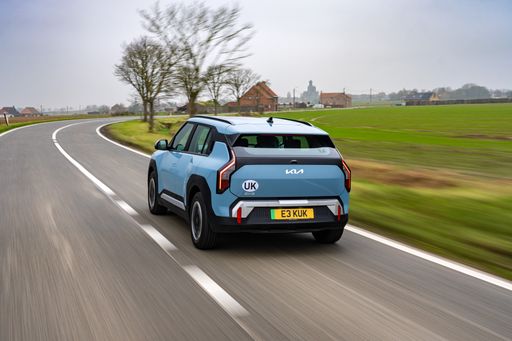
The Kia EV3 arrives as a cheeky, practical electric compact that manages to feel both premium and playful, delivering crisp handling and a roomy cabin that's perfect for urban life. With smart tech, friendly styling and sensible pricing, the EV3 is the kind of car that makes switching to electric feel like a no-brainer without asking you to give anything important up.

details
Renault Mégane
Kia EV3

Costs and Consumption

Price
35,100 - 38,500 £
Price
30,800 - 41,700 £
Consumption L/100km
-
Consumption L/100km
-
Consumption kWh/100km
15.4 kWh/100km
Consumption kWh/100km
14.9 - 16.2 kWh/100km
Electric Range
452 km
Electric Range
436 - 605 km
Battery Capacity
-
Battery Capacity
58.3 - 81.4 kWh
co2
0 g/km
co2
0 g/km
Fuel tank capacity
-
Fuel tank capacity
-

Dimensions and Body

Body Type
SUV
Body Type
SUV
Seats
5
Seats
5
Doors
5
Doors
5
Curb weight
1,719 kg
Curb weight
1,800 - 1,885 kg
Trunk capacity
389 L
Trunk capacity
460 L
Length
4,200 mm
Length
4,300 - 4,310 mm
Width
1,783 mm
Width
1,850 mm
Height
1,505 mm
Height
1,560 - 1,570 mm
Max trunk capacity
1,332 L
Max trunk capacity
1,251 L
Payload
446 kg
Payload
470 kg

Engine and Performance

Engine Type
Electric
Engine Type
Electric
Transmission
Automatic
Transmission
Automatic
Transmission Detail
Reduction Gearbox
Transmission Detail
Reduction Gearbox
Drive Type
Front-Wheel Drive
Drive Type
Front-Wheel Drive
Power HP
218 HP
Power HP
204 HP
Acceleration 0-100km/h
7.4 s
Acceleration 0-100km/h
7.5 - 7.9 s
Max Speed
160 km/h
Max Speed
170 km/h
Torque
300 Nm
Torque
283 Nm
Number of Cylinders
-
Number of Cylinders
-
Power kW
160 kW
Power kW
150 kW
Engine capacity
-
Engine capacity
-

General

Model Year
2025
Model Year
2024
CO2 Efficiency Class
A
CO2 Efficiency Class
A
Brand
Renault
Brand
Kia
DriveDuel uses data analysis and artificial intelligence to evaluate vehicle data and create content. Content is regularly reviewed and improved. The displayed prices are estimates based on German list prices, adjusted to the respective country’s VAT. Country-specific registration taxes are not included. This information is not legally binding.