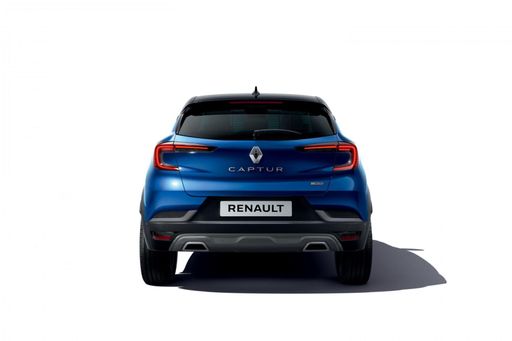
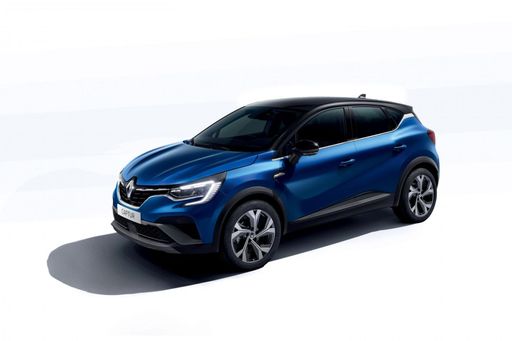
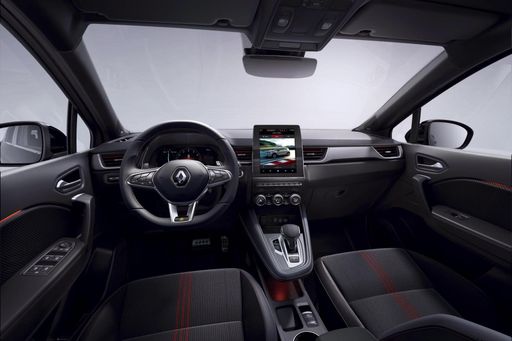
VS

Renault Mégane vs Renault Captur comparison

Compare performance (218 HP vs 158 HP), boot space and price (35,100 £ vs 21,100 £ ) at a glance. Find out which car is the better choice for you – Renault Mégane or Renault Captur?

Renault Mégane vs Renault Captur: Key differences

Renault Mégane

  • markedly more power
  • visibly quicker 0–100 km/h

Renault Captur

4.8 (5 Reviews)
rate
  • substantially cheaper
  • visibly lighter
  • very slightly more trunk space

All details on performance, efficiency, range and trunk space can be found in the technical comparison below – including user reviews for both models.

Mégane

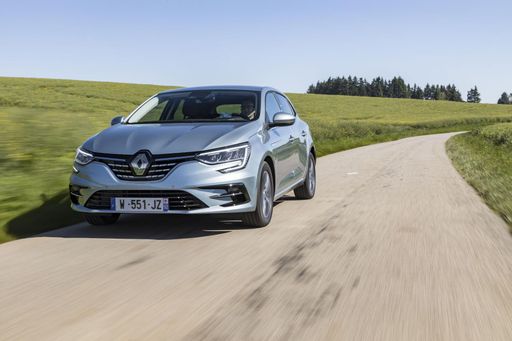
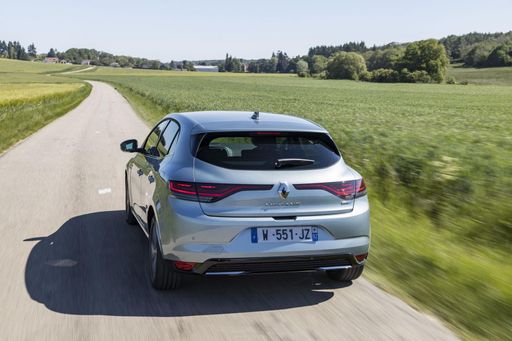
Head-to-head: Renault Captur VS Renault Mégane — crossover meets compact hatch

Renault Captur and Renault Mégane headline a classic household choice: the roomy, high-riding crossover versus the more grounded compact hatchback. This direct comparison is about real-world differences in presence, packaging and on-road manners, not just badges. If you search for clarity on how a city-friendly SUV stacks up against a focussed hatch, this page tells you which car leans practical and which leans poised. Read on for a character-led take before you dive into the spec sheet below.
Captur

Two attitudes on the road: playful versus purposeful

The Renault Captur arrives with a jaunty, higher-riding stance that advertises city confidence and a bit of personality, while the Renault Mégane plays the part of the composed, driver-focused compact that prefers corners to curbs. Feeling and setup are different: the Renault Captur prioritises easy ingress, upright visibility and a forgiving ride, whereas the Renault Mégane feels tighter, more controlled and a touch more deliberate on the move. Design language reflects that divide — the Renault Captur is about expression and practicality, the Renault Mégane about composure and presence. Each car broadcasts who it wants to attract before you even sit down.

Mégane

Daily life and distance: where each car earns its keep

For daily errands, school runs and tight parking, the Renault Captur is the friendlier, more forgiving companion with a higher driving position that makes urban chores less of a chore; the Renault Mégane rewards longer runs with a steadier, more grown-up highway demeanour that eases fatigue. Families who prioritise versatility and easy loading will like the way the Renault Captur handles day-to-day clutter, while buyers who log miles and want reassurance on motorways will tilt towards the Renault Mégane. Both cars can carry five people, but the way they package space changes who will feel comfortable after a week of commuting. In short: one leans towards city pragmatism, the other towards composed long-distance use.

Captur

How you explain the purchase to yourself and others

Choose the Renault Captur and you’re telling the world you value clever packaging, a relaxed ride and a bit of style without shouting; choose the Renault Mégane and you’re signalling a preference for sharper handling, a more premium touch and a grown-up compact that takes the road seriously. The Renault Captur is easier to justify to a household focused on flexibility and low fuss, while the Renault Mégane makes sense for buyers who enjoy driving and want a more composed cabin atmosphere. Both cars give you a clear narrative to justify the spend — one is practical charisma, the other is composed capability. Your explanation will match the car’s character, not just its price tag.

Mégane

Who should be pulling up in a Renault Captur?

The Renault Captur suits the Pragmatist and the Rational buyer: someone who values sensible packaging, everyday usability and an easy, upright driving experience over sporty theatrics. If your priorities are school runs, supermarket trips and parking in tight urban streets, the Renault Captur feels like the smarter, less precious choice next to the Renault Mégane. It also works for style-conscious urbanites who want a bit of personality without sacrificing common-sense utility. If that sounds like you, the Captur makes the daily grind feel less like a compromise.

Captur

Who should opt for the Renault Mégane — and how the Captur still fits in

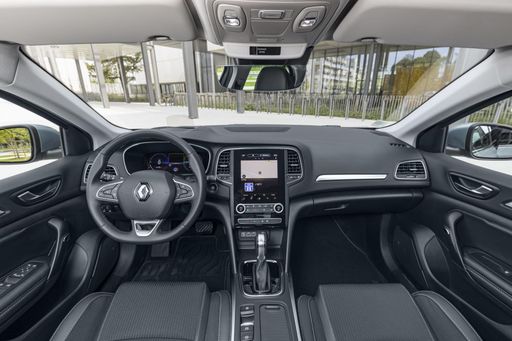
The Renault Mégane will appeal most to the Comfort and Status/Expression buyer: someone who appreciates a composed, assured drive and a cabin that reads a touch more sophisticated than a typical crossover, especially compared with the Renault Captur. If you crave a compact that feels settled on fast roads and projects a quieter kind of polish, the Renault Mégane is the natural choice. That said, the Renault Captur remains a sensible alternative for those who prize practicality and urban ease, so don’t write it off. Check the detailed figures and equipment breakdown below to see how the personalities translate into measurable differences before you decide.

Here’s where it gets real: The technical differences in detail

Mégane

Costs and Efficiency:

Price and efficiency are often the first things buyers look at. Here it becomes clear which model has the long-term edge – whether at the pump, the plug, or in purchase price.

Renault Captur is substantially cheaper – starting at 21,100 £ , while the Renault Mégane costs 35,100 £ . That’s a price difference of around 13,929 £.

Captur

Engine and Performance:

Under the bonnet, it becomes clear which model is tuned for sportiness and which one takes the lead when you hit the accelerator.

When it comes to engine power, the Renault Mégane offers markedly more power – delivering 218 HP compared to 158 HP. That’s roughly 60 HP more horsepower.

When accelerating from 0 to 100 km/h, the Renault Mégane is visibly quicker – completing the sprint in 7.4 s, while the Renault Captur takes 8.9 s. That’s about 1.5 s quicker.

Looking at top speed, the Renault Captur is somewhat faster – reaching 180 km/h, while the Renault Mégane tops out at 160 km/h. The difference is around 20 km/h.

There’s also a difference in torque: the Renault Mégane delivers somewhat more torque with 300 Nm compared to 265 Nm. That’s about 35 Nm more.

Mégane

Space and Everyday Use:

Cabin size, boot volume and payload all play a role in everyday practicality. Here, comfort and flexibility make the difference.

Both vehicles offer seating for 5 people.

In terms of curb weight, Renault Captur is visibly lighter – 1,323 kg compared to 1,719 kg. The difference is around 396 kg.

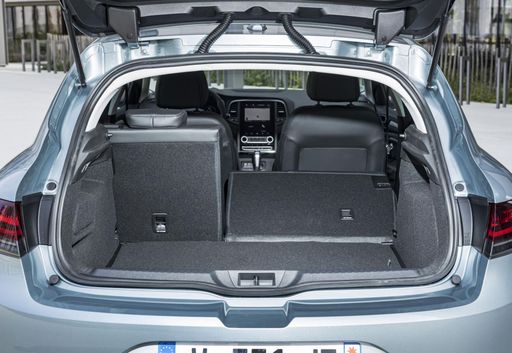
Looking at boot space, the Renault Captur offers very slightly more boot space – 422 L compared to 389 L. That’s a difference of about 33 L.

For maximum load capacity, the Renault Captur offers only slightly more capacity – up to 1,363 L, about 31 L more than the Renault Mégane.

When it comes to payload, the Renault Captur carries marginally more – 453 kg compared to 446 kg. That’s a difference of about 7 kg.

Who wins the race in the data check?

The Renault Mégane is clearly superior overall in the objective data comparison.
This result only shows which model scores more points on paper – not which of the two cars feels right for you.

from £35,100
Mégane

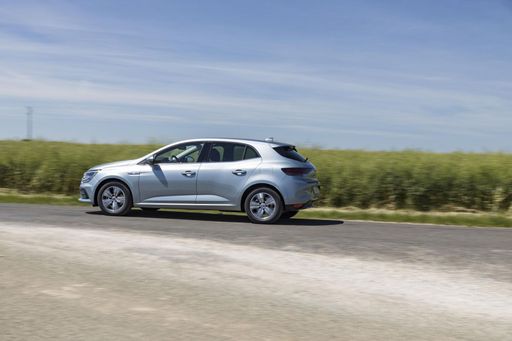
Renault Mégane

  • Engine Type : Electric
  • Transmission : Automatic
  • Drive Type : Front-Wheel Drive
  • Power HP : 218 HP
  • Consumption kWh/100km : 15.4 kWh/100km
  • Electric Range : 452 km
Renault Mégane
Renault Captur

Costs and Consumption

View detailed analysis

Engine and Performance

View detailed analysis

Dimensions and Body

View detailed analysis

Renault Mégane

The Renault Mégane blends Gallic flair with practical everyday charm, showing that sensible transport can still have personality and poise. It’s a smart pick for buyers who want a comfortable, stylish hatchback that feels a little more special than the usual commute companion.

details

Renault Captur

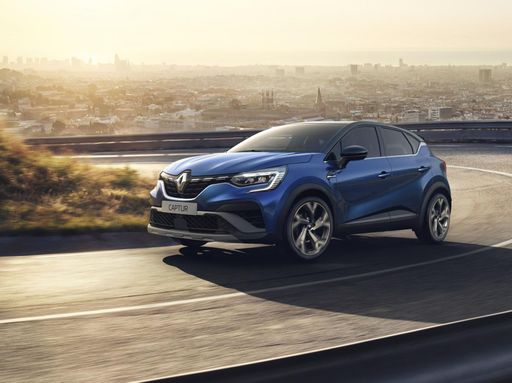
The Renault Captur is a cheeky little crossover that pairs city-friendly agility with a roomy, well-thought-out cabin and enough style to turn heads at the lights. It’s a sensible choice for buyers who want practical versatility and a dash of personality on their daily drives, without taking itself too seriously.

details
Renault Mégane
Renault Captur

Costs and Consumption

Price
35,100 - 38,500 £
Price
21,100 - 28,400 £
Consumption L/100km
-
Consumption L/100km
4.4 - 6 L/100km
Consumption kWh/100km
15.4 kWh/100km
Consumption kWh/100km
-
Electric Range
452 km
Electric Range
-
Battery Capacity
-
Battery Capacity
-
co2
0 g/km
co2
100 - 137 g/km
Fuel tank capacity
-
Fuel tank capacity
48 L

Dimensions and Body

Body Type
SUV
Body Type
SUV
Seats
5
Seats
5
Doors
5
Doors
5
Curb weight
1,719 kg
Curb weight
1,323 - 1,441 kg
Trunk capacity
389 L
Trunk capacity
326 - 422 L
Length
4,200 mm
Length
4,239 mm
Width
1,783 mm
Width
1,797 mm
Height
1,505 mm
Height
1,575 mm
Max trunk capacity
1,332 L
Max trunk capacity
1,363 L
Payload
446 kg
Payload
447 - 453 kg

Engine and Performance

Engine Type
Electric
Engine Type
Full Hybrid, Petrol, Petrol MHEV
Transmission
Automatic
Transmission
Automatic, Manuel
Transmission Detail
Reduction Gearbox
Transmission Detail
Automatic Gearbox, Manual Gearbox, Dual-Clutch Automatic
Drive Type
Front-Wheel Drive
Drive Type
Front-Wheel Drive
Power HP
218 HP
Power HP
115 - 158 HP
Acceleration 0-100km/h
7.4 s
Acceleration 0-100km/h
8.9 - 12.3 s
Max Speed
160 km/h
Max Speed
180 km/h
Torque
300 Nm
Torque
160 - 265 Nm
Number of Cylinders
-
Number of Cylinders
3 - 4
Power kW
160 kW
Power kW
84 - 116 kW
Engine capacity
-
Engine capacity
1,199 - 1,789 cm3

General

Model Year
2,025
Model Year
2,025
CO2 Efficiency Class
A
CO2 Efficiency Class
C, D, E
Brand
Renault
Brand
Renault
DriveDuel uses data analysis and artificial intelligence to evaluate vehicle data and create content. Content is regularly reviewed and improved. The displayed prices are estimates based on German list prices, adjusted to the respective country’s VAT. Country-specific registration taxes are not included. This information is not legally binding.