VS

Renault Scénic vs Ford Capri comparison

Compare performance (218 HP vs 340 HP), boot space and price (34,600 £ vs 36,300 £ ) at a glance. Find out which car is the better choice for you – Renault Scénic or Ford Capri?

Renault Scénic vs Ford Capri: Key differences

Renault Scénic

4.6 (4 Reviews)
rate
  • marginally cheaper
  • barely lighter
details

Ford Capri

4.8 (4 Reviews)
rate
  • markedly more power
  • visibly more efficient
  • only slightly more electric range
  • substantially quicker 0–100 km/h
  • only slightly more trunk space
details

All details on performance, efficiency, range and trunk space can be found in the technical comparison below – including user reviews for both models.

By Achim Sedelmaier

Scénic

Ford Capri VS Renault Scénic: which EV fits your everyday life?

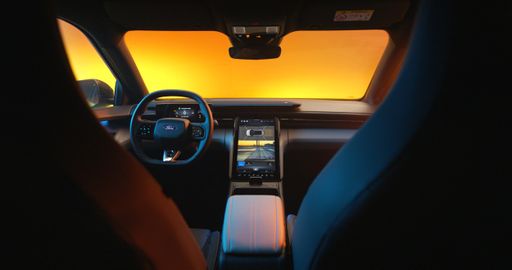
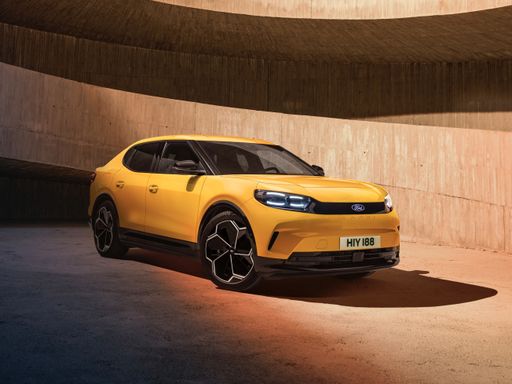
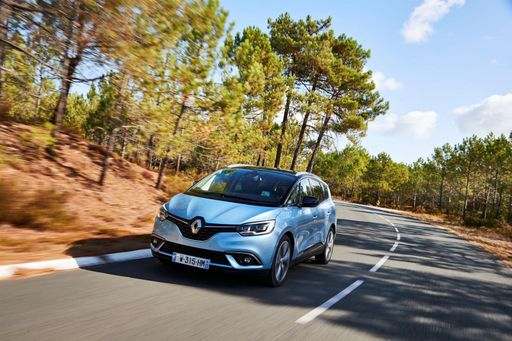
Ford Capri VS Renault Scénic is a matchup between two very different takes on the modern family EV: the Ford Capri wears a coupe‑SUV silhouette with a big, practical boot and motorway composure, while the Renault Scénic trades a sportier stance for a calm, family‑friendly cabin and excellent rear passenger comfort. The Capri leans into usable luggage space and a composed, efficient long‑distance character, whereas the Scénic focuses on rear-seat ergonomics, intuitive infotainment and strong value for the spec. Buyers will feel that the Capri is aimed at those who regularly haul luggage and want a more assertive highway experience, while the Scénic targets families and commuters who prize interior space and ease of use. Read on to see how those different priorities play out in comfort, practicality and daily usability.
Capri

Character and driving feel

Ford Capri drives with a noticeably more assertive temperament compared with the Renault Scénic, so merging and overtaking feel more assured in the Capri while the Scénic stays deliberately relaxed. The Capri’s setup rewards steady speeds and confident motorway progress, delivering sharper on‑ramp responses and a firmer composure; the Scénic answers with forgiving, comfort‑biased steering that keeps things predictable but never sporty. If you want a car that feels energetic under hard acceleration or when overtaking, the Capri will satisfy more often; if you prefer a smooth, unstressed drive that masks the daily grind, the Scénic will be more soothing. Both remain safe and stable, but the trade‑off is clear: Capri for punch and composure, Scénic for tranquillity and ease.

Scénic

Comfort and long‑distance behavior

On long runs the Ford Capri and Renault Scénic both aim for serenity, but they achieve it differently: the Capri filters motorway disturbances with a taut, controlled ride and a cabin tuned for steady cruising, while the Scénic emphasises cushioned comfort and low cabin noise at typical touring speeds. Rear passengers will notice a real difference—Renault Scénic gives more generous seat geometry and true long‑haul comfort, whereas the Capri’s rear bench sits lower and can feel snug for taller adults on extended trips. Charging and range behavior shape real-world travel too: Capri’s package supports longer uninterrupted stretches for those who prioritize fewer stops, while Scénic’s strengths make it reassuring for families who value comfort between charge breaks. In short, choose Capri when motorway calm and efficiency matter most, choose Scénic when rear‑seat comfort and a relaxed ride top your checklist.

Capri

Practicality and everyday usability

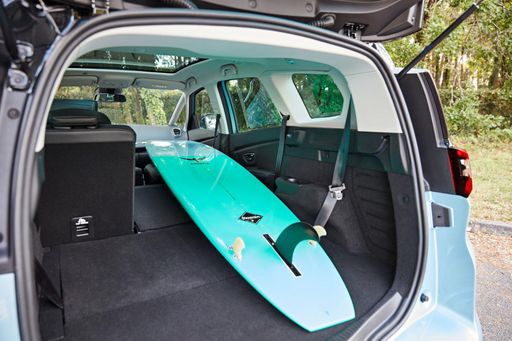
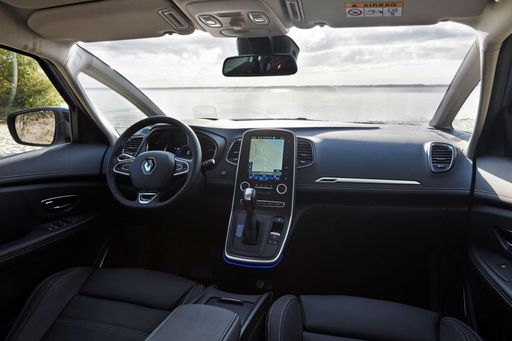
The practical story separates clearly: the Ford Capri presents a large, easy‑to‑use boot with variable floors and an electric tailgate that makes loading weekend gear frankly less fiddly, while the Renault Scénic offers clever underfloor storage and family‑friendly touches but a higher lip and a stepped loading area that complicates bulky items. Inside, Ford’s tall central screen and hidden stowage aim at straightforward daily convenience, whereas Renault’s Google‑based system with physical climate controls wins points for intuitive operation and fast, familiar mapping. Small practicalities matter: Capri’s load area and luggage flexibility favour active families and weekenders, while Scénic’s interior sockets, armrest solutions and simple controls suit parents who juggle devices and child seats. Both are thoughtfully packaged, yet the trade‑off is between raw load usability (Capri) and family‑centric cabin ergonomics (Scénic).

Scénic

City friendliness and daily driving

In town the Renault Scénic feels easier to live with thanks to its lighter steering, compact manners and straightforward infotainment, making parking and short trips less fussy than the slightly larger Ford Capri. The Capri is still manageable in urban environments—its steering is easy and the turning circle reasonable—but the high dash and longer silhouette reduce forward visibility and make tight kerbside manoeuvres more of a conscious task. Both cars rely on cameras and sensors to cover blind spots, but you’ll notice Scénic’s ergonomics and simpler physical controls make short, repetitive trips less wearing over a week of school runs. If city ease and quick daily routines dominate your life, the Scénic has the upper hand; if most of your miles are outside the city the Capri remains competitive even for occasional town use.

Who each car suits best — clear buyer trade‑offs

Choosing between the Ford Capri and Renault Scénic comes down to a few concrete trade‑offs: pick the Capri if you prioritise a very usable boot, a more forceful on‑road presence and slightly more highway‑oriented efficiency, and you won’t regret the extra focus on luggage and steady cruising. Opt for the Renault Scénic if you need the friendliest rear seats, the most intuitive day‑to‑day tech for family life, and a price‑for‑spec mix that stretches your budget further. Neither car is aimed at the hardcore enthusiast: Capri favours composure with a sporty flavour, Scénic sells comfort and usability with a calm personality. If you want the numbers behind these real‑world differences, the technical comparison that follows breaks down acceleration, charging and packaging so you can match figures to the lived experience described here.

Here’s where it gets real: The technical differences in detail

Scénic

Costs and Efficiency:

Price and efficiency are often the first things buyers look at. Here it becomes clear which model has the long-term edge – whether at the pump, the plug, or in purchase price.

Renault Scénic is marginally cheaper – starting at 34,600 £ , while the Ford Capri costs 36,300 £ . That’s a price difference of around 1,714 £.

In terms of energy consumption, the Ford Capri is visibly more efficient: consuming 13.8 kWh/100km compared to 16.6 kWh/100km for the Renault Scénic. That’s a difference of about 2.8 kWh/100km.

As for electric range, the Ford Capri offers only slightly more range – reaching up to 627 km, about 29 km more than the Renault Scénic.

Capri

Engine and Performance:

Under the bonnet, it becomes clear which model is tuned for sportiness and which one takes the lead when you hit the accelerator.

When it comes to engine power, the Ford Capri offers markedly more power – delivering 340 HP compared to 218 HP. That’s roughly 122 HP more horsepower.

When accelerating from 0 to 100 km/h, the Ford Capri is substantially quicker – completing the sprint in 5.3 s, while the Renault Scénic takes 7.9 s. That’s about 2.6 s quicker.

There’s also a difference in torque: the Ford Capri delivers significantly more torque with 679 Nm compared to 300 Nm. That’s about 379 Nm more.

Scénic

Space and Everyday Use:

Beyond pure performance, interior space and usability matter most in daily life. This is where you see which car is more practical and versatile.

Both vehicles offer seating for 5 people.

In terms of curb weight, Renault Scénic is barely lighter – 1,822 kg compared to 2,001 kg. The difference is around 179 kg.

Looking at boot space, the Ford Capri offers only slightly more boot space – 572 L compared to 545 L. That’s a difference of about 27 L.

When it comes to payload, the Ford Capri carries a bit more – 587 kg compared to 518 kg. That’s a difference of about 69 kg.

Who wins the race in the data check?

The Ford Capri is clearly superior overall in the objective data comparison.
This result only shows which model scores more points on paper – not which of the two cars feels right for you.

from £36,300
Capri

Ford Capri

  • Engine Type Electric
  • Transmission Automatic
  • Drive Type Rear-Wheel Drive, All-Wheel Drive
  • Power HP 190 - 340 HP
  • Consumption kWh/100km 13.8 - 16.5 kWh/100km
  • Electric Range 439 - 627 km
Renault Scénic
Ford Capri

Costs and Consumption

View detailed analysis

Engine and Performance

View detailed analysis

Dimensions and Body

View detailed analysis

Renault Scénic

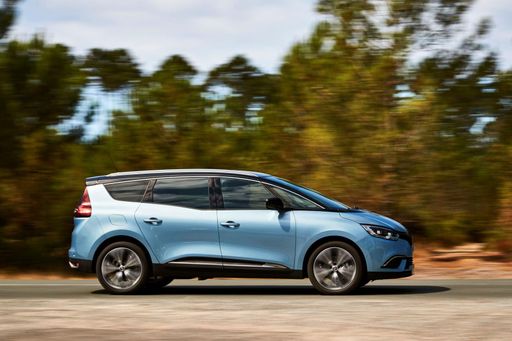
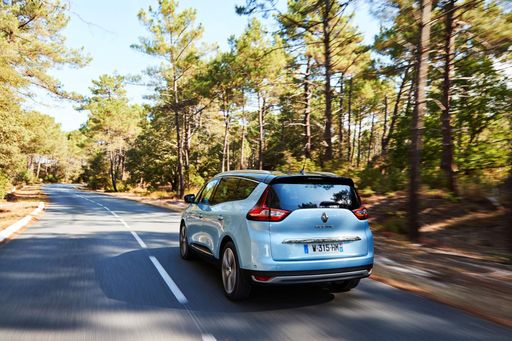
The Renault Scenic is a practical and comfortable family car that prioritises interior flexibility and everyday usability. With a composed ride and clever storage solutions, it suits buyers who want a versatile, easy-to-live-with vehicle for family duties and daily driving.

details

Ford Capri

The Ford Capri turned the family car into something cheekily sporty, with a long, rakish profile that still promises fun at a glance. Today it lives on as a lovable classic — easy to tinker with, enjoyable to drive and guaranteed to raise smiles at any meet.

details
Renault Scénic
Ford Capri

Costs and Consumption

Price
34,600 - 44,000 £
Price
36,300 - 51,800 £
Consumption L/100km
-
Consumption L/100km
-
Consumption kWh/100km
16.6 - 17.5 kWh/100km
Consumption kWh/100km
13.8 - 16.5 kWh/100km
Electric Range
420 - 598 km
Electric Range
439 - 627 km
Battery Capacity
-
Battery Capacity
-
co2
0 g/km
co2
0 g/km
Fuel tank capacity
-
Fuel tank capacity
-

Dimensions and Body

Body Type
SUV
Body Type
SUV
Seats
5
Seats
5
Doors
5
Doors
-
Curb weight
1,822 - 1,927 kg
Curb weight
2,001 - 2,206 kg
Trunk capacity
545 L
Trunk capacity
572 L
Length
4,470 mm
Length
-
Width
1,864 mm
Width
1,872 mm
Height
1,571 mm
Height
-
Max trunk capacity
1,670 L
Max trunk capacity
-
Payload
514 - 518 kg
Payload
539 - 587 kg

Engine and Performance

Engine Type
Electric
Engine Type
Electric
Transmission
Automatic
Transmission
Automatic
Transmission Detail
Reduction Gearbox
Transmission Detail
Reduction Gearbox
Drive Type
Front-Wheel Drive
Drive Type
Rear-Wheel Drive, All-Wheel Drive
Power HP
170 - 218 HP
Power HP
190 - 340 HP
Acceleration 0-100km/h
7.9 - 8.6 s
Acceleration 0-100km/h
5.3 - 8 s
Max Speed
150 - 170 km/h
Max Speed
-
Torque
280 - 300 Nm
Torque
350 - 679 Nm
Number of Cylinders
-
Number of Cylinders
-
Power kW
125 - 160 kW
Power kW
140 - 250 kW
Engine capacity
-
Engine capacity
-

General

Model Year
2025
Model Year
2026
CO2 Efficiency Class
A
CO2 Efficiency Class
A
Brand
Renault
Brand
Ford
DriveDuel uses data analysis and artificial intelligence to evaluate vehicle data and create content. Content is regularly reviewed and improved. The displayed prices are estimates based on German list prices, adjusted to the respective country’s VAT. Country-specific registration taxes are not included. This information is not legally binding.