
 Deutschland
 France
 Nederland
 Great Britain
 Sverige
 Danmark
 Suomi
Suomi Italia
 Polska
 Česko
Česko España
VS
Renault Symbioz vs Ferrari 849 Testarossa Coupe comparison
Compare performance (158 HP vs 1,050 HP), boot space and price (24,700 £ vs 385,700 £ ) at a glance. Find out which car is the better choice for you – Renault Symbioz or Ferrari 849 Testarossa Coupe?
Renault Symbioz vs Ferrari 849 Testarossa Coupe: Key differences
All details on performance, efficiency, range and trunk space can be found in the technical comparison below – including user reviews for both models.
Symbioz
Costs and Efficiency:
Looking at overall running costs, both models reveal some interesting differences in everyday economy.
Renault Symbioz is clearly cheaper – starting at 24,700 £ , while the Ferrari 849 Testarossa Coupe costs 385,700 £ . That’s a price difference of around 361,029 £.
Fuel consumption also shows a difference: the Renault Symbioz uses 4.5 L/100km and is considerably more efficient than the Ferrari 849 Testarossa Coupe with 9.3 L/100km. The difference is about 4.8 L/100km.
849 Testarossa Coupe
Engine and Performance:
Power, torque and acceleration say a lot about how a car feels on the road. This is where you see which model delivers more driving dynamics.
When it comes to engine power, the Ferrari 849 Testarossa Coupe offers clearly more power – delivering 1,050 HP compared to 158 HP. That’s roughly 892 HP more horsepower.
When accelerating from 0 to 100 km/h, the Ferrari 849 Testarossa Coupe is considerably quicker – completing the sprint in 2.3 s, while the Renault Symbioz takes 9.1 s. That’s about 6.8 s quicker.
Symbioz
Space and Everyday Use:
Whether family car or daily driver – which one offers more room, flexibility and comfort?
Seats: Renault Symbioz offers more seats – 5 vs 2.
In terms of curb weight, Renault Symbioz is markedly lighter – 1,359 kg compared to 1,890 kg. The difference is around 531 kg.
Looking at boot space, the Renault Symbioz offers substantially more boot space – 576 L compared to 74 L. That’s a difference of about 502 L.
When it comes to payload, the Renault Symbioz carries significantly more – 459 kg compared to 190 kg. That’s a difference of about 269 kg.
Who wins the race in the data check?
The Renault Symbioz is decisively ahead in the objective data comparison.
This result only shows which model scores more points on paper – not which of the two cars feels right for you.
from £24,700
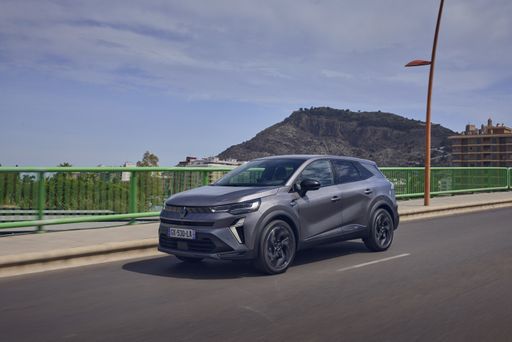
Renault Symbioz
Renault Symbioz
Ferrari 849 Testarossa Coupe
Costs and Consumption
View detailed analysis
View detailed analysis
Engine and Performance
View detailed analysis
View detailed analysis
Dimensions and Body
View detailed analysis
View detailed analysis
Renault Symbioz
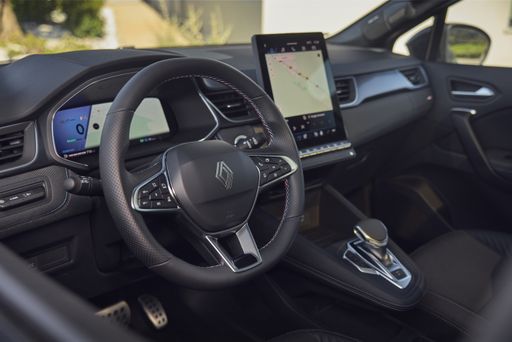
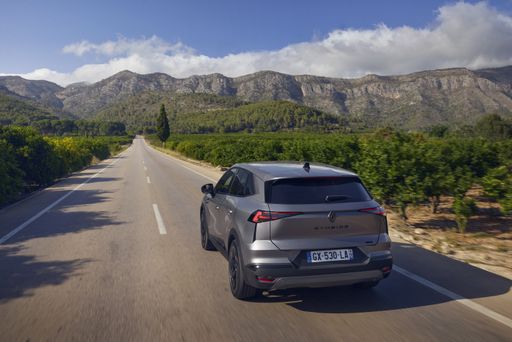
The Renault Symbioz is a forward-looking concept car that imagines a seamless link between vehicle and home, pairing a lounge-like cabin with striking, futuristic styling. More idea than production plan, it showcases Renault's vision for connected, autonomous and sustainable mobility while provoking debate about how we will live and travel.
details
Ferrari 849 Testarossa Coupe
The Ferrari Testarossa coupe still turns heads with its slash-sided styling and a soundtrack that insists you’re driving a piece of Italian theatre. For buyers who crave drama over practicality, it delivers intoxicating presence and raw driver engagement — just be ready to explain to friends why that midlife crisis looks so good.
details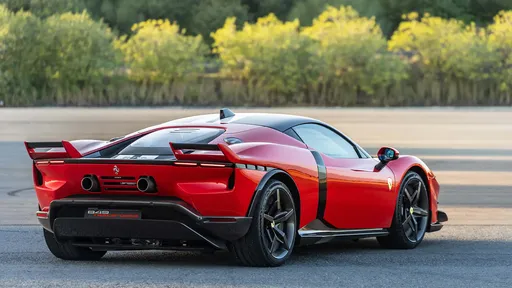
Renault Symbioz
Ferrari 849 Testarossa Coupe
Costs and Consumption |
|
|---|---|
|
Price
24,700 - 31,100 £
|
Price
385,700 £
|
|
Consumption L/100km
4.5 - 6 L/100km
|
Consumption L/100km
9.3 L/100km
|
|
Consumption kWh/100km
-
|
Consumption kWh/100km
-
|
|
Electric Range
-
|
Electric Range
21 km
|
|
Battery Capacity
-
|
Battery Capacity
-
|
|
co2
102 - 136 g/km
|
co2
212 g/km
|
|
Fuel tank capacity
-
|
Fuel tank capacity
-
|
Dimensions and Body |
|
|---|---|
|
Body Type
SUV
|
Body Type
Coupe
|
|
Seats
5
|
Seats
2
|
|
Doors
-
|
Doors
-
|
|
Curb weight
1,359 - 1,465 kg
|
Curb weight
1,890 kg
|
|
Trunk capacity
492 - 576 L
|
Trunk capacity
74 L
|
|
Length
-
|
Length
-
|
|
Width
1,797 mm
|
Width
1,999 mm
|
|
Height
-
|
Height
-
|
|
Max trunk capacity
-
|
Max trunk capacity
-
|
|
Payload
455 - 459 kg
|
Payload
190 kg
|
Engine and Performance |
|
|---|---|
|
Engine Type
Full Hybrid, Petrol MHEV
|
Engine Type
Plug-in Hybrid
|
|
Transmission
Automatic, Manual
|
Transmission
Automatic
|
|
Transmission Detail
Automatic Gearbox, Manual Gearbox, Dual-Clutch Automatic
|
Transmission Detail
Dual-Clutch Automatic
|
|
Drive Type
Front-Wheel Drive
|
Drive Type
All-Wheel Drive
|
|
Power HP
140 - 158 HP
|
Power HP
1,050 HP
|
|
Acceleration 0-100km/h
9.1 - 11 s
|
Acceleration 0-100km/h
2.3 s
|
|
Max Speed
-
|
Max Speed
-
|
|
Torque
250 - 265 Nm
|
Torque
-
|
|
Number of Cylinders
4
|
Number of Cylinders
8
|
|
Power kW
103 - 116 kW
|
Power kW
772 kW
|
|
Engine capacity
1,332 - 1,789 cm3
|
Engine capacity
3,990 cm3
|
General |
|
|---|---|
|
Model Year
2025
|
Model Year
2026
|
|
CO2 Efficiency Class
C, D, E
|
CO2 Efficiency Class
G
|
|
Brand
Renault
|
Brand
Ferrari
|
DriveDuel uses data analysis and artificial intelligence to evaluate vehicle data and create content. Content is regularly reviewed and improved.
The displayed prices are estimates based on German list prices, adjusted to the respective country’s VAT. Country-specific registration taxes are not included. This information is not legally binding.