VS

Renault Symbioz vs MG HS comparison

Compare performance (158 HP vs 272 HP), boot space and price (24,700 £ vs 30,000 £ ) at a glance. Find out which car is the better choice for you – Renault Symbioz or MG HS?

Renault Symbioz vs MG HS: Key differences

Renault Symbioz

4.8 (5 Reviews)
rate
  • visibly cheaper
  • noticeably lighter
  • a bit more trunk space
details

MG HS

4.6 (11 Reviews)
rate
  • substantially more power
  • clearly more efficient
  • clearly quicker 0–100 km/h
details

All details on performance, efficiency, range and trunk space can be found in the technical comparison below – including user reviews for both models.

By

Symbioz

Renault Symbioz VS MG HS — quick take

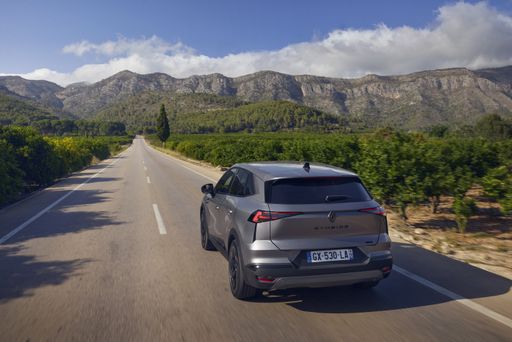
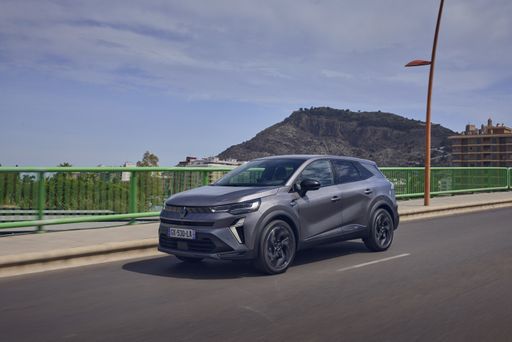
Renault Symbioz and MG HS sit in the same compact-SUV aisle but target different shopping lists: Symbioz prioritises low running costs and practical flexibility, while MG HS pushes value, space and equipment. The Symbioz feels calm and economical in daily life, pitched at buyers who want a composed commute and simple, fast infotainment. The MG HS trades some refinement for a bigger feel, more toys as standard and a plug‑in option that can make many short trips electric. This page contrasts how those choices play out in comfort, usability and ownership rather than in spec sheets. Read on if you want to know which car will suit your routine and which compromises you’ll accept.
HS

Character and driving feel

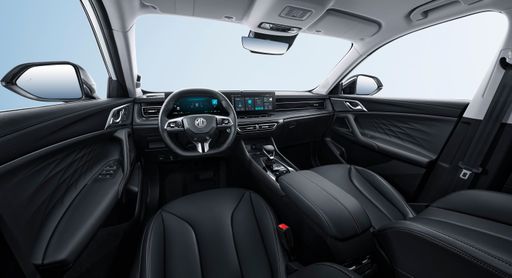
The Renault Symbioz is written for relaxed, predictable driving: steering is light, power delivery modest and the whole package encourages economical, unhurried progress. The MG HS delivers a more assertive shove when you ask for it — especially in its plug‑in guise — but that performance comes without sporty steering or engaging feedback. Neither car is aimed at enthusiastic drivers, yet the difference matters: Symbioz soothes and conserves, MG HS impresses briefly with thrust and standard kit but feels blunt when you try to hustle it. If you spend most time in traffic or on commuter runs, Symbioz’s mellow character will be less tiring; if you want occasional brisk bursts and a higher equipment level, MG HS will answer that need.

Symbioz

Comfort and long‑distance behaviour

On long motorway stints the Renault Symbioz shows its strengths: a quiet cabin and composed cruising make extended drives pleasantly undemanding. The MG HS is stable on the straight but tends to reveal tyre and road rumble at higher speeds, so long trips are less serene unless you accept a louder backdrop. In town the Symbioz can pass on short, sharp bumps—especially with larger wheels—whereas the MG HS leans toward a firmer, sometimes bracing ride that can feel bouncy over uneven surfaces. Put simply, choose Symbioz if highway tranquillity and low stress matter most, pick MG HS if you prioritise space and don’t mind a firmer ride.

HS

Practicality and everyday usability

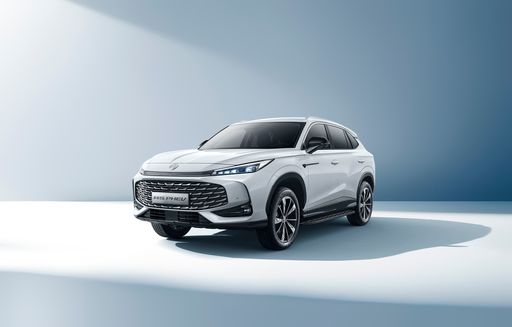
Practicality is a clear split: the Renault Symbioz makes the most of its interior with a sliding rear bench and a cleverly usable boot that suits families juggling passengers and cargo. The MG HS scores with more rear legroom and large doors that ease child‑seat access, but in its plug‑in form the loadspace is compromised by the battery and a higher loading sill, which is noticeable when you’re lifting suitcases or a stroller. MG HS counters with a generous list of safety and convenience kit as standard, so you get more hassle‑free features out of the gate; Symbioz repays you later with lower running costs and a simpler life at the petrol pump. For everyday grocery runs and flexible family use, Symbioz’s variable layout is the more practical companion, while MG HS suits buyers who put passenger space and equipment above boot finesse.

Symbioz

Cabin feel, infotainment and perceived quality

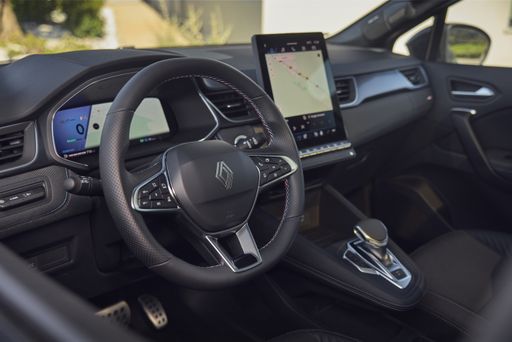
The Renault Symbioz cabin reads functional and familiar: materials are sensible rather than sumptuous, but the packaging is thoughtful and the Google‑based infotainment is quick and easy to live with. The MG HS offers a roomier, better‑equipped interior that feels contemporary, yet its native infotainment can be sluggish and fiddly compared with Renault’s cleaner system, making phone mirroring a common workaround. Perceived quality swings in both directions — Symbioz feels pared‑back but coherent, MG HS feels more generous but occasionally inconsistent in finishes and software polish. If intuitive tech and low distraction are priorities, the Symbioz gives a smoother day‑to‑day experience; if you want cabin space and kit for the money, the MG HS delivers more bling at the expense of some refinement.

HS

Buyer fit — who should pick which car

If your priority is running costs, a quiet long‑distance cruiser and a flexible family boot, the Renault Symbioz is tailored to that life and will likely be the more satisfying daily partner. If you want maximum kit, roomy rear seats and the option to do many daily miles electrically, the MG HS is the better fit provided you can live with a firmer ride, a higher boot lip on PHEV versions and a fiddlier infotainment system. Both cars avoid sporting driving thrills, so the decision really comes down to whether you value economy and simplicity (Symbioz) or space and equipment with occasional electric‑only range (MG HS). The technical comparison that follows will unpack the exact trade‑offs so you can match those practical differences to your routine.

Here’s where it gets real: The technical differences in detail

Symbioz

Costs and Efficiency:

When it comes to price and running costs, the biggest differences usually appear. This is often where you see which car fits your budget better in the long run.

Renault Symbioz is visibly cheaper – starting at 24,700 £ , while the MG HS costs 30,000 £ . That’s a price difference of around 5,306 £.

Fuel consumption also shows a difference: the MG HS uses 0.5 L/100km and is clearly more efficient than the Renault Symbioz with 4.5 L/100km. The difference is about 4 L/100km.

HS

Engine and Performance:

Power, torque and acceleration are the classic benchmarks for car enthusiasts – and here, some clear differences start to show.

When it comes to engine power, the MG HS offers substantially more power – delivering 272 HP compared to 158 HP. That’s roughly 114 HP more horsepower.

When accelerating from 0 to 100 km/h, the MG HS is clearly quicker – completing the sprint in 6.8 s, while the Renault Symbioz takes 9.1 s. That’s about 2.3 s quicker.

There’s also a difference in torque: the MG HS delivers visibly more torque with 350 Nm compared to 265 Nm. That’s about 85 Nm more.

Symbioz

Space and Everyday Use:

Cabin size, boot volume and payload all play a role in everyday practicality. Here, comfort and flexibility make the difference.

Both vehicles offer seating for 5 people.

In terms of curb weight, Renault Symbioz is noticeably lighter – 1,359 kg compared to 1,735 kg. The difference is around 376 kg.

Looking at boot space, the Renault Symbioz offers a bit more boot space – 576 L compared to 507 L. That’s a difference of about 69 L.

When it comes to payload, the Renault Symbioz carries slightly more – 459 kg compared to 400 kg. That’s a difference of about 59 kg.

Who wins the race in the data check?

The MG HS is far ahead overall in the objective data comparison.
This result only shows which model scores more points on paper – not which of the two cars feels right for you.

from £30,000
HS

MG HS

  • Engine Type Full Hybrid, Plug-in Hybrid
  • Transmission Automatic
  • Drive Type Front-Wheel Drive
  • Power HP 224 - 272 HP
  • Consumption L/100km 0.5 - 5.5 L/100km
  • Electric Range 100 km
Renault Symbioz
MG HS

Costs and Consumption

View detailed analysis

Engine and Performance

View detailed analysis

Dimensions and Body

View detailed analysis

Renault Symbioz

The Renault Symbioz is a forward-looking concept car that imagines a seamless link between vehicle and home, pairing a lounge-like cabin with striking, futuristic styling. More idea than production plan, it showcases Renault's vision for connected, autonomous and sustainable mobility while provoking debate about how we will live and travel.

details

MG HS

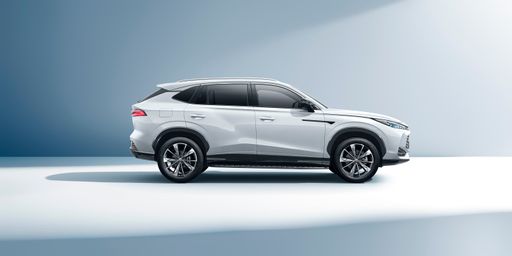
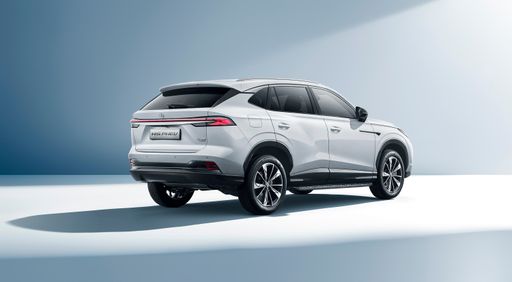
The MG HS, also known as the EHS in its hybrid variant, is a midsize SUV that combines modern design with a focus on comfort and technology. Its spacious interior offers a premium feel, enhanced by quality materials and an array of advanced features aimed at ensuring a smooth driving experience. Known for its efficiency, the MG HS/EHS delivers an enjoyable ride whether navigating city streets or taking on longer road trips.

details
Renault Symbioz
MG HS

Costs and Consumption

Price
24,700 - 31,100 £
Price
30,000 - 36,000 £
Consumption L/100km
4.5 - 6 L/100km
Consumption L/100km
0.5 - 5.5 L/100km
Consumption kWh/100km
-
Consumption kWh/100km
-
Electric Range
-
Electric Range
100 km
Battery Capacity
-
Battery Capacity
-
co2
102 - 136 g/km
co2
14 - 126 g/km
Fuel tank capacity
-
Fuel tank capacity
-

Dimensions and Body

Body Type
SUV
Body Type
SUV
Seats
5
Seats
5
Doors
-
Doors
-
Curb weight
1,359 - 1,465 kg
Curb weight
1,735 - 1,930 kg
Trunk capacity
492 - 576 L
Trunk capacity
441 - 507 L
Length
-
Length
-
Width
1,797 mm
Width
1,890 mm
Height
-
Height
-
Max trunk capacity
-
Max trunk capacity
-
Payload
455 - 459 kg
Payload
400 kg

Engine and Performance

Engine Type
Full Hybrid, Petrol MHEV
Engine Type
Full Hybrid, Plug-in Hybrid
Transmission
Automatic, Manual
Transmission
Automatic
Transmission Detail
Automatic Gearbox, Manual Gearbox, Dual-Clutch Automatic
Transmission Detail
Automatic Gearbox
Drive Type
Front-Wheel Drive
Drive Type
Front-Wheel Drive
Power HP
140 - 158 HP
Power HP
224 - 272 HP
Acceleration 0-100km/h
9.1 - 11 s
Acceleration 0-100km/h
6.8 - 7.9 s
Max Speed
-
Max Speed
-
Torque
250 - 265 Nm
Torque
340 - 350 Nm
Number of Cylinders
4
Number of Cylinders
4
Power kW
103 - 116 kW
Power kW
165 - 200 kW
Engine capacity
1,332 - 1,789 cm3
Engine capacity
1,496 cm3

General

Model Year
2025
Model Year
2025
CO2 Efficiency Class
C, D, E
CO2 Efficiency Class
D, B
Brand
Renault
Brand
MG
DriveDuel uses data analysis and artificial intelligence to evaluate vehicle data and create content. Content is regularly reviewed and improved. The displayed prices are estimates based on German list prices, adjusted to the respective country’s VAT. Country-specific registration taxes are not included. This information is not legally binding.