VS

Renault Symbioz vs Nissan Qashqai comparison

Compare performance (158 HP vs 205 HP), boot space and price (24,400 £ vs 29,600 £ ) at a glance. Find out which car is the better choice for you – Renault Symbioz or Nissan Qashqai?

Renault Symbioz vs Nissan Qashqai: Key differences

Renault Symbioz

4.5 (5 Reviews)
rate
  • clearly cheaper
  • marginally lighter
  • moderately more trunk space
details

Nissan Qashqai

4.9 (3 Reviews)
rate
  • clearly more power
  • somewhat quicker 0–100 km/h
details

All details on performance, efficiency, range and trunk space can be found in the technical comparison below – including user reviews for both models.

By Achim Sedelmaier

Symbioz

Design and Dimensions: Aesthetic Choices

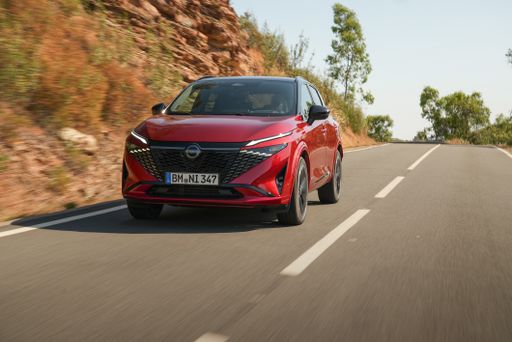
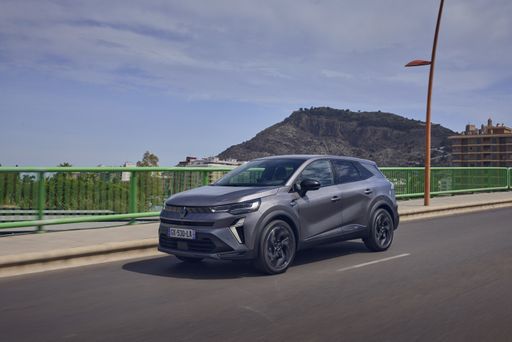
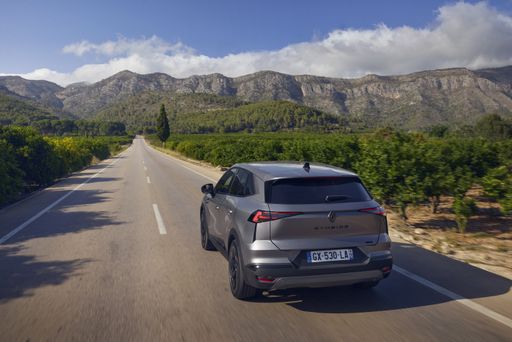
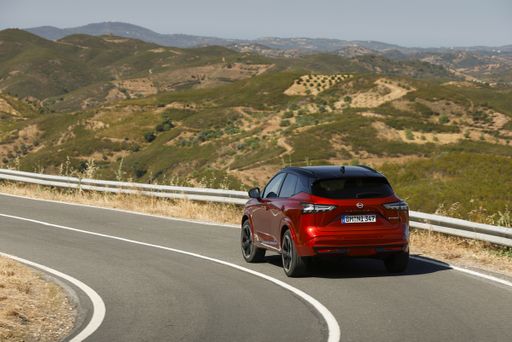
When comparing the Nissan Qashqai and the Renault Symbioz, one of the first things that stand out is their design and dimensions. The Qashqai measures at 4425 mm in length, 1835 mm in width, and stands 1625 mm tall. In contrast, the Symbioz is slightly smaller, with dimensions of 4413 mm in length, 1797 mm in width, and a height of 1575 mm. This difference may appeal to different consumer preferences; the Qashqai leans towards a more robust presence, whereas the Symbioz embodies sleek modernity.

Qashqai

Engine and Performance: Power Under the Hood

Powering the Qashqai are various options that include petrol mild hybrid (MHEV) and full hybrid engines, delivering between 140 and 190 HP. Consumers can choose between a six-speed manual or a continuously variable transmission (CVT) for a smooth driving experience. The acceleration from 0 to 100 km/h ranges from 7.9 to 10.2 seconds, depending on the specific model.

On the other hand, the Renault Symbioz is equipped with a full hybrid engine producing 143 HP, delivered via an automatic transmission. Its acceleration is recorded at 10.6 seconds from 0 to 100 km/h, which puts it slightly behind the Qashqai in terms of performance metrics. However, the Symbioz compensates with fuel efficiency, consuming only 4.8 L/100km.

Symbioz

Fuel Efficiency and Emissions: Environmentally Friendly Choices

The Nissan Qashqai has a fuel consumption that varies from 5.1 to 6.8 L/100km based on the engine option which also translates into CO2 emissions ranging from 116 to 154 g/km. The vehicle offers a fuel tank capacity of 55 liters, allowing for an extended range suitable for long drives.

Conversely, the Renault Symbioz boasts impressive fuel efficiency, registering 4.8 L/100km, with a CO2 emission value of just 109 g/km. Its fuel tank holds 48 liters, which, while fewer than the Qashqai, still provides adequate range for urban commuting. The lower emissions and consumption of the Symbioz make it an appealing choice for eco-conscious drivers.

Qashqai

Interior and Comfort: Space for All

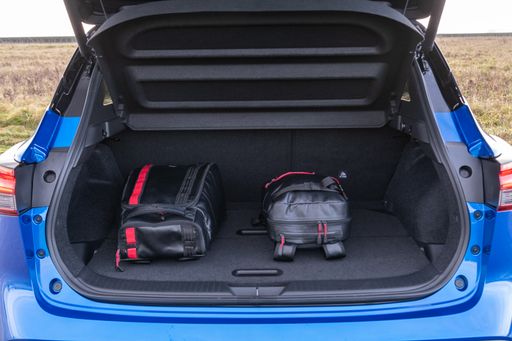
Inside the Nissan Qashqai, occupants will find ample room with a trunk capacity of 504 liters, allowing for plenty of cargo space. The vehicle comfortably seats five individuals, ensuring no compromise on passenger comfort.

The Renault Symbioz, while slightly behind with a trunk capacity of 492 liters, is equally accommodating with space for five passengers. Both vehicles are designed for comfort, but the Qashqai edges out marginally with its larger cargo area.

Symbioz

Innovative Features: Technology at Your Fingertips

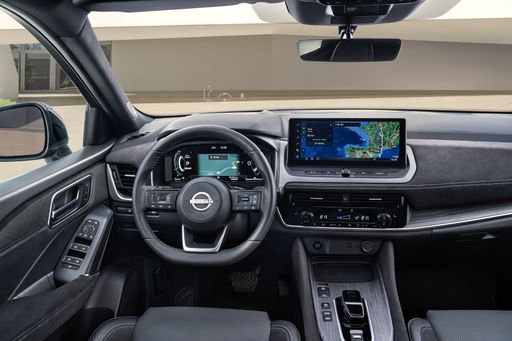
Both vehicles pride themselves on their innovative technologies. The Qashqai includes advanced driver-assistance systems (ADAS) that enhance safety and make driving more intuitive. Features might include lane departure warning, adaptive cruise control, and a user-friendly infotainment system that boasts connectivity options.

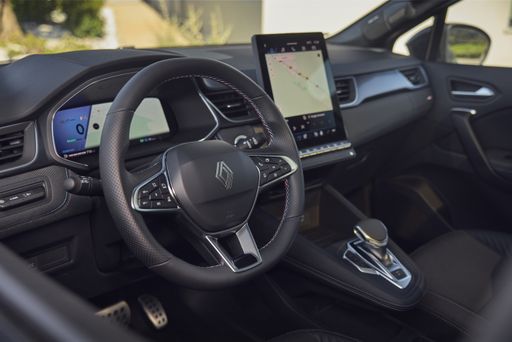
On the flip side, the Renault Symbioz offers its own suite of tech features aimed at revolutionizing the driving experience. It may feature AI-driven navigation, and smart connectivity options, alongside efficient hybrid technology that exemplifies Renault’s forward-thinking approach to automotive design.

Qashqai

Conclusion: Which SUV Comes Out on Top?

The Nissan Qashqai and Renault Symbioz each bring unique attributes to the SUV category. The Qashqai excels in performance, offering a more powerful lineup and spacious interior. However, the Symbioz shines in fuel efficiency and innovative technology, making it easier on the environment and more economically feasible for daily commutes.

The choice ultimately boils down to driving preferences and priorities. Whether you prioritize power and spaciousness with the Qashqai or seek eco-friendliness and innovative tech with the Symbioz, both vehicles signify the advancements taking place in the automotive world.

Here’s where it gets real: The technical differences in detail

Symbioz

Costs and Efficiency:

Price and efficiency are often the first things buyers look at. Here it becomes clear which model has the long-term edge – whether at the pump, the plug, or in purchase price.

Renault Symbioz is clearly cheaper – starting at 24,400 £ , while the Nissan Qashqai costs 29,600 £ . That’s a price difference of around 5,177 £.

Both cars consume an average of 4.5 L/100km – no difference here.

Qashqai

Engine and Performance:

Under the bonnet, it becomes clear which model is tuned for sportiness and which one takes the lead when you hit the accelerator.

When it comes to engine power, the Nissan Qashqai offers clearly more power – delivering 205 HP compared to 158 HP. That’s roughly 47 HP more horsepower.

When accelerating from 0 to 100 km/h, the Nissan Qashqai is somewhat quicker – completing the sprint in 7.6 s, while the Renault Symbioz takes 9.1 s. That’s about 1.5 s quicker.

Looking at top speed, the Nissan Qashqai is a bit faster – reaching 206 km/h, while the Renault Symbioz tops out at 180 km/h. The difference is around 26 km/h.

There’s also a difference in torque: the Nissan Qashqai delivers a bit more torque with 330 Nm compared to 265 Nm. That’s about 65 Nm more.

Symbioz

Space and Everyday Use:

Cabin size, boot volume and payload all play a role in everyday practicality. Here, comfort and flexibility make the difference.

Both vehicles offer seating for 5 people.

In terms of curb weight, Renault Symbioz is marginally lighter – 1,359 kg compared to 1,420 kg. The difference is around 61 kg.

Looking at boot space, the Renault Symbioz offers moderately more boot space – 576 L compared to 504 L. That’s a difference of about 72 L.

For maximum load capacity, the Renault Symbioz offers moderately more capacity – up to 1,682 L, about 235 L more than the Nissan Qashqai.

When it comes to payload, the Nissan Qashqai carries somewhat more – 520 kg compared to 459 kg. That’s a difference of about 61 kg.

Who wins the race in the data check?

The Nissan Qashqai is clearly ahead overall in the objective data comparison.
This result only shows which model scores more points on paper – not which of the two cars feels right for you.

from £29,600
Qashqai

Nissan Qashqai

  • Engine Type : Petrol MHEV, Full Hybrid
  • Transmission : Manuel, Automatic
  • Drive Type : Front-Wheel Drive, All-Wheel Drive
  • Power HP : 140 - 205 HP
  • Consumption L/100km : 4.5 - 6.8 L/100km
Renault Symbioz
Nissan Qashqai

Costs and Consumption

View detailed analysis

Engine and Performance

View detailed analysis

Dimensions and Body

View detailed analysis

Renault Symbioz

The Renault Symbioz feels less like a traditional car and more like a rolling living room that's been told it's allowed to drive — its flowing lines and minimalist cabin are pure concept-car theatre that teases the future of everyday transport. For buyers with an eye for design and a taste for tech-forward ideas, the Symbioz is an alluring vision of what Renault could offer tomorrow, even if it's not yet a model you can park in your driveway.

details

Nissan Qashqai

The Nissan Qashqai blends practical, family-friendly packaging with SUV styling that refuses to shout, making it a sensible and dependable choice for everyday life. It’s comfortable to live with, economical on the road, and neatly equipped enough to feel modern without ever feeling precious — perfect if you want crossover versatility without the drama.

details
Renault Symbioz
Nissan Qashqai

Costs and Consumption

Price
24,400 - 30,700 £
Price
29,600 - 39,900 £
Consumption L/100km
4.5 - 6 L/100km
Consumption L/100km
4.5 - 6.8 L/100km
Consumption kWh/100km
-
Consumption kWh/100km
-
Electric Range
-
Electric Range
-
Battery Capacity
-
Battery Capacity
-
co2
102 - 136 g/km
co2
102 - 154 g/km
Fuel tank capacity
48 L
Fuel tank capacity
55 L

Dimensions and Body

Body Type
SUV
Body Type
SUV
Seats
5
Seats
5
Doors
5
Doors
5
Curb weight
1,359 - 1,465 kg
Curb weight
1,420 - 1,665 kg
Trunk capacity
492 - 576 L
Trunk capacity
479 - 504 L
Length
4,413 mm
Length
4,425 mm
Width
1,797 mm
Width
1,835 mm
Height
1,575 mm
Height
1,625 mm
Max trunk capacity
1,682 L
Max trunk capacity
1,422 - 1,447 L
Payload
455 - 459 kg
Payload
466 - 520 kg

Engine and Performance

Engine Type
Full Hybrid, Petrol MHEV
Engine Type
Petrol MHEV, Full Hybrid
Transmission
Automatic, Manuel
Transmission
Manuel, Automatic
Transmission Detail
Automatic Gearbox, Manual Gearbox, Dual-Clutch Automatic
Transmission Detail
Manual Gearbox, CVT, Reduction Gearbox
Drive Type
Front-Wheel Drive
Drive Type
Front-Wheel Drive, All-Wheel Drive
Power HP
140 - 158 HP
Power HP
140 - 205 HP
Acceleration 0-100km/h
9.1 - 11 s
Acceleration 0-100km/h
7.6 - 10.2 s
Max Speed
180 km/h
Max Speed
170 - 206 km/h
Torque
250 - 265 Nm
Torque
240 - 330 Nm
Number of Cylinders
4
Number of Cylinders
3 - 4
Power kW
103 - 116 kW
Power kW
103 - 151 kW
Engine capacity
1,332 - 1,789 cm3
Engine capacity
1,332 - 1,498 cm3

General

Model Year
2025
Model Year
2,025 - 2,026
CO2 Efficiency Class
C, D, E
CO2 Efficiency Class
E, C
Brand
Renault
Brand
Nissan
DriveDuel uses data analysis and artificial intelligence to evaluate vehicle data and create content. Content is regularly reviewed and improved. The displayed prices are estimates based on German list prices, adjusted to the respective country’s VAT. Country-specific registration taxes are not included. This information is not legally binding.