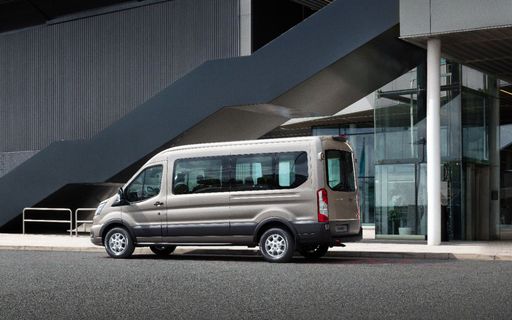
VS

Renault Trafic Bus vs Ford Transit Custom Transporter comparison

Compare performance (170 HP vs 286 HP), boot space and price (34,600 £ vs 49,700 £ ) at a glance. Find out which car is the better choice for you – Renault Trafic Bus or Ford Transit Custom Transporter?

Renault Trafic Bus vs Ford Transit Custom Transporter: Key differences

Renault Trafic Bus

  • considerably cheaper
details

Ford Transit Custom Transporter

  • substantially more power
details

By Achim Sedelmaier

Trafic Bus

A Clash of Titans: Ford Transit Custom Transporter vs Renault Trafic Bus

The light commercial vehicle market is fiercely competitive, and the Ford Transit Custom Transporter and the Renault Trafic Bus are two giants battling for supremacy. Both models have undergone significant upgrades in recent years, and choosing between them can be daunting. This article delves into their technical specifications, performance, and innovative features, providing a detailed comparison for potential buyers.
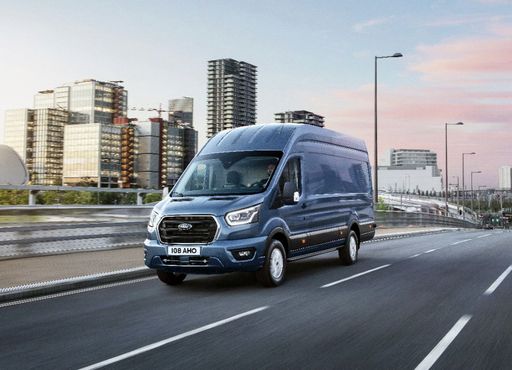
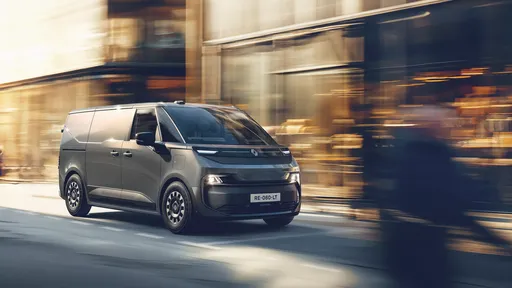
Transit Custom Transporter

Engine and Performance

The Ford Transit Custom Transporter offers a versatile range of engine options, including electric, diesel, and plug-in hybrid, catering to different driving needs. The power output varies from 110 HP to a powerful 286 HP, ensuring a tailored performance. Electric versions can achieve up to 286 HP, with a substantial torque of 415 Nm, and a commendable electric range up to 327 km. The model also focuses on sustainability, with CO2 emissions as low as 0 g/km, making it an environmentally friendly choice.

In contrast, the Renault Trafic Bus is exclusively diesel-powered but provides ample power, ranging from 110 HP to 170 HP. Despite a higher CO2 rating (minimum 178 g/km), the Trafic Bus impresses with a compelling torque of up to 380 Nm. The vehicle balances performance with economy, offering fuel consumption figures between 6.8 and 7.2 L/100km.

Transmission and Drivetrain

The Ford Transit Custom Transporter boasts a more comprehensive array of transmissions, including reduction gearbox, CVT, and manual, appealing to various driving preferences. It also offers the flexibility of rear-wheel, front-wheel, and all-wheel drive configurations, further expanding its utility and handling capacity.

The Renault Trafic Bus keeps things straightforward with either a manual gearbox or dual-clutch automatic transmission. It's solely front-wheel drive, which is sufficient for most urban and highway conditions but may limit off-road capabilities compared to its Ford counterpart.

Interior and Capacity

In terms of interior options, the Ford Transit Custom Transporter provides seating for either 3 or 6 passengers, emphasizing adaptability, especially for commercial users needing to balance cargo and crew. This model's payload capacity is equally impressive, reaching up to 1332 kg, making it an excellent choice for heavy-duty transportation.

The Renault Trafic Bus shines in passenger capacity, comfortably seating 8, positioning itself as a leading contender for group transport solutions. Although, the payload tops out at 1010 kg, slightly lower than the Ford competitor, but it's sufficient for most passenger and light cargo needs.

Dimensions and Practicality

Both vehicles are designed with practicality in mind. The Ford Transit Custom Transporter has lengths ranging from 5050 mm to 5450 mm, with a consistent width of 2032 mm and height around 1958-1959 mm, balancing size and maneuverability. It also comes with a generous fuel tank capacity between 55 to 63 liters, depending on the variant.

Renault Trafic Bus dimensions are competitive, with lengths from 5080 mm to 5480 mm, slightly narrower at a width of 1956 mm, and a bit taller, with heights of 1973-1974 mm. It features a larger fuel tank, offering 80 liters, enhancing its range for long-distance travels.

Conclusion

Choosing between the Ford Transit Custom Transporter and the Renault Trafic Bus hinges on specific needs. The Ford model offers a broader engine choice, advanced drive options, and better payload capacity, ideal for dynamic commercial uses. Meanwhile, the Renault Trafic Bus stands out with superior passenger capacity, straightforward yet efficient diesel engines, and practical internal dimensions, making it perfect for group travels.

Ultimately, the decision will rest on the priority of either transporting goods or people, as both vehicles are stellar in their respective specialties.

Here’s where it gets real: The technical differences in detail

Trafic Bus

Costs and Efficiency:

Price and efficiency are often the first things buyers look at. Here it becomes clear which model has the long-term edge – whether at the pump, the plug, or in purchase price.

Renault Trafic Bus is considerably cheaper – starting at 34,600 £ , while the Ford Transit Custom Transporter costs 49,700 £ . That’s a price difference of around 15,107 £.

Transit Custom Transporter

Engine and Performance:

Under the bonnet, it becomes clear which model is tuned for sportiness and which one takes the lead when you hit the accelerator.

When it comes to engine power, the Ford Transit Custom Transporter offers substantially more power – delivering 286 HP compared to 170 HP. That’s roughly 116 HP more horsepower.

There’s also a difference in torque: the Ford Transit Custom Transporter delivers markedly more torque with 630 Nm compared to 380 Nm. That’s about 250 Nm more.

Space and Everyday Use:

Cabin size, boot volume and payload all play a role in everyday practicality. Here, comfort and flexibility make the difference.

Seats: Renault Trafic Bus offers more seats – 9 vs 6.

Who wins the race in the data check?

The Ford Transit Custom Transporter is decisively ahead in the objective data comparison.
This result only shows which model scores more points on paper – not which of the two cars feels right for you.

from £49,700
Transit Custom Transporter

Ford Transit Custom Transporter

  • Engine Type : Electric
  • Transmission : Automatic
  • Drive Type : Rear-Wheel Drive, All-Wheel Drive
  • Power HP : 136 - 286 HP
Renault Trafic Bus
Ford Transit Custom Transporter

Costs and Consumption

View detailed analysis

Engine and Performance

View detailed analysis

Dimensions and Body

View detailed analysis

Renault Trafic Bus

The Renault Trafic is a practical people-carrier that prefers sensible space and smart flexibility to showroom gloss, making it a top pick for families, shuttle operators or anyone ferrying a crowd without fuss. It’s comfortable, economical in everyday running and blessedly uncomplicated — not the most glamorous vehicle, but brilliantly dependable when you need it to be.

details

Ford Transit Custom Transporter

The Transit Custom is a clever, no-nonsense workhorse that blends roomy practicality with surprisingly car-like driving manners, so your workday feels less like a chore and more like efficient transport. With a sensible interior, smart storage and tidy handling, it’s the kind of van that makes owners smile while they get on with the job — reliable, unfussy and built to keep moving.

details
Renault Trafic Bus
Ford Transit Custom Transporter

Costs and Consumption

Price
34,600 - 54,400 £
Price
49,700 - 77,400 £
Consumption L/100km
6.8 - 7.2 L/100km
Consumption L/100km
-
Consumption kWh/100km
-
Consumption kWh/100km
-
Electric Range
-
Electric Range
-
Battery Capacity
-
Battery Capacity
-
co2
179 - 189 g/km
co2
0 g/km
Fuel tank capacity
-
Fuel tank capacity
-

Dimensions and Body

Body Type
Bus
Body Type
Cargo Van
Seats
8 - 9
Seats
3 - 6
Doors
-
Doors
-
Curb weight
2,031 - 2,352 kg
Curb weight
-
Trunk capacity
-
Trunk capacity
-
Length
-
Length
-
Width
1,956 mm
Width
2,032 mm
Height
-
Height
-
Max trunk capacity
-
Max trunk capacity
-
Payload
718 - 982 kg
Payload
-

Engine and Performance

Engine Type
Diesel
Engine Type
Electric
Transmission
Automatic, Manuel
Transmission
Automatic
Transmission Detail
Automatic Gearbox, Manual Gearbox
Transmission Detail
Reduction Gearbox
Drive Type
Front-Wheel Drive
Drive Type
Rear-Wheel Drive, All-Wheel Drive
Power HP
110 - 170 HP
Power HP
136 - 286 HP
Acceleration 0-100km/h
10.6 - 16.5 s
Acceleration 0-100km/h
-
Max Speed
-
Max Speed
-
Torque
300 - 380 Nm
Torque
415 - 630 Nm
Number of Cylinders
4
Number of Cylinders
-
Power kW
81 - 125 kW
Power kW
100 - 210 kW
Engine capacity
1,997 cm3
Engine capacity
-

General

Model Year
2,025 - 2,026
Model Year
2025
CO2 Efficiency Class
G
CO2 Efficiency Class
A
Brand
Renault
Brand
Ford
DriveDuel uses data analysis and artificial intelligence to evaluate vehicle data and create content. Content is regularly reviewed and improved. The displayed prices are estimates based on German list prices, adjusted to the respective country’s VAT. Country-specific registration taxes are not included. This information is not legally binding.