VS

SEAT Arona vs Ford Puma comparison

Compare performance (150 HP vs 168 HP), boot space and price (20,700 £ vs 23,900 £ ) at a glance. Find out which car is the better choice for you – SEAT Arona or Ford Puma?

SEAT Arona vs Ford Puma: Key differences

SEAT Arona

4.9 (2 Reviews)
rate
  • a bit cheaper
  • very slightly more efficient
  • moderately lighter

Ford Puma

3 (11 Reviews)
rate
  • a bit more power
  • slightly quicker 0–100 km/h

All details on performance, efficiency, range and trunk space can be found in the technical comparison below – including user reviews for both models.

Arona

When it comes to the burgeoning compact SUV market, two models are making significant waves: the Ford Puma and the SEAT Arona. Both vehicles boast modern designs, efficient engines, and a host of cutting-edge technologies, making them worthy contenders in their segment. This article provides a comprehensive comparison of these two popular models, focusing on technical specifications, performance metrics, and innovative features.

Puma

Powertrains and Performance

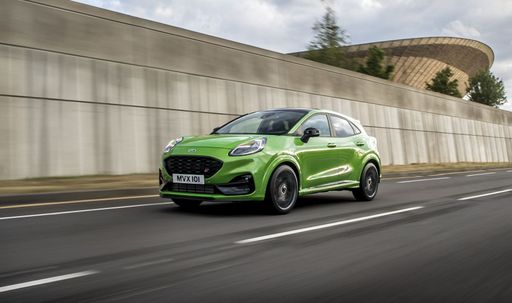
The Ford Puma offers a range of options that cater to different preferences and driving styles. With engine choices including petrol MHEV (Mild Hybrid Electric Vehicle) variants, the Puma provides power outputs that range from 125 to 168 HP. Its acceleration capabilities also impress, with times as low as 7.4 seconds for the 0-100 km/h sprint. In terms of efficiency, the Puma showcases a remarkable fuel consumption range of 5.4 to 6 L/100 km, which is competitive in its class.

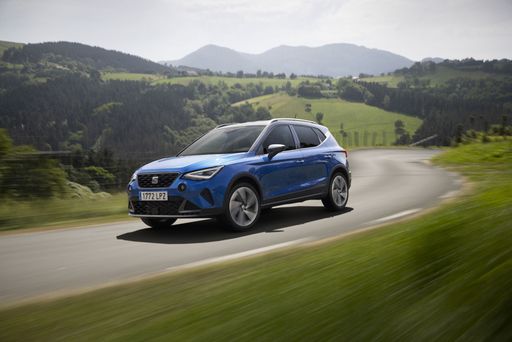
On the other hand, the SEAT Arona is powered exclusively by petrol engines, with power outputs ranging from 95 to 150 HP. It demonstrates solid performance, reaching 0-100 km/h in as low as 8.4 seconds with the more powerful engine option. The Arona's fuel consumption is comparable to the Puma, with values ranging from 5.4 to 5.6 L/100 km. Both models utilize front-wheel drive layouts, although the Puma’s hybrid variant may offer additional efficiency benefits in certain driving conditions.

Arona

Dimensions and Cargo Space

In terms of size, the Ford Puma measures between 4186 mm to 4226 mm in length, 1805 mm wide, and has a height of 1550 to 1555 mm. It provides ample trunk capacity ranging from 456 to 523 liters, making it practical for everyday use or family outings.

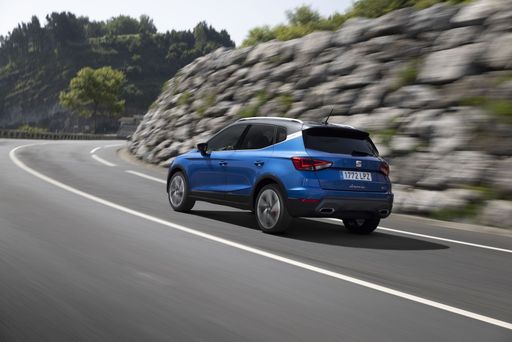
The SEAT Arona, while slightly smaller with a length of 4153 mm and a width of 1780 mm, still manages to offer competitive space. Its trunk capacity sits at a respectable 400 liters. While it may not surpass the Puma in cargo volume, the Arona’s compact size can be advantageous for city driving and parking.

Puma

Technological Innovations

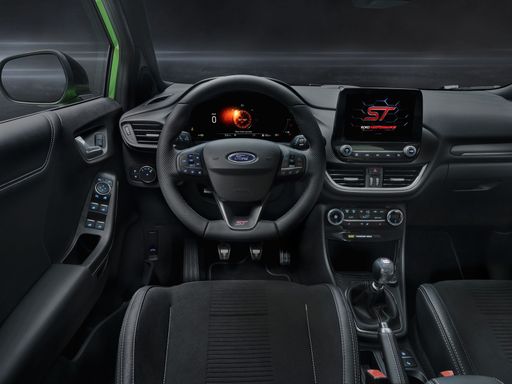
Ford has incorporated multiple technological advancements into the Puma, including an advanced infotainment system that supports Android Auto and Apple CarPlay. Additionally, its hybrid powertrain features regenerative braking technology, which enhances energy efficiency. The Puma also boasts a 43 kWh battery on its electric variants, allowing for an electric range of up to 376 km.

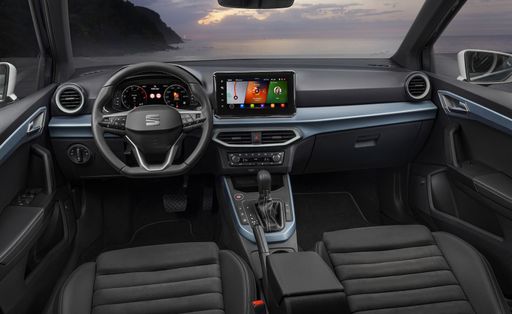
SEAT, on the other hand, emphasizes connectivity and driver assistance systems in the Arona. It features a user-friendly infotainment system, along with multiple connectivity options. While SEAT may not offer a hybrid variant, the Arona is designed to be light and nimble, affording a dynamic driving experience.

Arona

Driving Experience and Comfort

The driving experience in both vehicles is designed to be engaging and comfortable. The Ford Puma is equipped with features like adaptive cruise control, lane-keeping assistance, and enhanced suspension that caters to both spirited drives and daily commutes. It is built with a focus on comfort, promising a smooth ride regardless of road conditions.

The SEAT Arona offers a similarly inviting driving experience, with responsive steering and a well-tuned suspension system. The cabin benefits from quality materials and ergonomic design, ensuring passengers enjoy a comfortable journey. While it leans towards a sporty feel, the Arona does not compromise on comfort.

Puma

Conclusion

In conclusion, the Ford Puma and SEAT Arona each offer unique advantages and appeal to different types of drivers. The Puma stands out with its hybrid offerings and superior cargo space, while the Arona shines in its dynamic driving experience and connectivity features. Ultimately, the choice between these two compact SUVs will depend on individual preferences regarding efficiency, space, and driving style. Regardless, both models are illustrious representations of their brands, setting high standards in the competitive compact SUV market.

Here’s where it gets real: The technical differences in detail

Arona

Costs and Efficiency:

Price and efficiency are often the first things buyers look at. Here it becomes clear which model has the long-term edge – whether at the pump, the plug, or in purchase price.

SEAT Arona is a bit cheaper – starting at 20,700 £ , while the Ford Puma costs 23,900 £ . That’s a price difference of around 3,214 £.

Fuel consumption also shows a difference: the SEAT Arona uses 5.3 L/100km and is very slightly more efficient than the Ford Puma with 5.4 L/100km. The difference is about 0.1 L/100km.

Puma

Engine and Performance:

Under the bonnet, it becomes clear which model is tuned for sportiness and which one takes the lead when you hit the accelerator.

When it comes to engine power, the Ford Puma offers a bit more power – delivering 168 HP compared to 150 HP. That’s roughly 18 HP more horsepower.

When accelerating from 0 to 100 km/h, the Ford Puma is slightly quicker – completing the sprint in 7.4 s, while the SEAT Arona takes 8.3 s. That’s about 0.9 s quicker.

There’s also a difference in torque: the Ford Puma delivers somewhat more torque with 290 Nm compared to 250 Nm. That’s about 40 Nm more.

Arona

Space and Everyday Use:

Beyond pure performance, interior space and usability matter most in daily life. This is where you see which car is more practical and versatile.

Both vehicles offer seating for 5 people.

In terms of curb weight, SEAT Arona is moderately lighter – 1,188 kg compared to 1,316 kg. The difference is around 128 kg.

When it comes to payload, the SEAT Arona carries somewhat more – 522 kg compared to 469 kg. That’s a difference of about 53 kg.

Who wins the race in the data check?

The Ford Puma comes out clearly ahead in the objective data comparison.
This result only shows which model scores more points on paper – not which of the two cars feels right for you.

from £23,900
Puma

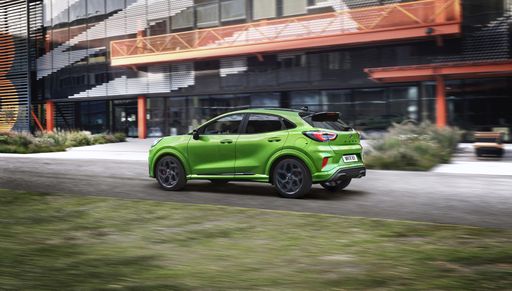
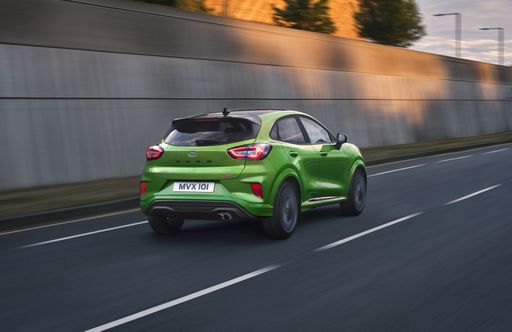
Ford Puma

  • Engine Type : Petrol MHEV, Electric
  • Transmission : Manuel, Automatic
  • Drive Type : Front-Wheel Drive
  • Power HP : 125 - 168 HP
  • Consumption L/100km : 5.4 - 5.9 L/100km
  • Consumption kWh/100km : 13 - 13.7 kWh/100km
  • Electric Range : 404 - 417 km
SEAT Arona
Ford Puma

Costs and Consumption

View detailed analysis

Engine and Performance

View detailed analysis

Dimensions and Body

View detailed analysis

SEAT Arona

The SEAT Arona is a cheeky urban crossover that mixes sharp styling with sensible practicality, making it an appealing choice for buyers who want personality without fuss. It’s zippy in traffic, comfortable enough for daily driving, and brings enough character to make routine journeys feel a little more fun.

details

Ford Puma

The Ford Puma is a cheeky compact crossover that blends sporty styling with city-friendly practicality, giving drivers a surprisingly fun and composed ride. With clever storage tricks and a lively personality, it’s a smart pick for buyers who want enjoyment without fuss.

details
SEAT Arona
Ford Puma

Costs and Consumption

Price
20,700 - 30,500 £
Price
23,900 - 36,300 £
Consumption L/100km
5.3 - 5.8 L/100km
Consumption L/100km
5.4 - 5.9 L/100km
Consumption kWh/100km
-
Consumption kWh/100km
13 - 13.7 kWh/100km
Electric Range
-
Electric Range
404 - 417 km
Battery Capacity
-
Battery Capacity
-
co2
120 - 132 g/km
co2
0 - 135 g/km
Fuel tank capacity
-
Fuel tank capacity
-

Dimensions and Body

Body Type
SUV
Body Type
SUV
Seats
5
Seats
5
Doors
-
Doors
-
Curb weight
1,188 - 1,268 kg
Curb weight
1,316 - 1,563 kg
Trunk capacity
400 L
Trunk capacity
-
Length
-
Length
-
Width
1,780 mm
Width
1,805 mm
Height
-
Height
-
Max trunk capacity
-
Max trunk capacity
-
Payload
502 - 522 kg
Payload
367 - 469 kg

Engine and Performance

Engine Type
Petrol
Engine Type
Petrol MHEV, Electric
Transmission
Manuel, Automatic
Transmission
Manuel, Automatic
Transmission Detail
Manual Gearbox, Dual-Clutch Automatic
Transmission Detail
Manual Gearbox, Dual-Clutch Automatic, Reduction Gearbox
Drive Type
Front-Wheel Drive
Drive Type
Front-Wheel Drive
Power HP
95 - 150 HP
Power HP
125 - 168 HP
Acceleration 0-100km/h
8.3 - 11.1 s
Acceleration 0-100km/h
7.4 - 9.8 s
Max Speed
-
Max Speed
-
Torque
175 - 250 Nm
Torque
170 - 290 Nm
Number of Cylinders
3 - 4
Number of Cylinders
3
Power kW
70 - 110 kW
Power kW
92 - 124 kW
Engine capacity
999 - 1,498 cm3
Engine capacity
999 cm3

General

Model Year
2,025
Model Year
2,025 - 2,026
CO2 Efficiency Class
D
CO2 Efficiency Class
D, A
Brand
SEAT
Brand
Ford
DriveDuel uses data analysis and artificial intelligence to evaluate vehicle data and create content. Content is regularly reviewed and improved. The displayed prices are estimates based on German list prices, adjusted to the respective country’s VAT. Country-specific registration taxes are not included. This information is not legally binding.